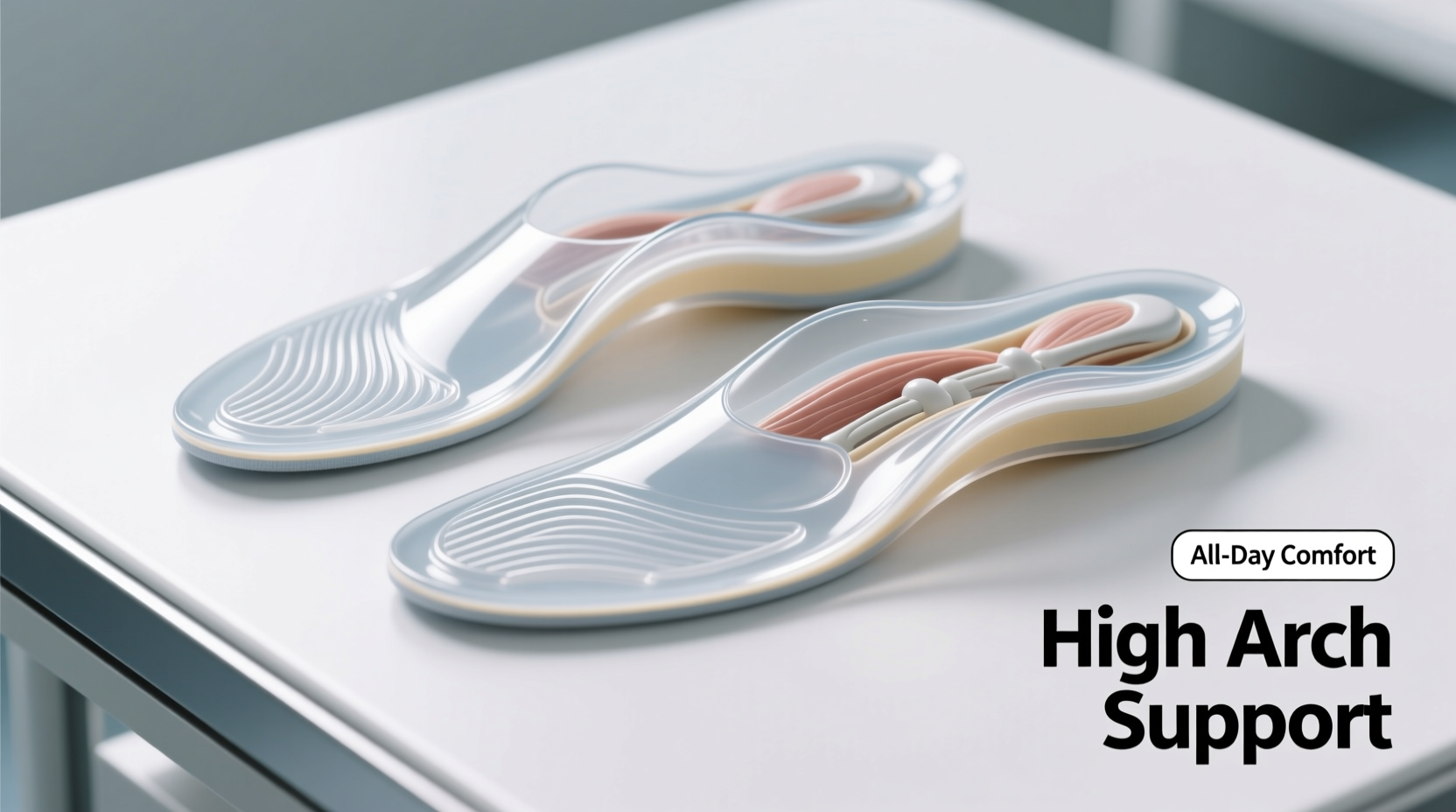
For individuals with high arches, foot discomfort is more than a minor annoyance—it can affect posture, gait, and overall mobility. One common solution people turn to is gel insoles, marketed as cushioned supports that provide comfort throughout the day. But do they truly offer adequate arch support for those with high arches during extended wear? The answer isn't straightforward. While gel insoles excel in shock absorption and short-term comfort, their structural support capabilities are often limited compared to rigid or semi-rigid orthotics. Understanding how gel insoles interact with high arch foot mechanics is essential to making an informed decision about long-term foot health.
The Anatomy of High Arches and Support Needs
High arches, or pes cavus, refer to an exaggerated upward curve along the inner sole of the foot. Unlike flat feet, which tend to overpronate (roll inward), high-arched feet typically underpronate or supinate—meaning they roll outward upon impact. This altered biomechanics leads to increased pressure on the heel and ball of the foot, reduced shock absorption, and a higher risk of ankle instability, plantar fasciitis, and stress fractures.
Because the natural arch doesn’t make full contact with the ground, support must be artificially introduced through footwear or insoles. The ideal insole for high arches should:
- Provide firm, anatomically contoured arch support
- Distribute weight evenly across the foot
- Maintain proper alignment from heel to forefoot
- Prevent excessive supination
Gel insoles, while soft and pliable, often fall short in delivering the structural reinforcement needed to correct misalignment. Their primary function is cushioning, not correction.
Tip: If you have high arches, prioritize insoles with a defined, elevated arch profile rather than flat or shallow designs—even if they feel softer initially.How Gel Insoles Work: Cushioning vs. Support
Gel insoles are constructed from silicone-based polymers or thermoplastic materials infused with gel pockets. These materials respond dynamically to pressure by redistributing force and absorbing impact. This makes them particularly effective in reducing discomfort caused by standing or walking on hard surfaces.
However, the key distinction lies between cushioning and support:
- Cushioning refers to the ability to absorb shock and soften impact.
- Support involves maintaining the foot’s optimal alignment and preventing collapse or strain in key areas like the medial longitudinal arch.
Gel excels at the former but often fails at the latter. Because gel is inherently flexible and lacks rigidity, it compresses easily under body weight, especially during prolonged use. Over time, this compression diminishes its effectiveness, leading to inconsistent support—particularly problematic for high-arched individuals who rely on consistent elevation to maintain balance and reduce strain.
“Gel provides excellent short-term relief, but it cannot replace the biomechanical control offered by firmer, molded orthotics for structural issues like high arches.” — Dr. Alan Kim, Podiatrist and Gait Specialist
Comparing Insole Types for High Arch Support
Not all insoles are created equal. For high arches, material composition and structural design significantly influence performance. Below is a comparison of common insole types based on support level, durability, and suitability for all-day wear.
| Type | Arch Support Level | Cushioning | Durability | Best For |
|---|---|---|---|---|
| Gel Insoles | Low to Moderate | High | Moderate (compress over time) | Short-term comfort, light activity |
| Foam Insoles (EVA/Polyurethane) | Moderate | Moderate | Low to Moderate (break down faster) | Everyday shoes, moderate activity |
| Semi-Rigid Orthotics (TPU/Composite) | High | Moderate (balanced) | High (long-lasting shape) | All-day wear, overpronation/supination correction |
| Rigid Orthotics (Polypropylene) | Very High | Low | Very High | Severe biomechanical issues, medical use |
| Hybrid Gel-Foam with Arch Shell | Moderate to High | High | Moderate to High | Balanced comfort and support |
As shown, pure gel insoles rank low in arch support despite their superior cushioning. However, hybrid models that combine gel top layers with a firm thermoplastic arch shell offer a middle ground—delivering both comfort and functional support.
A Real-World Scenario: Office Worker with High Arches
Sarah, a 34-year-old administrative professional, has naturally high arches and began experiencing sharp heel pain after transitioning to a job requiring her to stand at a desk for four hours daily. She initially purchased over-the-counter gel insoles, attracted by their softness and advertised “all-day comfort.”
At first, she noticed immediate relief. The gel felt plush and reduced the jarring sensation when walking on tile floors. However, by mid-afternoon, the pain returned, now radiating into her outer ankle. After two weeks, she consulted a podiatrist, who examined her gait and identified chronic supination due to inadequate arch support.
The doctor recommended switching to semi-rigid orthotics with a deep heel cup and elevated medial arch. Within five days of using the new insoles, Sarah reported improved stability and eliminated heel pain. Her experience illustrates a common pitfall: mistaking initial comfort for long-term efficacy.
This case underscores that while gel may feel good initially, it does not address the root cause of high-arch discomfort—lack of structural support.
When Gel Insoles Might Be Effective
Despite their limitations, gel insoles aren’t universally unsuitable for high-arched individuals. There are specific scenarios where they can play a beneficial role:
- Secondary layer in supportive shoes: When worn underneath a shoe that already has strong built-in arch support, gel inserts can enhance cushioning without compromising structure.
- Temporary relief during travel: For occasional long walks or flights, gel insoles can reduce fatigue even if they don’t correct alignment.
- Use in athletic shoes with existing support: Some running shoes designed for neutral or supinated gait already include firm midfoot support. Adding thin gel insoles can improve underfoot feel without sacrificing stability.
- Hybrid models: Products combining a rigid arch core with a gel top cover offer both support and comfort, bridging the gap between function and feel.
Step-by-Step Guide to Choosing the Right Insoles for High Arches
Selecting effective insoles requires more than just comfort testing. Follow this step-by-step process to ensure lasting support:
- Assess your arch type: Perform a wet test—wet your foot, step on a piece of paper, and examine the imprint. A narrow band connecting heel and forefoot indicates a high arch.
- Evaluate your symptoms: Note pain locations (heel, ball of foot, outer ankle) and activities that worsen discomfort.
- Check shoe compatibility: Ensure your footwear has enough depth to accommodate added insoles without crowding the toes.
- Look for key features: Prioritize insoles with a deep heel cup, firm medial arch contour, and metatarsal padding.
- Start with semi-rigid orthotics: Brands like Superfeet, Powerstep, or Formthotics offer high-arch-specific models with durable support cores.
- Test gradually: Wear new insoles for 1–2 hours per day initially, increasing duration as your feet adapt.
- Monitor changes: Track improvements in pain, balance, and energy levels throughout the day.
- Consult a professional: If pain persists, seek evaluation from a podiatrist for custom orthotics.
FAQ: Common Questions About Gel Insoles and High Arches
Can I use gel insoles if I have high arches?
Yes, but with caveats. Basic gel insoles alone are unlikely to provide sufficient arch support for all-day wear. They may help with cushioning, but pairing them with structurally supportive footwear or upgrading to hybrid models is recommended for lasting relief.
Do gel insoles lose effectiveness over time?
Yes. Most gel insoles begin to degrade after 3–6 months of regular use. Compression reduces their thickness and responsiveness, leading to diminished shock absorption and support. Replace them when they feel flat or no longer provide comfort.
Are custom orthotics better than gel insoles for high arches?
Generally, yes. Custom orthotics are molded to your exact foot shape and address individual biomechanical imbalances. While more expensive, they offer superior alignment correction and durability compared to off-the-shelf gel inserts.
Final Recommendations and Action Plan
Gel insoles can offer temporary comfort for people with high arches, especially in situations involving brief periods of standing or walking. However, they are not a substitute for true structural support. Relying solely on gel for all-day wear risks ongoing strain, improper gait mechanics, and potential long-term injuries such as tendonitis or stress fractures.
For sustained relief and foot health, consider upgrading to semi-rigid or hybrid insoles that combine cushioning with firm arch support. Evaluate your daily activities, footwear, and symptoms carefully before making a choice. If you're unsure, consult a foot specialist—many clinics offer free gait analysis or foot scanning services.
“The right insole doesn’t just make your feet feel better today—it protects your joints and posture for years to come.” — Dr. Lena Torres, Sports Medicine Physician
Conclusion: Step Forward with Confidence
Your feet carry you through every part of your day. Giving them proper support isn’t a luxury—it’s a necessity. While gel insoles might feel soft and inviting, true comfort comes from stability, alignment, and endurance. Don’t settle for short-term fixes when long-term solutions are within reach. Assess your needs, invest in quality support, and take proactive steps toward healthier feet. Your future self will thank you with every step you take.
🚀 Ready to upgrade your foot comfort? Try a reputable brand with proven support for high arches—and share your experience in the comments below.








