As we age past our mid-twenties, the body’s natural collagen production begins to decline—roughly 1% per year. This slow depletion affects the skin’s elasticity, firmness, and hydration, often leading to fine lines, dryness, and a rougher texture. In response, many turn to collagen supplements hoping for a visible improvement. But can you really see a difference in your skin texture after just 30 days of supplementation?
The short answer: for some people, yes—there can be subtle but measurable improvements within a month. However, expectations must be realistic. Visible changes are typically modest and vary significantly based on age, baseline skin condition, lifestyle, and the type of collagen used.
The Science Behind Collagen Supplementation
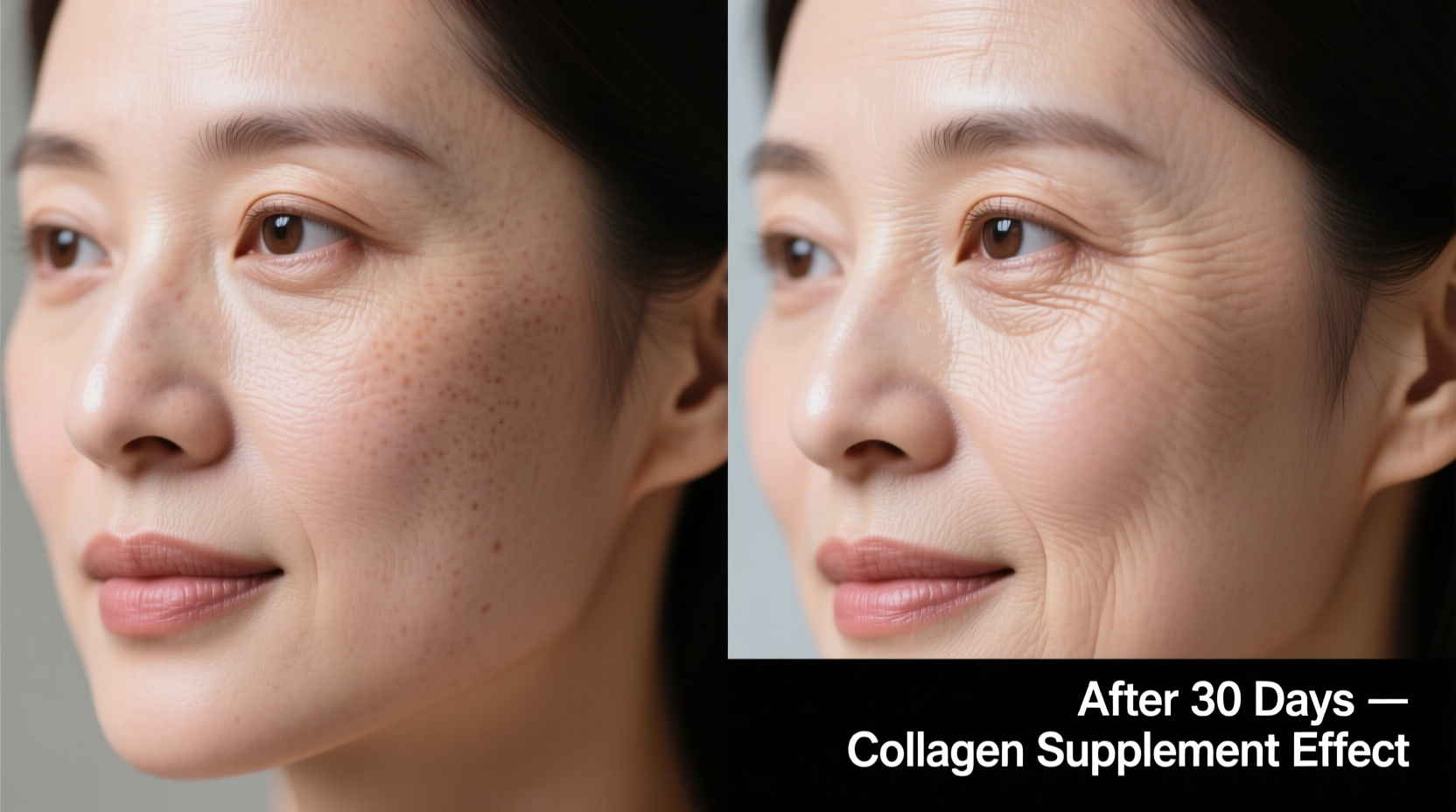
Collagen is the most abundant protein in the human body, making up about 75% of the skin’s dry weight. It acts as the structural scaffolding that keeps skin plump, smooth, and resilient. When oral hydrolyzed collagen peptides are ingested, they are broken down into amino acids and absorbed through the gut. These bioactive peptides then travel to the dermis, where they stimulate fibroblasts—the cells responsible for producing new collagen, elastin, and hyaluronic acid.
A 2019 meta-analysis published in the journal *Skin Pharmacology and Physiology* reviewed 11 studies involving over 800 participants. It concluded that daily intake of 2.5–10 grams of hydrolyzed collagen over 8–12 weeks led to significant improvements in skin elasticity, hydration, and dermal collagen density. While most studies spanned at least 8 weeks, several noted early signs of improvement as early as 4 weeks.
“While full remodeling of the dermis takes time, patients often report improved skin feel and reduced roughness within four weeks of starting collagen peptides.” — Dr. Rebecca Tan, Dermatological Researcher, University Hospital Zurich
What Changes Are Realistically Visible After 30 Days?
It’s important to distinguish between measurable biological changes and visibly noticeable ones. After one month, most users don’t experience dramatic transformations like wrinkle erasure or a complete glow-up. Instead, the improvements tend to be subtle and tactile:
- Improved skin smoothness: Many report their skin feels softer and less rough, especially on areas like cheeks and décolletage.
- Reduced flakiness: Dry patches may become less frequent due to increased hydration retention.
- Firmer appearance: Skin may appear slightly more taut, particularly around the jawline and under the eyes.
- Less crepiness: Fine lines may look less pronounced when skin is well-hydrated.
These changes are often first noticed by the individual themselves—especially when touching their face or applying makeup more smoothly. Others may not perceive a dramatic shift, but the cumulative effect sets the foundation for longer-term benefits.
Tip: Take weekly close-up photos in natural light to objectively track subtle changes in skin texture over 30 days.Factors That Influence Results Within 30 Days
Not everyone will experience visible improvements in skin texture after one month. Several key variables determine how responsive your skin is to collagen supplementation:
1. Age and Baseline Collagen Levels
Individuals over 35 with naturally lower collagen levels often notice quicker perceptible changes than younger users whose skin is already rich in collagen.
2. Type and Quality of Supplement
Hydrolyzed collagen (also called collagen peptides) is the only form proven effective in clinical studies. Avoid gelatin or whole collagen powders unless specifically formulated for absorption. Look for products with Verisol®, Peptan®, or Naticol®—branded peptides with research backing.
3. Dosage and Consistency
Most studies showing positive effects used 5–10 grams per day. Taking less than 2.5 grams daily may not trigger a sufficient biological response. Consistency matters—missing doses reduces efficacy.
4. Diet and Lifestyle
Vitamin C is essential for collagen synthesis. Without adequate intake (from food or supplements), collagen production stalls. Smoking, excessive sun exposure, and high sugar consumption accelerate collagen breakdown, counteracting supplement benefits.
5. Skin Care Routine
Using topical retinoids, hyaluronic acid, and sunscreen enhances the skin environment, making internal collagen support more effective.
| Factor | Promotes Faster Results | Slows or Blocks Progress |
|---|---|---|
| Supplement Type | Hydrolyzed collagen peptides | Gelatin or unhydrolyzed collagen |
| Daily Dose | 5–10g | Below 2.5g |
| Nutrient Support | Vitamin C, zinc, copper | Vitamin deficiencies |
| Lifestyle | Sun protection, no smoking | Smoking, UV overexposure |
| Topical Skincare | Retinol, moisturizers, SPF | Harsh exfoliants, no SPF |
Mini Case Study: A 38-Year-Old Professional After 30 Days
Sarah M., a marketing executive from Portland, began taking 7 grams of marine collagen peptides daily after noticing her skin felt “thin” and looked dull post-winter. She paired the supplement with a vitamin C serum each morning and committed to drinking more water.
After 30 days, she didn’t see fewer wrinkles, but coworkers commented that her skin “looked healthier.” Her makeup applied more evenly, and she no longer needed heavy concealer on dry patches near her nose. A dermatologist using a skin texture analyzer noted a 12% increase in epidermal hydration and smoother micro-relief compared to baseline images.
“I didn’t wake up glowing,” Sarah said, “but my skin felt stronger. It was less reactive to wind and cold air. That told me something was changing beneath the surface.”
Step-by-Step Guide: Optimizing Your First 30 Days
To maximize your chances of seeing visible improvements in skin texture within one month, follow this evidence-based timeline:
- Day 1: Choose the Right Supplement
Select a hydrolyzed collagen product with at least 5 grams per serving. Prefer marine or bovine sources with third-party testing. - Day 2: Pair With Vitamin C
Add 100–200mg of vitamin C to your morning routine. Citrus fruits, bell peppers, or a supplement work well. - Day 3: Establish a Routine
Take collagen at the same time daily—either in coffee, smoothies, or water. Consistency improves absorption. - Day 7: Assess Early Signs
Note any changes in skin comfort, dryness, or tightness. Take a baseline photo in natural light. - Day 14: Evaluate Makeup Application
Does foundation go on smoother? Are there fewer patchy areas? These are early indicators of improved texture. - Day 21: Hydrate and Protect
Increase water intake and reapply sunscreen if outdoors. Support collagen from both inside and out. - Day 30: Compare and Reflect
Review your Day 1 photo. Look for subtle differences in radiance, pore appearance, and evenness. Don’t expect miracles—but do note progress.
Checklist: Are You Set Up for Success?
Before starting—or continuing—your collagen regimen, verify you’ve covered these essentials:
- ✅ Using hydrolyzed collagen peptides (not gelatin or pills with minimal dosage)
- ✅ Taking at least 5 grams per day
- ✅ Consuming enough vitamin C daily (diet or supplement)
- ✅ Staying hydrated (aim for 2+ liters of water)
- ✅ Wearing sunscreen daily (SPF 30+)
- ✅ Avoiding smoking and excessive alcohol
- ✅ Tracking skin changes with photos or notes
- ✅ Allowing at least 30 days before evaluating results
Frequently Asked Questions
Can I see results faster than 30 days?
Some individuals report feeling a difference in skin softness within 10–14 days, but visible texture improvements typically take at least 3–4 weeks. Biological turnover cycles in the skin mean major changes require time.
Do all types of collagen supplements work the same?
No. Only hydrolyzed collagen has been shown in studies to improve skin health. Type I and III are most relevant for skin; Type II is primarily for joints. Marine collagen is highly bioavailable, while bovine offers a broader amino acid profile.
What if I don’t see changes after 30 days?
Consider increasing your dose to 10g/day, checking your vitamin C intake, or switching brands. Also evaluate lifestyle factors like sleep, stress, and sun exposure. True results often emerge between 60–90 days, so persistence is key.
Conclusion: Realistic Expectations, Lasting Benefits
Yes, collagen supplements can lead to visible improvements in skin texture after 30 days—but the changes are often subtle and best described as a refinement rather than a revolution. Skin may feel smoother, look more hydrated, and respond better to makeup and skincare. These early wins signal that the deeper layers of your skin are rebuilding, setting the stage for more noticeable results over time.
The truth is, collagen supplementation isn’t a quick fix. It’s a long-term investment in skin resilience. When combined with good nutrition, sun protection, and consistent habits, it becomes part of a holistic strategy for aging well. The first month is just the beginning.
🚀 Start today—not for instant perfection, but for lasting skin health. Share your 30-day journey in the comments and inspire others to build stronger skin from within.








