Adaptogens—herbs like ashwagandha, rhodiola, and holy basil—have surged in popularity as natural tools for managing stress, boosting energy, and supporting mental clarity. Marketed in capsules, powders, and tinctures, they’re often taken daily with little thought to long-term safety. But as their use becomes routine, a critical question emerges: are adaptogens safe to take every day, or should they be cycled?
The answer isn’t universal. It depends on the specific herb, your health status, duration of use, and individual response. While many adaptogens have centuries of traditional use behind them, modern science is still catching up. Understanding when daily use is appropriate—and when cycling is wiser—can help you harness their benefits without unintended consequences.
What Are Adaptogens and How Do They Work?
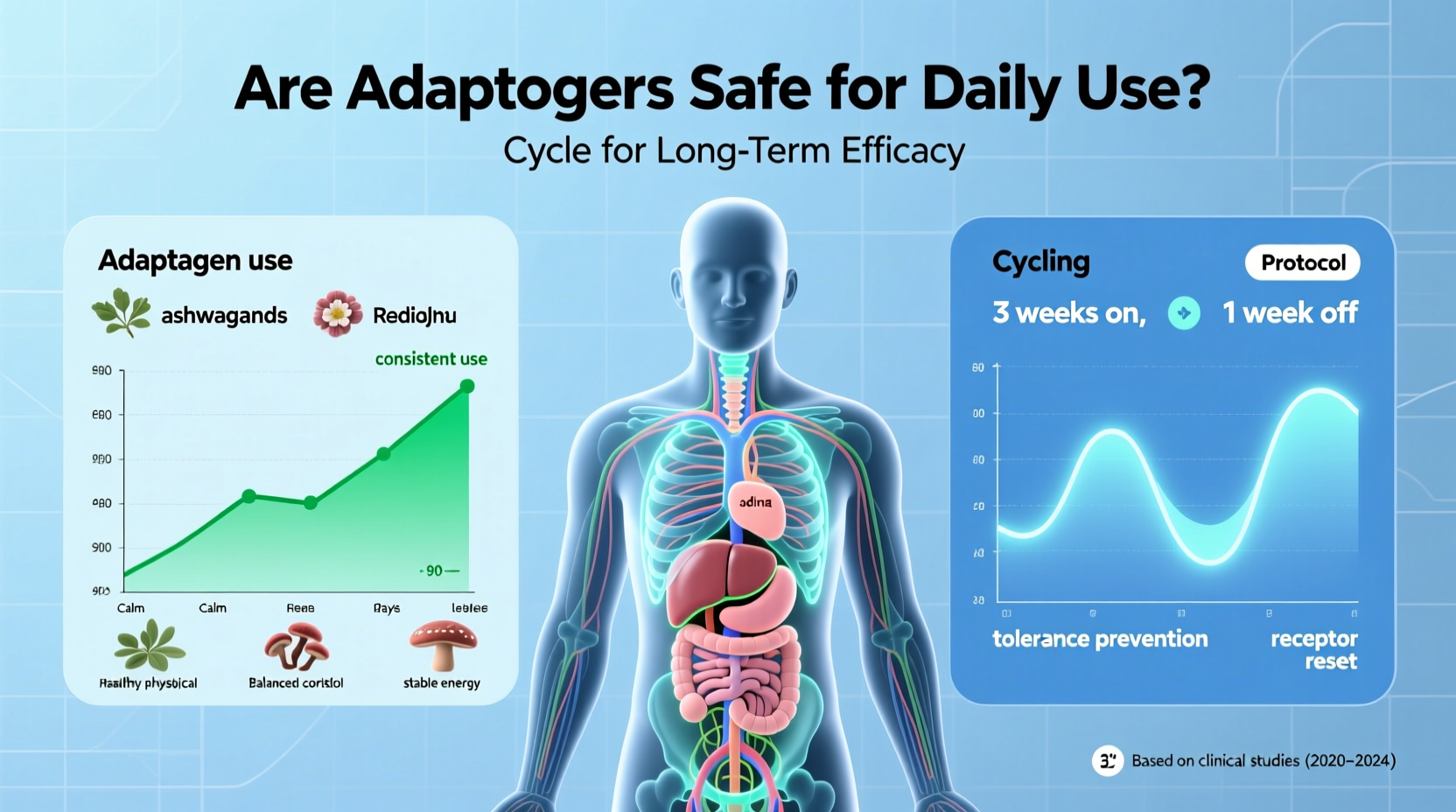
Adaptogens are a class of herbs and mushrooms that help the body “adapt” to physical, chemical, and biological stress. To qualify as an adaptogen, a substance must meet three criteria:
- Non-toxic: Safe for consumption at recommended doses.
- Normalizing effect: Helps restore balance regardless of direction of imbalance (e.g., can calm or energize depending on need).
- Anti-stress action: Reduces the negative impact of stressors on physiological functions.
These plants work primarily through the hypothalamic-pituitary-adrenal (HPA) axis, which regulates cortisol, adrenaline, and other stress hormones. By modulating this system, adaptogens may reduce fatigue, improve focus, and support immune function.
Common examples include:
- Ashwagandha (Withania somnifera): Known for calming effects and cortisol reduction.
- Rhodiola rosea: Used for mental stamina and reducing burnout.
- Eleuthero (Siberian ginseng): Supports endurance and immune resilience.
- Holy basil (Tulsi): Balances mood and supports metabolic health.
- Cordyceps and Reishi mushrooms: Enhance energy and immune modulation.
Daily Use vs. Cycling: What’s the Difference?
Taking adaptogens daily means consistent, uninterrupted use over weeks or months. This approach is common among people managing chronic stress, adrenal fatigue, or low energy. In contrast, cycling involves using an adaptogen for a set period—typically 4 to 8 weeks—followed by a break of 1 to 4 weeks.
Why cycle? The rationale stems from two concerns: receptor downregulation and diminishing returns. Just as the body can become less responsive to caffeine with constant use, prolonged stimulation of the HPA axis may reduce sensitivity over time. A break allows systems to reset.
Additionally, some adaptogens act as tonics—gentle but cumulative in effect. These may be safer for long-term use. Others are more stimulating and better suited for short bursts during high-stress periods.
When Daily Use May Be Appropriate
- You're using a mild, balancing adaptogen like holy basil or reishi.
- You have chronic stress or mild adrenal insufficiency under professional guidance.
- You’ve responded well with no side effects after several weeks.
- Your practitioner recommends ongoing support due to lifestyle demands.
When Cycling Is Recommended
- You're using potent stimulatory herbs like rhodiola or eleuthero.
- You notice diminished effects after a few weeks.
- You experience jitteriness, insomnia, or digestive upset.
- You're using adaptogens preventively rather than therapeutically.
“While many adaptogens are safe for extended use, we see better long-term outcomes when patients rotate or cycle them based on seasonal needs.” — Dr. Lena Torres, Integrative Medicine Specialist
Scientific Evidence on Long-Term Safety
Most clinical studies on adaptogens last between 4 and 12 weeks, leaving long-term data limited. However, traditional systems like Ayurveda and Traditional Chinese Medicine (TCM) have used these herbs for decades, even lifetimes, in certain formulations.
A 2020 review published in *Phytotherapy Research* analyzed 27 trials on ashwagandha and found it generally safe for up to 12 weeks, with minor side effects like gastrointestinal discomfort. Similarly, rhodiola has been studied for up to 10 weeks with good tolerability, though longer-term human data is sparse.
Animal studies suggest potential liver toxicity with extremely high doses of certain adaptogens over extended periods, but such doses far exceed typical human intake. Still, caution is warranted, especially with pre-existing liver conditions.
The European Medicines Agency recognizes standardized extracts of ashwagandha and rhodiola as safe for short-term use, but does not endorse indefinite daily supplementation.
Who Should Avoid Daily Adaptogen Use?
- Pregnant or breastfeeding women: Limited safety data; best avoided unless under medical supervision.
- People with autoimmune diseases: Some adaptogens (like echinacea or astragalus) may stimulate immune activity, potentially exacerbating conditions like lupus or rheumatoid arthritis.
- Those on medication: Adaptogens can interact with thyroid meds (ashwagandha), antidepressants (rhodiola), and blood thinners (ginseng).
- Individuals with hormone-sensitive conditions: Ashwagandha may influence testosterone and thyroid hormones.
How to Cycle Adaptogens Effectively
Cycling doesn’t have to be rigid. A flexible approach tailored to your needs yields better results than strict adherence to arbitrary timelines. Here’s a practical framework:
- Choose your phase length: Most benefit from 4–6 weeks of use followed by 1–2 weeks off.
- Monitor symptoms: Track energy, sleep, mood, and stress levels in a journal.
- Rotate types: Switch between calming (ashwagandha) and energizing (rhodiola) based on season or workload.
- Take breaks seriously: Use the off-period to reassess whether continued use is necessary.
- Reintroduce gradually: After a break, restart at a lower dose to gauge response.
For example, someone preparing for a high-pressure work quarter might use rhodiola Monday–Friday for six weeks, then switch to reishi for recovery during a lighter month. This mimics the body’s natural rhythm of exertion and restoration.
Sample Adaptogen Cycling Schedule
| Weeks | Adaptogen | Purpose | Notes |
|---|---|---|---|
| 1–6 | Rhodiola rosea | Boost focus and combat mental fatigue | Take in morning; avoid late-day dosing |
| 7–8 | Break | Allow HPA axis reset | No adaptogens; focus on sleep and hydration |
| 9–14 | Ashwagandha | Support relaxation and sleep quality | Take in evening; pair with magnesium |
| 15–16 | Break | Assess need for continuation | Reflect on stress levels and energy |
Mini Case Study: Managing Burnout with Cycled Adaptogens
Sarah, a 38-year-old project manager, began experiencing persistent fatigue, irritability, and difficulty concentrating after a series of high-pressure deadlines. Her functional medicine practitioner recommended a trial of adaptogens.
She started with rhodiola (200 mg/day) for four weeks to address mental fog and low motivation. Initially, she felt sharper and more resilient. But by week five, the benefits plateaued, and she developed mild insomnia.
Following her practitioner’s advice, Sarah took a two-week break and switched to ashwagandha (300 mg at night). Over the next month, her sleep improved, and cortisol levels normalized on follow-up testing. She now cycles between both herbs seasonally—using rhodiola during busy quarters and ashwagandha during family-focused or restorative periods.
This case illustrates how cycling prevents dependency, maintains efficacy, and aligns supplementation with changing life demands.
Checklist: Using Adaptogens Safely and Strategically
- ✅ Consult a healthcare provider before starting, especially if pregnant or on medication.
- ✅ Begin with a single adaptogen to monitor effects.
- ✅ Choose standardized, third-party tested products for quality assurance.
- ✅ Track your response in a journal (energy, mood, sleep).
- ✅ Limit continuous use of stimulating adaptogens to 4–8 weeks.
- ✅ Take breaks of 1–2 weeks between cycles.
- ✅ Rotate based on your current needs—calming vs. energizing.
- ✅ Discontinue if you experience adverse effects like anxiety or digestive issues.
Frequently Asked Questions
Can I take multiple adaptogens at once?
Yes, but cautiously. Many commercial blends combine herbs like ashwagandha, rhodiola, and schisandra. While synergistic, stacking increases the risk of overstimulation or interactions. Start with one, then introduce others slowly. Monitor your body’s signals closely.
How do I know if an adaptogen is working?
Effects are often subtle. Look for improvements in stress resilience—fewer reactive moments, better sleep onset, sustained energy without crashes. Journaling helps identify patterns. Significant changes may take 2–4 weeks.
Do I need to cycle all adaptogens?
Not necessarily. Milder, nourishing herbs like reishi mushroom or holy basil may be used more continuously, especially in low doses. Stronger, more pharmacologically active ones like rhodiola or maca are better cycled. Listen to your body—it will signal when a break is needed.
Final Thoughts: Balance Is Key
Adaptogens are powerful allies in modern wellness, but they’re not meant to be crutches. Their true value lies in supporting the body’s innate ability to self-regulate—not overriding it indefinitely. Whether you choose daily use or cycling, the goal should be balance, awareness, and intentionality.
Respect these herbs as bioactive compounds, not just trendy supplements. Pair them with foundational habits: quality sleep, nutritious food, movement, and mindfulness. And remember, the most sustainable form of resilience isn’t found in a bottle—it’s built through consistent, holistic living.
🚀 Ready to optimize your adaptogen routine? Start tracking your response today, consider a strategic cycle, and consult a trusted practitioner to personalize your approach. Share your experience in the comments—we’re all learning together.








