
Alcohol consumption and hydration are deeply intertwined—yet often overlooked—in personal health management. When you drink alcohol, your body loses more fluid than it takes in: ethanol suppresses vasopressin (the antidiuretic hormone), increasing urine output by up to 400% over baseline. That means even a single glass of wine can trigger measurable dehydration—contributing to fatigue, headaches, impaired cognition, and disrupted sleep. Against this physiological backdrop, a growing number of mobile apps promise to “track both sides of the equation”: logging alcoholic drinks while nudging users toward adequate water intake. But do these tools deliver meaningful behavioral change—or simply add digital clutter to an already complex health habit?
This article cuts through marketing claims and app-store ratings. Drawing on clinical trials, behavioral science literature, and real-world usage data, we examine whether alcohol and hydration tracking apps genuinely support healthier choices—and when they fall short. You’ll learn what works, what doesn’t, and how to use these tools with intention—not just habit.
How These Apps Actually Work (and Where They Fall Short)
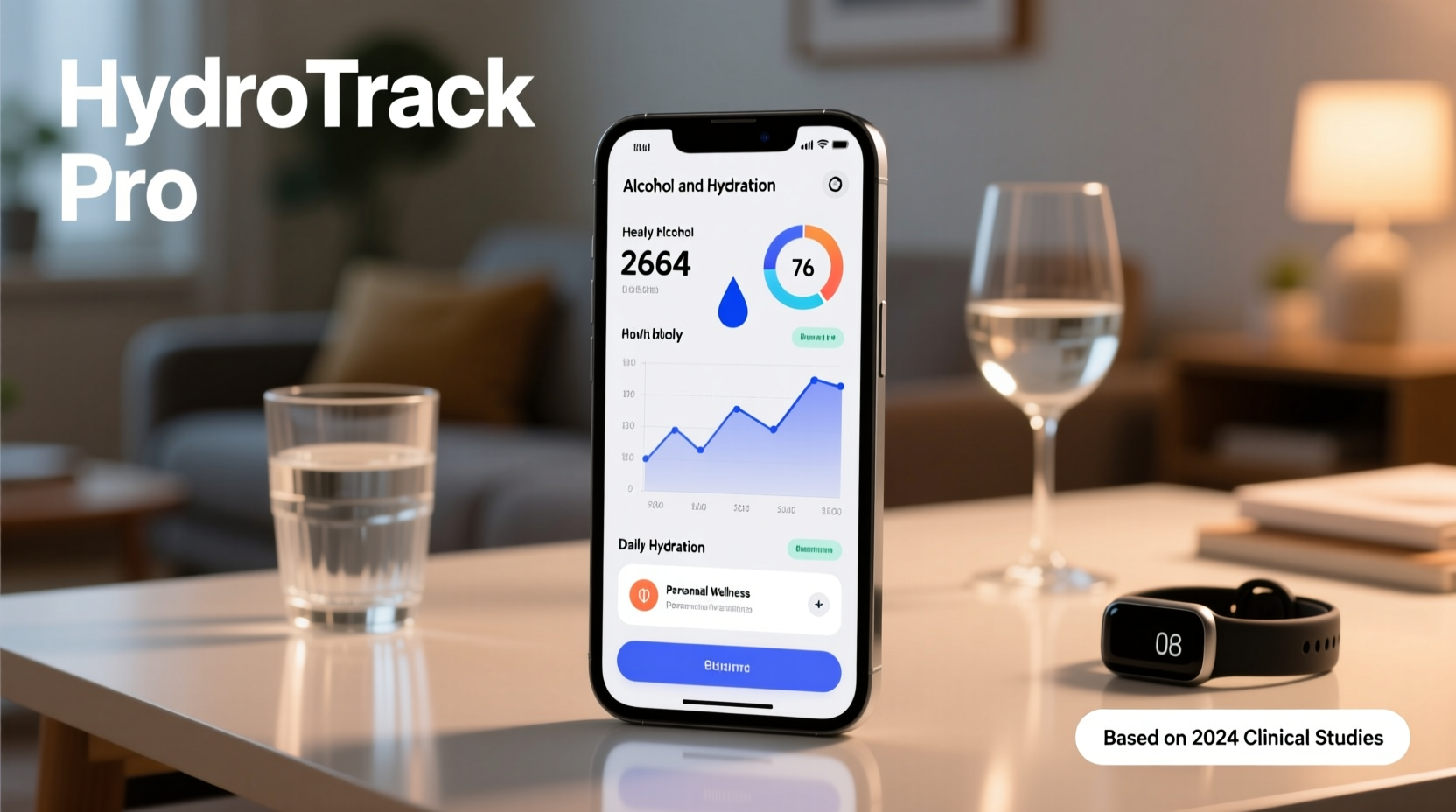
Most dual-purpose apps—such as DrinkAware, Hydration Tracker + Water Reminder, NIAAA’s Rethinking Drinking, and integrated features in MyFitnessPal or Apple Health—follow a similar logic: users manually log each alcoholic beverage (often selecting from preset options like “12 oz beer,” “5 oz wine,” or “1.5 oz spirits”) and separately record water intake. Some calculate estimated blood alcohol concentration (BAC), suggest “water-to-alcohol ratios,” or send push notifications reminding users to hydrate before, during, or after drinking.
Yet functionality alone doesn’t equate to efficacy. A 2023 systematic review published in JAMA Internal Medicine analyzed 27 alcohol-monitoring apps and found that only 12% incorporated evidence-based behavior-change techniques—like motivational interviewing prompts, personalized feedback loops, or goal-reflection exercises. The majority offered passive logging with no follow-up, no contextual education, and minimal integration with clinical support resources.
Similarly, hydration trackers often treat water intake as a standalone metric—ignoring electrolyte balance, sodium intake, physical activity level, climate, and medication use (e.g., diuretics or SSRIs). Logging “8 glasses” becomes a ritual rather than a responsive strategy.
Tip: Before downloading any tracking app, check its “About” or “Evidence” section. If it doesn’t cite peer-reviewed research, clinical guidelines (e.g., NIAAA, WHO, or EFSA), or partnerships with public health agencies, treat its claims with skepticism.The Science Behind What *Does* Help Reduce Harm
Behavioral interventions succeed not because they track—but because they reframe, reinforce, and respond. Research consistently shows three elements drive lasting change in alcohol and hydration behaviors:
- Personalized normative feedback: Comparing one’s drinking to age- and gender-matched population averages reduces perceived “normalcy” of heavy use. A randomized trial with college students found those receiving weekly normative feedback via app reduced binge episodes by 32% over eight weeks—versus 9% in the control group.
- Implementation intentions: Not just “I’ll drink less,” but “If I’m at a bar after 7 p.m., I’ll order sparkling water with lime first.” Apps that prompt users to pre-plan responses to high-risk situations show stronger adherence.
- Physiological anchoring: Linking hydration goals to tangible bodily signals (“When my mouth feels dry or my urine is dark yellow, I’ll drink 250 mL immediately”) increases self-efficacy more than abstract targets like “2 L/day.”
Crucially, apps that embed these principles outperform generic loggers—even when feature sets appear identical. For example, Rethinking Drinking (developed by the U.S. National Institute on Alcohol Abuse and Alcoholism) doesn’t just count drinks—it offers interactive risk calculators, printable goal-setting worksheets, and direct links to confidential counseling services. Its design reflects decades of clinical insight: behavior change requires context, not just counts.
“Tracking without interpretation is like weighing yourself daily without understanding metabolism, muscle mass, or hormonal cycles. The number only becomes useful when paired with meaning, reflection, and support.” — Dr. Sarah Lin, Behavioral Health Researcher, Stanford Prevention Research Center
Real-World Use: A Mini Case Study
Maya, 34, worked in marketing and regularly attended client dinners where wine was served. She downloaded Hydration Hero after experiencing persistent afternoon fatigue and brain fog. For two weeks, she logged every drink—including her nightly 2-glass habit—and set hourly water reminders. Her app dashboard showed she averaged 1.4 L of water daily—well below her target of 2.2 L. But Maya didn’t feel dehydrated; her urine was pale yellow, and her skin turgor was normal. Confused, she consulted her primary care provider, who ordered basic labs: her serum osmolality and sodium were within range, but her cortisol was elevated and her ferritin low.
Turns out, Maya’s fatigue wasn’t primarily from dehydration—it was compounded by chronic stress and iron deficiency. The app had spotlighted one variable while obscuring others. With guidance, she shifted focus: she began using Rethinking Drinking’s “Drink Diary” to identify emotional triggers (e.g., stress-eating after meetings), swapped one evening glass for kombucha, and started pairing each alcoholic drink with 150 mL of water—not as a rigid rule, but as a mindful pause. Within five weeks, her energy improved markedly—not because she hit a hydration target, but because she used tracking as a gateway to holistic self-awareness.
What to Look for (and Avoid) in an App: A Practical Comparison
Not all tracking tools are created equal. Below is a side-by-side comparison of key features aligned with evidence-based best practices. Use this table to evaluate whether an app supports sustainable behavior change—or merely collects data.
| Feature | Evidence-Based Standard | Common App Shortfall | Red Flag |
|---|---|---|---|
| Alcohol logging | Includes standard drink definitions, unit conversion, and visual portion guides (e.g., “14 g pure alcohol = 12 oz beer at 5% ABV”) | Uses vague terms like “small,” “medium,” or “large” without calibration | No mention of ABV variability (e.g., craft IPAs at 7–9% vs. lagers at 3–4%) |
| Hydration guidance | Adjusts recommendations based on activity, climate, caffeine intake, and health conditions | Promotes fixed “8×8” rule regardless of individual factors | Suggests chugging water rapidly or exceeding 3.5 L/day without medical supervision |
| Feedback & insights | Provides weekly summaries with trend analysis, norm comparisons, and nonjudgmental reflections (“You drank 3 fewer drinks this week than last—what helped?”) | Only displays raw totals and streak counters | Uses shaming language (“You’re behind on hydration!” or “High-risk drinking detected!”) |
| Clinical integration | Offers clear pathways to evidence-based resources: NIAAA treatment locator, CDC hydration guidelines, or telehealth referrals | Links only to generic blog posts or affiliate supplement stores | Requires subscription to unlock “insights” or “support” features |
Your Action Plan: Using Tracking Tools Intentionally
Apps aren’t magic—but they can be effective levers—if used deliberately. Here’s a four-week, step-by-step framework grounded in cognitive behavioral principles. It prioritizes learning over logging and insight over input.
- Week 1: Observe Without Judgment
Log alcohol and water intake—but disable all notifications, streak counters, and “goal met” alerts. At day’s end, write one sentence: “What did I notice about timing, mood, or context?” No evaluation. Just awareness. - Week 2: Identify One Anchor Habit
Select a single, repeatable moment to insert hydration: e.g., “After pouring my first drink, I’ll fill a glass with water and lemon.” Practice it daily—not to “hit a target,” but to build neural association. - Week 3: Add Contextual Reflection
Each time you log, answer one question: “Was this drink serving a need (celebration, stress relief, social ease)? And is there another way to meet that need right now?” Keep responses brief—three words max. - Week 4: Review & Refine
Look back at your notes. Which patterns emerged? Did certain days or settings predict heavier drinking or lower hydration? Draft one realistic, values-aligned intention for Week 5 (e.g., “I’ll bring my own sparkling water to Friday happy hour” or “I’ll pause for 60 seconds before reaching for wine after work”).
FAQ: Clear Answers Based on Current Evidence
Do these apps reduce alcohol consumption long-term?
Yes—but only when combined with supportive features. A 2022 meta-analysis in Addiction found apps incorporating personalized feedback, goal setting, and relapse prevention strategies led to modest but sustained reductions (average 12% fewer drinks/week at 6-month follow-up). Standalone trackers without those components showed no significant difference from control groups.
Can over-tracking worsen anxiety around drinking or hydration?
It can—and often does. Clinicians report rising cases of “hydration orthorexia” and “alcohol hypervigilance,” especially among people with histories of disordered eating or anxiety disorders. When tracking shifts from curiosity to compulsion—when skipping a log triggers guilt or a missed water reminder causes distress—the tool has become counterproductive. Pause and ask: “Is this helping me feel more capable—or more controlled?”
Are there free, clinically validated alternatives to commercial apps?
Absolutely. The NIAAA’s Rethinking Drinking website offers free, ad-free tools including a drink calculator, printable journals, and downloadable PDFs on low-risk drinking guidelines. The CDC’s Hydration Guidelines provide plain-language, evidence-based advice—no login required. Both are reviewed annually by multidisciplinary panels of physicians, epidemiologists, and behavioral scientists.
Conclusion: Track Less, Understand More
Alcohol and hydration tracking apps don’t fail because they’re poorly designed—they fail when we expect them to do the work of self-knowledge, clinical support, and compassionate habit change. The most powerful “feature” isn’t AI-driven BAC estimation or glittering hydration streaks. It’s the quiet space between logging a drink and pausing to ask, “How do I feel—right now?”
Use technology as a mirror, not a mandate. Choose tools that deepen your understanding of your own patterns—not ones that impose arbitrary rules. And remember: the goal isn’t perfect tracking. It’s building resilience, clarity, and kindness toward yourself—whether you’re sipping water, wine, or something in between.
💬 Your experience matters. Have you used an alcohol or hydration app that truly shifted your habits—or one that backfired? Share what worked, what didn’t, and what you wish developers understood. Real stories fuel better tools.








