Genealogy has evolved from dusty archives and handwritten records into a high-tech exploration of identity. A 23andMe gift is more than a novelty—it's a gateway to ancestral roots, inherited traits, and even potential health predispositions. Whether you're giving it to a parent, sibling, or close friend, this DNA kit offers a deeply personal journey into the biological story encoded in their cells. With just a saliva sample, recipients gain access to detailed reports on ancestry composition, regional migration patterns, and connections to distant relatives.
The appeal lies not only in curiosity but in connection. People use 23andMe results to trace lineage across continents, confirm oral family histories, or discover previously unknown branches of their family tree. For adoptees or those with fragmented genealogical records, the insights can be transformative. As direct-to-consumer genetics grows more accurate and accessible, gifting a 23andMe kit means offering someone the chance to see themselves through a new lens—one shaped by science and heritage.
How 23andMe Translates DNA Into Personal History
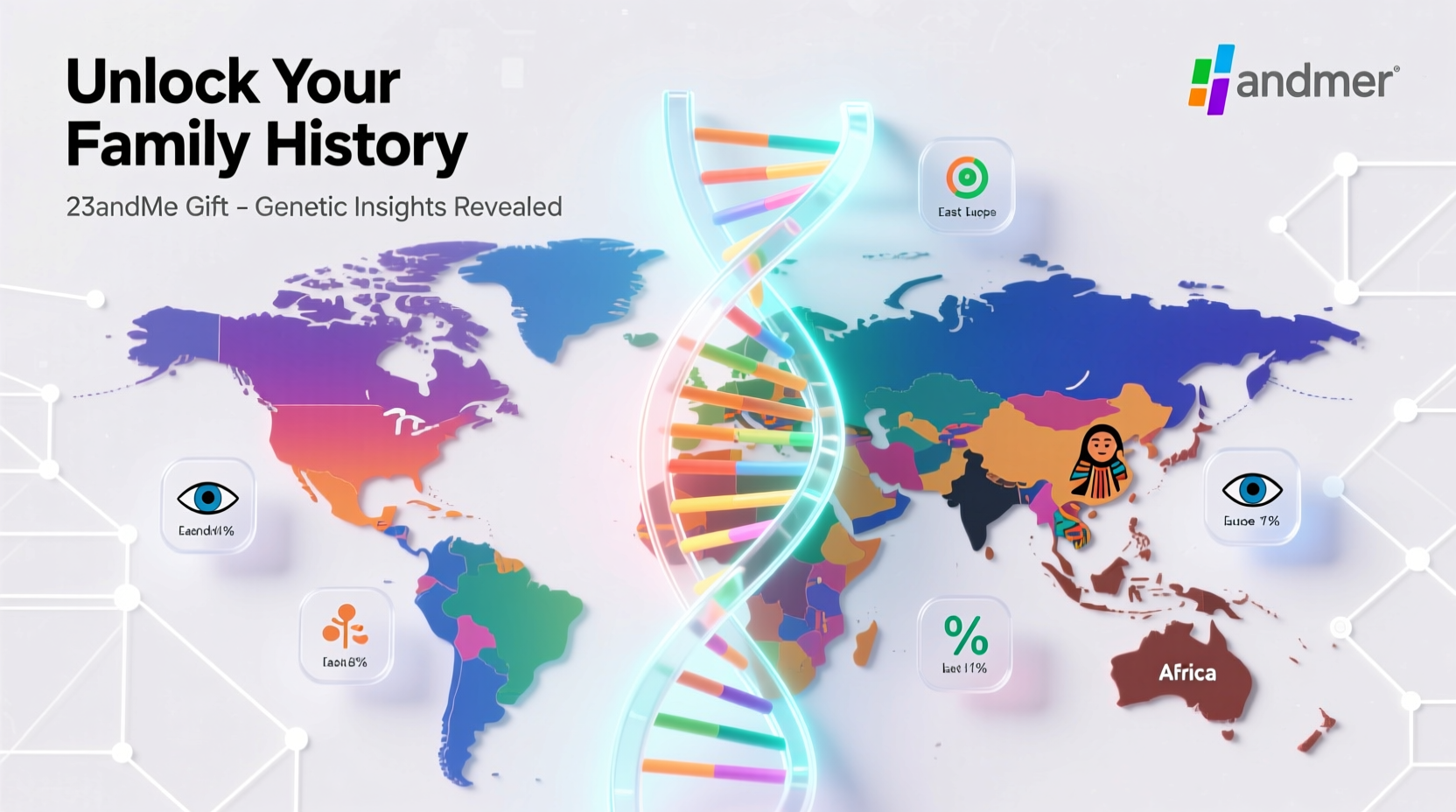
At its core, 23andMe analyzes specific markers across an individual’s genome. After receiving the kit, users provide a saliva sample and mail it back to the lab. Within six to eight weeks, they receive digital access to comprehensive reports based on two main categories: Ancestry + Traits and Health + Wellness (depending on the version purchased).
Ancestry analysis compares the user’s DNA to reference populations from around the world. By identifying shared genetic segments, 23andMe estimates ethnic percentages and pinpoints regions where ancestors likely lived. This includes sub-regional breakdowns—for example, distinguishing between Irish and Scottish roots or identifying Ashkenazi Jewish heritage with high precision.
The Relatives feature allows users to opt-in to find genetic matches among other 23andMe customers. These matches range from close relatives (like half-siblings or cousins) to distant ones hundreds of miles away. Many people have reunited with long-lost relatives or confirmed paternity questions through these connections—all initiated by a simple gift.
Tip: Encourage the recipient to fill out relative profiles in the app; this improves match accuracy and enriches shared family trees.What Kind of Insights Can Be Unlocked?
Beyond broad ancestry percentages, 23andMe delivers nuanced findings that often surprise users. Some learn they carry Neanderthal variants linked to hair texture or sun sensitivity. Others discover maternal haplogroups tracing back thousands of years along ancient migration routes out of Africa.
Traits reports reveal fun, tangible characteristics influenced by genetics—such as whether someone is likely to dislike cilantro (thanks to OR6A2 gene variants), has a higher tolerance for bitter tastes, or tends to be a night owl due to circadian rhythm genes.
On the health side, certain versions of the test report on carrier status for conditions like cystic fibrosis or sickle cell anemia—information valuable for family planning. While 23andMe does not diagnose disease, FDA-approved reports include select genetic risks such as for late-onset Alzheimer’s (APOE), Parkinson’s, and BRCA1/BRCA2 variants (limited compared to clinical testing).
“Genetic data gives people context—they begin to understand why certain illnesses run in families or why traditions persist across generations.” ��� Dr. Linda Chang, Genomic Counselor at UCSF
Step-by-Step: How to Maximize the Gift Experience
A 23andMe kit may seem straightforward, but thoughtful follow-up enhances its impact. Here’s how to guide the recipient toward meaningful discovery:
- Activate the Kit Promptly: Registration must be completed online using the unique code inside the package. Delays can slow processing time.
- Submit Sample Early in the Day: Saliva collection works best before eating, drinking, or brushing teeth—ideally first thing in the morning.
- Opt Into Relative Matching: This unlocks the full social dimension of the service. Users can choose privacy settings later.
- Explore All Report Categories: Don’t stop at ethnicity estimates. Dive into trait explanations and historical timelines.
- Combine with Traditional Research: Pair DNA results with census records, immigration documents, or family interviews for richer context.
Real Example: Reconnecting a Disconnected Family
Sarah, a 54-year-old teacher from Portland, received a 23andMe kit from her daughter for Mother’s Day. Adopted as an infant, she’d spent decades searching for biological clues with little success. Three weeks after submitting her sample, she logged in to find a predicted “Close Family” match labeled “First Cousin.”
Through cautious messaging via the platform, she connected with a woman who turned out to be her maternal cousin. Over several months, they exchanged photos, medical histories, and stories about Sarah’s birth mother, who had passed years earlier. The cousin provided names, hometowns, and even a partial family tree. For the first time, Sarah understood her origins—not just genetically, but emotionally.
This kind of outcome isn’t guaranteed, but it underscores the profound potential embedded in a small tube of saliva. As one user put it: “It felt less like taking a test and more like coming home.”
Comparison: 23andMe vs. Other Major DNA Testing Services
| Feature | 23andMe | AncestryDNA | MyHeritage |
|---|---|---|---|
| Primary Focus | Ancestry + Health | Ancestry + Genealogy Tools | Ancestry + Family Trees |
| Health Reports Available | Yes (FDA-approved) | No | Limited (via add-on) |
| Number of Reference Populations | 170+ | 1,500+ regions | 42 ethnicities |
| Relative Matching Database Size | 12 million+ | 23 million+ | 5 million+ |
| Neanderthal Inheritance Estimate | Yes | No | No |
| Maternal/Paternal Lineage Tracing | Haplogroups included | Available with upgrade | Separate test required |
Frequently Asked Questions
Can I return a 23andMe kit if the recipient already took the test?
Unopened kits can typically be returned within 30 days. However, once activated or used, refunds are not available. Consider purchasing gift cards instead for maximum flexibility.
Is my genetic data safe with 23andMe?
23andMe uses encryption and strict access controls to protect user data. You control sharing preferences and can delete your account and DNA data at any time. That said, no digital system is entirely immune to breaches—review their privacy policy before opting in.
Will the results change over time?
Yes. As 23andMe expands its reference databases and refines algorithms, some ancestry percentages may shift slightly. New reports and features are also added periodically for existing users at no extra cost.
Actionable Checklist for Givers and Recipients
- ✔ Choose the right version: Ancestry + Traits or Health + Ancestry
- ✔ Include a handwritten note explaining why you chose this gift
- ✔ Help register the kit online if needed (especially for older relatives)
- ✔ Suggest scheduling a “results reveal” video call together
- ✔ Recommend downloading raw data for backup or third-party analysis
- ✔ Remind them to explore both ancestry and trait reports fully
Final Thoughts: More Than a Test—A Legacy in the Making
A 23andMe gift transcends typical presents. It doesn’t sit on a shelf—it integrates into a person’s understanding of self. The data lasts a lifetime and can be passed down, becoming part of a family’s documented legacy. Unlike fleeting trends, this insight grows richer with time, especially as science advances and new discoveries emerge from existing DNA samples.
In a world where identity feels increasingly complex, reconnecting with biological roots offers grounding. Whether uncovering royal lineage, confirming cultural ties, or simply satisfying a lifelong curiosity, the journey begins with a single step—and sometimes, that step is wrapped in a bow.
💬 Have you given or received a 23andMe kit? Share your experience and what you discovered—your story might inspire someone else to explore their own roots.