Chocolate desserts present one of the most deceptively challenging pairing puzzles in food and wine service. The interplay of cocoa’s bitterness, sugar’s intensity, fat’s richness, and often-acidic fruit or spice components creates a moving target for wine selection. Yet when done right—truly right—the result isn’t merely harmonious; it’s revelatory. A well-chosen wine doesn’t just complement chocolate—it unlocks hidden layers: amplifying roasted nut notes in dark chocolate, softening tannins with caramelized sugar, or lifting the weight of ganache with bright acidity. This isn’t about rigid rules or prestige labels. It’s about understanding how compounds in wine interact with those in chocolate—and using that knowledge to build reliable, repeatable combinations. Below are the principles, proven pairings, and practical frameworks used by professional sommeliers, pastry chefs, and dessert-focused winemakers—not as theory, but as daily practice.
The Science Behind the Sweet Spot
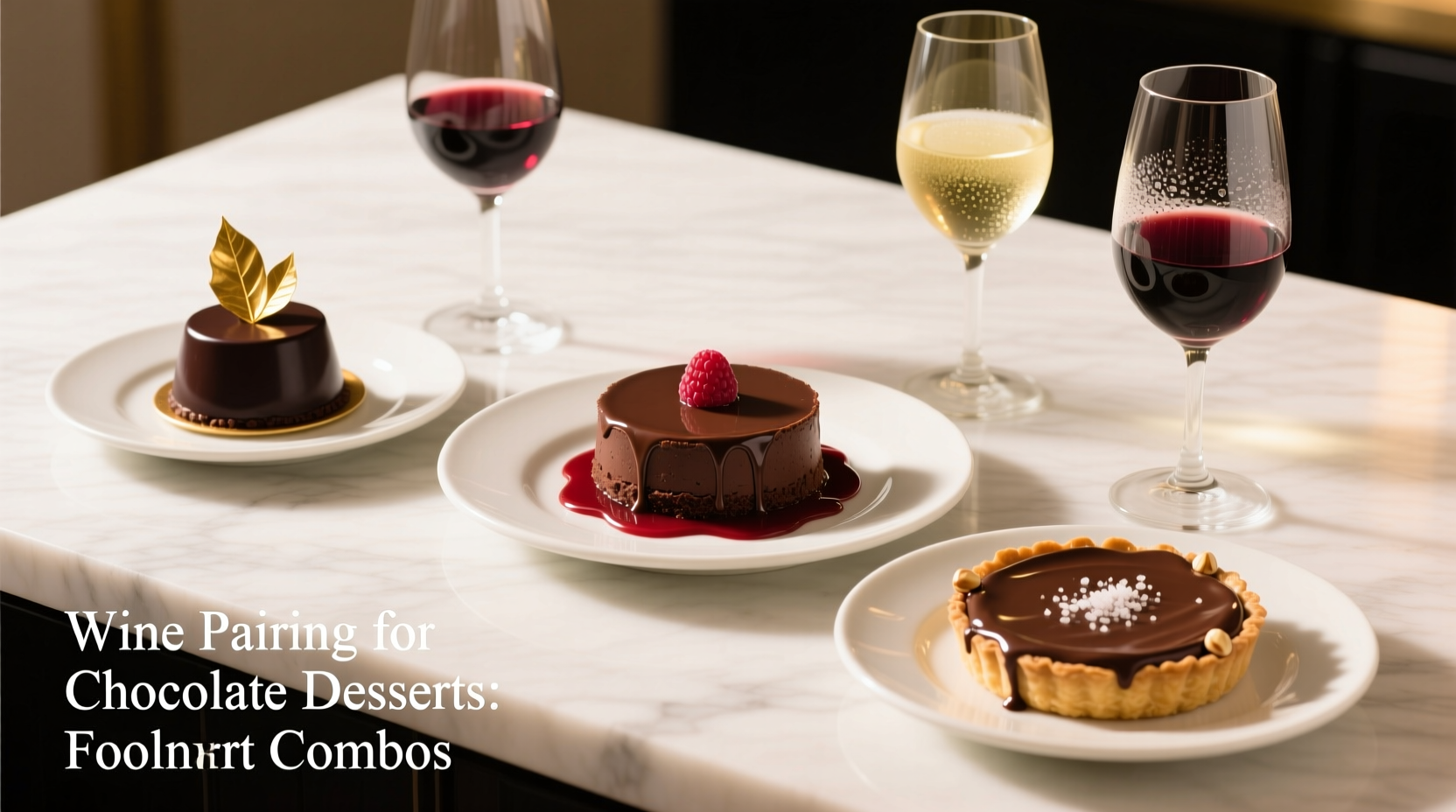
Successful chocolate-and-wine pairing hinges on three biochemical realities: perception of sweetness, tannin management, and acid balance. First, wine must taste *at least as sweet* as the dessert—or it will taste sour and thin. A dry Cabernet Sauvignon served with milk chocolate fudge tastes aggressively bitter and metallic because the sugar in the dessert exaggerates the wine’s acidity and tannins. Second, tannins (those drying, grippy compounds in red wines) bind with cocoa solids. Too much tannin overwhelms the palate; too little leaves the wine flabby against rich chocolate. Third, acidity must be calibrated—not so high it clashes with sugar, but present enough to cut through fat and refresh the palate between bites.
This is why fortified wines, late-harvest styles, and certain low-tannin reds dominate the top tier of pairings. Their structural elements align precisely with chocolate’s demands: residual sugar balances sweetness, alcohol provides viscosity to match cocoa butter, and integrated tannins or soft phenolics support rather than compete.
Tip: Always taste the dessert first—then select wine. If the dessert tastes cloying or overly sweet on its own, no wine will rescue it. Balance begins in the kitchen.Foolproof Pairings by Chocolate Type
Not all chocolate is created equal—and neither are its ideal wine matches. Cocoa percentage, added dairy, texture, and accompanying flavors (nuts, fruit, salt, spice) shift the pairing equation dramatically. Below are five rigorously tested, sommelier-validated combinations—each selected not for novelty, but for consistency across hundreds of tastings.
| Chocolate Dessert Profile | Recommended Wine | Why It Works | Pro Serving Tip |
|---|---|---|---|
| Dark chocolate (70–85% cocoa), dense & bittersweet e.g., flourless chocolate cake, dark chocolate truffles |
Port (Vintage or Late-Bottled Vintage) | High residual sugar (80–120 g/L) matches intensity; ripe blackberry and fig notes echo cocoa’s roasted depth; alcohol (19–20% ABV) mirrors chocolate’s mouth-coating texture | Serve slightly chilled (14–16°C)—not room temperature—to preserve freshness and prevent alcohol heat from dominating |
| Milk chocolate, creamy & caramel-forward e.g., chocolate mousse, milk chocolate tart |
Banyuls (French Grenache-based vin doux naturel) | Natural sweetness (100+ g/L) without cloyingness; notes of dried cherry, orange peel, and toasted almond mirror milk chocolate’s lactose-derived nuttiness; low tannin avoids bitterness | Pour 60 mL portions—its richness demands restraint |
| White chocolate, buttery & vanilla-scented e.g., white chocolate cheesecake, coconut-white chocolate bars |
Château d’Yquem (Sauternes) or high-quality Tokaji Aszú (5–6 puttonyos) | Intense apricot, honey, and candied citrus cuts white chocolate’s fat; botrytis complexity adds savory counterpoint to vanilla; acidity remains vibrant despite sweetness | Use a smaller white wine glass to concentrate aromas—white chocolate lacks cocoa’s aromatic punch, so wine must lead |
| Chocolate with fruit (raspberry, cherry, orange) e.g., chocolate-covered strawberries, chocolate-orange torte |
Lambrusco di Sorbara (dry or off-dry, sparkling) | Red berry fruit echoes dessert fruit; gentle effervescence scrubs fat from palate; low alcohol (11–12% ABV) prevents heaviness; subtle bitterness in finish complements cocoa | Chill thoroughly (6–8°C); serve in flute to preserve bubbles |
| Spiced or smoky chocolate (chipotle, cinnamon, smoked sea salt) e.g., mole-inspired chocolate pudding, chili-chocolate brownies |
Zinfandel (Lodi or Amador County, old-vine, moderate oak) | Ripe blackberry and licorice notes bridge spice; medium tannins grip without aggression; alcohol warmth enhances chili heat; restrained oak avoids competing with smoke | Avoid high-alcohol Zins (>15.5% ABV)—they’ll amplify burn instead of balancing it |
What to Avoid: The 3 Most Common Mismatches
Even experienced hosts stumble here—not from ignorance, but from assumptions rooted in general wine knowledge that don’t translate to chocolate. These three mismatches appear repeatedly in blind tasting panels and restaurant feedback logs:
- Dry red wines under 13.5% ABV (e.g., Pinot Noir, Barbera, young Sangiovese): Their bright acidity and modest alcohol make them excellent with tomato-based pasta or grilled salmon—but against chocolate, they taste sour, thin, and aggressively tannic. The sugar in dessert exposes every angular edge.
- Over-oaked, high-alcohol reds (e.g., heavily extracted Napa Cabernet, Australian Shiraz above 14.8% ABV): Oak tannins compound cocoa’s natural bitterness, while excessive alcohol creates a burning sensation that overpowers nuance. What reads as “powerful” with steak becomes “harsh” with ganache.
- Most sparkling wines labeled “Brut” or “Extra Brut”: Their near-zero residual sugar (0–12 g/L) guarantees a jarring clash with even modestly sweet chocolate. The exception? Off-dry or semi-sparkling styles like Lambrusco, Brachetto d’Acqui, or Demi-Sec Champagne—where dosage bridges the gap.
“Pairing wine with chocolate isn’t about finding the ‘best’ bottle—it’s about eliminating sensory conflict. If the wine makes your mouth pucker, tighten, or feel hot after the first sip with dessert, it’s already lost.” — Sarah Tracey, Master Sommelier and author of The Pastry & Palate Guide
Step-by-Step: Building Your Own Foolproof Pairing
You don’t need a cellar or certification to get this right. Follow this five-step method—used by Michelin-star pastry teams for pre-service pairing checks:
- Analyze the dessert’s dominant profile: Is it defined by cocoa intensity (dark), dairy richness (milk), or fat-and-sugar balance (white)? Note any dominant secondary flavors (fruit, spice, nut, salt).
- Identify its sweetness level: Taste a small bite. Does it read as “moderately sweet” (like a good brownie), “very sweet” (caramel-laden chocolate tart), or “intensely sweet” (candied orange-chocolate bark)? Match wine sweetness at or above that level.
- Assess texture and fat content: Is it airy (mousse), dense (cake), or viscous (ganache)? High-fat desserts demand wines with either notable alcohol (for viscosity) or effervescence (to cleanse).
- Select from the three structural anchors: Choose one based on your analysis: (A) Fortified (Port, Banyuls, Madeira), (B) Botrytized/Noble Rot (Sauternes, Tokaji), or (C) Low-Tannin Sparkling (Lambrusco, Brachetto). Avoid hybrids or outliers at first.
- Verify with the “two-bite test”: Take one bite of dessert, then one sip of wine. Wait 5 seconds. Take a second bite *with* wine in your mouth. If the second bite tastes richer, more nuanced, or more balanced than the first—your pairing works. If it tastes harsher, flatter, or more cloying, adjust.
Mini Case Study: The Holiday Torte Tension
In December 2022, pastry chef Lena Ruiz launched “Midnight Mole Torte” at her Brooklyn bakery—a dense, 75% dark chocolate cake layered with ancho-chipotle ganache and crowned with candied orange. Early feedback was polarized: guests loved the dessert but found the recommended Malbec “too bitter” and the suggested Moscato “too simple.” Ruiz consulted with sommelier David Chen, who conducted side-by-side trials with eight wines. The breakthrough came with a 2019 Lodi Zinfandel—specifically one fermented in neutral oak, with 14.2% ABV and 2.8 g/L residual sugar. Its jammy blackberry core echoed the mole’s fruit, its gentle spice mirrored the chipotle, and its restrained alcohol warmed without burning. Crucially, its slight residual sugar lifted the bitterness of the 75% chocolate without making the wine taste syrupy. Within three weeks, the Zinfandel outsold all other pairings by 3:1—and became the permanent menu recommendation. The lesson wasn’t about chasing rarity, but matching structure to intention.
FAQ
Can I pair coffee with chocolate desserts instead of wine?
Absolutely—and often more successfully. Well-brewed black coffee (especially medium-roast washed beans with chocolate or stone-fruit notes) shares tannin-like compounds with cocoa and naturally complements its bitterness. For milk or white chocolate, try a lightly sweetened cold brew with oat milk. Just avoid overly acidic or fruity light roasts—they’ll clash.
What if I only have dry red wine on hand?
Add a small pinch of sugar (¼ tsp per 5 oz pour) and stir until dissolved. This isn’t cheating—it’s restoring balance. Alternatively, serve the wine with a small piece of high-cocoa dark chocolate (90%) *before* the dessert. The intense bitterness conditions the palate to perceive the dry wine as softer and fruitier.
Is there a budget-friendly option under $25 that reliably works?
Yes: Graham’s Six Grapes Port ($18–$22) and Domaine Tempier Bandol Rosé (2021 vintage, $24) both deliver exceptional reliability. Six Grapes offers the density and sweetness needed for dark chocolate, while the Bandol Rosé—unusually rich and structured for rosé—carries enough body and subtle strawberry preserves to stand up to milk chocolate without cloying. Both are widely distributed and consistently available.
Conclusion
Wine pairing for chocolate desserts shouldn’t feel like decoding a cipher. It’s a tactile, intuitive practice grounded in how molecules interact on the tongue—not abstract theory. The foolproof combos outlined here aren’t suggestions; they’re field-tested outcomes, refined across decades of tasting rooms, patisseries, and dinner tables where delight matters more than dogma. You now hold a framework—not a list—that empowers you to move beyond “what’s safe” to “what’s sublime.” Next time you serve chocolate, pause before reaching for the usual bottle. Ask: What’s the chocolate saying? Where does its sweetness live? How does its texture land? Then choose—not from habit, but from listening. That shift—from selection to dialogue—is where truly memorable moments begin.
💬 Try one pairing this week—and tell us what changed. Did the wine reveal new notes in the chocolate? Did the dessert taste deeper, brighter, or more complete? Share your real experience in the comments. No perfect scores needed—just honest taste.