Kombucha is a beloved fermented tea known for its tangy flavor, probiotic benefits, and natural effervescence. But when the taste veers into sharp, overly acidic territory—reminiscent of vinegar rather than refreshment—it’s time to reassess your brewing process. A vinegary kombucha isn’t necessarily spoiled, but it does indicate that fermentation has gone too far or conditions weren’t properly balanced. The good news? This issue is both preventable and correctable with the right understanding of fermentation timing, sugar-to-tea ratios, temperature control, and SCOBY management.
The sourness in kombucha comes primarily from acetic acid, one of several organic acids produced during fermentation by the symbiotic culture of bacteria and yeast (SCOBY). While some acetic acid is desirable—giving kombucha its characteristic bite—too much overwhelms other flavors and can make the drink unpalatable. By adjusting key variables in your brew cycle, you can regain control over acidity and produce consistently balanced kombucha.
Understanding the Fermentation Process
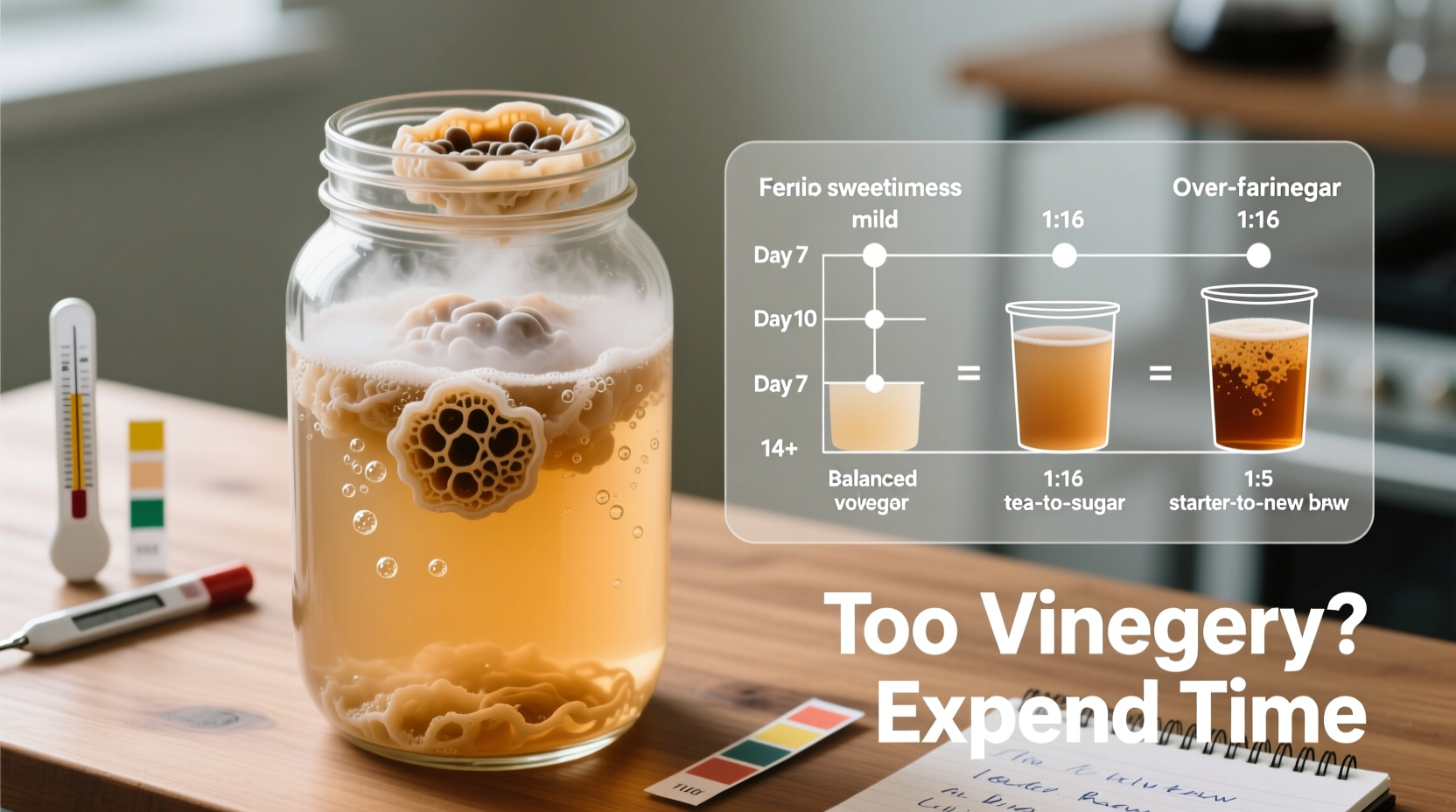
Fermentation in kombucha is a two-phase biochemical transformation driven by microorganisms in the SCOBY. In the first phase, yeasts consume sugar and convert it into alcohol and carbon dioxide. In the second phase, acetic acid bacteria (primarily Acetobacter species) oxidize that alcohol into acetic acid—the same compound found in household vinegar. The longer this second phase continues, the more acetic acid accumulates.
This means that extended fermentation naturally increases sourness. However, other factors such as temperature, oxygen exposure, starter liquid volume, and tea strength also influence microbial activity. For instance, warmer environments accelerate bacterial metabolism, speeding up acid production. Similarly, using too little sugar or too much starter liquid can throw off balance early in the process.
“Fermentation is not just about waiting—it’s about managing an ecosystem. Every variable shifts the microbial balance.” — Dr. Lena Torres, Microbiologist & Fermentation Scientist
To avoid excessive sourness, brewers must monitor these interdependent elements closely. The goal is not to eliminate acidity, but to achieve harmony between sweetness, tartness, and complexity.
Common Causes of Overly Vinegary Kombucha
Several interconnected factors contribute to a kombucha batch becoming too acidic. Identifying the root cause is essential before making adjustments.
- Over-fermentation: Leaving the primary ferment too long is the most common reason for vinegar-like taste. Most batches reach ideal balance between 7–14 days, depending on conditions.
- High ambient temperature: Temperatures above 80°F (27°C) boost bacterial activity, accelerating acid production.
- Excessive starter liquid: Using more than 10–15% starter tea increases initial acidity, pushing pH down faster.
- Weak tea concentration: Too little tea (and thus fewer nutrients) stresses the SCOBY, sometimes leading to erratic acid development.
- Too much oxygen exposure: While oxygen is needed early in fermentation, prolonged exposure in later stages favors acetic acid bacteria over yeast balance.
- Aged or overactive SCOBY: Thick, multi-layered SCOBYs may harbor dense bacterial colonies that dominate fermentation.
Optimizing Fermentation Timing and Temperature
Fermentation duration should never be fixed—it must respond to environmental conditions. A rigid schedule ignores real-time changes in temperature, humidity, and microbial behavior.
In cooler environments (below 70°F / 21°C), fermentation slows significantly. A batch might need 14–21 days to develop proper flavor. In contrast, at 78–85°F (26–29°C), the same recipe could be ready in 6–8 days—or become over-fermented if unchecked.
Step-by-Step Guide: Monitoring Fermentation Progress
- Day 1: Start primary fermentation with fresh sweet tea, SCOBY, and 10–15% starter liquid.
- Day 5: Begin tasting daily. Use a clean straw to draw liquid from beneath the SCOBY without disturbing it.
- Evaluate flavor: Look for a balance between sweetness and tartness. If still very sweet, continue fermenting.
- Check pH (optional): Ideal range is 2.5–3.5. Below 2.5 indicates high acidity; above 3.5 risks contamination.
- Stop fermentation: Once desired tartness is reached, remove the SCOBY and reserve starter liquid for next batch.
Keeping a brewing journal helps track patterns across seasons. Note start date, room temperature, tea type, sugar amount, and taste notes each day. Over time, you’ll recognize how your environment shapes fermentation speed.
Adjusting Brewing Ratios for Better Balance
The ratio of ingredients directly affects microbial health and acid production. Small tweaks can yield significant improvements in flavor balance.
| Component | Ideal Ratio | Effect of Imbalance |
|---|---|---|
| Sugar (white cane) | 1 cup per gallon (approx. 200g) | Too little: weak fermentation; too much: overly sweet base requiring longer ferment |
| Tea (black or green) | 4–8 bags or 2–3 tbsp loose per gallon | Weak tea: poor SCOBY nutrition; strong tea: caffeine stress on microbes |
| Starter Liquid | 10–15% of total volume | Too much: immediate low pH, rapid acidification; too little: contamination risk |
| Water | Balances to 1 gallon | Chlorinated water harms SCOBY; use filtered or boiled-cooled tap water |
One often-overlooked factor is sugar quality. While white sugar is recommended for consistency, substitutions like honey (except in Jun kombucha), maple syrup, or coconut sugar alter fermentation dynamics. These alternatives contain different sugars and compounds that certain microbes metabolize unevenly, potentially increasing acid output.
Tip: Stick to plain white sugar and black/green tea when troubleshooting sourness. Simplify variables first.Rescuing and Repurposing Over-Fermented Kombucha
If you’ve already produced a batch that’s too vinegary, don’t discard it. Over-fermented kombucha is still safe and useful.
It can serve as excellent starter liquid for your next batch—just reduce the amount used to avoid compounding acidity. Alternatively, blend it into smoothies, use it as a salad dressing base, or dilute it with juice or herbal tea to make a refreshing shrub.
Mini Case Study: Recovering a Sour Batch
Sarah, a home brewer in Texas, noticed her summer batches turning sharply sour within 6 days. Despite following the same recipe year-round, she was getting vinegar instead of kombucha. After tracking temperatures, she found her kitchen averaged 84°F (29°C) during peak afternoon hours. She moved her jar to a basement corner where temps stayed around 74°F (23°C) and began tasting at day 5. She also reduced starter liquid from 2 cups to 1.5 cups per gallon. Within two cycles, her kombucha regained balance—tangy but not harsh, with subtle fruity notes emerging post-bottle conditioning.
Her solution wasn’t changing the recipe entirely, but recalibrating it to match seasonal conditions.
Best Practices Checklist
- Brewing Setup
- Use glass jars (no metal or plastic)
- Cover with tightly woven cloth + rubber band
- Keep away from direct sunlight and drafts
- Ingredient Ratios
- 1 cup white sugar per gallon
- 4–8 black tea bags or equivalent
- 10–15% starter liquid (1–1.5 cups per gallon)
- Fermentation Management
- Monitor temperature daily (ideal: 70–78°F)
- Taste starting on day 5
- Limit primary ferment to 7–10 days unless cool
- Post-Fermentation
- Reserve 1–2 cups for next batch starter
- Flavor and bottle promptly to halt over-fermentation
- Store extra SCOBYs in a \"hotel\" with starter tea
FAQ: Addressing Common Concerns
Can I dilute vinegary kombucha to make it drinkable?
Yes. Mix equal parts over-fermented kombucha with fruit juice, cold brew tea, or sparkling water. This balances acidity while preserving probiotics. It’s a great way to enjoy a too-sour batch without waste.
Is vinegary kombucha harmful?
No. High acidity actually makes it safer, as low pH inhibits pathogens. As long as there’s no mold, off smells (like rotten eggs), or slimy film beyond the SCOBY, it’s safe to consume or repurpose.
How do I slow down fermentation in hot weather?
Move the jar to a cooler location (e.g., interior closet, basement). You can also slightly reduce starter liquid (down to 10%) and check the batch earlier—possibly as soon as day 4 or 5. Avoid placing near ovens, refrigerators, or sun-facing windows.
Conclusion: Master Your Brew Through Observation and Adjustment
Producing well-balanced kombucha isn’t about rigid adherence to timelines—it’s about attentive stewardship of a living culture. The vinegar-like taste many brewers encounter is not a failure, but feedback. It tells you that fermentation ran longer than optimal, likely due to warmth, excess starter, or delayed tasting.
By refining ingredient ratios, monitoring temperature, and tasting frequently, you gain control over the process. Each batch becomes a learning opportunity, helping you adapt to seasonal shifts and personal taste preferences. Remember, even “failed” batches have value—as starters, cleaners, or culinary ingredients.
💬 Have a kombucha success story or tip? Share your experience below and help fellow brewers create better-tasting ferments!