Mustard oil is a staple in many South Asian kitchens, prized for its pungent flavor and high smoke point. Yet, despite its widespread culinary use, it remains banned or heavily restricted for food consumption in the United States and the European Union. This restriction often surprises people unfamiliar with the scientific and regulatory rationale behind it. The ban isn’t arbitrary—it stems from well-documented health concerns related to specific chemical compounds in the oil. Understanding why mustard oil is prohibited in these regions requires examining its composition, potential toxicity, and how global food safety standards are applied.
The Science Behind the Ban: What’s in Mustard Oil?
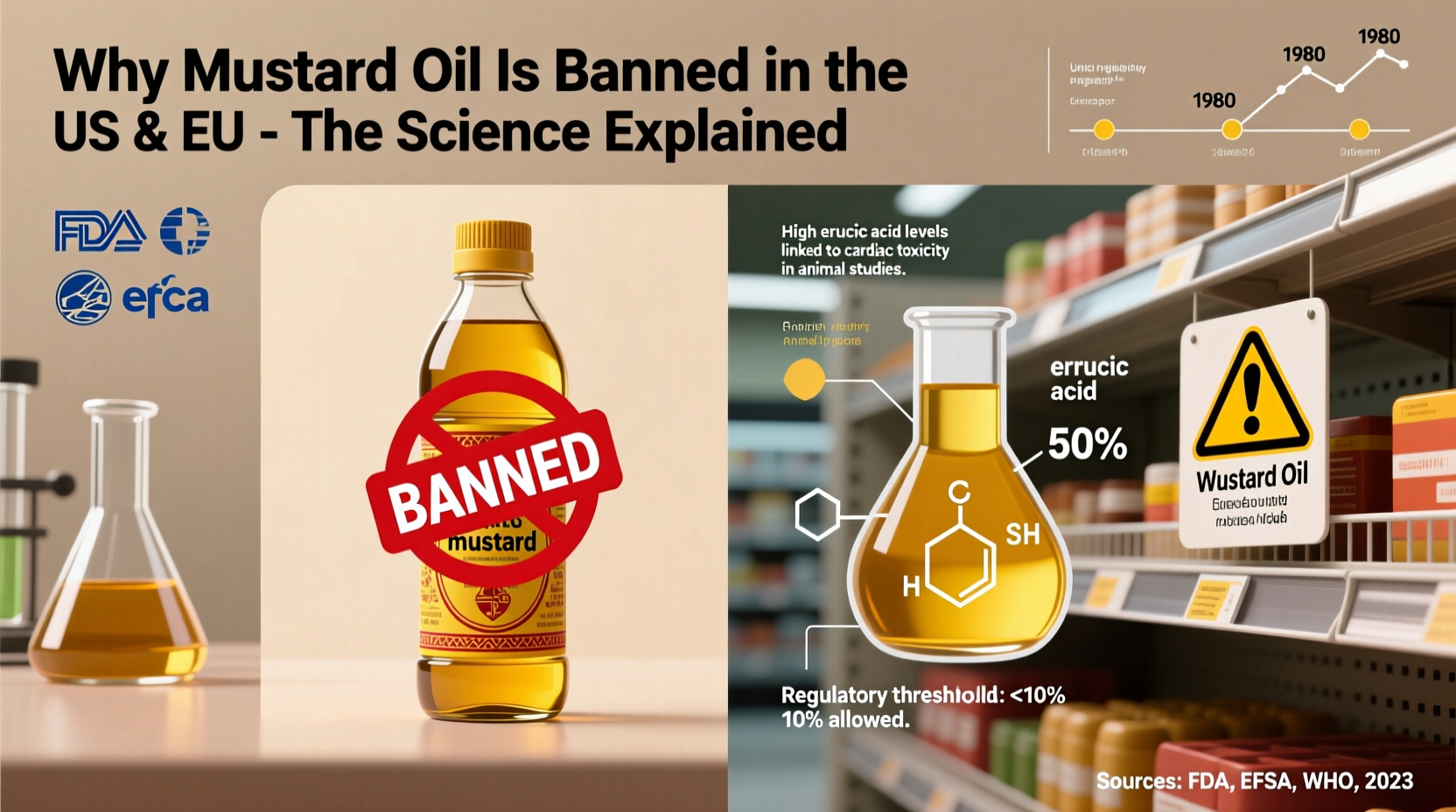
Mustard oil is extracted from the seeds of the mustard plant (genus Brassica). There are two primary types: cold-pressed (often labeled as \"Kachi Ghani\") and refined. While both contain beneficial compounds like omega-3 fatty acids and antioxidants, they also contain a substance that raises red flags among food regulators—allyl isothiocyanate (AITC) and, more critically, erucic acid.
Erucic acid is a long-chain monounsaturated fatty acid found in high concentrations in certain varieties of mustard seed, particularly brown and black mustard. In animal studies, prolonged exposure to high levels of erucic acid has been linked to myocardial lipid accumulation—essentially fat buildup in heart tissue—which can lead to cardiovascular complications over time. While human metabolism differs from that of test animals, regulators err on the side of caution when evidence suggests potential risk.
“While traditional diets may include mustard oil without apparent harm, regulatory agencies must consider cumulative exposure and vulnerable populations.” — Dr. Lena Fischer, Food Safety Analyst, EFSA
Regulatory Stance: Why the US and EU Say No
In the United States, the Food and Drug Administration (FDA) prohibits the sale of mustard oil for cooking under 21 CFR § 172.861, which classifies it as “not generally recognized as safe” (GRAS). The FDA allows its import only if labeled “For External Use Only,” typically for hair or skin applications.
Similarly, the European Food Safety Authority (EFSA) restricts edible oils containing more than 2% erucic acid. Since most traditional mustard oils contain between 20% and 45% erucic acid, they fall far above this threshold. As a result, mustard oil cannot be legally sold as a food product in EU member states unless specially processed to reduce erucic acid levels—a process that alters its flavor and character.
Tip: Always check the label if purchasing mustard oil outside South Asia—many products clearly state \"Not for Culinary Use\" due to regulatory restrictions.Comparative Safety: Global Perspectives on Mustard Oil
The regulation of mustard oil varies dramatically across countries. While banned in the West, it remains legal and widely used in India, Nepal, Bangladesh, and parts of Pakistan. This divergence reflects differences in dietary patterns, cultural practices, and risk assessment methodologies.
To understand this contrast, consider the following comparison:
| Region | Status of Mustard Oil | Key Regulatory Body | Primary Concern |
|---|---|---|---|
| United States | Banned for food use; allowed externally | FDA | High erucic acid content |
| European Union | Restricted (max 2% erucic acid) | EFSA | Cardiotoxicity in animal models |
| India | Legal for consumption | FSSAI | Recognized as part of traditional diet |
| Canada | Allowed with labeling restrictions | Health Canada | Consumer awareness required |
This table illustrates that while Western nations prioritize precautionary principles, others emphasize historical consumption and cultural context. However, even in India, health authorities recommend moderation due to erucic acid concerns.
Real-World Impact: A Case from a New York Kitchen
Rajiv Mehta, a chef who runs an Indian restaurant in Queens, learned about the mustard oil ban the hard way. He imported a batch from Kolkata to ensure authentic flavors in his pickles and tadkas. During a routine inspection, the health department flagged the oil as adulterated and confiscated the stock. Though Rajiv had used it safely for years in India, he was unaware of U.S. regulations.
After consulting with a food compliance expert, he switched to a blend of sunflower oil and mustard essential oil—used in minute quantities to mimic flavor—while ensuring full compliance. His experience highlights the gap between culinary tradition and regulatory reality, especially for immigrant-run businesses navigating foreign food laws.
Safer Alternatives and Practical Workarounds
Chefs and home cooks seeking the sharp bite of mustard oil have several options that comply with U.S. and EU regulations:
- Mustard Essential Oil: Highly concentrated, used in drops to replicate flavor without bulk oil intake.
- Canola Oil + Mustard Seeds: Toasted mustard seeds infused into canola or vegetable oil provide similar aroma.
- Expeller-Pressed Rapeseed Oil: Low in erucic acid and chemically closer to modified mustard oil.
- Commercial “Indian Cooking Oils”: Some brands offer blends designed to mimic mustard oil safely.
Step-by-Step Guide: How to Flavor Oil Like Mustard Without Using Pure Mustard Oil
- Choose a neutral base oil such as sunflower, grapeseed, or canola.
- Add one teaspoon of whole black or brown mustard seeds per cup of oil.
- Heat gently over medium flame until seeds begin to crackle (about 2–3 minutes).
- Remove from heat and let cool completely.
- Strain and store in a dark glass bottle away from light and heat.
- Use within 4 weeks for best flavor and safety.
This infusion method captures the essence of mustard oil without introducing high levels of erucic acid, making it compliant and safe for regular use.
Frequently Asked Questions
Is mustard oil toxic?
Not in the immediate sense, but chronic consumption of unrefined mustard oil high in erucic acid may pose long-term cardiovascular risks based on animal studies. It is not acutely toxic in small amounts, but regulatory bodies discourage regular dietary intake.
Can I bring mustard oil from India to the U.S. for personal use?
Technically, small quantities for personal use may not be intercepted, but it remains against FDA rules to use it as food. Carrying it labeled for external use (e.g., massage) reduces risk, but cooking with it still violates federal guidelines.
Are there any safe edible mustard oils in the U.S.?
Yes—some specialty brands sell mustard-infused oils that meet FDA standards by blending purified oils with trace mustard extracts. Look for products explicitly labeled as edible and compliant with U.S. food regulations.
Final Thoughts: Balancing Tradition and Safety
The ban on mustard oil in the U.S. and Europe isn’t a rejection of cultural cuisine, but a reflection of science-based food safety protocols. While millions consume it without reported issues, regulators apply conservative thresholds to protect public health, especially given the lack of large-scale human trials proving long-term safety.
For consumers, the takeaway is clear: respect local regulations, understand the risks, and explore safe alternatives that preserve flavor without compromising health. Whether you're a home cook or a restaurateur, adapting traditional recipes to modern standards ensures both authenticity and compliance.
🚀 Want to keep your favorite dishes flavorful and safe? Share this guide with fellow cooks and start exploring legal, healthy substitutes today. Your kitchen—and your heart—will thank you.