Walk into any serious winery in Bordeaux, Burgundy, or Napa Valley, and you’ll find French oak barrels stacked like architectural pillars—often at $1,200 to $2,000 each. That price isn’t arbitrary. It reflects centuries of empirical refinement, geological specificity, and a nuanced interplay between wood chemistry and wine evolution. While American oak offers bold vanilla and coconut notes, and Hungarian oak delivers value with restrained spice, French oak remains the benchmark for complexity, integration, and aging integrity—not because it’s “better” in every context, but because its physical and chemical profile aligns uniquely with the goals of fine-wine craftsmanship. This isn’t tradition for tradition’s sake; it’s terroir expressed through timber.
The Anatomy of Oak: Why Species and Origin Matter More Than You Think
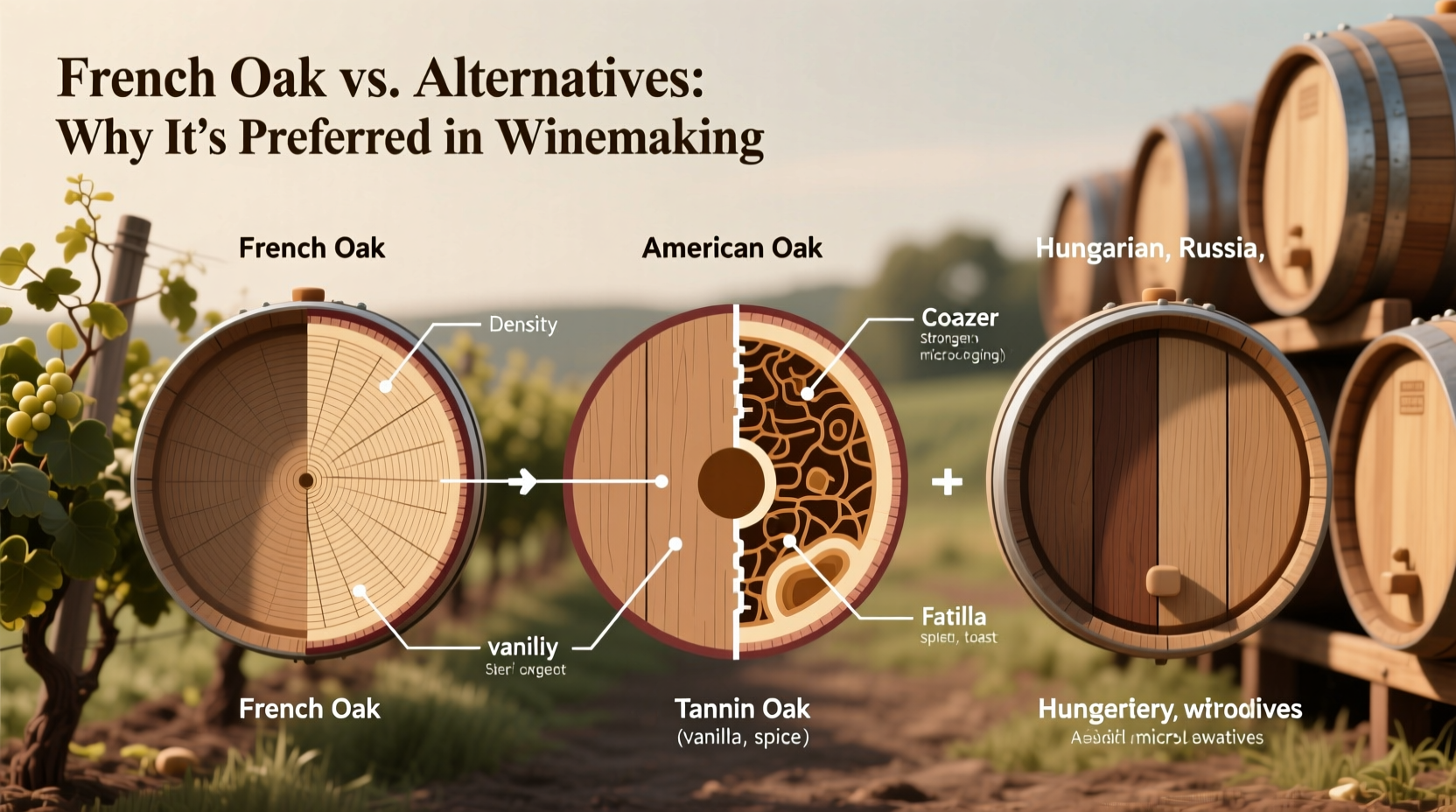
Oak isn’t a monolith. Only three species are commercially viable for cooperage: Quercus robur (pedunculate oak), Quercus petraea (sessile oak), and Quercus alba (American white oak). Of these, Q. petraea dominates French forests—and for compelling reasons. Its tighter grain, slower growth (50–120 years per tree), and lower density mean less aggressive tannin extraction and more gradual, layered influence on wine. In contrast, American oak (Q. alba) grows faster, has wider pores, and contains up to 4× more lactones—compounds responsible for pronounced coconut and dill aromas. Hungarian oak (Q. robur from the Zemplén or Mecsek forests) shares structural similarities with French oak but tends toward firmer tannins and earthier spice due to differing soil composition and climate.
Crucially, French oak isn’t defined by country alone—it’s defined by forest. The Tronçais forest in central France yields exceptionally fine-grained, low-tannin wood prized for Pinot Noir. The Allier forest provides balanced structure ideal for Cabernet Sauvignon. Limousin oak, coarser and higher in ellagitannins, is historically used for Cognac—not fine table wine—because its aggressive tannins require decades to soften. This hyper-local specificity means a “French oak barrel” label tells only part of the story; the forest designation matters as much as the region.
Tip: When selecting barrels for red wine aging, prioritize Quercus petraea from Allier or Tronçais for elegance and slow integration—especially for delicate varieties like Pinot Noir or Nebbiolo.Chemical Composition: The Quiet Science Behind the Preference
What makes French oak chemically distinct? Three key compounds determine its impact: lignin derivatives (vanillin, syringaldehyde), hydrolyzable tannins (ellagitannins), and volatile phenols (eugenol, guaiacol). French oak contains moderate levels of vanillin—less than American oak—but higher concentrations of syringaldehyde, which contributes subtle smoky, roasted almond notes rather than overt sweetness. Its ellagitannins are smaller-molecule and more readily polymerized, meaning they bind with wine tannins over time to soften mouthfeel without adding harshness. American oak’s larger ellagitannins can impart bitterness if overused.
Moreover, French oak’s lower cellulose and hemicellulose content means slower oxygen ingress—critical for micro-oxygenation. A French barrel allows ~15–20 mg/L/year of oxygen transfer, compared to 25–35 mg/L/year in American oak. That difference may seem marginal, but over 12–24 months, it profoundly affects color stability, tannin polymerization, and aroma preservation. Wines aged in French oak retain brighter fruit definition and develop more complex tertiary notes (forest floor, dried herb, cedar) rather than dominant wood character.
| Characteristic | French Oak (Q. petraea) | American Oak (Q. alba) | Hungarian Oak (Q. robur) |
|---|---|---|---|
| Typical Grain Tightness | Very tight | Wide to medium | Medium to tight |
| Vanillin Concentration | Moderate | High | Low to moderate |
| Oxygen Transfer Rate (mg/L/yr) | 15–20 | 25–35 | 18–22 |
| Ellagitannin Profile | Small-molecule, polymerization-friendly | Large-molecule, potentially bitter | Medium-molecule, firm but integrated |
| Primary Aromatic Signature | Smoke, toasted almond, cedar, graphite | Coconut, dill, sweet vanilla, sawdust | Clove, black pepper, roasted chestnut, earth |
Real-World Impact: A Case Study from Saint-Émilion
In 2019, Château La Gaffelière—a Saint-Émilion Grand Cru Classé—conducted a controlled barrel trial across three vintages. They fermented identical Merlot and Cabernet Franc lots in three sets: 100% new French oak (Allier), 100% new American oak (Missouri), and 100% new Hungarian oak (Zemplén). After 18 months, blind tastings by seven MWs and oenologists revealed consistent patterns. The American oak cuvée showed intense coconut and caramel on the nose but flattened mid-palate acidity and early browning in the glass—signs of oxidative stress. The Hungarian oak version delivered impressive structure and spice but lacked aromatic lift and developed slightly green, stemmy notes by month 14. The French oak wine retained vibrant cassis and violet notes, built seamless tannin integration, and developed layered complexity: licorice, tobacco leaf, and wet stone—hallmarks of slow, balanced maturation. Crucially, it was the only sample rated “ready to drink now but with 15+ year potential.” As cellar master Julien Boudet noted: “American oak shouts. Hungarian oak stands firm. French oak listens—and answers back in harmony.”
Expert Insight: The Cooper’s Perspective
Barrel-making isn’t industrial—it’s craft passed down through generations. At Cadus Cooperage in Nevers, fourth-generation master cooper Élodie Martin explains the irreplaceable role of French oak: “You cannot rush French oak. We air-dry staves outdoors for 24–36 months—not kiln-dry them—so rain, sun, and wind leach harsh tannins and stabilize lignin. American coopers often air-dry for 12–18 months because demand is higher and margins tighter. That extra year changes everything: it transforms raw wood into something that breathes with the wine, not against it.” Her sentiment echoes across the industry. As Dr. Susan R. Anderson, Senior Enologist at UC Davis’ Department of Viticulture & Enology, confirms: “French oak’s dominance isn’t about prestige—it’s about predictability. Winemakers know precisely how 225L Allier barrels will behave in year one, year two, and year five. That reliability lets them focus on vineyard expression, not wood management.”
“French oak doesn’t mask wine—it mirrors it. Its subtlety forces the winemaker to listen more closely to what the grapes are saying.” — Élodie Martin, Master Cooper, Cadus Cooperage
When Alternatives Make Sense: A Strategic Checklist
French oak isn’t universally superior—it’s situationally optimal. Choosing alternatives isn’t compromise; it’s intentionality. Here’s when to consider them:
- For early-drinking, fruit-forward wines: American oak adds immediate appeal and market-ready richness—ideal for $25–$45 Merlot or Zinfandel blends meant for release within 12 months.
- For high-volume, value-tier production: Hungarian oak offers 70–80% of French oak’s structure at 40–50% the cost—making it a pragmatic choice for large-batch Chardonnay or Syrah.
- For experimental texture-building: Acacia or chestnut barrels (though not true oaks) provide neutral fermentation vessels with gentle micro-oxygenation—perfect for skin-contact whites or natural reds where varietal purity is paramount.
- For sustainability-driven programs: Some producers use French oak staves in stainless steel tanks (“micro-oak infusion”) to achieve 30–50% of barrel impact with 90% less wood consumption and carbon footprint.
- For warm-climate regions: In places like South Australia or Chile, where ambient temperatures accelerate aging, slower-oxygenating French oak helps prevent over-ripeness and loss of acidity—whereas American oak might push wines toward stewed fruit and flatness.
Frequently Asked Questions
Does French oak always mean better quality wine?
No. Quality depends on alignment between oak, grape variety, vintage conditions, and winemaker intent. A bold, ripe Napa Zinfandel may gain dimension from American oak’s exuberance, while an ethereal Volnay would be overwhelmed by it. “Better” is contextual—not absolute.
Can I mix French and American oak in the same wine?
Yes—and many top producers do. A common tactic is fermenting in stainless steel, then aging 70% in French oak (for structure and finesse) and 30% in American oak (for aromatic lift and mid-palate roundness). The key is proportionality and timing: blending post-aging rarely works as well as co-aging.
Are there sustainable alternatives gaining traction?
Absolutely. High-density oak chips and staves from FSC-certified French forests offer precise dosage control and reduced waste. More innovatively, some estates now use “re-coopered” barrels—stripping old French oak staves, re-toasting them, and rebuilding barrels at 60% of the cost and environmental impact. These aren’t substitutes for new oak, but intelligent tools for layered, cost-conscious élevage.
Conclusion: Beyond Preference—Toward Precision
French oak’s preference isn’t dogma—it’s the result of centuries of observation, adaptation, and quiet dialogue between foresters, coopers, and winemakers. Its dominance lies not in superiority, but in its unparalleled capacity for nuance: the way its tight grain modulates oxygen, how its specific lignin breakdown deepens without dominating, and why its regional diversity allows a winemaker in Oregon to choose Tronçais for restraint or Limousin for power—all within one species. Understanding this empowers you—not to default to French oak, but to choose deliberately. Whether you’re a winemaker evaluating cooperage options, a sommelier decoding tasting notes, or a curious enthusiast reading a label, remember: the barrel is never neutral. It’s the first collaborator in the wine’s story. So ask not just “what oak?” but “which forest? Which toast level? For which vintage? With what goal?” That’s where true craftsmanship begins.
💬 Have you tasted a wine where the oak choice transformed your perception? Share your experience—was it French elegance, American boldness, or Hungarian intrigue? Your insight could help others taste more thoughtfully.