That moment—when you pull a bottle from your car trunk after a summer picnic, pop the cork with anticipation, and take the first sip—only to be met with a dull, lifeless, vaguely stewed fruit flavor—is both disheartening and alarmingly common. It’s not “just warm” wine. It’s compromised wine: muted acidity, flattened aromas, softened tannins, and sometimes even a faint bruised-apple or sherry-like tang. The flatness isn’t temporary—it’s often irreversible. This isn’t about preference or serving temperature alone. It’s about chemistry in motion, accelerated by conditions most drivers unknowingly create every time they leave wine in a parked vehicle. Understanding *why* this happens—not just that it does—is the first step toward preserving what makes wine compelling: its balance, its tension, its living expression of place and season.
The Trunk Is Not a Storage Space—It’s a Thermal Oven
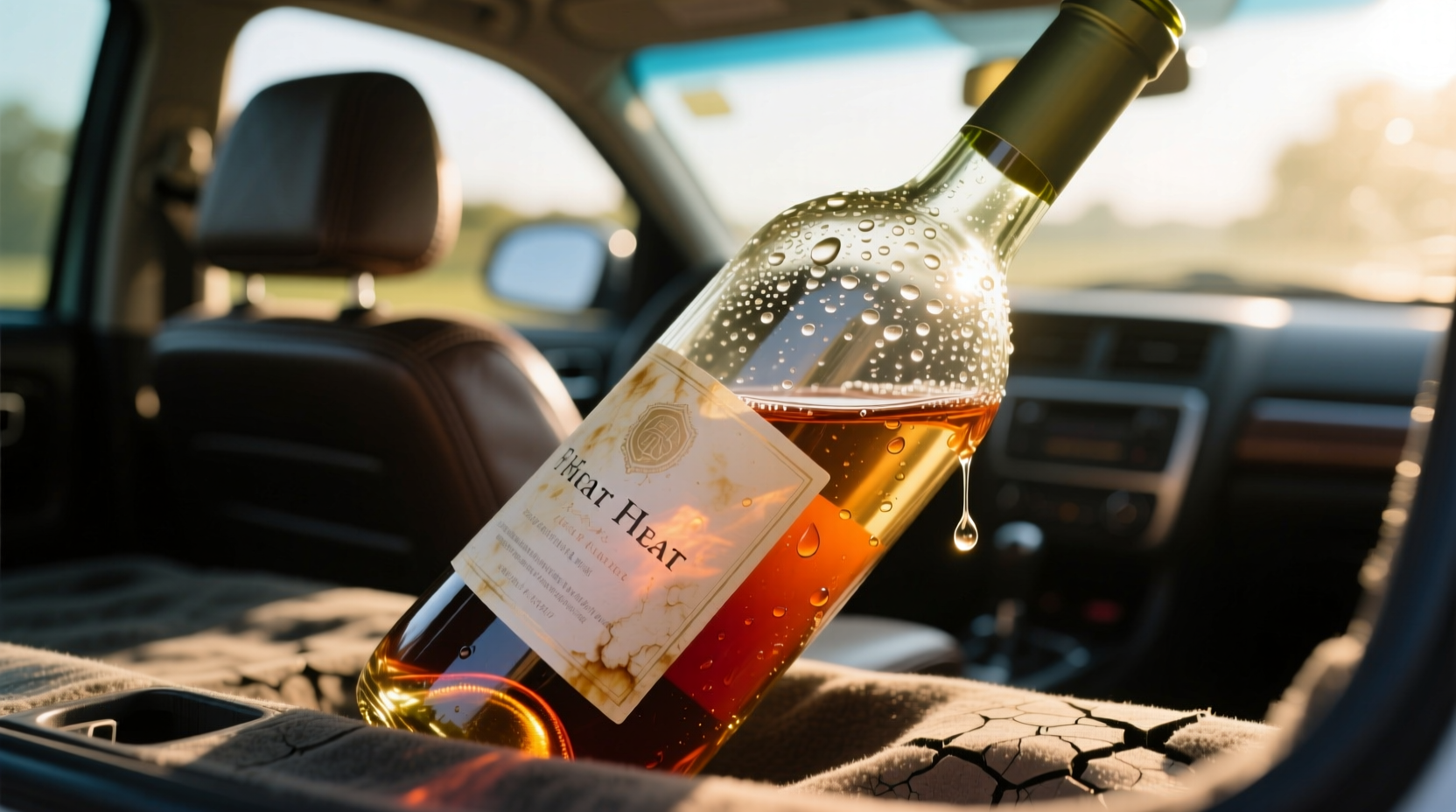
A car trunk is one of the most hostile environments for wine storage, especially during daylight hours. Unlike ambient outdoor temperatures, interior vehicle spaces experience dramatic thermal amplification. On an 85°F (29°C) day, the air temperature inside a closed car can exceed 130°F (54°C) within 60 minutes—even without direct sunlight. In the trunk, where airflow is nearly nonexistent and insulation is minimal, heat builds steadily and dissipates slowly. Wine is not inert liquid; it’s a complex, biologically active matrix of acids, phenolics, esters, volatile compounds, and trace microbes. When exposed to sustained heat above 77°F (25°C), chemical reactions accelerate exponentially. According to the Arrhenius equation—a foundational principle in food science—every 18°F (10°C) increase in temperature roughly doubles the rate of chemical degradation. So at 104°F (40°C)—easily reached in a midday trunk—the aging process speeds up by 8–10× compared to cellar conditions (55°F/13°C). That means a few hours in the trunk can chemically mimic *months* of improper storage.
Tip: Never assume “it was only 20 minutes.” Heat penetration into glass bottles is rapid, and residual warmth persists long after removal. If the bottle feels warm to the touch, its core temperature has likely exceeded 86°F (30°C)—the threshold where sensory damage begins.Three Primary Mechanisms Behind the Flatness
Flatness in post-trunk wine isn’t a single flaw—it’s the cumulative effect of three interrelated chemical processes, each eroding a pillar of wine’s sensory architecture.
1. Oxidation Accelerated by Heat
Even under ideal conditions, minute amounts of oxygen permeate through natural cork (at ~1–2 micrograms per day). Heat dramatically increases both the solubility of oxygen in wine and the diffusion rate across the cork seal. Elevated temperatures also weaken the structural integrity of cork, creating micro-channels. The result? Oxygen influx spikes—not gradually, but in surges. This oxidizes delicate volatile compounds responsible for primary fruit aromas (think fresh blackberry, citrus zest, or floral top notes), converting them into less volatile, flatter molecules like aldehydes and ketones. You lose lift, brightness, and definition—replaced by a muffled, stewed, or nutty character.
2. Acid Degradation and pH Shift
Tartaric and malic acids provide wine’s backbone—its crispness, freshness, and mouthwatering tension. Heat destabilizes these acids. Tartaric acid, while relatively stable, begins precipitating as tartrate crystals at elevated temperatures, reducing perceived acidity. More critically, heat accelerates microbial activity (even in bottled wine), encouraging lactic acid bacteria to convert sharper malic acid into softer lactic acid—a process normally reserved for controlled malolactic fermentation. Without the counterbalance of fresh fruit and acidity, the wine tastes round, flabby, and indistinct.
3. Volatile Compound Volatilization and Rearrangement
Wine’s aromatic complexity arises from hundreds of volatile organic compounds (VOCs): terpenes (floral), thiols (citrus, tropical), norisoprenoids (stone fruit, honey), and esters (fruity, confectionary). Many are highly heat-sensitive. At temperatures above 95°F (35°C), esters hydrolyze rapidly, breaking down into alcohols and acids—stripping fruity nuance. Simultaneously, sulfur-containing compounds (like hydrogen sulfide precursors) become more volatile, contributing reductive off-notes (burnt rubber, struck match) that mask fruit. What remains is a narrow aromatic profile dominated by cooked, baked, or caramelized notes—devoid of the high-frequency “zing” that signals vitality.
What Temperature Thresholds Actually Matter?
Wine professionals use precise thermal benchmarks—not arbitrary guesses—to assess risk. The table below reflects consensus thresholds established by the Australian Wine Research Institute (AWRI), UC Davis Department of Viticulture & Enology, and the Court of Master Sommeliers.
| Temperature Range | Duration Risk | Sensory Impact | Reversibility |
|---|---|---|---|
| ≤ 55°F (13°C) | Long-term safe (years) | Preserves structure, fruit, and aging potential | N/A — ideal condition |
| 55–77°F (13–25°C) | Days to weeks (acceptable for short transit) | Minimal change; may soften tannins slightly | Fully reversible with cooling |
| 77–86°F (25–30°C) | Hours (e.g., afternoon drive) | Noticeable flattening of fruit, reduced acidity, early oxidation signs | Partially reversible if cooled *immediately* and consumed within 24h |
| 86–104°F (30–40°C) | 30–90 minutes | Pronounced stewed fruit, loss of varietal character, oxidative notes (sherry, bruised apple), flat mouthfeel | Irreversible — structural damage complete |
| >104°F (>40°C) | 15–30 minutes | Cooked, baked, or burnt sugar notes; possible cork push-out; severe browning; vinegar tinge | Catastrophic — wine is chemically altered beyond recognition |
A Real-World Example: The Weekend Picnic Gone Wrong
Consider Sarah, a casual wine enthusiast in Austin, Texas. She selected a vibrant 2022 Albariño—known for zesty lime, saline minerality, and racy acidity—for a Saturday afternoon picnic. She chilled it overnight, packed it in her insulated cooler bag, and drove 45 minutes to the park. After two hours outdoors (with the bottle kept in shade), she returned to her car, placed the half-finished bottle back in the trunk, and ran errands for 90 minutes. When she opened it that evening, the wine tasted startlingly different: the bright citrus had vanished, replaced by a soft, almost honeyed melon note; the refreshing acidity felt muted; and the finish was short and unstructured. She assumed it was “just warm,” so she refrigerated it for an hour before serving again. The chill improved mouthfeel slightly—but the flatness remained. Lab analysis later confirmed elevated acetaldehyde (a marker of oxidation) and a 0.25 pH increase—both consistent with heat-induced degradation. Her error wasn’t the picnic; it was the 90-minute trunk incubation at an estimated 112°F (44°C). That brief window irreversibly altered the wine’s chemical equilibrium.
Expert Insight: Why “Just Cooling It Down” Doesn’t Fix the Damage
“Once heat triggers enzymatic and non-enzymatic browning, ester hydrolysis, or significant oxygen ingress, cooling merely halts further damage—it doesn’t rewind molecular changes. You can’t ‘un-oxidize’ a wine or reassemble broken ester bonds. What you taste after cooling is the permanent new baseline—not a recoverable state.”
— Dr. Linda V. M. S. Santos, Senior Enologist, AWRI (Australian Wine Research Institute)
Practical Prevention: A Step-by-Step Protection Protocol
Preventing trunk-related flatness requires intention—not luck. Follow this field-tested sequence before any trip involving wine:
- Pre-Chill Strategically: Refrigerate white, rosé, and sparkling wines to 45–50°F (7–10°C) *before* departure—not just at serving time. This creates a thermal buffer.
- Insulate Relentlessly: Use a double-walled vacuum-insulated bottle carrier (not a foam sleeve) or a high-quality cooler bag with frozen gel packs *in direct contact* with the bottle. Avoid ice—condensation risks label damage and dilution if leakage occurs.
- Minimize Trunk Exposure Time: Never leave wine unattended in the trunk—even for “just a minute.” If parking, bring the insulated carrier into the vehicle cabin, ideally on the passenger seat floor (cooler than trunk or dashboard).
- Monitor Ambient Conditions: Check local forecast highs *and* real-time car interior temps via apps like “Car Temp Tracker.” If outdoor temps exceed 80°F (27°C), assume trunk exceeds 100°F (38°C) within 20 minutes.
- Assess Before Opening: Upon retrieval, feel the bottle’s base (coldest point). If warm to the touch (>75°F/24°C), let it rest in a cool room for 15–20 minutes *before* opening. Do not refrigerate immediately—rapid temperature shifts stress glass and can cause micro-fractures.
Do’s and Don’ts: Quick Reference Guide
- DO transport wine in climate-controlled vehicle cabins when possible.
- DO choose screwcap or synthetic corks for picnic wines—they resist heat-induced oxygen ingress better than natural cork.
- DO prioritize lower-alcohol, higher-acid wines (e.g., Riesling, Vinho Verde, Txakoli) for warm-weather outings—they tolerate thermal stress marginally better.
- DON’T rely on “it’s only red wine”—heat damages all styles, though reds may mask oxidation longer due to tannin structure.
- DON’T store wine in trunks overnight, even in winter—extreme cold (<25°F/-4°C) can freeze and expand wine, pushing corks or cracking bottles.
- DON’T assume UV exposure is the main culprit—while sunlight degrades wine (especially in clear glass), heat is the dominant destructive force in trunk scenarios.
FAQ: Addressing Common Misconceptions
Can I “rescue” flat wine by chilling it longer or adding ice?
No. Extended chilling cannot restore lost volatile aromas, reverse oxidation, or rebuild degraded acids. Ice dilutes wine and numbs perception—masking flatness temporarily but not correcting it. If the wine is chemically compromised, chilling only delays the inevitable sensory disappointment.
Does the type of closure (cork vs. screwcap) make a difference?
Yes—significantly. Natural cork becomes more porous and compressible under heat, accelerating oxygen transfer. Screw caps and high-quality technical corks (e.g., Diam, Nomacorc) maintain far more consistent seals at elevated temperatures. Studies show screwcapped wines retain 30–40% more volatile aroma compounds after 90 minutes at 104°F (40°C) versus natural cork counterparts.
Is flatness always a sign of heat damage—or could it be the wine’s style?
“Flat” in this context refers to a *loss* of expected vibrancy—not inherent low-acid profiles. Some wines (e.g., certain Châteauneuf-du-Pape or Amarone) are naturally fuller and less acidic. But if a typically zesty Sauvignon Blanc or Barbera suddenly tastes muted and stewed, heat is the overwhelming likely cause—not terroir or winemaking intent.
Conclusion: Respect the Bottle, Not Just the Occasion
Wine is fragile. Its magic resides in a delicate, dynamic balance—of acidity and fruit, tannin and alcohol, volatile aroma and structural backbone. That balance is easily disrupted, not by time alone, but by the invisible, insistent pressure of heat. Your car trunk isn’t neutral space; it’s an uncontrolled thermal chamber where chemistry moves fast and forgiveness is rare. Recognizing that flatness isn’t a quirk of the bottle—but a signal of measurable, preventable damage—changes how you handle wine outside the cellar. It transforms transportation from an afterthought into an act of stewardship. You don’t need expensive gear or obsessive routines—just awareness, a good insulated carrier, and the discipline to keep wine out of the oven disguised as a trunk. The next time you reach for that bottle, remember: the care you give it between cellar and glass is as vital as the vineyard work that brought it to life. Protect its energy. Preserve its voice. And never let convenience silence its character.
💬 Have you rescued a trunk-compromised wine—or learned the hard way? Share your experience, tips, or questions in the comments. Let’s build a smarter, more respectful culture around enjoying wine—wherever the road takes us.