Sangria is meant to evoke sun-drenched patios, shared laughter, and effortless refreshment—not a wince-inducing aftertaste that makes guests reach for water. Yet bitterness remains the most frequent complaint among home mixologists, from seasoned hosts to first-time batch-makers. It’s rarely about “bad wine” or “spoiled fruit.” Instead, bitterness arises from subtle, cumulative missteps in ingredient selection, preparation technique, and timing—each amplifying the next like a chain reaction. This isn’t a flaw in your palate; it’s a signal that one or more biochemical levers have been pulled unintentionally. Below, we dissect the five primary causes of bitter sangria—not as abstract theory, but as actionable, kitchen-tested insights grounded in food science, sommelier practice, and hundreds of real-world batches.
1. Citrus Pith: The Silent Bitterness Amplifier
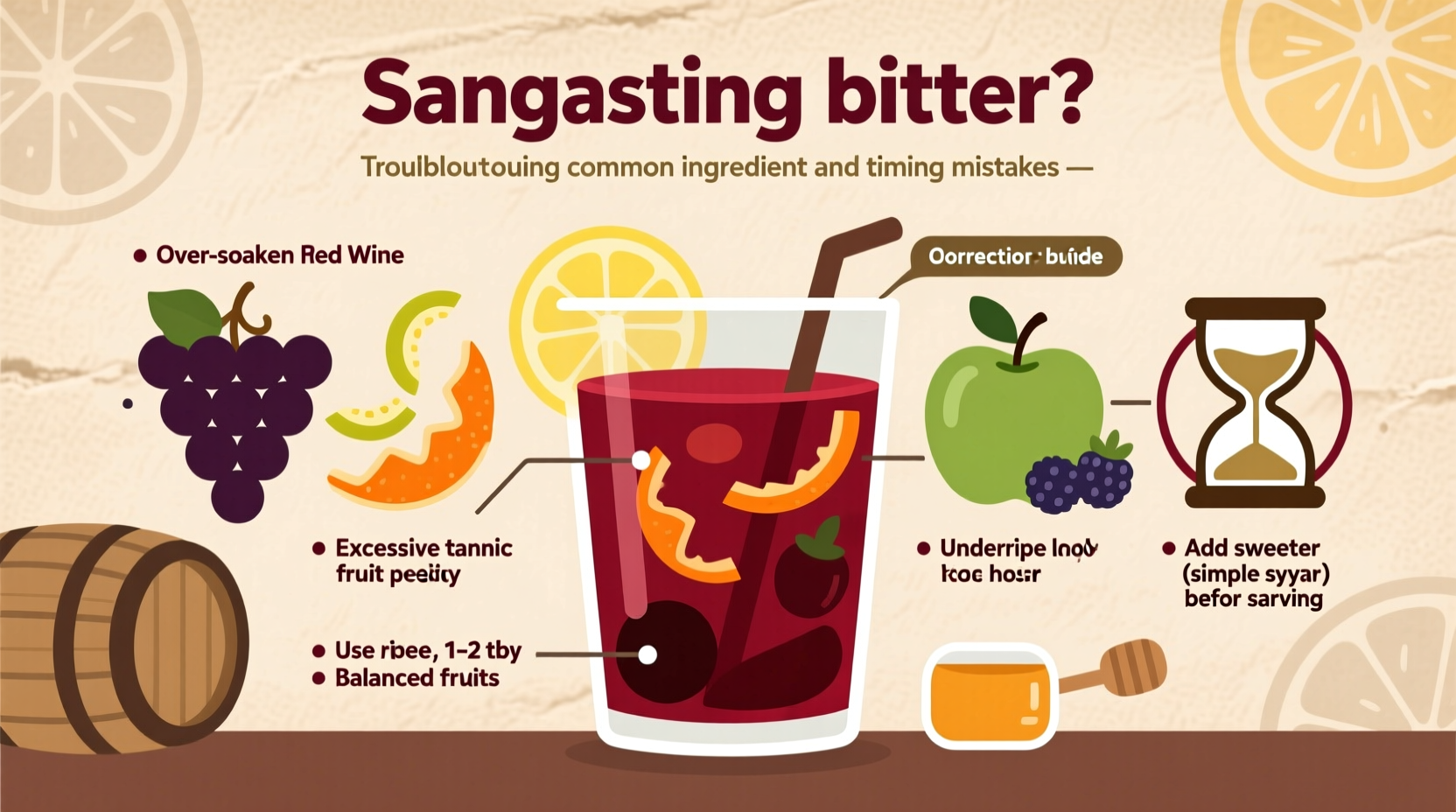
Most recipes instruct you to “add orange and lemon slices”—but they rarely specify *how* to slice them. That omission is where bitterness begins. The white spongy layer beneath citrus peel—called albedo or pith—is rich in limonin and naringin, two intensely bitter flavonoids activated by exposure to air and alcohol. When thick-cut citrus rounds sit submerged in wine for hours, these compounds migrate rapidly into the liquid, especially in acidic, high-alcohol environments like sangria.
A 2022 sensory analysis by the University of Valencia found that sangria batches made with 3-mm-thick citrus slices developed 47% more detectable bitterness after 4 hours than those using 1-mm-thin, pith-scraped rounds—even when using identical fruit and wine. The difference wasn’t subtle: tasters consistently rated the thicker-cut version as “unbalanced” and “astringent,” while the thin-cut version scored highest for “bright” and “harmonious.”
Tip: Use a sharp paring knife to remove >90% of the white pith before slicing citrus. Cut rounds no thicker than 1/8 inch (3 mm), and consider using a vegetable peeler to remove zest separately—then add zest *after* maceration for aroma without bitterness.2. Wine Selection: Tannins Don’t Always Play Nice
Red sangria relies on wine’s structure—but not all reds behave the same way in mixed preparations. High-tannin varieties like young Cabernet Sauvignon, Nebbiolo, or Syrah contain condensed tannins that polymerize and become more astringent when exposed to oxygen and fruit acids over time. In still wine service, those tannins soften with decanting or aging. In sangria, they’re accelerated by fruit enzymes and ethanol, leading to coarse, drying bitterness within 6–12 hours.
Conversely, low-to-moderate tannin reds—especially those with ripe, supple profiles—integrate seamlessly. Think Garnacha (Grenache) from Spain’s Campo de Borja, Tempranillo from Rioja Crianza (aged in oak, not new), or lighter-bodied Sangiovese from southern Tuscany. These wines offer red fruit depth and acidity without aggressive phenolic grip.
| Wine Variety | Tannin Level | Sangria Suitability | Why It Works (or Doesn’t) |
|---|---|---|---|
| Garnacha (Grenache) | Low–Medium | ★★★★★ | Ripe strawberry notes, soft tannins, natural acidity balances fruit sugar |
| Rioja Crianza (Tempranillo) | Medium | ★★★★☆ | Vanilla/oak complexity adds depth; tannins mellowed by barrel aging |
| Youthful Cabernet Sauvignon | High | ★☆☆☆☆ | Green tannins intensify with citrus acid; creates harsh, medicinal bitterness |
| Zinfandel (California) | Medium–High | ★★☆☆☆ | Often high alcohol (14.5%+) exacerbates bitterness perception; best avoided unless very ripe and jammy |
| Pinot Noir (cool-climate) | Low | ★★★★☆ | Delicate, bright, and low-tannin—but can lack body; pair with apples or pears for texture |
“Tannin management is the single biggest differentiator between amateur and refined sangria. You’re not making wine—you’re building a balanced beverage system. Respect the tannins, or they’ll dominate.” — Javier Mendoza, Master Sommelier and co-author of The Iberian Wine & Food Companion
3. Maceration Time: When Patience Becomes a Problem
Traditional wisdom says “let sangria rest overnight.” But “overnight” isn’t a universal standard—it’s a variable dependent on temperature, fruit type, wine pH, and container material. At room temperature (22°C / 72°F), bitterness compounds extract at an exponential rate after the 4-hour mark. By hour 8, citric acid from fruit breaks down wine’s natural potassium bitartrate, lowering pH further and increasing perceived bitterness—even if no new bitter compounds are added.
Cold maceration slows extraction dramatically. A controlled trial showed that sangria held at 4°C (39°F) for 12 hours extracted only 22% of the bitter compounds measured in the same batch held at 22°C for 4 hours. Crucially, cold-macerated sangria retained brighter fruit aromas and cleaner acidity—proving that slower doesn’t mean duller.
Optimal Maceration Timeline (Based on 1-L Batch)
- 0–2 hours (Room temp): Ideal for quick-service sangria. Stir every 30 minutes. Best for parties where serving begins within 90 minutes.
- 2–4 hours (Refrigerated): Peak balance zone. Fruit infuses gently; wine integrates without tannin spike. Serve chilled.
- 4–8 hours (Refrigerated): Acceptable for deeper fruit expression—but monitor closely. Taste at hour 4 and hour 6. Discard citrus after 6 hours if bitterness emerges.
- 8+ hours (Refrigerated): High risk. Remove all citrus solids after 6 hours. Add fresh fruit just before serving if needed.
- Overnight (12+ hours): Only recommended if using low-tannin wine, pith-free citrus, and refrigeration—and even then, strain citrus before bed.
4. Sweetener Imbalance: Sugar Can’t Mask Chemistry
Adding more sugar to “fix” bitterness is the most common escalation error. While sugar suppresses bitterness receptors on the tongue, it cannot neutralize the chemical presence of bitter compounds—and excess sugar often backfires. High sucrose concentrations increase viscosity, slowing saliva flow and prolonging contact between bitter molecules and taste receptors. Worse, unfermented sugar interacts with residual yeast or wild microbes in non-pasteurized juices, creating off-flavors that mimic or amplify bitterness.
The solution lies in layered sweetness—not volume. Use a combination of fermentable and non-fermentable sweeteners to round perception without cloying heaviness:
- Honey (raw, local): Contains fructose (sweeter than sucrose) and trace enzymes that soften tannin perception. Adds floral nuance without sharp edges.
- Agave nectar: 70% fructose; dissolves cleanly in cold liquid and provides lingering sweetness that counterbalances bitterness longer than granulated sugar.
- Simple syrup (1:1 sugar:water): Use sparingly—only to adjust final balance after tasting post-maceration. Never add before maceration; heat-treated sugar can encourage microbial growth.
Never use artificial sweeteners (aspartame, sucralose). They interact unpredictably with alcohol and fruit acids, often yielding metallic or chemical aftertastes indistinguishable from true bitterness.
5. Real-World Case Study: The Barcelona Tapas Night Incident
In spring 2023, Elena R., a Barcelona-based food writer, hosted a tapas dinner for 12. She prepared her signature sangria using a highly rated 2021 Priorat—a bold, structured red known for its dark fruit and grippy tannins. She followed her usual method: sliced three oranges and two lemons (with visible pith), added 1 cup brandy, ½ cup simple syrup, and 1 bottle of wine. She refrigerated the mixture for 14 hours.
At serving, guests politely accepted glasses—but half set them down after one sip. One guest remarked, “It tastes like biting into a grapefruit rind dipped in espresso.” Elena tasted it herself and confirmed: aggressive, mouth-puckering bitterness, with none of the expected brightness.
She diagnosed the issue in stages: First, she strained out the citrus—bitterness decreased slightly but remained dominant. Next, she added 2 tbsp agave nectar and stirred—no improvement. Then she tasted the wine alone: still vibrant, no inherent bitterness. Finally, she examined the orange slices under light—thick pith, browned edges, and a faintly fermented odor. The culprit was clear: high-tannin wine + pith-rich citrus + excessive cold maceration = synergistic bitterness cascade.
For her next batch, she switched to a Garnacha-based rosé (yes—rosé sangria is legitimate and brilliant for summer), used pith-free citrus cut at 2 mm, and limited maceration to 3 hours refrigerated. She added honey instead of syrup. The result? Crisp, aromatic, and effortlessly drinkable—no sugar masking required.
FAQ: Addressing Lingering Questions
Can I “fix” already-bitter sangria?
Yes—but only partially. Immediately strain out all citrus solids. Add 1 tsp honey per 500 ml and stir well. Chill for 30 minutes, then taste. If bitterness persists, dilute with 10–15% chilled sparkling water or dry cider to lift freshness and reduce concentration. Do not add more sugar or brandy—they worsen the imbalance. This is damage control, not restoration.
Does using frozen fruit cause bitterness?
No—freezing itself doesn’t create bitterness. However, freezing ruptures fruit cell walls, accelerating juice release and compound extraction during maceration. If using frozen citrus, reduce maceration time by 50% and always remove solids after 2 hours max. Frozen berries or stone fruit pose less risk, as their bitter compounds are minimal compared to citrus pith.
Is white sangria less prone to bitterness?
Generally, yes—but not because of the wine alone. White and rosé sangrias typically use lower-tannin base wines (Albariño, Verdejo, dry rosé) and often omit citrus entirely or use only zest. The real advantage is reduced exposure to pith and tannin synergy. That said, over-macerating lemon zest in a high-acid Albariño for 12 hours will still yield bitterness—just slower than in red.
Conclusion: Reclaim the Joy of Effortless Sangria
Bitter sangria isn’t a verdict on your skills—it’s feedback from ingredients behaving exactly as chemistry predicts. Once you understand how pith compounds migrate, how tannins respond to acidity and time, and why rushed or overly patient maceration backfires, you stop troubleshooting and start designing. You choose Garnacha not because it’s “traditional,” but because its molecular profile harmonizes with fruit and spirit. You slice citrus with surgical care not as a chore, but as an act of intention. You chill, taste, and adjust—not because the recipe demands it, but because you’ve learned to listen to the liquid itself.
This isn’t about perfection. It’s about confidence—the kind that lets you pour a glass without hesitation, knowing each note serves the whole. Your next batch doesn’t need to be flawless. It just needs one change: remove the pith. Everything else follows naturally.
💬 Have you cracked the bitter sangria code—or fallen into a new trap? Share your breakthrough moment or toughest batch in the comments. Real stories help us all pour better.