If you've ever unloaded your dishwasher only to find filmy, cloudy, or chalky white residue coating your glassware, you're not alone. This common frustration affects households across regions with hard water. The residue isn't just unattractive—it can make even clean glasses feel gritty and diminish their clarity over time. While dishwashers are designed to simplify cleaning, mineral buildup from hard water often undermines their performance. Understanding the root cause and applying targeted fixes can restore your glasses to sparkling clarity and extend their lifespan.
The white film is typically not leftover food or soap scum but rather a deposit of dissolved minerals—primarily calcium and magnesium—left behind when water evaporates. In areas with hard water, these minerals are present in high concentrations, leading to persistent deposits during the drying cycle. Over time, repeated exposure without proper intervention can permanently etch glass surfaces, making restoration impossible. Fortunately, most cases can be prevented or reversed with consistent care and adjustments to your washing routine.
Understanding Hard Water and Its Impact on Dishwashing
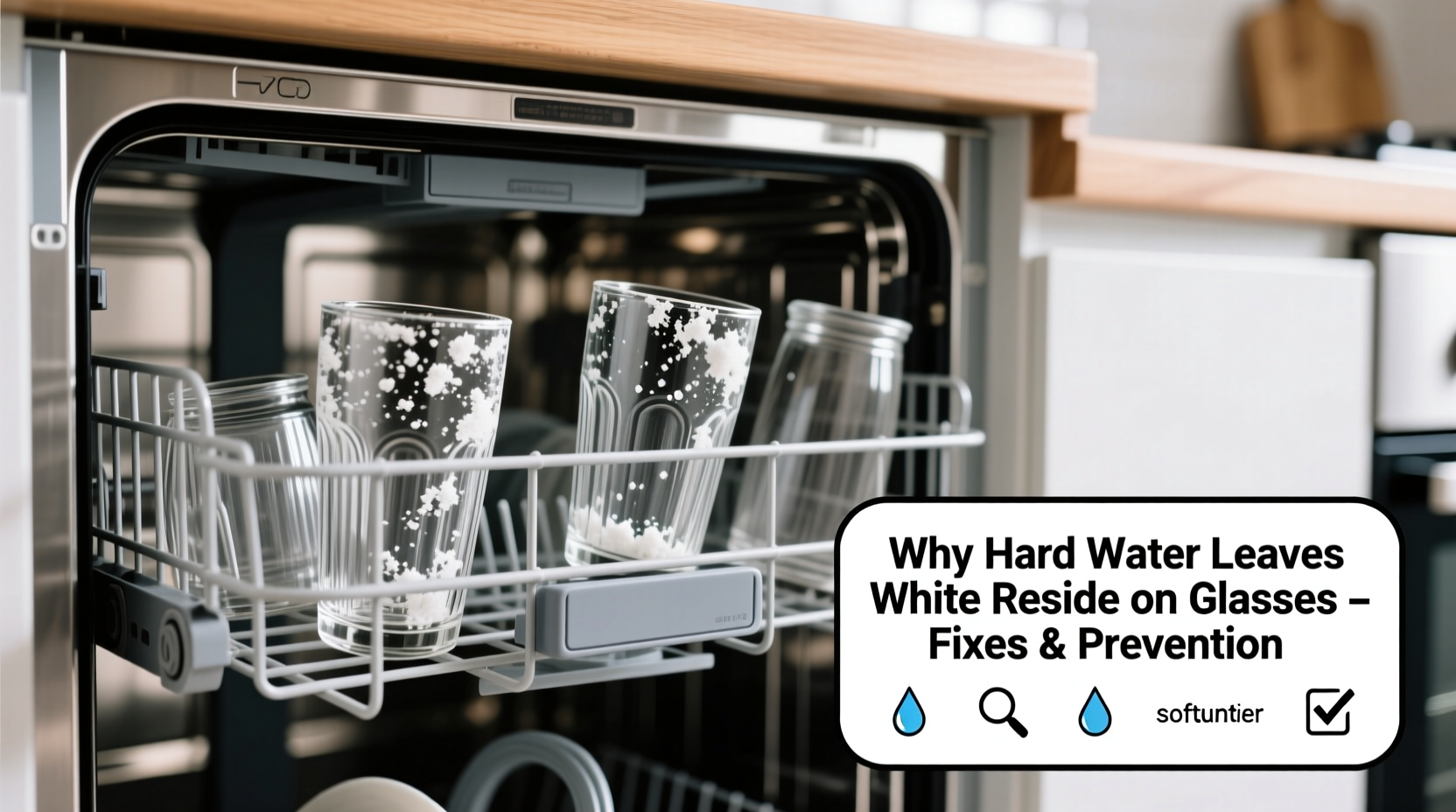
Hard water contains elevated levels of naturally occurring minerals, especially calcium and magnesium ions. As water travels through soil and rock, it dissolves these minerals before entering municipal supplies or private wells. When this water is heated—such as in your dishwasher’s rinse cycle—the minerals precipitate out and form scale. This scale adheres to dishes, especially delicate materials like glass, leaving behind a hazy white film.
The severity of residue depends on water hardness levels, measured in grains per gallon (GPG) or milligrams per liter (mg/L) of calcium carbonate. According to the U.S. Geological Survey:
| Water Hardness Level | Grains Per Gallon (GPG) | Calcium Carbonate (mg/L) |
|---|---|---|
| Soft | 0–3 | 0–60 |
| Moderately Hard | 3–7 | 61–120 |
| Hard | 7–10 | 121–180 |
| Very Hard | 10+ | 180+ |
In very hard water areas (above 10 GPG), dishwashers struggle to rinse effectively, even with detergent. Without mitigation, mineral deposits accumulate rapidly, leading to permanent clouding due to chemical etching. This occurs when alkaline detergents interact with soft glass under high heat, accelerating surface degradation. Recognizing whether your issue stems from temporary film or irreversible damage is essential before selecting a solution path.
Tip: Test your water hardness using an at-home kit or contact your local utility provider for free water quality reports.How Dishwasher Components Contribute to Residue Buildup
Your dishwasher's internal systems play a significant role in how well it handles hard water. Several key components influence rinse effectiveness and mineral deposition:
- Water Softener Unit: Built-in ion-exchange softeners use salt to replace calcium and magnesium ions with sodium, reducing scale formation. If depleted or improperly regenerated, they lose efficiency.
- Rinse Aid Dispenser: Rinse aids lower water surface tension, promoting sheeting action that prevents droplets from drying into spots. Low or empty rinse aid leads to uneven drying and increased residue.
- Detergent Type: Powder, gel, or pod detergents vary in phosphate content and chelating agents. Phosphates bind minerals; their absence in eco-friendly formulas may reduce effectiveness in hard water.
- Heating Element: High drying temperatures increase evaporation speed, which can trap minerals on surfaces if water doesn’t sheet off properly.
A malfunctioning softener or incorrect settings can render even premium detergents ineffective. For example, failing to refill the dishwasher’s salt reservoir monthly in hard water zones compromises the entire system. Similarly, skipping rinse aid assumes perfect drainage and pure water—conditions rarely met in real-world kitchens.
“Many customers blame their detergent when the real culprit is an exhausted water softener. Regular maintenance of the built-in softener is non-negotiable in hard water areas.” — Daniel Reyes, Appliance Engineer & Home Efficiency Consultant
Step-by-Step Guide to Eliminate and Prevent White Residue
Resolving white film requires both immediate treatment and long-term prevention. Follow this structured approach to restore clarity and maintain spot-free results:
- Diagnose the Cause: Perform a vinegar test. Soak a cloudy glass in white vinegar for 30 minutes. If the film dissolves, it’s mineral buildup. If unchanged, the glass may be chemically etched and cannot be restored.
- Clean the Dishwasher Interior: Run an empty cycle with 2 cups of white vinegar placed upright on the bottom rack. This removes internal scale from spray arms, walls, and heating elements.
- Check and Refill Salt Reservoir: Locate the softener compartment (usually under the lower rack). Ensure it’s filled with dishwasher-specific salt. Top up as needed—typically every 4–6 weeks in hard water regions.
- Adjust Detergent Usage: Use a brand formulated for hard water (look for “hard water” or “anti-lime” labels). Avoid overloading; crowding reduces water flow and rinsing efficiency.
- Optimize Rinse Aid Settings: Fill the dispenser and set the dial to level 4–6 (higher for harder water). Observe drying results and adjust incrementally.
- Lower Final Rinse Temperature (if possible): Excessive heat accelerates mineral bonding. Some models allow adjustment via control panel settings or by disabling the energy-saving dry feature.
- Install a Whole-House Water Softener: For persistent issues, consider upgrading plumbing with a central softening system. This treats all household water, protecting appliances beyond the dishwasher.
Consistency matters. Even minor lapses—like forgetting to add salt or delaying vinegar cleans—can restart the cycle of buildup within weeks.
Practical Tips and Maintenance Checklist
Preventing residue is easier than removing it. Integrate these habits into your routine for lasting results:
Tip: After each wash, wipe the door gasket and edges with a damp cloth to prevent mineral-laden water from re-entering the next load.Dishwasher Hard Water Maintenance Checklist:
- ✅ Test home water hardness annually
- ✅ Refill dishwasher salt reservoir monthly
- ✅ Replenish rinse aid weekly
- ✅ Clean filter and spray arms monthly
- ✅ Run vinegar cycle every 1–2 months
- ✅ Use citric acid cleaner quarterly for deep descaling
- ✅ Avoid pre-rinsing heavily; modern detergents need food particles to activate enzymes
- ✅ Load glasses at angles to promote draining and airflow
Additionally, avoid using regular table salt in the dishwasher—it often contains anti-caking agents that can clog the softener. Always use granular dishwasher regeneration salt, which is purer and dissolves more efficiently.
Real Example: Solving Residue in a Suburban Home
Sarah M., a homeowner in Phoenix, Arizona—one of the nation’s hardest water regions—struggled with increasingly opaque wine glasses despite daily dishwasher use. She assumed she needed a new machine until a plumber tested her water at 14 GPG. Following a diagnostic protocol, she first ran a vinegar cycle, which improved some items. Then she checked her dishwasher’s salt compartment: bone dry. After refilling it and resetting the water hardness level on her Bosch model to “8+,” she noticed visible improvement within two cycles. She began using Cascade Platinum pacs with Power Dry and increased her rinse aid setting to 5. Within three weeks, her glasses were clear again. Sarah now maintains a calendar reminder to check salt and rinse aid every four weeks, preventing recurrence.
This case illustrates that hardware functionality and user behavior are equally important. Technology performs best when supported by informed maintenance.
Do’s and Don’ts for Hard Water Dishwashing
| Do’s | Don’ts |
|---|---|
| Use rinse aid consistently | Run the dishwasher without rinse aid |
| Refill softener salt regularly | Use rock salt or iodized salt in the softener |
| Choose detergents with phosphates or citric acid | Assume all detergent pods work equally in hard water |
| Hand-wash delicate crystal or vintage glassware | Overload racks, blocking spray arms |
| Wipe down door seals and detergent dispenser weekly | Ignore error codes related to water intake or softener faults |
Adhering to best practices significantly reduces wear on both dishes and the appliance itself. A well-maintained dishwasher can last 10–12 years; neglect in hard water environments often shortens that to 6–7 years due to scaling and component strain.
Frequently Asked Questions
Can I use white vinegar instead of commercial rinse aid?
Yes, temporarily. Pouring 1/2 cup of white vinegar into a dishwasher-safe container on the top rack during the rinse cycle can reduce spotting. However, vinegar is less effective than specialized rinse aids because it evaporates quickly and lacks surfactants that promote sheeting. Long-term use may also degrade rubber seals. Use vinegar for periodic cleaning, not as a permanent substitute.
Is the white film harmful to drink from?
No, the residue is primarily calcium and magnesium carbonates���minerals naturally found in drinking water and generally safe in small amounts. While unsightly, it poses no health risk. However, once glass becomes etched, microscopic surface changes can harbor bacteria more easily, so replacing severely damaged items is advisable.
Why do some glasses get cloudy while others don’t?
Glass composition varies. Soda-lime glass (common in household sets) is softer and more prone to etching than borosilicate glass (used in labware or high-end cookware). Additionally, glasses placed directly in the path of the heating element or blocked from proper rinsing are more likely to develop film. Rotating storage positions and avoiding front-row placement can help distribute exposure evenly.
Conclusion: Take Control of Your Dishwashing Results
White residue on glasses isn’t inevitable—it’s a solvable symptom of hard water interacting with improper dishwasher management. By understanding the chemistry at play and taking deliberate steps to optimize your machine’s function, you can achieve consistently spot-free, brilliant glassware. The solution lies not in upgrading equipment prematurely, but in mastering the balance between water quality, detergent choice, and routine upkeep.
Start today: check your salt level, refill the rinse aid, and schedule a vinegar cleaning cycle. Monitor improvements over the next few loads. Share your experience or ask questions in the comments—your insights could help another homeowner reclaim their sparkle.
💬 Have you fixed cloudy glasses using these methods? Share your story or tip below to help others battling hard water!