A perfectly balanced cocktail should sing—not slur. When you take that first sip and detect a thin, lifeless, vaguely icy flatness instead of vibrant acidity, rich texture, or clean spirit-forward clarity, the culprit is almost always one thing: poorly managed dilution. Not too little dilution—though that’s possible—but wrong dilution: uneven, excessive, premature, or misapplied. Watery cocktails aren’t caused by “using too much ice” or “shaking too long” in isolation; they’re symptoms of a breakdown in the delicate physics and timing of temperature transfer, surface contact, and melt rate. This isn’t about guesswork or tradition—it’s about understanding how water becomes flavor’s silent conductor.
The Science Behind Dilution: Why Water Isn’t the Enemy
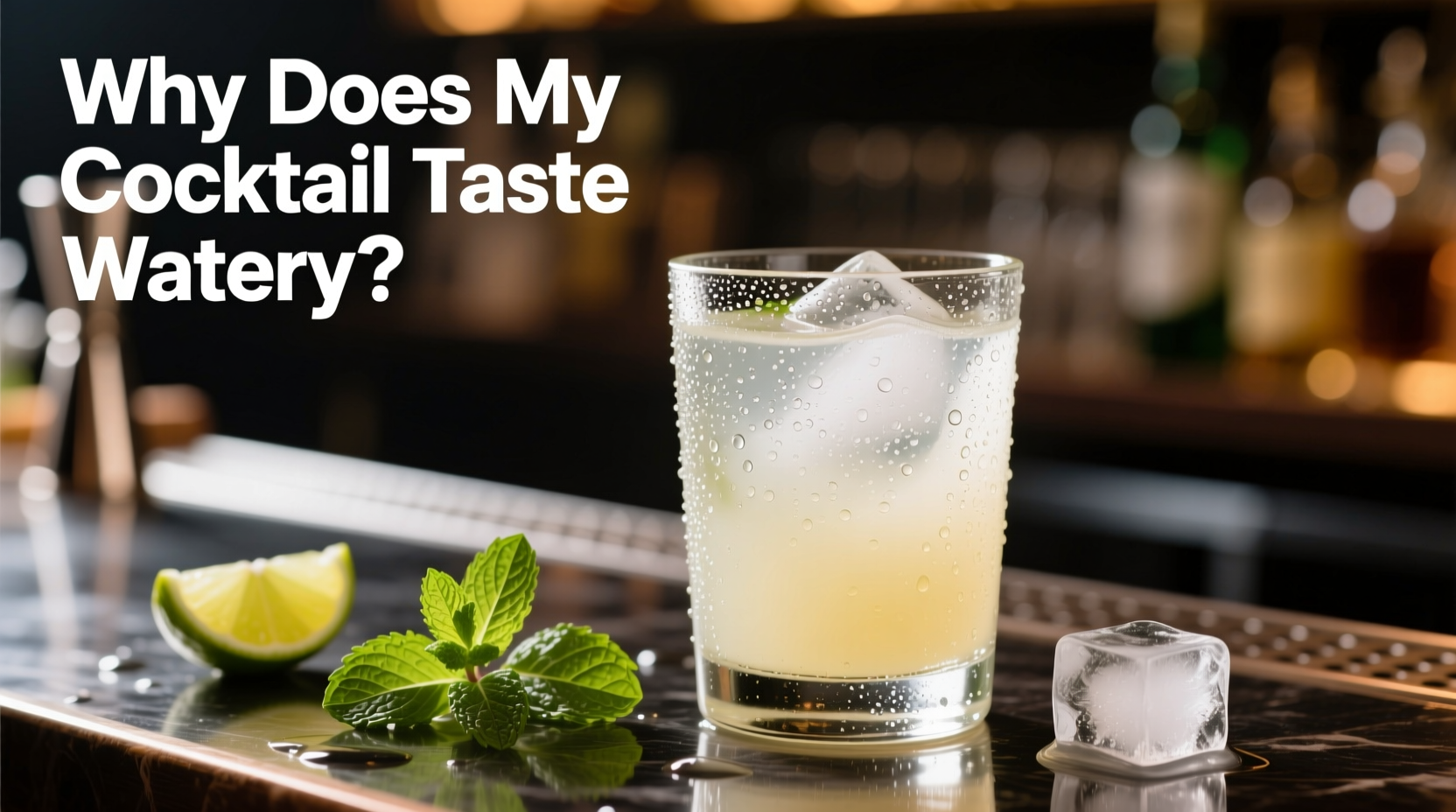
Dilution isn’t a compromise—it’s a core ingredient. Pure spirits are too volatile, too abrasive, too hot on the palate to deliver balance. Water from melting ice softens alcohol burn, unlocks aromatic compounds, rounds out acidity, and integrates sweet and bitter elements. The ideal dilution for most shaken or stirred cocktails falls between 20% and 30% by volume—meaning roughly one-fifth to one-third of what lands in your glass is water introduced during mixing. But achieving that range requires intention, not inertia.
Two primary mechanisms drive dilution: thermal shock (rapid chilling causing immediate melt) and mechanical agitation (ice tumbling against itself and the vessel, generating friction and surface melt). Stirring produces slower, more controlled dilution—ideal for spirit-forward drinks like Martinis or Manhattans—while shaking creates faster, more aggressive dilution plus aeration and emulsification, essential for citrus, dairy, or egg-based cocktails.
What makes dilution go wrong? It’s rarely about the *amount* of water added—but rather its timing, temperature profile, and integration. Ice that’s too warm melts before proper chilling occurs. Ice that’s too small creates excess surface area and uncontrolled melt. Shaking that continues after the drink hits optimal temperature adds only water—not chill or texture. And using room-temperature ingredients forces the ice to work harder, accelerating melt before the spirit base is properly stabilized.
5 Common Dilution Mistakes—and How to Fix Them
1. Using “Wet” or Pre-Chilled Ice
Ice pulled straight from the freezer is ideal—firm, dense, and below 0°F (−18°C). But ice left sitting in a room-temperature bar bin, or worse, pre-chilled in a fridge (which rarely drops below 34°F/1°C), begins melting immediately upon contact with room-temp spirits. That initial melt layer coats the ice, insulating it and slowing subsequent chilling while contributing early, unbalanced water.
2. Choosing the Wrong Ice Shape & Density
Cube size and density directly control melt rate and surface contact. Small, irregular cubes (like crushed or pebble ice) have high surface-area-to-volume ratios—they chill fast but over-dilute quickly. Large, dense cubes (1.5-inch spheres or diamonds) melt slowly and evenly, ideal for stirring. For shaking, medium-density cubes (¾-inch standard cubes, preferably made with boiled, then cooled water to reduce cloudiness and air pockets) offer the best balance: enough surface to chill rapidly without runaway dilution.
3. Over-Shaking Spirit-Forward Cocktails
A Dry Martini or Gibson has no citrus, no sugar syrup, no egg—just cold gin or vodka, dry vermouth, and a garnish. It needs minimal dilution (closer to 20%) and maximum clarity. Shaking such a drink introduces unnecessary aeration, cloudiness, and often 5–10% excess water. Stirring for 25–30 seconds with large, cold ice achieves ideal temperature (around 22–24°F/−5.5 to −4.5°C) and precise dilution—without compromising texture.
4. Under-Stirring High-Alcohol or Low-Mixability Drinks
Conversely, a 100-proof rye Manhattan or a Navy Strength Old Fashioned needs more time to integrate and temper heat. Stirring for only 15 seconds leaves the drink harsh and disjointed—even if cold—because insufficient dilution fails to round the edges. These benefit from 35–45 seconds of vigorous stirring with dense ice to reach full integration without oversaturation.
5. Ignoring Ingredient Temperature
Using room-temperature vermouth, bitters, or even simple syrup adds thermal load. Your ice must first cool those liquids *before* it can begin chilling and diluting the base spirit. That extra work means more melt before optimal temperature is reached. Always refrigerate vermouth, fortified wines, syrups, and juices. Keep bitters at room temp (they’re highly concentrated and stable), but ensure your spirit is chilled if the recipe calls for it (e.g., some modern Martini variations).
Tip: Freeze your mixing glass or shaker tin for 5 minutes before use—especially when ambient temps exceed 72°F (22°C). A pre-chilled vessel reduces initial thermal shock and extends effective ice life by 3–5 seconds.Step-by-Step: Dialing in Perfect Dilution for Any Cocktail
- Pre-Chill Everything: Refrigerate vermouth, syrups, juices, and liqueurs for ≥2 hours. Chill your glassware. Freeze your mixing vessel (tin or glass) for 5 minutes.
- Select Ice Strategically: Use ¾-inch clear cubes for shaking; 1.5-inch spheres or large diamonds for stirring. Fill your mixing vessel ¾ full—enough to allow vigorous movement without spilling, but not so much that ice can’t tumble freely.
- Measure Precisely: Use a jigger—never free-pour into the mixing vessel. Volume consistency ensures repeatable dilution. Note: A “standard” ¾-ounce pour of 40% ABV spirit contains ~0.3 oz pure ethanol; diluting to 25% ABV means adding ~0.9 oz water—achievable with ~1.2 oz of melted ice (since ice is ~92% water by weight).
- Time Your Agitation:
- Stirring: 25 sec for low-ABV or delicate drinks (e.g., Martinez); 35 sec for 90–100 proof spirits; 45 sec for Navy Strength (114+ proof).
- Shaking: 10 sec for dairy/egg drinks (to emulsify); 12–14 sec for citrus-forward drinks (Daiquiri, Margarita); 16 sec only for very viscous or high-sugar preparations (e.g., Ramos Gin Fizz—though dry shake first).
- Strain Immediately at Optimal Temp: Use a calibrated thermometer probe (or trust tactile cues: the tin should feel intensely cold—not just cold, but *burning-cold*—and sweat heavily). Strain as soon as timing ends. Never “test” temperature by tasting mid-shake—it disrupts rhythm and adds unmeasured variables.
Do’s and Don’ts of Dilution Control
| Action | Do | Don’t |
|---|---|---|
| Ice Storage | Store ice in airtight, freezer-burn–proof container at 0°F (−18°C) or colder | Leave ice in open bin or plastic bag exposed to freezer air |
| Shaking Technique | Use firm, consistent two-handed grip; rotate wrist to create vortex motion | Shake erratically or “chop” up-and-down—creates splashing, not turbulence |
| Stirring Motion | Stir with back of bar spoon against side of mixing glass; maintain smooth, deep spiral | Stir lazily or lift spoon out of liquid—reduces contact and efficiency |
| Tasting Protocol | Taste only after straining into final glass; compare side-by-side with known benchmark | Taste from shaker tin or stirrer—temperature and undiluted concentration distort perception |
| Post-Strain Handling | Serve immediately; never let strained cocktail sit in glass before serving | Add garnish then wait 2 minutes—allows further unmetered dilution from melting garnish ice |
Mini Case Study: The Over-Diluted Daiquiri That Wouldn’t Sing
Maya, a home bartender with two years of weekly practice, loved classic Daiquiris. Yet hers consistently tasted thin and sour—“like lime water with rum,” she said. She used fresh-squeezed lime, 2:1 raw cane syrup, and 8-year Jamaican pot still rum. Her process: cubed ice from the freezer, 12-second shake, double-strain into coupe.
Diagnosis revealed three interlocking issues: First, her “cubed ice” was actually small, cloudy cubes from a tray left uncovered in the freezer—partially sublimated and warmer than optimal. Second, she was using a 16-oz Boston shaker tin, filling it ¾ full—so much ice that movement was sluggish, reducing friction and increasing melt-per-second. Third, she stirred her simple syrup (unrefrigerated) right before mixing, adding 68°F (20°C) thermal load.
After switching to boiled-water cubes frozen at 0°F, using a 10-oz tin with 8 cubes, refrigerating syrup and limes, and shaking for exactly 13.5 seconds (timed with phone app), her Daiquiri transformed: richer mouthfeel, balanced acidity, pronounced rum esters, and a clean, lingering finish. The water was still there—but now it was integrated, purposeful, and invisible.
“Dilution is the bartender’s most underrated tool. It’s not about adding water—it’s about orchestrating phase change. Every gram of melt carries temperature, texture, and equilibrium. Master that, and you master balance.” — Javier Mendoza, Head Bartender, Midnight Oak (James Beard Award Finalist, 2023)
FAQ: Addressing Real Reader Questions
How do I know if my cocktail is *under*-diluted?
An under-diluted cocktail feels hot, sharp, or disjointed—alcohol burns dominate, acidity tastes shrill rather than bright, and sweetness (if present) seems cloying or syrupy. The texture may be thin but “prickly,” lacking roundness. You’ll likely taste distinct, unblended layers instead of a unified whole. Fix: Extend stir/shake time by 3–5 seconds next round—or verify ice temperature and density.
Can I “fix” a watery cocktail after it’s poured?
Not truly—once served, further dilution only worsens imbalance. However, you can mitigate perception: serve immediately (don’t let it sit), use a properly chilled glass (not one rinsed with water), and avoid garnishes that add moisture (e.g., skip the lime wedge if the drink is already flabby). For future batches, reduce ice volume by 10–15%, shorten agitation by 2 seconds, and confirm all ingredients are pre-chilled.
Does using filtered or bottled water for ice really matter?
Yes—especially for clarity and neutrality. Tap water contains minerals (calcium, magnesium) and chlorine compounds that can impart subtle metallic or medicinal notes at high dilution levels. Boiling tap water before freezing removes volatile chlorine and reduces mineral scaling, yielding clearer, purer-tasting ice. For competition or high-end service, many bars use reverse-osmosis water.
Conclusion: Water Is Your Co-Bartender—Treat It With Respect
Calling a cocktail “watery” is rarely an indictment of water—it’s a signal that water hasn’t been invited to the party with intention. Dilution isn’t something that happens *to* your drink; it’s a variable you command. From the moment you select your ice shape to the second your spoon leaves the glass, every choice either supports or sabotages equilibrium. The difference between a flat, forgettable sip and a resonant, layered experience often comes down to 3 seconds of stir time, 2 degrees of ice temperature, or 1 ounce of pre-chilled vermouth.
You don’t need expensive gear or decades of experience to fix this. Start tonight: freeze your mixing glass, measure your ice, time your shake, and taste critically—not for “strength,” but for harmony. Notice where the water lives in the flavor arc. Does it arrive too early? Too late? Does it carry chill or just chill? Once you begin listening to dilution—not fighting it—you won’t just stop making watery cocktails. You’ll start composing them.
💬 Have you cracked the dilution code with a technique that changed your cocktails? Share your breakthrough—ice hacks, timing tricks, or “aha” moments—in the comments. Let’s refine the craft, one perfectly balanced sip at a time.