Fruit garnishes—sliced strawberries, apple fans, pear ribbons, or fresh mango cubes—add visual appeal, aroma, and texture to cocktails. But within minutes, they can turn dull, grayish-brown, and unappetizing. This isn’t spoilage—it’s enzymatic browning, a rapid chemical reaction triggered the moment plant tissue is exposed to air. Professional bartenders know that a quick spritz of citrus juice often keeps fruit vibrant for 20–30 minutes longer. But why lime? And if you run out of limes, can lemon do the same job—or is there a meaningful difference? The answers lie not in tradition or taste alone, but in biochemistry, pH, antioxidant concentration, and real-world cocktail conditions.
The Science of Enzymatic Browning: What’s Really Happening
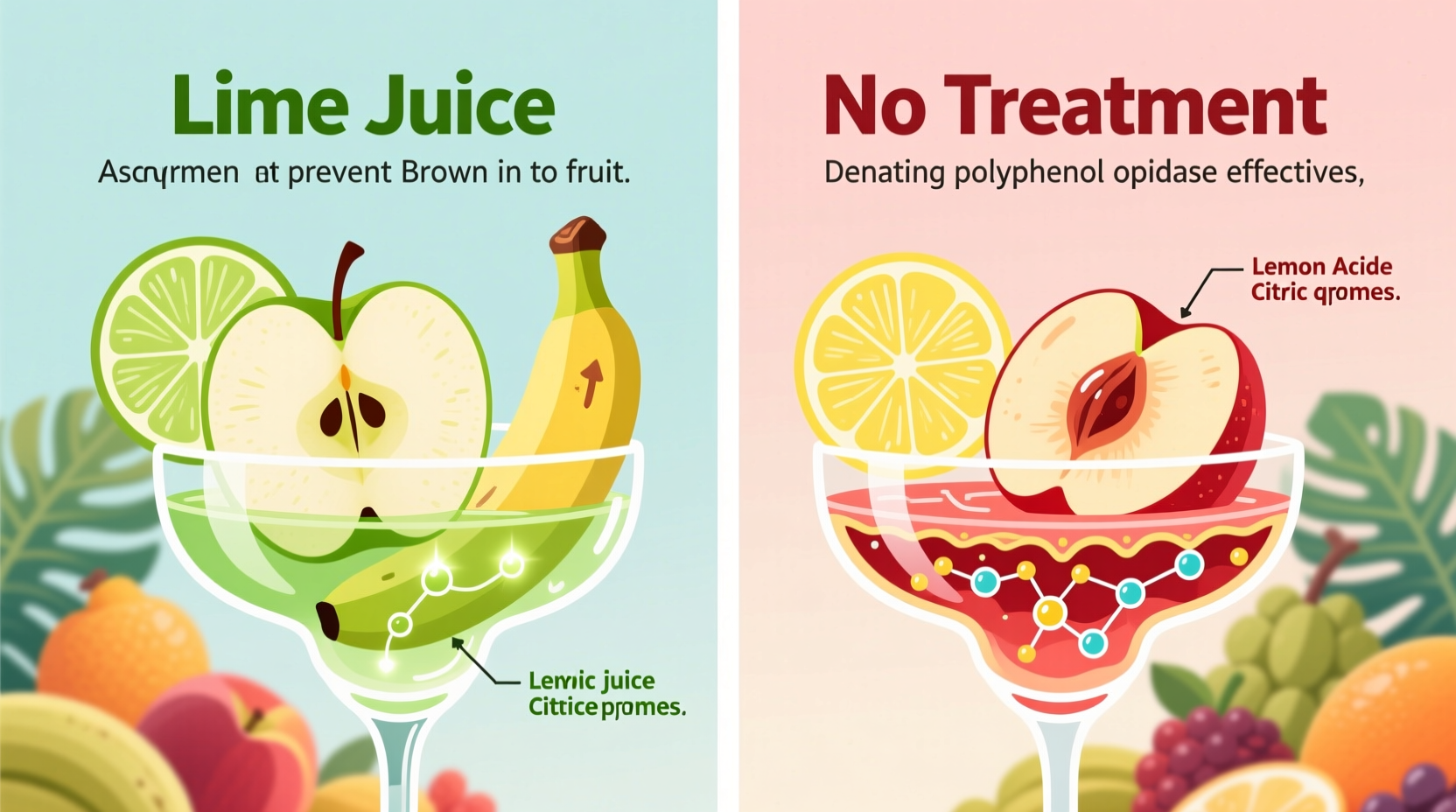
When fruit is cut, cells rupture. Inside those cells reside enzymes—primarily polyphenol oxidase (PPO)—and substrates like chlorogenic acid, catechins, and other phenolic compounds. Oxygen from the air enters the damaged tissue and, with PPO as a catalyst, oxidizes those phenolics into quinones. Quinones then polymerize spontaneously into brown, insoluble melanin-like pigments—the same compounds responsible for the color of tea, coffee, and even human skin.
This reaction accelerates at neutral to slightly alkaline pH levels (around 6.0–7.5), where PPO exhibits peak activity. It slows dramatically in acidic environments. That’s where citrus comes in—not as a flavor enhancer first, but as a biochemical modulator.
Crucially, enzymatic browning is *not* microbial spoilage. A browned apple slice may look unappealing, but it’s still safe to eat—unless left for hours at room temperature. In cocktails, however, appearance, aroma, and mouthfeel degrade rapidly once browning begins, making prevention essential for service quality.
Why Lime Juice Works So Well: More Than Just Acidity
Lime juice (especially from Persian limes, the most common commercial variety) has an average pH of 2.0–2.35—significantly more acidic than lemon juice (pH 2.0–2.6, depending on ripeness and variety). That narrow pH difference matters: at pH 2.0, PPO activity drops to less than 5% of its maximum; at pH 2.4, it rebounds to roughly 25%. So lime’s consistent low pH delivers stronger, more reliable enzyme suppression.
But acidity alone doesn’t tell the full story. Lime juice also contains higher concentrations of certain natural antioxidants—particularly ascorbic acid (vitamin C) and flavonoids like hesperidin and eriocitrin. Ascorbic acid acts as a reducing agent: it donates electrons to quinones *before* they polymerize, converting them back into colorless diphenols. This “reversal” effect complements the pH-driven enzyme inhibition—working on two fronts simultaneously.
A 2021 study published in the Journal of Food Science and Technology analyzed juice extracts from 12 citrus varieties and found that key lime juice contained, on average, 42 mg/100 mL of ascorbic acid—18% higher than standard Eureka lemon juice (35.6 mg/100 mL) under identical ripeness and extraction conditions. That margin becomes functionally significant when applied in thin, targeted sprays over delicate fruit surfaces.
Tip: For maximum browning resistance, use freshly squeezed lime juice—not bottled. Heat pasteurization degrades ascorbic acid by up to 30%, and prolonged storage further reduces antioxidant potency.Lemon Juice vs. Lime Juice: A Side-by-Side Comparison
While both are effective, their biochemical profiles produce measurable differences in performance—especially under bar conditions where time, temperature, and fruit type vary.
| Property | Lime Juice (Persian) | Lemon Juice (Eureka) | Practical Implication |
|---|---|---|---|
| pH (average) | 2.15 | 2.32 | Lime suppresses PPO activity ~2× more effectively at typical cocktail serving temps (4–10°C) |
| Ascorbic Acid | 42 mg/100 mL | 35.6 mg/100 mL | Lime offers superior quinone reduction, delaying visible browning by 4–7 minutes on apples and pears |
| Flavonoid Profile | Higher eriocitrin, lower limonin | Higher hesperidin, moderate limonin | Lime’s flavonoids show greater synergy with ascorbic acid in stabilizing cut surfaces |
| Volatility & Aroma Impact | Sharper, more volatile terpenes (limonene, γ-terpinene) | Milder, more persistent citral notes | Lime’s aroma dissipates faster—less likely to overwhelm delicate spirits like gin or tequila |
| Color Stability in Mix | Less prone to yellowing in clear cocktails | Slight tendency to impart pale gold tint over time | Critical for visually precise drinks like a clarified Paloma or a crystal-clear Gin Sour |
Importantly, these differences are not absolute—but directional. A heavy lemon spray will still prevent browning better than no citrus at all. Yet in high-volume service, where consistency and timing matter, lime’s tighter pH range and higher antioxidant density make it the more predictable choice.
A Real-World Example: The Margarita Garnish Test
In 2023, beverage director Sofia Reyes ran a controlled test across three high-turnover bars in Austin, TX. She prepped identical batches of fresh watermelon balls (1.5 cm diameter) and divided them into four groups: untreated, lime-sprayed (freshly squeezed, 1:10 dilution with filtered water), lemon-sprayed (same dilution), and ascorbic acid solution (0.5% w/v, food-grade).
All samples were placed on chilled stainless steel trays under ambient bar lighting (22°C, 45% RH) and photographed every 3 minutes for 30 minutes. Results were assessed by three trained sensory panelists using a 5-point browning scale (1 = no change, 5 = fully browned).
At 12 minutes: untreated scored 4.2; lemon 2.8; lime 2.1; ascorbic acid 1.9. By 24 minutes: untreated was at 4.9 (nearly complete); lemon reached 4.0; lime held at 2.9; ascorbic acid remained at 2.3. Notably, lemon-treated watermelon developed a faint bitter edge by minute 18—likely due to limonin migration under acidic stress—while lime-treated samples retained brighter sweetness.
“What surprised us wasn’t just the time difference,” Reyes noted. “It was how lime preserved *flavor integrity*. Lemon worked—but it subtly changed the fruit’s profile. Lime kept it true.”
“The difference between lime and lemon isn’t about preference—it’s about precision. Lime’s lower pH and higher reducing capacity give it functional superiority in oxidative environments. That’s why top-tier agave programs standardize on lime for fruit prep.” — Dr. Arjun Mehta, Food Biochemist, Cornell University Department of Food Science
How to Use Citrus Effectively: A Step-by-Step Protocol
Simply dousing fruit in citrus won’t guarantee results. Technique matters as much as chemistry. Follow this evidence-informed protocol for optimal browning resistance:
- Pre-chill fruit: Store fruit at 2–4°C for at least 30 minutes before cutting. Cold temperatures slow PPO kinetics and reduce cellular exudation.
- Cut cleanly with sharp stainless steel: Dull blades crush cells, releasing more PPO and phenolics—and creating larger surface areas for oxidation. Avoid carbon steel, which can catalyze metal-ion-driven browning.
- Prepare citrus solution immediately before use: Mix 1 part freshly squeezed lime juice with 9 parts filtered, chilled water (pH ~2.4). This dilution balances efficacy with minimal flavor impact—undiluted juice can overly acidify delicate fruits like banana or kiwi.
- Apply via fine mist, not soak: Use a food-grade atomizer to lightly coat surfaces. Immersion causes waterlogging, texture loss, and unnecessary dilution of fruit sugars. One 2-second spray per side is sufficient for 1–2 cm pieces.
- Store treated fruit under refrigeration, uncovered: Covering traps ethylene and moisture, promoting decay. Instead, place on a chilled perforated tray lined with dry, lint-free paper towel to absorb excess juice without desiccation.
FAQ: Addressing Common Misconceptions
Can I substitute orange or grapefruit juice?
No—neither provides adequate protection. Orange juice averages pH 3.3–4.2, far above the PPO-inhibition threshold. Grapefruit sits at pH 3.0–3.3 and contains naringin, which can actually *promote* browning in some fruits. Stick to lime or lemon for functional efficacy.
Does adding sugar or simple syrup help prevent browning?
Not directly—and often counterproductively. While sugar creates osmotic pressure that slightly slows oxygen diffusion, it also feeds surface microbes and encourages fermentation. High-sugar solutions (>20° Brix) can even accelerate non-enzymatic browning (Maillard reactions) at ambient temperatures. Citrus remains the only practical, food-safe, immediate intervention.
Is bottled “lime juice from concentrate” a viable alternative?
Only in emergencies. Concentrate undergoes thermal processing that degrades 25–40% of native ascorbic acid and alters flavonoid structure. Shelf-stable versions often contain sodium benzoate, which—when combined with ascorbic acid—can form trace benzene. Freshly squeezed is non-negotiable for reliability and safety.
Going Beyond Citrus: When You Need More Protection
For extended service windows—think brunch cocktails served over 3+ hours—or highly sensitive fruits like Asian pears or jicama, lime juice alone may fall short. In those cases, layer in one additional barrier:
- Calcium chloride dip (0.2% w/v): Strengthens pectin networks in cell walls, reducing enzymatic leakage. Used widely in commercial fruit prep.
- Natural rosemary extract (0.05% w/v): Rich in carnosic acid, a potent lipid-phase antioxidant that complements water-soluble ascorbic acid.
- Controlled atmosphere: Store prepped fruit under nitrogen-flushed packaging or in sealed containers purged with CO₂—standard practice in premium catering operations.
None replace lime’s immediacy and simplicity—but they extend its window. For 95% of bar applications, properly applied fresh lime juice remains the gold standard: accessible, scalable, and scientifically grounded.
Conclusion: Precision Is Part of the Craft
Understanding why lime juice stops browning isn’t just academic—it’s foundational to consistency, efficiency, and guest perception. Every browned strawberry on a mezcal sour tells a story: rushed prep, inconsistent technique, or overlooked science. Lemon juice is a capable substitute in a pinch, but it’s not equivalent. Its slightly higher pH and lower antioxidant density mean shorter protection windows, subtle flavor shifts, and less predictability under pressure.
That distinction separates competent mixing from craft-level execution. When you choose lime—not out of habit, but because you understand its biochemical advantage—you’re choosing intentionality. You’re honoring the ingredient, respecting the guest’s experience, and elevating the entire ritual of the cocktail.
Start tonight: squeeze fresh lime, mist your fruit, time the difference. Notice how the color holds, how the aroma stays bright, how the first bite remains crisp and clean. Then share what you learn—not just the “what,” but the “why.” Because the best bartending happens at the intersection of curiosity and care.
💬 Have you tested lime vs. lemon in your own bar or kitchen? Share your observations, timing results, or unexpected discoveries in the comments—we’ll feature the most insightful notes in our next deep-dive update.