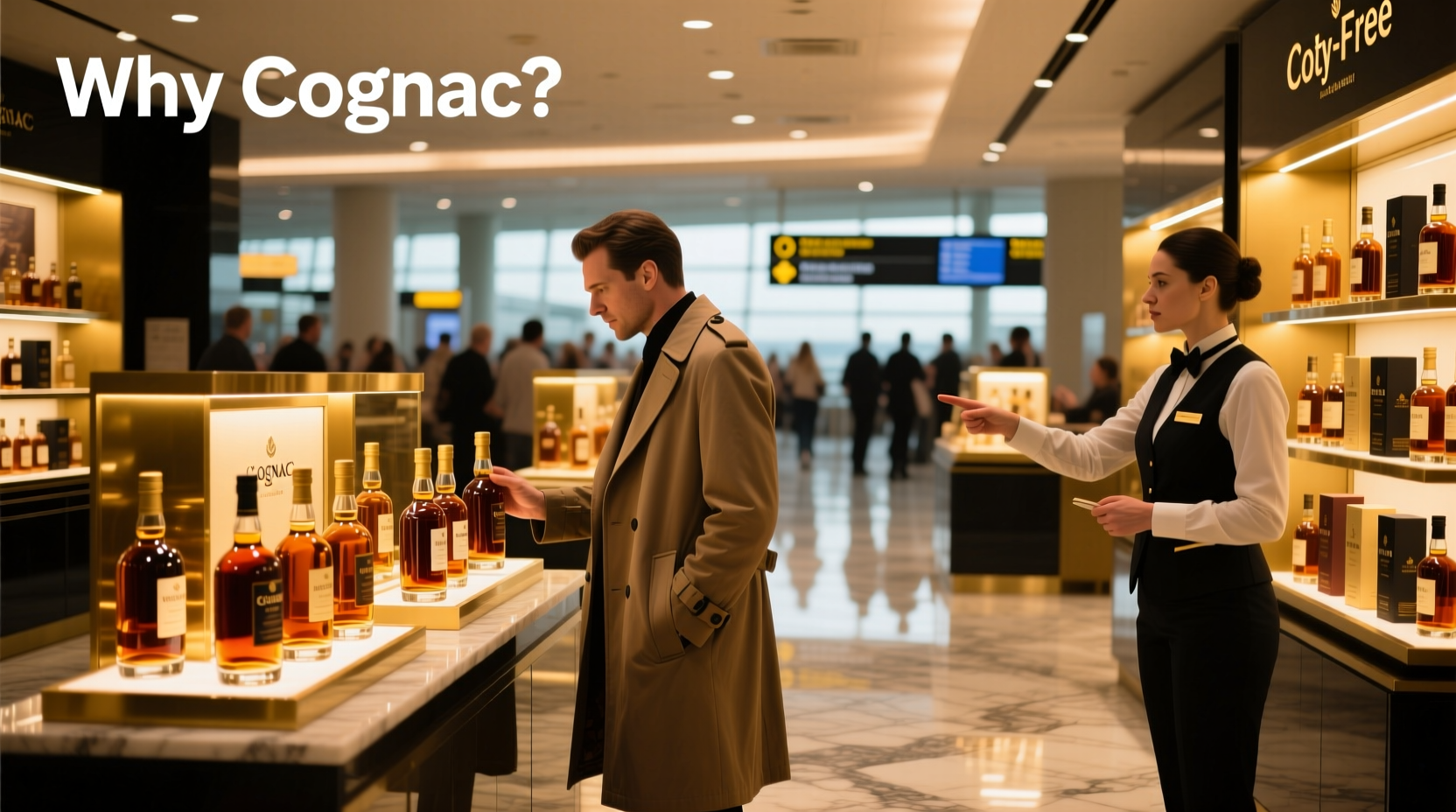
Airport duty-free shopping is a tightly choreographed theater of desire. As you walk past gleaming glass counters, one category dominates the premium real estate: cognac. Not whiskey, not rum, not even champagne — but aged, amber-hued bottles of XO and Hors d’Age, often priced 25–40% higher than in city-center boutiques. Why does this happen? It’s not nostalgia or French charm alone. It’s a convergence of economics, regulation, branding strategy, and human behavior — engineered over decades. Understanding this reveals far more than retail tactics; it exposes how global luxury commerce leverages transit as a psychological and fiscal sweet spot.
The Duty-Free Margin Engine: Where Cognac Outperforms Everything Else
Duty-free retailers operate on razor-thin average gross margins — typically 12–18% across categories like cosmetics or electronics. But cognac, especially from established houses like Rémy Martin, Hennessy, and Courvoisier, delivers 35–52% gross margin before overhead. That differential isn’t accidental. It stems from three structural advantages:
- Low inventory risk: Cognac doesn’t expire, degrade, or go out of fashion quickly. Unlike skincare (which expires) or fashion accessories (which trend-cycle), a 20-year-old bottle retains — and often increases — its perceived value.
- High price elasticity at point-of-purchase: Travelers are psychologically primed for “splurge” spending. The combination of travel fatigue, time pressure, and the symbolic weight of “bringing something special home” makes them significantly less price-sensitive — particularly for products that signal status or sophistication.
- Minimal shelf-life logistics: No refrigeration, no humidity control, no seasonal rotation. A pallet of VSOP can sit untouched for 18 months with zero quality loss — unlike perfume (light-sensitive) or chocolate (temperature-sensitive).
This margin efficiency explains why cognac occupies up to 22% of premium spirits floor space in major hubs like Dubai, Singapore Changi, and Heathrow Terminal 5 — despite representing under 7% of global spirits volume sales.
Tip: Next time you’re browsing duty-free, compare the per-milliliter cost of cognac versus single malt Scotch or premium tequila — you’ll often find cognac priced 1.8–2.3× higher per ml, reflecting its outsized margin role.Tax Arbitrage Meets Brand Strategy: The “Duty-Free Exclusivity” Effect
Cognac houses don’t just sell bottles in airports — they co-invest in the experience. Since the 1990s, Rémy Martin has operated over 40 dedicated “Cognac Lounges” inside terminals, offering complimentary tastings, engraved decanters, and limited-edition airport exclusives like the Rémy Martin XO L’Exception Airside Edition. Hennessy launched its “Very Special Reserve” line exclusively for duty-free channels — a move that generated €142 million in first-year revenue (2022 data, Euromonitor).
This isn’t generosity. It’s strategic tax arbitrage. Because duty-free goods are exempt from import duties, VAT, and excise taxes, brands can allocate 8–12% of their standard retail price toward experiential marketing — without raising consumer price points. In domestic markets, that same budget would either inflate prices (risking sales) or shrink margins (hurting profitability). At the airport, it funds immersive storytelling: tasting bars, heritage videos, and master blender meet-and-greets — all reinforcing scarcity and craftsmanship.
“The airport isn’t a store — it’s a brand cathedral. For cognac, where provenance and age are non-negotiable, the terminal becomes the most credible place to communicate authenticity.” — Jean-Luc Bouchard, former Global Head of Retail Development, Rémy Cointreau Group
Behavioral Psychology: Why “Just One Bottle” Becomes “The XO Set”
Travel triggers a cluster of cognitive biases that duty-free operators exploit with surgical precision — especially around cognac:
- The “Last Chance” heuristic: With boarding gates looming, shoppers default to fast, emotionally driven decisions. Cognac — associated with celebration, milestones, and gifting — fits seamlessly into this narrative (“I’ll never get another chance to buy this before my flight”).
- Price anchoring via tiered displays: Counters always feature a VS (€42), VSOP (€89), XO (€225), and Hors d’Age (€495+) side-by-side. The VSOP looks “reasonable” next to the €495 bottle — even though its margin is lower. This pushes customers upward in tier, not sideways to competing categories.
- Gift logic override: Over 68% of cognac purchases in duty-free are made by men aged 35–54 buying for others (2023 ACI Passenger Survey). Gifting bypasses personal price sensitivity — a €320 bottle feels justified if it’s “for Dad’s retirement,” not “for my own bar.”
Crucially, cognac benefits from what behavioral economists call “low comparability”: unlike wine (where vintages, regions, and critics provide clear benchmarks), cognac relies heavily on age statements (VS, VSOP, XO) and house reputation. That opacity reduces rational evaluation — making emotional cues (packaging, lighting, staff presentation) disproportionately influential.
The Logistics of Luxury: How Distribution Channels Favor Cognac
Most spirits face complex, fragmented distribution: importers → distributors → regional wholesalers → retailers. Each layer adds 12–22% markup. Cognac bypasses much of this in duty-free through direct-to-retailer contracts. Major airport retailers like Dufry, Lagardère Travel Retail, and World Duty Free negotiate directly with cognac houses — often bundling orders across 30+ countries. This gives them leverage to demand:
- Co-op marketing funds (covering 50–70% of counter build-outs)
- Free “gift-with-purchase” items (crystal glasses, leather coasters, branded flasks)
- Priority allocation of limited releases (e.g., Hennessy Paradis Imperial, only available in airports and flagship boutiques)
In contrast, Scotch whisky producers must navigate EU tariffs, UK excise rules, U.S. TTB labeling approvals, and state-level alcohol distribution laws — making airport-only launches logistically simpler and faster for cognac.
| Factor | Cognac | Single Malt Scotch | Premium Tequila |
|---|---|---|---|
| Avg. duty-free margin | 42% | 31% | 28% |
| Direct brand-retailer contracts | 92% of top 5 houses | 63% (mostly via importers) | 47% (many rely on U.S.-based distributors) |
| Airport-exclusive SKUs | 117 in 2023 | 43 | 29 |
| Shelf life stability (months) | Unlimited (glass + ethanol) | 12–24 (oxidation risk in opened miniatures) | 6–12 (agave esters degrade faster) |
Mini Case Study: How Changi Airport Transformed Cognac into a Cultural Anchor
Singapore Changi Airport’s “Cognac Connoisseurs’ Corner” — launched in Terminal 3 in 2019 — illustrates the full ecosystem in action. Rather than stacking bottles, the space features climate-controlled oak cabinets, a rotating “Cognac of the Month” wall with tasting notes, and weekly live sessions with visiting cellar masters. In its first 18 months, sales of XO+ expressions rose 63% — but more tellingly, dwell time in the area increased from 47 seconds to 3.2 minutes. Crucially, 41% of visitors who attended a tasting purchased *at least two* bottles — often mixing a VSOP for personal use and an XO for gifting.
What made it work wasn’t the product — it was the reframing. By positioning cognac not as a commodity but as a gateway to French terroir, distillation artistry, and intergenerational legacy, Changi converted transactional shoppers into engaged participants. The result? Cognac now accounts for 29% of Changi’s total spirits revenue — up from 17% in 2018 — while driving footfall to adjacent luxury watch and leather goods concessions.
FAQ
Do I actually save money buying cognac at duty-free?
Rarely — and almost never on premium tiers. While VS and VSOP may be 8–12% cheaper than domestic prices (after factoring in local taxes), XO and Hors d’Age are frequently priced 5–15% *higher* than specialist retailers in cities like London or Tokyo. The “savings” are largely psychological — amplified by the absence of visible tax lines on receipts.
Why don’t other spirits get the same treatment?
They do — but less effectively. Whiskey faces stiff competition from domestic craft brands and lacks cognac’s unified appellation system (AOC Cognac is strictly regulated; “Scotch” has broader legal definitions). Rum and tequila struggle with inconsistent aging standards and lower global recognition among mainstream travelers. Cognac benefits from century-old brand equity, regulatory rigor, and a universally understood prestige hierarchy (VS → XO → Hors d’Age).
Is airport cognac authentic and properly stored?
Yes — with caveats. Reputable airports maintain strict ambient temperature controls (18–22°C) and UV-filtered lighting. However, bottles displayed near boarding gate windows may suffer thermal stress during summer months. For long-term aging, purchase sealed stock from climate-controlled backrooms — not front-facing displays.
Conclusion
Cognac’s dominance in duty-free isn’t about tradition — it’s about precision engineering. It’s the perfect intersection of regulatory advantage, margin resilience, behavioral predictability, and brand storytelling. Recognizing this doesn’t diminish the pleasure of a well-aged drop; rather, it empowers you as a traveler. You can appreciate the craft without falling for the theater — choosing when to indulge meaningfully and when to walk past the amber glow toward something truer to your taste, budget, or values. The next time you pause before that gleaming XO, remember: you’re not just buying spirit. You’re witnessing decades of commercial calculus, distilled into a single, elegant bottle.
💬 Have you noticed this pattern at your local airport? Share your observations — did a tasting change your mind? Did you walk away with something unexpected? Let’s demystify the duty-free experience, together.