Ask any seasoned bartender what spirit they reach for first when building a new cocktail—and you’ll rarely hear a definitive answer. But ask what spirit they’d choose if forced to pick just one for a fully stocked home bar, and the debate sharpens: vodka or gin? On the surface, both are clear, 40% ABV spirits distilled from grain or potatoes. Yet their roles in modern mixology diverge as dramatically as their flavor profiles. Vodka promises purity—a blank canvas. Gin demands attention—a botanical signature. But versatility isn’t about neutrality alone. It’s about adaptability across styles, resilience under dilution, compatibility with diverse ingredients, and capacity to anchor both classic and avant-garde expressions. This isn’t a question of preference—it’s a functional analysis of how each spirit behaves behind the bar, on the palate, and in the evolution of cocktail culture.
The Core Distinction: Neutrality vs. Expression
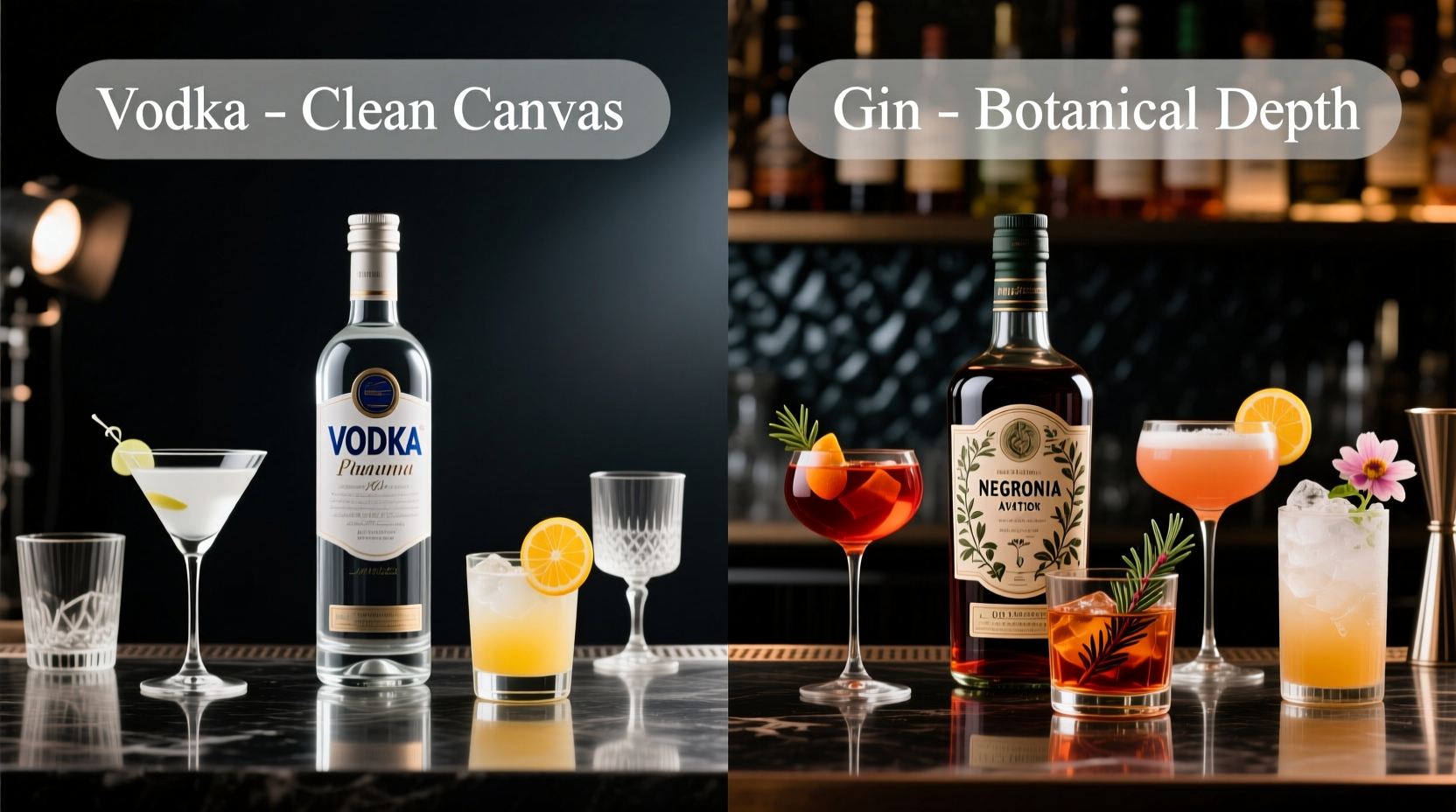
Vodka is defined by what it omits: flavor, aroma, color, and character. International standards require it to be “without distinctive character, aroma, taste, or color.” That absence is its design. Distillers strip away congeners through repeated distillation and filtration—often over charcoal, quartz, or even silver. The result is a high-proof, texturally clean spirit that carries sugar, acid, bitterness, and spice without interference. Gin, by contrast, is legally defined by the presence of juniper—its dominant botanical—and must be redistilled with botanicals (coriander, citrus peel, orris root, angelica, cardamom, etc.) to qualify as London Dry or contemporary styles. Its character is intentional, layered, and often assertive.
This foundational difference shapes everything that follows—not just taste, but function. A Martini made with vodka doesn’t merely substitute for gin; it rewrites the drink’s architecture. The gin Martini relies on juniper’s piney astringency to cut through vermouth’s richness and stand up to olive brine. The vodka Martini depends entirely on temperature, dilution, and texture—its success hinges on technique, not terroir.
Versatility Measured: Five Functional Dimensions
Versatility in mixology isn’t theoretical. It’s measured in real-world performance across five dimensions: ingredient compatibility, structural role (spirit-forward vs. low-ABV), dilution tolerance, global cocktail repertoire, and innovation ceiling. Let’s compare vodka and gin across each.
| Dimension | Vodka | Gin |
|---|---|---|
| Ingredient Compatibility | Exceptionally broad: pairs seamlessly with fruit juices (cranberry, pineapple), dairy (cream, coconut milk), syrups (elderflower, ginger), bitter liqueurs (Campari, Aperol), and even savory elements (tomato, horseradish, black pepper). Rarely clashes. | High—but selective: shines with citrus, herbs, tonic, vermouth, and bitters. Can clash with overly sweet or creamy ingredients unless balanced by acidity or botanical counterpoints (e.g., grapefruit + rosemary). |
| Spirit-Forward Stability | Moderate: lacks inherent structure. Without strong modifiers (dry vermouth, amaro, or intense bitters), it risks tasting thin or watery at room temperature. Relies heavily on chilling and dilution control. | Strong: juniper and supporting botanicals provide tannic grip, aromatic lift, and herbal backbone. Holds up beautifully in stirred, spirit-forward drinks like the Martinez or Gibson—even after 30 seconds of stirring. |
| Dilution Tolerance | High: remains perceptible even when diluted to ~25% ABV (e.g., in a long, shaken Collins). Its neutrality prevents flavor collapse. | Variable: delicate gins (e.g., floral or citrus-forward) can fade quickly under heavy dilution. Robust, juniper-dominant gins (like Beefeater or Tanqueray) retain clarity longer—but still lose definition faster than vodka. |
| Global Repertoire Breadth | Wide: anchors iconic drinks across continents—Moscow Mule (USA), Bloody Mary (global), Cosmopolitan (USA), White Russian (Eastern Europe), Caipiroska (Brazil), and countless tiki variations. | Deep but narrower: dominates British, European, and American classics (Martini, Gimlet, Tom Collins, Negroni, French 75) and modern botanical-driven drinks—but fewer globally ubiquitous “everyday” staples outside the gin category. |
| Innovation Ceiling | Low-to-moderate: excels as a vehicle, not a voice. Innovation happens *around* vodka (infusions, fat-washing, texture manipulation), not *within* it. Limited by its lack of intrinsic complexity. | High: botanical diversity fuels constant reinvention—new distillates (cucumber, yuzu, seaweed), barrel-aged expressions, and hyper-local foraged ingredients push boundaries. Gin’s DNA invites reinterpretation. |
The Cocktail Lab: Real-World Performance Testing
To test versatility beyond theory, consider how each spirit performs in three foundational cocktail formats—shaken, stirred, and long—and how bartenders actually deploy them.
In shaken drinks (e.g., Martinis, Gimlets, Daiquiris), gin’s volatility becomes apparent. Shake a gin Gimlet too vigorously, and citrus oils emulsify while delicate top notes vanish. Vodka, meanwhile, tolerates aggressive shaking without losing integrity—making it the default for high-volume bars serving dozens of Cosmopolitans nightly. Yet the best gin Gimlets—chilled, precisely stirred, and served up—offer a depth no vodka version replicates: the interplay of lime, coriander, and juniper creates a resonant finish that lingers.
In stirred, spirit-forward drinks, gin’s advantage solidifies. Try substituting vodka into a Negroni. The resulting drink is technically sound—bitter, sweet, strong—but hollow. Without gin’s herbal counterpoint to Campari’s medicinal bite and sweet vermouth’s raisin richness, the Negroni collapses into a disjointed syrup-bitter blend. Gin provides the connective tissue. As award-winning bartender and author Sasha Petraske once observed:
“The Negroni doesn’t work with vodka because it’s not about alcohol—it’s about conversation between botanicals. Juniper speaks to orange peel. Coriander answers Campari’s bitterness. Vodka has nothing to say in that language.” — Sasha Petraske, founder of Milk & Honey and pioneer of modern craft cocktail philosophy
In long, refreshing drinks (tonics, sodas, mules), vodka’s neutrality shines. A Moscow Mule’s success lies in the balance of spicy ginger, tart lime, and clean vodka—no competing flavors distract. Gin’s role here is more nuanced: a classic Gin & Tonic relies on quinine’s bitterness amplifying juniper’s dryness, while a French 75 leverages gin’s effervescence and citrus affinity. But when a guest orders “something light, crisp, and not too herbal,” vodka delivers predictably. Gin requires calibration.
Mini Case Study: The Home Bartender’s Dilemma
Maya, a graphic designer in Portland, built her home bar during lockdown. She started with two bottles: Ketel One vodka and Plymouth gin. Her goal was versatility—enough drinks to impress friends without buying 20 bottles. For six months, she rotated between vodka-based favorites (Cosmo, Espresso Martini, Cranberry Sparkler) and gin classics (Gin & Tonic, Martini, Southside). Then she hosted a dinner party where one guest declared gin “too piney,” another found vodka “boring,” and a third requested a “herbal, not-too-strong” drink.
Maya improvised: she muddled cucumber and mint, added fresh lime, simple syrup, and a splash of Plymouth gin—then topped it with soda. It was a hit. But when she tried the same base with vodka, the drink tasted flat and one-dimensional. Later, she swapped gin for vodka in a Negroni for a skeptical friend—and watched his expression shift from curiosity to polite confusion. “It’s… fine,” he said. “But where’s the *point*?”
The lesson wasn’t about preference—it was functional. Vodka offered breadth; gin offered meaning. Maya kept both—but began seeing vodka as her utility player (for crowd-pleasing, low-risk drinks) and gin as her signature voice (for moments demanding character and intention).
Tip: When choosing your first premium bottle, prioritize a well-structured gin (e.g., Tanqueray No. TEN or Sipsmith) over ultra-premium vodka. A great gin elevates simple drinks; a $50 vodka rarely improves a basic mixer beyond what a $25 one does.Building True Versatility: A Practical Checklist
Owning both spirits unlocks maximum flexibility—but using them wisely requires strategy. Follow this actionable checklist to maximize versatility without cluttering your bar:
- ✅ Start with one versatile gin: Choose a London Dry with pronounced juniper and balanced citrus (e.g., Beefeater, Broker’s, or Ford’s). Avoid overly floral or experimental gins until you master the classics.
- ✅ Select a clean, textured vodka: Not the most neutral, but one with subtle mouthfeel—like Belvedere (rye-based) or Reyka (Icelandic lava-filtered). Avoid “flavored” vodkas for foundational versatility.
- ✅ Master three gin templates first: Gin & Tonic (ratio: 1:3 gin:tonic, with lime), Martini (1:1 or 2:1 gin:vermouth, stirred, lemon twist), and Gimlet (2:1 gin:lime cordial, shaken hard).
- ✅ Master three vodka templates next: Moscow Mule (2:4:4 vodka:ginger beer:lime), Cosmopolitan (2:1:0.5:0.5 vodka:triple sec:lime:cointreau), and Bloody Mary (3:2:1 vodka:tomato juice:lemon, plus Worcestershire, hot sauce, celery salt).
- ✅ Always taste before serving: Stir or shake a small test portion. Does the spirit dominate? Disappear? Clash? Adjust ratios—not just add more spirit.
FAQ: Clarifying the Confusion
Is “premium” vodka worth it for mixing?
For stirred, spirit-forward drinks (like a vodka Martini), yes—higher-quality vodkas offer better mouthfeel, smoother finish, and less ethanol burn. For high-dilution drinks (Mules, Bloody Marys), the difference diminishes significantly. Spend more on gin first.
Can I use gin in place of vodka in a White Russian?
You can—but it transforms the drink entirely. Vodka’s neutrality lets coffee liqueur and cream shine. Gin introduces pine, citrus, and spice that compete with coffee’s roasted notes and mute cream’s richness. If you try it, reduce gin to 0.75 oz and add a barspoon of orange bitters to bridge the gap.
Does filtering gin through charcoal make it “vodka-like”?
No—and it’s strongly discouraged. Charcoal filtration strips essential volatile compounds (terpenes, esters) that define gin’s aromatic profile. You’ll lose complexity without gaining true neutrality. It’s like sanding a painting to make it look like canvas.
The Verdict: Versatility Is Contextual, Not Absolute
Declaring one spirit “more versatile” than the other is like naming the more versatile knife: a chef’s knife handles 90% of tasks, but a paring knife excels where precision matters. Vodka wins on sheer breadth—its ability to integrate seamlessly into almost any format, culture, or palate preference makes it the ultimate diplomatic spirit. It’s the foundation of accessibility, consistency, and crowd-pleasing reliability. Gin wins on expressive depth—its botanical architecture enables nuance, tension, and storytelling in a glass. It’s the spirit of intention, of craft, of conversation.
Yet the most versatile bars—and the most skilled bartenders—don’t choose. They understand that vodka serves the drink, while gin defines it. They reach for vodka when the goal is harmony; for gin when the goal is distinction. They know that a perfectly balanced Vesper Martini (gin, vodka, Lillet) proves these spirits aren’t rivals—they’re collaborators.
Versatility, then, isn’t about owning the broadest tool—but about knowing which tool to wield, and why. Your bar doesn’t need more bottles. It needs deeper understanding. Open a bottle of gin and stir a Martini slowly, watching the oils bloom on the surface. Then pour vodka into a chilled copper mug, add ginger beer and lime—and feel the crisp, unadorned lift. Taste the difference not as right or wrong, but as two languages of pleasure, each with its own grammar, vocabulary, and poetry.
💬 Your turn: Which spirit surprised you most when you dug deeper—vodka’s quiet power or gin’s layered intelligence? Share your breakthrough moment or favorite hybrid recipe in the comments. Let’s raise a glass to thoughtful mixing—not just more mixing.