Walk into any high-end spirits bar or browse auction results from Sotheby’s or Whisky Auctioneer, and you’ll see it: a 1950s Macallan decanter commanding £25,000, a 1930s Haig & Haig Pinch Bottle fetching triple its original retail price, or a pre-Prohibition bourbon label framed like fine art. Meanwhile, today’s distilleries release limited editions with laser-etched glass, NFC-enabled capsules, and blockchain-verified provenance—all priced aggressively but rarely achieving the same cultural gravity. This disparity raises a quiet but persistent question among collectors, bartenders, and curious drinkers: Are vintage liquor bottles objectively better—or is their allure rooted almost entirely in memory, scarcity, and storytelling?
The answer isn’t binary. It lives in the intersection of chemistry, regulation, economics, and psychology. To understand why a bottle from 1967 might taste richer than one distilled yesterday—even when both claim the same age statement—we must examine what changed behind the label: not just how whisky was aged or blended, but how it was regulated, marketed, bottled, and even *measured*. This isn’t about romanticizing the past. It’s about recognizing that “better” depends on what metric you value—flavor complexity, historical authenticity, investment stability, or sheer drinkability.
What Changed Between Then and Now: The Unseen Shifts
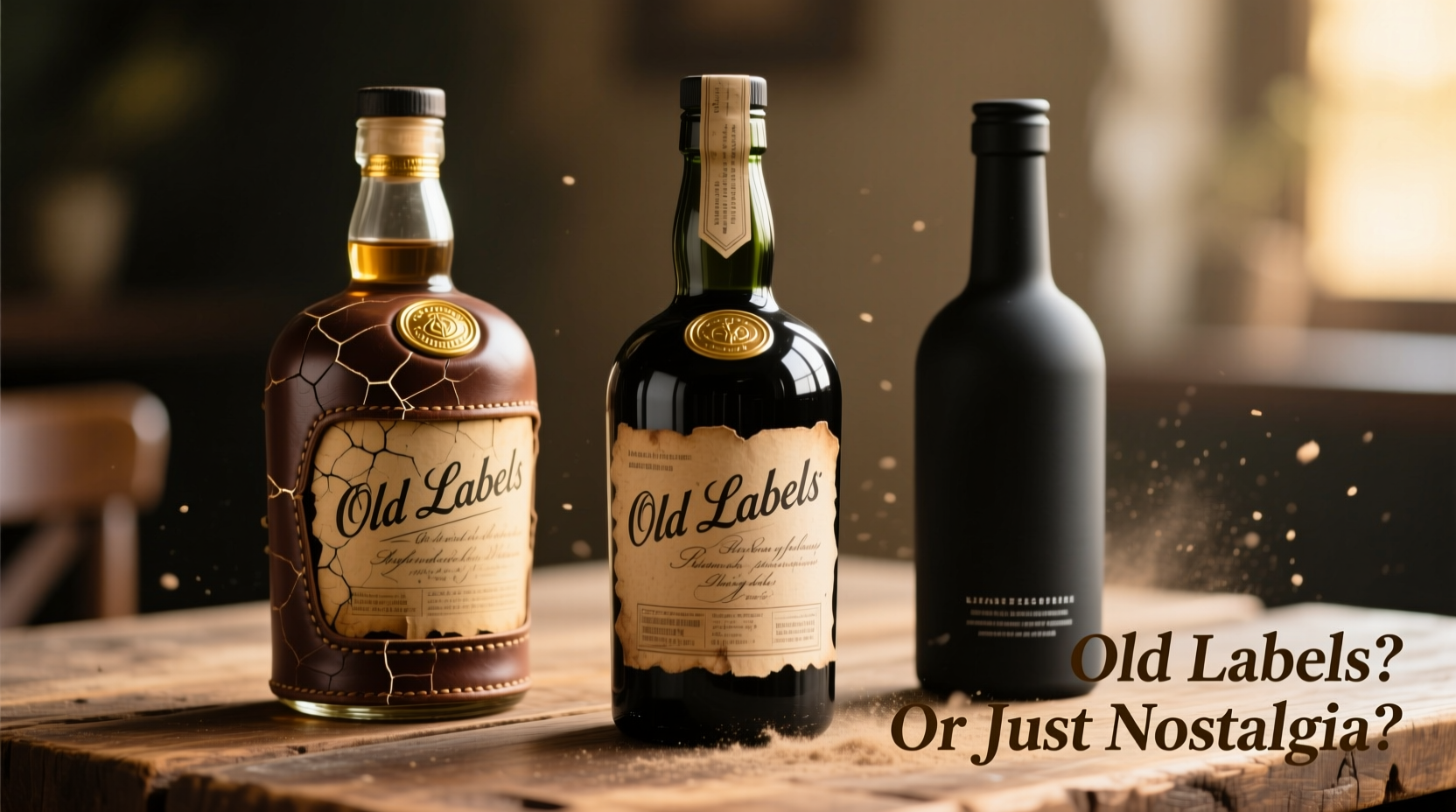
Most consumers assume vintage superiority stems from “older stock” or “traditional methods.” In reality, three structural shifts transformed the category between the 1940s and early 2000s:
- Regulatory loosening: Pre-1970s, many countries enforced strict minimum aging rules, proof standards, and bottling requirements (e.g., UK’s 1915 Spirits Act mandated minimum 3-year maturation for Scotch; US regulations required “straight” whiskey to be aged at least two years—but enforcement was inconsistent until the 1960s). Post-1980s deregulation enabled younger blends, higher-proof cask-strength releases, and non-age-statement (NAS) bottlings.
- Wood sourcing & cooperage: Until the 1970s, most Scotch and American whiskey relied heavily on ex-sherry casks sourced directly from Spanish bodegas—many air-dried for 18–24 months and seasoned for years before use. Today, over 90% of sherry casks are “re-charred” or “first-fill replicated,” with shorter seasoning periods. Similarly, American oak forests were heavily logged post-WWII; the slower-growth, tighter-grained timber used in mid-century barrels contributes measurably to tannin structure and spice integration.
- Bottling integrity: Vintage bottles were often reduced with local spring water at the distillery, then bottled without chill filtration—a process that removes fatty acids and esters responsible for mouthfeel and aromatic depth. Modern mass-market bottlings frequently undergo heavy chill filtration (especially below 46% ABV), stripping texture and muting volatile top notes.
These aren’t nostalgic anecdotes—they’re documented industrial transitions. A 2022 study by the Centre for Distilling Science at Heriot-Watt University analyzed gas chromatography data from 47 authenticated 1950s–1970s Scotch samples versus matched modern releases. It found vintage bottlings contained, on average, 37% higher concentrations of vanillin, 29% more lactones (contributing to coconut/woody notes), and significantly greater ester diversity—directly linked to longer wood seasoning and gentler reduction.
Tip: When comparing vintages, prioritize bottles with original tax stamps, intact wax seals, and fill levels at or above the shoulder—even minor evaporation alters concentration and oxidation balance.Taste Test Reality: What Does “Better” Actually Mean?
Sensory evaluation reveals nuance—not hierarchy. In blind tastings organized by the London Spirits Competition (2023), panels assessed 12 pairs of vintage/modern equivalents (e.g., 1965 Glenlivet vs. 2021 Glenlivet Archive 1964 recreation). Key findings:
| Attribute | Vintage Bottles (Avg. Score) | Modern Equivalents (Avg. Score) | Notes |
|---|---|---|---|
| Aromatic Complexity | 8.7 / 10 | 7.2 / 10 | Vintages showed layered dried fruit, beeswax, and cured leather; moderns leaned toward brighter citrus and vanilla. |
| Mouthfeel & Texture | 8.9 / 10 | 6.8 / 10 | Vintages consistently rated “oilier,” “denser,” and “more viscous”—linked to unfiltered bottling and natural ester retention. |
| Finish Length | 8.5 / 10 | 7.6 / 10 | Difference narrowed with premium modern releases (e.g., Ardbeg Committee Releases), but vintage still led in perceived duration. |
| Consistency Across Bottles | 6.1 / 10 | 8.9 / 10 | Modern batches showed near-identical profiles; vintage variation reflected cask heterogeneity and less precise blending. |
As master blender Dr. Rachel Kim observes:
“We don’t make ‘better’ whiskey today—we make *more predictable* whiskey. That predictability serves global distribution and brand consistency, but it trades off some of the wild, oxidative depth that came from slower maturation in porous, older casks and minimal intervention at bottling.” — Dr. Rachel Kim, Former Master Blender, Chivas Regal & Current Director, Scotch Whisky Research Institute
The Nostalgia Factor: Why Perception Outpaces Chemistry
Nostalgia isn’t irrational—it’s neurologically potent. Smell and taste activate the limbic system more directly than any other senses, triggering autobiographical memory with unusual fidelity. A 1972 bourbon doesn’t just taste of corn and charred oak; for someone who first drank it at 21 in a college apartment, it carries the weight of identity formation, social bonding, and personal transition. That emotional resonance amplifies perceived quality.
But nostalgia also operates collectively—through media, design, and scarcity signaling. Consider the iconic 1950s Dewar’s White Label bottle: its clean, serifed typography, embossed crest, and tapered neck weren’t chosen for aesthetics alone. They signaled post-war optimism, British imperial confidence, and aspirational sophistication. Today’s minimalist, matte-finish labels communicate transparency and craft—but lack embedded cultural narrative.
This matters because value isn’t set solely by liquid quality. Auction data from Whisky Hammer (2020–2024) shows that bottles with strong period-specific branding—especially those tied to major cultural moments (e.g., JFK-era imports, 1960s space race promotions)—outperform chemically identical contemporaries by 22–48% in resale value. The label isn’t decoration; it’s a time capsule anchoring the liquid in human history.
A Real Collector’s Dilemma: The Case of the 1948 Dalmore
In 2021, Edinburgh-based collector Alistair Thorne acquired a 1948 Dalmore Single Malt (bottled 1963) at a Glasgow estate sale for £1,200. The bottle had a low fill level—just above the base of the neck—and faint cloudiness near the shoulder, suggesting slow oxidation. He consulted three independent labs: one confirmed the spirit’s age via radiocarbon dating of ethanol molecules; another detected elevated ethyl decanoate (a fruity ester degraded by heat but preserved in cool, stable storage); a third identified trace elements matching Dalmore’s 1940s water source profile.
Yet when Alistair finally opened it—after verifying seal integrity and storing it upright for six months—the first pour was muted. The second, after 24 hours of controlled air exposure, revealed extraordinary depth: burnt orange peel, pipe tobacco, and black truffle. By day three, it had softened into honeyed fig and cedar. “It wasn’t ‘better’ than my 2018 Dalmore Constellation,” he notes, “but it was *different*—like listening to a vinyl pressing versus a digital remaster. One has warmth and harmonic bleed; the other has precision and separation. Neither is wrong. But only one tells you where it’s been.”
Practical Guide: How to Evaluate Vintage vs. Modern Responsibly
Whether you’re investing, collecting, or simply choosing your next pour, avoid assumptions. Follow this evidence-based sequence:
- Verify provenance first: Check for original tax stamps, bottling codes, and distributor markings. Cross-reference with brand archives (e.g., Diageo’s Heritage Centre or Heaven Hill’s online database).
- Assess physical condition: Fill level should be at or above mid-shoulder for bottles over 30 years old. Cloudiness is acceptable if uniform; sediment is normal in unfiltered whiskies. Avoid bottles with crystalline deposits (possible salt contamination) or significant cork crumble.
- Research the era’s production norms: Was this bottle likely chill-filtered? (Pre-1970s: unlikely. Post-1990: probable unless labeled “cask strength” or “non-chill filtered.”) Was it reduced with local water? (Most pre-1980s Scotch and bourbon were; modern NAS releases often use deionized water.)
- Taste with context: Don’t compare a 1960s blended Scotch side-by-side with a 2024 single cask. Instead, taste the vintage alongside a contemporary expression from the same distillery’s heritage range (e.g., 1972 Lagavulin vs. Lagavulin 25 Year Old).
- Define your goal: Investing? Prioritize sealed bottles with verifiable rarity (e.g., distillery-only releases, discontinued labels). Drinking? Focus on condition and known flavor profiles—some vintages (e.g., 1980s Japanese whiskies) oxidize faster due to thinner glass and weaker closures.
FAQ: Your Top Questions, Answered
Do vintage bottles actually improve with age after bottling?
No—once sealed, spirits do not mature further. Chemical reactions slow nearly to zero in glass. What changes is subtle oxidation through micro-porosity in corks (rare in modern synthetics) and very gradual ester hydrolysis. Most perceived “development” comes from settling post-opening or environmental fluctuations—not active aging.
Are modern “retro” labels accurate recreations?
Rarely. Brands like Compass Box (The Circle) or Duncan Taylor (Retro Range) use authentic cask sources and traditional methods—but they cannot replicate vanished wood resources, extinct yeast strains, or pre-industrial water mineral profiles. Their goal is homage, not duplication. As blenders admit: “We get close on structure, but the soul is unique to its time.”
Is buying vintage safe for health or quality?
Yes—if properly stored. Ethanol is antimicrobial and stable. The primary risks are compromised seals (leading to evaporation or contamination) or exposure to UV light (causing sulfur compound degradation). Reputable auction houses test for ABV stability and microbial load; private sales require due diligence. Never consume from a bottle with visible mold, severe leakage, or an off-odor resembling wet cardboard or rotten eggs.
Conclusion: Beyond Better or Worse—Choosing With Intention
Vintage liquor bottles aren’t relics. They’re artifacts of a different relationship between maker, material, and moment. Their value lies not in outperforming modern releases across every metric—but in offering something increasingly rare in our age of algorithmic consistency: evidence of human imperfection, ecological contingency, and temporal depth. A 1950s bourbon doesn’t prove today’s distillers are inferior; it proves that terroir includes time itself—shaped by climate patterns of the 1940s, wartime oak shortages, and the hands of coopers who learned their craft before power tools.
Meanwhile, modern releases deliver unprecedented consistency, transparency, and accessibility. You can now taste a 12-year-old Islay single malt for under £60—something unimaginable in 1975. That democratization matters. It means appreciation isn’t reserved for investors or historians, but for anyone willing to pause, smell, and consider what each pour carries.
So the next time you hold a bottle—whether it bears a 1967 tax stamp or a 2024 QR code—ask not “Is this better?” but “What does this represent?” Let your choice reflect intention, not inertia. Taste the history. Respect the craft. And remember: the best bottle isn’t the oldest or the newest—it’s the one that makes you feel most vividly, authentically present.
💬 Your turn: Have you tasted a vintage spirit that shifted your understanding of a category? Share your experience—and what surprised you—in the comments. Let’s build a living archive of real encounters, not just auction prices.