Baked puff pastry is a marvel of texture—light, airy, and shatteringly crisp when fresh from the oven. But its delicate nature makes it vulnerable to moisture and sogginess, especially when stored overnight. Whether you're preparing appetizers for a brunch, crafting gourmet tarts, or baking savory turnovers, maintaining that perfect crunch can be challenging. The good news: with the right techniques, you can preserve the flakiness of your baked puff pastry for hours—even overnight—without sacrificing quality.
This guide breaks down the science behind puff pastry’s structure, outlines best practices for cooling and storing, and delivers tested methods to revive crispness the next day. No more limp vol-au-vents or soft-bottomed palmiers. With these strategies, your pastries will taste freshly baked, even after a night in storage.
The Science Behind Puff Pastry Crispness
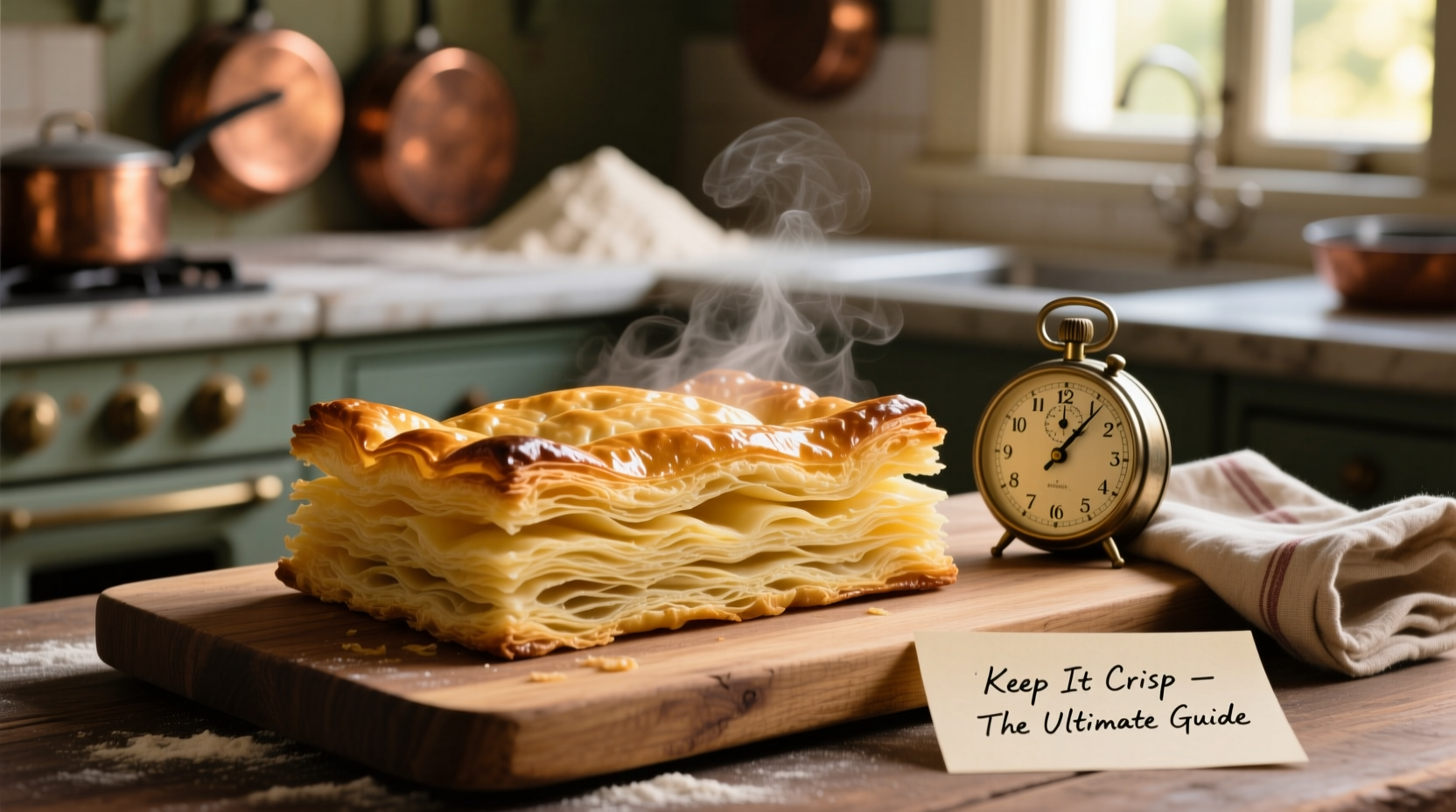
Puff pastry achieves its signature flakiness through hundreds of alternating layers of butter and dough. When baked, the water in the butter turns to steam, lifting the layers apart and creating an airy, crisp structure. However, once removed from the oven, this delicate matrix begins interacting with ambient humidity. Moisture absorption—either from the air or internal fillings—is the primary enemy of crispness.
Crucially, baked puff pastry does not \"dry out\" in the way bread might; instead, it becomes soggy because starches reabsorb moisture. This process, known as retrogradation, accelerates at room temperature and in humid environments. Understanding this helps explain why simply sealing pastry in plastic wrap leads to condensation and a chewy result.
“Puff pastry is fragile the moment it leaves the oven. The key isn’t just storage—it’s managing moisture at every stage.” — Chef Antoine Leclair, Pastry Instructor at Le Cordon Bleu Paris
Step-by-Step Guide to Overnight Storage
To keep puff pastry crisp overnight, follow this precise sequence. Each step addresses a critical point where moisture can compromise texture.
- Allow Proper Cooling: Let pastries cool completely on a wire rack. Placing them on a solid surface traps steam underneath, leading to a damp base. A wire rack ensures airflow on all sides, preventing condensation.
- Avoid Plastic Wrap: Never wrap warm or recently cooled pastries in plastic. It traps residual heat and creates a humid microclimate. Wait until fully cooled, then use breathable materials.
- Use Paper First, Then Container: Place cooled pastries in a single layer inside an airtight container lined with paper towels. The paper absorbs any ambient moisture without suffocating the pastry.
- Separate Layers with Parchment: If stacking is unavoidable, place parchment paper between layers to prevent sticking and allow minimal airflow.
- Store in a Dry Environment: Keep the container in a cool, dry place—never the refrigerator unless absolutely necessary (refrigeration introduces moisture). A pantry away from stoves or sinks works best.
Do’s and Don’ts of Puff Pastry Storage
| Do’s | Don’ts |
|---|---|
| Let pastries cool completely before storing | Store while still warm |
| Use paper towels in containers to absorb moisture | Wrap tightly in plastic wrap |
| Store in a single layer whenever possible | Stack without parchment separation |
| Reheat before serving to restore crispness | Serve cold from storage without reheating |
| Keep fillings separate if possible (e.g., add cream later) | Bake with wet fillings like custard or fruit compote ahead of time |
Reviving Crispness: Reheating Techniques That Work
No matter how well-stored, puff pastry benefits from a quick refresh before serving. Reheating drives off absorbed moisture and re-crisps the exterior without overcooking.
- Oven Method (Best for Most Pastries): Preheat oven to 350°F (175°C). Place pastries on a wire rack over a baking sheet and heat for 5–8 minutes. The dry heat restores crispness evenly.
- Toaster Oven (Ideal for Small Batches): Use the same settings as above. Its compact size heats faster and reduces energy use.
- Air Fryer (Excellent for Turnovers and Sausage Rolls): 3–4 minutes at 340°F (170°C), shaking halfway. The rapid air circulation mimics convection perfectly.
- Never Use Microwave: Microwaves generate steam internally, turning flaky layers into rubbery mush. Avoid entirely.
Real-World Example: Catering a Brunch Buffet
Sophie, a private chef in Portland, was tasked with preparing 120 mini cheese-and-herb puff pastry cups for a Sunday brunch. She needed them to stay crisp from Saturday evening prep until 11 a.m. service.
Her solution: she blind-baked the shells on Saturday afternoon, cooled them on racks, and stored them in lidded containers lined with paper towels. Each container held one layer only. On Sunday morning, she reheated them in batches using a convection oven at 325°F for six minutes. Just before plating, she filled each cup with her goat cheese mixture.
Result: guests praised the “freshly baked” texture. Not a single soggy shell appeared. By separating filling from baking and using proper storage and reheating, Sophie preserved both flavor and structure.
Checklist for Perfect Overnight Puff Pastry
Follow this checklist to ensure success every time:
- ✅ Bake until deep golden brown—underbaking leads to quicker sogginess
- ✅ Cool completely on a wire rack (minimum 30–45 minutes)
- ✅ Line storage container with absorbent paper towel
- ✅ Store in a single layer with space between items
- ✅ Use airtight container but avoid vacuum sealing
- ✅ Reheat before serving using oven or air fryer
- ✅ Add moist fillings (cream, fruit, sauces) immediately before serving
Frequently Asked Questions
Can I freeze baked puff pastry and reheat it later?
Yes, freezing is actually one of the best long-term storage options. Freeze cooled pastries on a tray first, then transfer to a sealed freezer bag or container. Reheat directly from frozen at 375°F for 10–12 minutes. Freezing halts moisture migration and preserves texture better than refrigeration.
Why do my pastry bottoms get soggy even when stored properly?
Soggy bottoms usually stem from underbaking or internal moisture. Ensure pastries are baked until uniformly golden, especially underneath. Using a preheated baking sheet or pizza stone helps conduct heat to the base. Also, avoid overly wet fillings—consider thickening creams or adding a moisture barrier like ground nuts or chocolate.
Is it safe to leave puff pastry out overnight at room temperature?
Yes, if properly stored. Baked puff pastry without perishable fillings (like cheese or cream) is safe at room temperature for up to 48 hours. The risk comes from microbial growth in fillings, not the pastry itself. Always discard items with dairy, meat, or eggs left unrefrigerated beyond two hours.
Final Thoughts: Quality Starts with Smart Handling
Keeping baked puff pastry crisp and flaky overnight isn’t about luck—it’s about controlling moisture at every stage. From cooling to storage to reheating, each decision impacts the final texture. The techniques outlined here are used by professional bakers and caterers who can’t afford to serve anything less than perfect.
Whether you’re preparing a batch of napoleons for Sunday dessert or hosting a cocktail party with savory pinwheels, apply these principles with confidence. Your guests won’t believe they weren’t pulled from the oven moments ago.
🚀 Ready to transform your leftover pastries? Try the oven-revival method tonight and taste the difference. Share your results or ask questions in the comments below—we’d love to hear your puff pastry wins!