Chocolate is not merely a sweet indulgence in Mexican cuisine—it is a cornerstone of one of the country’s most complex and revered savory dishes: mole. Far from the sugary confections familiar in Western desserts, the chocolate used in traditional Mexican mole contributes depth, richness, and a subtle bitterness that balances chiles, spices, nuts, and aromatics. Understanding its role is essential for anyone seeking to grasp the soul of regional Mexican cooking. This article explores how chocolate functions within mole, its historical roots, the types best suited for authentic preparation, and practical guidance for using it effectively in both home and professional kitchens.
Definition & Overview
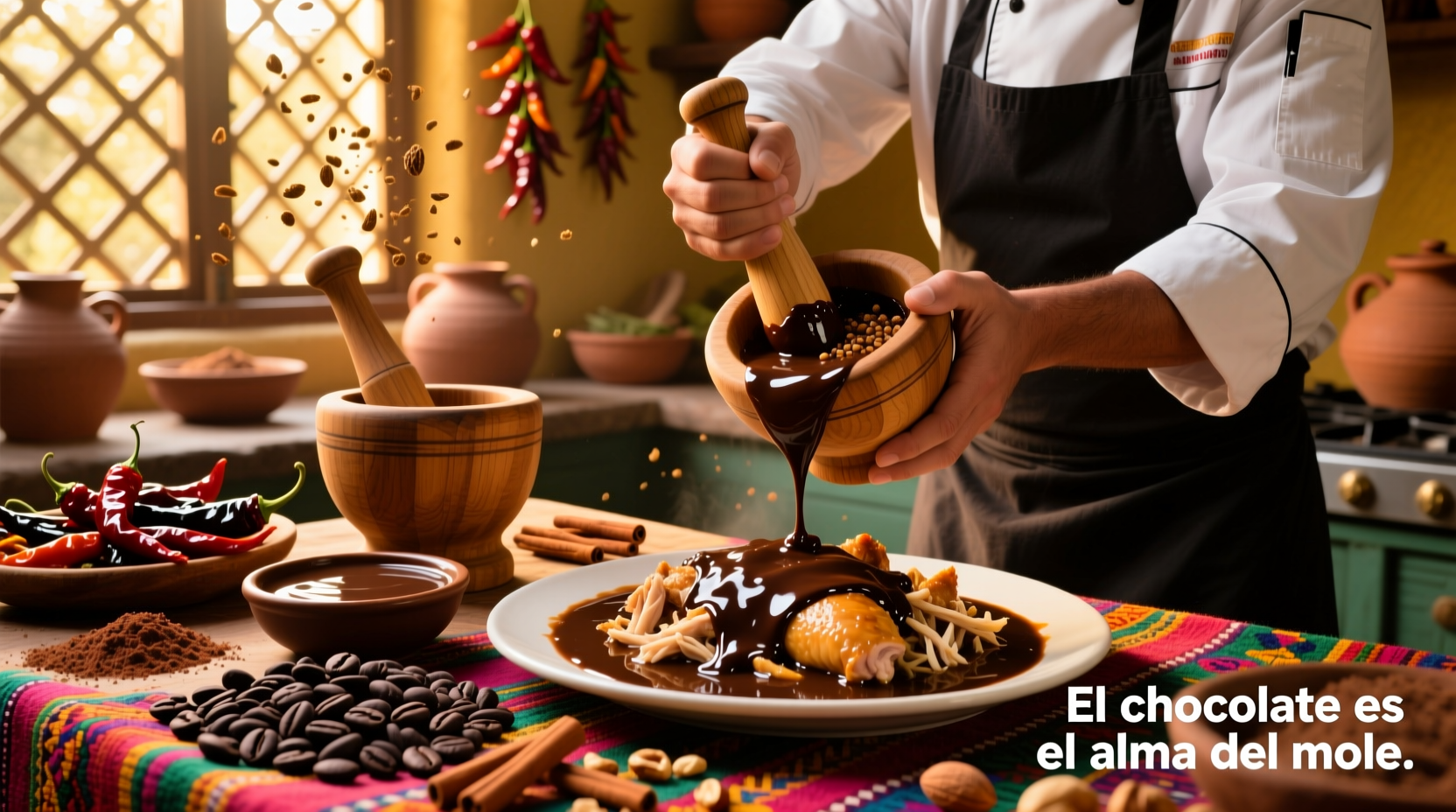
Mole (pronounced moh-leh) is a broad category of complex sauces originating in Mexico, particularly associated with Oaxaca and Puebla. While there are dozens of variations—mole negro, mole poblano, mole amarillo, among others—the most famous, mole poblano, is distinguished by its deep mahogany color, layered spice profile, and the inclusion of chocolate. Despite common misconceptions, chocolate is not added for sweetness but as a thickening agent and flavor modulator that rounds out the heat of dried chiles and the sharpness of spices like cumin and cloves.
The use of chocolate in mole traces back to pre-Hispanic Mesoamerica, where cacao was cultivated and consumed as a bitter beverage, often spiced with chili, vanilla, and annatto. After the Spanish conquest, European ingredients such as almonds, raisins, cinnamon, and sugar were incorporated into indigenous preparations, giving rise to the modern mole. The fusion culminated in what many consider Mexico’s national dish: mole poblano, famously served over turkey or chicken.
In this context, chocolate is not an afterthought—it is a structural and sensory pillar. It provides body, emulsifies fats and liquids, and imparts a nuanced earthiness that binds the sauce’s diverse elements into a harmonious whole.
Key Characteristics of Chocolate in Mole
When used in mole, chocolate behaves very differently than in baking or dessert applications. Its contribution is primarily functional and aromatic rather than sweet. The following table outlines its key characteristics in this culinary context:
| Characteristic | Description |
|---|---|
| Flavor Profile | Bitter, earthy, slightly fruity, with notes of roasted nuts and wood; not sweet unless additional sugar is used. |
| Aroma | Deep, smoky, with hints of vanilla, spice, and fermentation; intensifies when toasted or melted into the sauce base. |
| Color Contribution | Imparts a rich, dark brown to near-black hue, especially in mole negro and mole poblano. |
| Culinary Function | Thickens the sauce, balances acidity and heat, enhances mouthfeel, and acts as an emulsifier. |
| Heat Level Impact | Reduces perceived spiciness by coating the palate and moderating capsaicin burn. |
| Shelf Life (as ingredient) | Unopened tablets last up to two years if stored in a cool, dry place; once opened, use within six months for optimal flavor. |
It is crucial to understand that the chocolate used in mole is fundamentally different from American-style semisweet or milk chocolate. It contains little to no added dairy and is formulated specifically for cooking, often including sugar, cinnamon, and sometimes ground almonds or other thickeners.
Practical Usage: How Chocolate Functions in Mole Preparation
Integrating chocolate into mole is a precise process that requires timing and technique. It is never added at the beginning or end of cooking but introduced during the final stages to preserve its integrity and prevent scorching.
- Toasting and Rehydration: Dried chiles, spices, nuts, and seeds are individually toasted to develop flavor, then rehydrated and blended into a smooth paste. Chocolate is not included in this stage.
- Frying the Paste: The blended mixture is fried in oil or lard to remove raw flavors and concentrate taste. This step can take 20–30 minutes over medium heat, requiring constant stirring.
- Simmering with Broth: Once the paste is cooked, it is gradually diluted with warm broth and simmered for 1–2 hours to meld flavors and reduce thickness.
- Adding Chocolate: Only when the sauce is nearly finished is chocolate introduced—typically in small pieces or grated form—so it melts evenly without clumping or burning.
The amount of chocolate varies by recipe and region. A classic mole poblano may include 20–40 grams of Mexican chocolate per liter of sauce, depending on desired intensity. Too much can overwhelm the chile profile; too little fails to provide the necessary balance.
TIP: Always melt the chocolate in a separate pan with a small amount of warm broth before incorporating it into the main sauce. This ensures smooth integration and prevents graininess.
Professional chefs often prepare mole in multiple phases, allowing each component to develop fully. In high-end Mexican restaurants, mole is frequently made a day in advance, refrigerated overnight, and reheated before service—this resting period deepens the flavor and allows the chocolate to further integrate into the sauce matrix.
Variants & Types of Chocolate Used in Mole
Not all chocolate is suitable for mole. The best results come from traditional Mexican chocolate products designed for cooking. Below are the primary types used:
- Tabletas de Chocolate para Mesa (e.g., Ibarra, Abuelita): These are the most accessible forms, sold in disc-shaped tablets. They contain sugar, cinnamon, and sometimes almond meal. Ideal for home cooks seeking authenticity with convenience.
- Chocolate Mexicano en Grano (Cacao Beans): Whole or cracked roasted cacao beans used in artisanal moles. Requires grinding and refining into paste. Offers the purest flavor but demands significant effort.
- Chocolate Líquido (Cacao Paste): Unsweetened blocks of pure ground cacao, similar to European bitter chocolate but without added cocoa butter. Used in Oaxacan moles for a more intense, less sweet profile.
- Chocolate con Especias: Specialty blends infused with ancho chili, clove, or allspice. Rare but prized in certain regional variations for added complexity.
Each type serves a distinct purpose. For everyday cooking, tabletas like Ibarra are reliable and widely available. For deeper authenticity, combining unsweetened cacao paste with a touch of cinnamon and sugar allows greater control over sweetness and texture.
| Type | Sugar Content | Best For | Availability |
|---|---|---|---|
| Ibarra / Abuelita | High | Beginner-friendly mole; balanced sweetness | Widely available in supermarkets |
| Unsweetened Cacao Paste | None | Authentic, low-sugar moles; professional use | Specialty stores, online |
| Homemade Blend | Adjustable | Custom flavor profiles | Requires sourcing ingredients |
Comparison with Similar Ingredients
Chocolate in mole is often confused with other dark, bitter ingredients used in global cuisines. Clarifying these distinctions helps avoid substitution errors and supports authentic preparation.
- Dutch-Process Cocoa Powder: While usable in a pinch, it lacks the fat content and textural contribution of real chocolate. It also tends to be more alkaline, which can dull the brightness of chiles.
- Baking Chocolate (Bittersweet/Dark): Contains higher cocoa butter and sugar levels than traditional Mexican chocolate. May make mole greasy or overly sweet unless adjusted carefully.
- Cocoa Nibs: Provide bitterness and crunch but do not melt or thicken. Not a substitute for paste or tablets.
- Masa Harina: Sometimes mistaken as a thickener alternative, masa adds corn flavor and starch but does not offer the aromatic or emulsifying benefits of chocolate.
“In Oaxaca, we say mole is alive. It breathes. And chocolate? That’s its heartbeat. Without it, you have a stew—not a mole.”
—Chef Margarita Sánchez, Oaxacan Culinary Institute
Practical Tips & FAQs
Should I use sweet or unsweetened chocolate in mole?
It depends on your recipe and preference. Traditional mole poblano includes some sweetness, so tabletas like Ibarra are appropriate. For a more balanced, less sugary version, use unsweetened cacao paste and adjust sweetness with piloncillo (unrefined cane sugar) or a small amount of honey.
Can I substitute Dutch cocoa powder?
You can, but only partially. Replace up to half the chocolate with cocoa powder and add a teaspoon of neutral oil to compensate for lost fat. However, the result will lack the silkiness and depth of true chocolate.
How do I store leftover mole sauce?
Cool completely, then transfer to airtight containers. Refrigerate for up to 5 days or freeze for up to 3 months. Reheat gently over low heat, adding broth if needed. The chocolate may separate slightly upon reheating—whisk vigorously to re-emulsify.
Does mole always contain chocolate?
No. Only certain varieties—primarily mole negro, mole poblano, and some versions of mole coloradito—include chocolate. Others, like mole verde (green mole), rely on herbs and tomatillos and contain no chocolate at all.
Is the chocolate in mole the same as eating chocolate?
No. Eating chocolate (like bars for snacking) contains dairy, extra sugar, and emulsifiers not suitable for savory sauces. Always use chocolate labeled for cooking or traditional Mexican tabletas.
What protein pairs best with chocolate-based mole?
Traditionally served over turkey (guajolote), which has a rich, gamey flavor that stands up to the sauce. Chicken is a common substitute. Vegetarian options include stuffed chiles (chiles en nogada-style), enchiladas, or roasted vegetables.
✅ Quick Checklist: Using Chocolate in Mole
- Use Mexican chocolate tablets or unsweetened cacao paste—avoid eating chocolate.
- Add chocolate late in cooking, after the sauce base is fully developed.
- Melt chocolate in warm broth first to ensure smooth blending.
- Balance sweetness: taste before serving and adjust with salt, vinegar, or more chile if needed.
- Allow mole to rest overnight for optimal flavor integration.
Summary & Key Takeaways
The role of chocolate in traditional Mexican mole sauce extends far beyond sweetness. It is a vital component that defines the character of iconic dishes like mole poblano and mole negro. Historically rooted in Mesoamerican cacao traditions and refined through colonial-era fusion, chocolate in mole functions as a thickener, emulsifier, and flavor balancer—softening heat, enriching texture, and deepening aroma.
Understanding the types of chocolate used—whether commercial tabletas like Ibarra or artisanal cacao paste—is essential for achieving authenticity. Proper technique, including late-stage incorporation and careful melting, ensures a smooth, cohesive sauce. Substitutions should be approached with caution, as even small changes can disrupt the delicate equilibrium of flavors.
For home cooks, the takeaway is clear: chocolate in mole is not optional experimentation—it is foundational. Respecting its role honors centuries of culinary tradition and unlocks the full potential of one of Mexico’s greatest gastronomic achievements.
Explore the layers of mole—not just as a sauce, but as a story told through spice, chile, and the quiet power of chocolate.