
There’s a quiet magic in rolling out dough, cutting festive shapes, and pulling golden cookies from the oven that hold their form with precision while offering a tender, melt-in-the-mouth center. Achieving this balance—crisp edges, soft interiors, and clean details—isn’t accidental. It’s the result of precise ingredients, proper technique, and a few well-guarded baking secrets. This recipe delivers exactly that: Christmas sugar cookies with sharp, defined edges and irresistibly soft centers, ideal for decorating and gifting.
The Science Behind Perfect Sugar Cookies
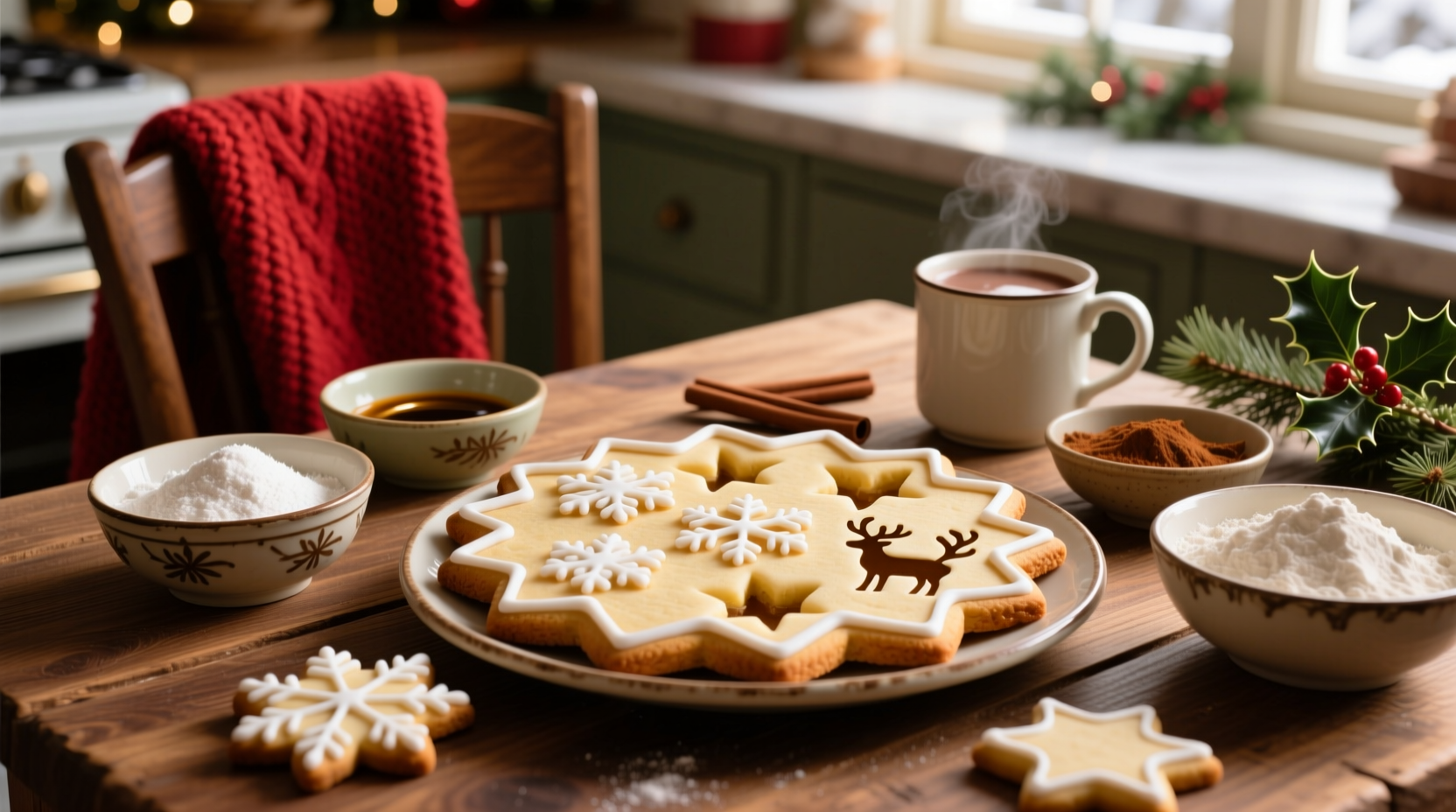
Sugar cookies seem simple, but subtle variations in fat, flour, sugar, and temperature dramatically affect texture and structure. For sharp edges and soft centers, the goal is to limit spread without sacrificing tenderness. Over-spreading blurs cutout details; under-hydration creates dryness. The key lies in ingredient ratios and chilling time.
Butter provides flavor and richness, but its water content can lead to spreading if not managed. Using a combination of butter and shortening offers the best of both worlds: buttery depth with structural stability. Shortening has a higher melting point, helping the cookies maintain shape during baking. Meanwhile, cake flour—lower in protein than all-purpose—creates a more delicate crumb, contributing to the soft interior.
“Precision in chilling and portioning is just as important as the ingredients themselves. A few degrees or minutes can make the difference between a cookie that holds its shape and one that melts into a puddle.” — Chef Lila Montgomery, Pastry Instructor at Boston Culinary Institute
Step-by-Step Guide to Flawless Cookies
Follow this detailed process to ensure every batch turns out picture-perfect.
- Prepare Ingredients at Correct Temperatures: Use cold butter straight from the fridge, cut into cubes. Cold fats create steam during baking, which lifts the dough slightly and preserves thickness.
- Cream Butter and Shortening Briefly: Mix only until combined. Over-creaming incorporates too much air, leading to puff and potential cracking.
- Add Sugar Gradually: Incorporate granulated sugar slowly to avoid aerating the mixture excessively.
- Mix Dry Ingredients Separately: Whisk together cake flour, cornstarch (for tenderness), baking powder, and salt. Sift into wet ingredients to prevent overmixing.
- Chill Dough for 4 Hours or Overnight: This is non-negotiable. Chilling solidifies the fat, preventing spread and allowing flavors to meld.
- Roll Between Parchment Sheets: Lightly flour parchment paper, not the counter, to avoid adding excess flour that toughens the dough.
- Cut Shapes While Cold: Return dough to the fridge if it warms above 60°F (15°C). Warm dough sticks and loses definition.
- Bake on Preheated Baking Stones or Sheets: Preheat your oven and baking surface for even heat distribution.
- Watch Closely Near End of Bake Time: Remove when edges are just set and centers look slightly underdone. Residual heat finishes the cook.
- Cool Completely Before Decorating: Wait at least 30 minutes to avoid melting icing.
Perfect Recipe: Sharp-Edged, Soft-Centered Sugar Cookies
This tested recipe yields about 36 two-inch cookies. Adjust size as needed for larger decorations.
Ingredients
- 1 cup (2 sticks) unsalted butter, cold and cubed
- ½ cup vegetable shortening, chilled
- 1¼ cups granulated sugar
- 1 large egg
- 1 tsp pure vanilla extract
- 2¾ cups cake flour (spooned and leveled)
- 2 tbsp cornstarch
- 1 tsp baking powder
- ¼ tsp salt
Instructions
- In a stand mixer with paddle attachment, beat butter and shortening on medium-low until just combined (about 1 minute).
- Add sugar gradually; mix on low until incorporated. Do not whip.
- Add egg and vanilla; mix until just blended.
- In a separate bowl, whisk flour, cornstarch, baking powder, and salt. Gradually add to wet ingredients on low speed until dough forms.
- Divide dough into 3 equal portions. Flatten into 1-inch-thick discs. Wrap in plastic and chill at least 4 hours, preferably overnight.
- Preheat oven to 350°F (175°C). Line baking sheets with parchment.
- On lightly floured parchment, roll one disc to ⅛–¼ inch thick. Cut shapes using cookie cutters. Transfer to baking sheet with offset spatula.
- Chill cut cookies on sheet for 10 minutes.
- Bake 8–10 minutes, rotating halfway, until edges are light golden and centers appear set but soft.
- Cool on sheet for 5 minutes, then transfer to wire rack.
Do’s and Don’ts for Crisp, Defined Cookies
| Do | Don’t |
|---|---|
| Use cake flour for a softer crumb | Substitute all-purpose flour without adjusting hydration |
| Chill dough thoroughly before rolling | Roll dough at room temperature |
| Use a combination of butter and shortening | Use only butter if sharp edges are critical |
| Bake on preheated, cool baking sheets | Stack hot sheets directly from the oven |
| Refrigerate cutouts before baking | Bake warm dough straight from the counter |
Real Example: Holiday Cookie Success After Years of Failure
Sarah Thompson, a home baker from Minneapolis, spent years frustrated by her holiday cookies spreading into unrecognizable blobs. “I followed recipes exactly, but my reindeer always looked like melted snowmen,” she said. After switching to this method—using shortening, chilling the dough overnight, and refrigerating cut cookies before baking—her results transformed. “Last Christmas, I delivered trays to neighbors, and everyone asked for the recipe. The stars stayed star-shaped, and the texture was so soft inside.” Her secret? She now bakes in batches early in the morning when her kitchen is coolest, ensuring consistent temperatures throughout the process.
Frequently Asked Questions
Can I freeze the dough?
Yes. Wrap discs tightly in plastic and store in freezer-safe bags for up to 3 months. Thaw overnight in the refrigerator before rolling.
Why did my cookies spread even after chilling?
Several factors could be at play: oven temperature too low, butter too soft during mixing, or baking sheets not cooled between batches. Use an oven thermometer to verify accuracy and allow sheets to return to room temperature.
Can I use all butter instead of shortening?
You can, but expect slightly less definition and more spread. For best results with all butter, increase chilling time and reduce oven temperature to 325°F (160°C), extending bake time by 1–2 minutes.
Tip: Dust cookie cutters with flour before each use to prevent sticking and preserve edge clarity.Final Checklist Before Baking
- ✅ Butter and shortening are cold
- ✅ Dough has chilled at least 4 hours
- ✅ Oven is fully preheated
- ✅ Baking sheets are lined with parchment
- ✅ Cookie cutters are floured between uses
- ✅ Cut cookies are chilled again before baking
- ✅ Timer is set and monitored closely
Conclusion: Bake with Confidence This Holiday Season
Creating Christmas sugar cookies with sharp edges and soft centers isn’t reserved for professional bakers. With the right ingredients, disciplined chilling, and attention to detail, anyone can achieve bakery-quality results at home. These cookies aren’t just treats—they’re edible keepsakes, perfect for decorating with family, sharing at parties, or packaging as heartfelt gifts. The effort shows in every clean line and delicate bite.
💬 Try this recipe and see the difference chilling and cornstarch make. Share your decorated creations in the comments—we’d love to see your holiday designs!