
Choosing between a steam oven and an air fryer isn’t just about countertop space—it’s about how you want to eat, cook, and live. Both appliances promise healthier alternatives to traditional frying and baking, but they achieve those results in fundamentally different ways. One uses moist heat to preserve nutrients, while the other relies on rapid air circulation to mimic crispiness without oil. The real question is: which one helps you prepare genuinely nutritious food with minimal effort, day after day?
The answer depends on your priorities—nutritional integrity, texture, speed, versatility, or cleanup. For families focused on whole foods, plant-based eating, or managing health conditions like hypertension or diabetes, nutrient retention matters. For others craving crunch without guilt, convenience may tip the scales. Understanding how each appliance works—and where it falls short—is essential to making a choice that supports long-term wellness.
How Steam Ovens Work: Gentle Heat, Maximum Nutrition
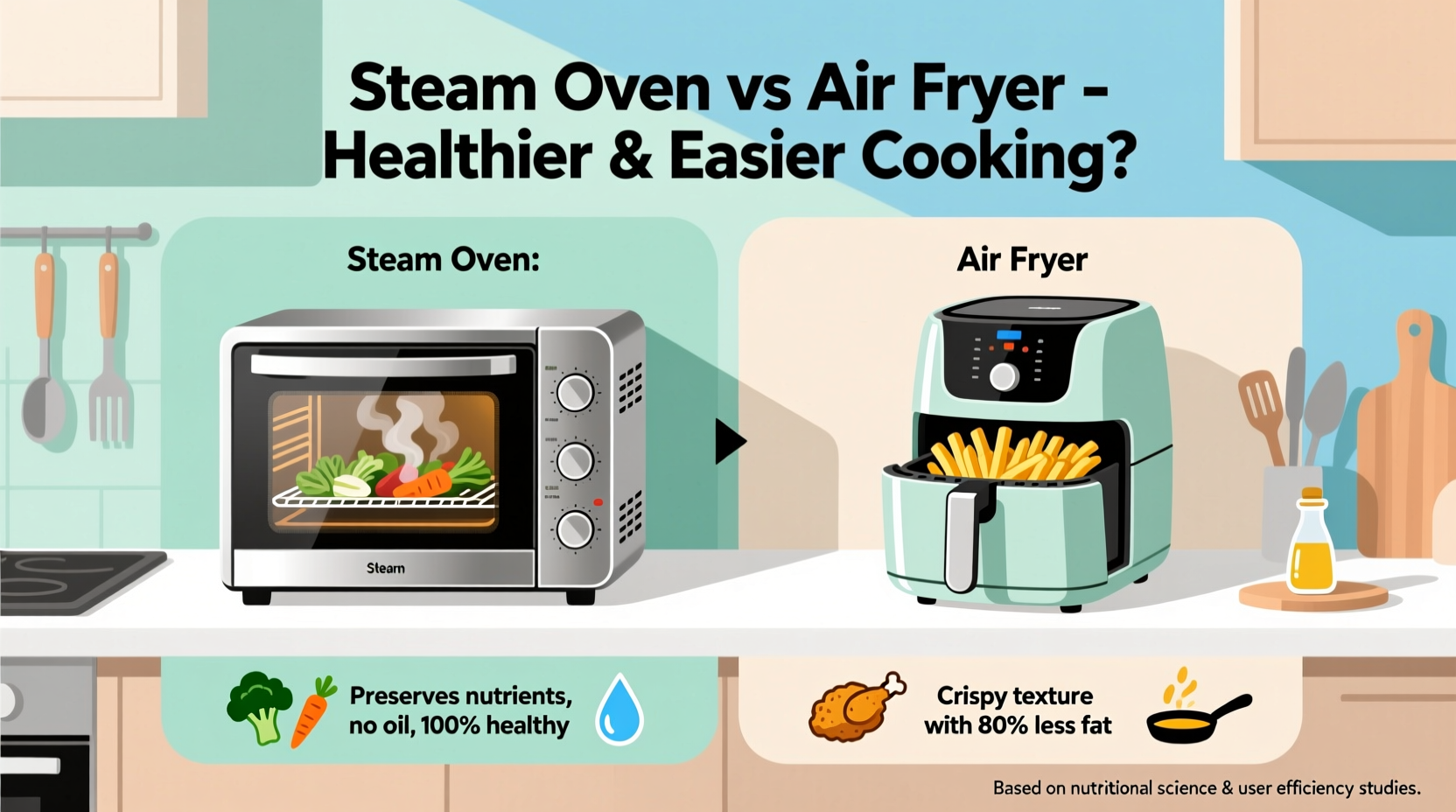
A steam oven cooks food using 100% humidity generated from heated water. Unlike conventional ovens that dry out ingredients over time, steam ovens surround food with moist heat, preserving moisture, color, and crucially, vitamins. Water-soluble nutrients like vitamin C and B-complex vitamins are particularly vulnerable to degradation during high-heat, dry cooking. Steam ovens minimize this loss.
These units can operate in full-steam mode or combine steam with convection heat (known as combi-steam), allowing for roasting, browning, and crisping while still retaining internal moisture. Many models feature preset programs for vegetables, fish, grains, and even reheating leftovers without turning them into rubbery disappointments.
Cooking times vary depending on the dish, but generally, steaming is efficient for delicate items. A salmon fillet takes about 12–15 minutes at 212°F (100°C), while broccoli retains its bright green hue and crisp-tender texture in under 8 minutes. Because no preheating is required in most cases, and there's little to no need for added fats, the process is both energy-efficient and aligned with clean-eating principles.
Tip: To enhance flavor in steam-cooked dishes, place herbs, lemon slices, or garlic in the drip tray or directly on the food before cooking.How Air Fryers Work: Crispiness Without the Oil
An air fryer is essentially a compact convection oven that circulates hot air at high speed around food, creating a Maillard reaction—the chemical process responsible for browning and crisping. While not actual frying, the result mimics deep-fried textures using little to no oil. A batch of frozen fries, for example, achieves golden crispness with just a light spray of oil, cutting fat content by up to 75% compared to traditional frying.
Air fryers excel at transforming frozen foods, proteins, and roasted vegetables into satisfying meals quickly. Most models reach operating temperature within 3–5 minutes and cook small portions in 10–20 minutes. Their simplicity makes them ideal for busy individuals or households seeking fast, low-effort meals.
However, the trade-off lies in nutritional impact. High-temperature cooking, especially above 375°F (190°C), can lead to the formation of acrylamide—a potential carcinogen found in starchy foods like potatoes when browned excessively. Additionally, the dry environment can dehydrate food faster, potentially reducing moisture-sensitive nutrients more than steam cooking does.
“While air frying reduces fat intake significantly, it doesn't eliminate concerns related to high-heat processing. For optimal health, prioritize steaming or boiling for vegetables and use air frying selectively.” — Dr. Lena Torres, Registered Dietitian and Food Science Researcher
Direct Comparison: Health, Effort, and Real-World Performance
To determine which appliance delivers healthier meals with less effort, consider five key factors: nutrient retention, fat content, ease of use, versatility, and cleanup.
| Feature | Steam Oven | Air Fryer |
|---|---|---|
| Nutrient Retention | High – preserves water-soluble vitamins and antioxidants | Moderate – some nutrient loss due to high heat and dehydration |
| Fat Content | Very low – no oil needed | Low – minimal oil required for crispiness |
| Cooking Speed | Moderate – varies by food; no preheat saves time | Fast – quick preheat and rapid cooking for small batches |
| Versatility | High – handles everything from dumplings to bread, meats, and desserts | Moderate – best for frying-style dishes; limited capacity |
| Cleanup | Moderate – requires water tank refill and occasional descaling | Easy – removable non-stick baskets dishwasher-safe |
| Portion Size | Larger capacity – suitable for families | Smaller capacity – better for 1–2 servings |
From a health standpoint, steam ovens have a clear edge in preserving nutritional value, especially for vegetables, fish, and grains. They allow you to cook without compromising on taste or texture, provided you season thoughtfully. Air fryers win on speed and sensory satisfaction—delivering crunch and browning that many find psychologically rewarding, particularly when transitioning from fried foods.
Real-World Example: A Week of Family Dinners
Consider Sarah, a working parent of two, trying to serve balanced meals without spending hours in the kitchen. She owns both a countertop steam oven and a 5.8-quart air fryer. On Monday, she prepares a sheet of rainbow vegetables—zucchini, bell peppers, carrots—for her kids. In the steam oven, they come out tender, vibrant, and require only a drizzle of olive oil and herbs after cooking. Her children actually eat them, citing “crunchy but soft” as a plus.
On Thursday, she defrosts chicken tenders meant for the kids’ lunch prep. Instead of pan-frying, she sprays them lightly and air-fries at 400°F for 12 minutes. The result is crispy on the outside, juicy inside, and uses 90% less oil than deep frying. For her own meal, she steams wild-caught cod with ginger and scallions���a restaurant-quality dish ready in 15 minutes with zero mess.
Sarah finds that neither appliance replaces the other entirely. The steam oven excels at preparing fresh, whole ingredients with minimal intervention. The air fryer shines when handling convenience foods or adding texture to otherwise bland proteins. Together, they reduce her reliance on takeout and support a diet higher in vegetables and lean protein.
Step-by-Step: Building a Low-Effort, High-Nutrition Routine
If you're deciding which appliance fits your lifestyle—or whether to invest in both—follow this practical sequence:
- Assess Your Diet: Do you eat mostly fresh produce, grains, and lean proteins? A steam oven aligns well. Do you rely on frozen snacks or crave fried textures? An air fryer may bridge the gap more effectively.
- Evaluate Kitchen Workflow: How much counter or cabinet space do you have? Steam ovens are typically larger and may require plumbing for built-in models. Air fryers are portable and easy to store.
- Test Key Recipes: Try steaming broccoli and air-frying the same florets. Compare color, texture, taste, and cleanup. Repeat with fish, chicken, and potatoes.
- Measure Effort Over Time: Track how often you use each method during a week. Which one becomes routine? Which gathers dust?
- Consider Long-Term Health Goals: If lowering sodium, sugar, and processed fats is a priority, lean toward steam cooking as the foundation, using air frying sparingly for variety.
Expert Recommendations and Common Pitfalls
Dietitians consistently emphasize cooking methods that preserve natural flavors and nutrients without relying on salt, sugar, or fat for palatability. Steaming emerges as a top recommendation in clinical nutrition settings, especially for patients managing heart disease, obesity, or digestive issues.
Yet experts also acknowledge behavioral realities. “Telling someone to eat steamed broccoli every night isn’t realistic if they don’t enjoy it,” says Dr. Torres. “The air fryer can be a transitional tool—helping people retrain their palates away from deep-fried foods toward lower-fat versions while still enjoying texture and satisfaction.”
Common mistakes include overcooking in the steam oven (leading to mushy textures) and overcrowding the air fryer basket (resulting in uneven crisping). Both can be avoided with practice and proper timing.
Checklist: Choosing the Right Appliance for You
- ☐ I prioritize nutrient-dense, whole-food meals
- ☐ I cook for more than two people regularly
- ☐ I want to reduce oil and fat in my diet significantly
- ☐ I value quiet, hands-off cooking with automatic settings
- ☐ I frequently cook frozen or breaded convenience foods
- ☐ I crave crispy, fried-like textures without the guilt
- ☐ I have limited kitchen space and prefer plug-and-play devices
- ☐ I’m willing to monitor cooking times closely to avoid drying out food
If the first four resonate more strongly, a steam oven is likely the better investment. If the latter four dominate, start with an air fryer. For those who can accommodate both, the combination offers maximum flexibility.
FAQ
Can a steam oven replace an air fryer?
Not entirely. While modern combi-steam ovens can brown and crisp food using hybrid settings, they don’t replicate the intense surface crunch of an air fryer. However, they produce healthier results overall and handle a wider range of dishes.
Is air frying truly healthy?
It’s healthier than deep frying—reducing fat and calorie content dramatically—but it’s not inherently “healthy.” The nutritional quality depends on what you cook. Air-fried potato chips are still chips. Air-fried vegetables are a great choice. Context matters.
Do steam ovens require special maintenance?
Yes. Since they use water, mineral buildup can occur over time, especially in hard-water areas. Most manufacturers recommend descaling every 1–3 months using vinegar or a dedicated solution. Water tanks should be emptied and dried after use to prevent mold.
Conclusion: Prioritize Health, Then Convenience
When comparing steam ovens and air fryers for healthier meals with less effort, the steam oven stands out as the superior choice for long-term wellness. It preserves nutrients, eliminates the need for oil, and supports a diet rich in vegetables, fish, and whole grains—all with minimal active cooking time. The air fryer, while convenient and effective for texture-driven meals, serves best as a supplementary tool rather than a primary cooking method.
The goal isn’t perfection—it’s progress. Whether you choose one appliance or both, the real win is moving away from ultra-processed, high-fat takeout toward home-cooked meals that nourish your body and simplify your routine. Start small: steam a batch of vegetables tonight, or air-fry some tofu for crunch. Build from there.
💬 Have you tried both appliances? Share your experience—what worked, what didn’t—and help others make smarter choices for healthier living.