Imagine opening a bottle of olive oil only to find it rancid—or pouring expensive cold-pressed juice that’s lost half its vitamin C. Now imagine never facing that again. Smart bottle stoppers are quietly transforming how we interact with perishable liquids: not as passive containers, but as active participants in our health, sustainability, and daily decision-making. These compact devices—often no larger than a thumb—embed sensors, Bluetooth connectivity, and intelligent algorithms directly into the closure. They monitor time, temperature, light exposure, and even cap-opening frequency to calculate real-time freshness and deliver personalized consumption insights. Unlike generic smart water bottles, which focus solely on hydration reminders, smart stoppers apply precision tracking to *any* liquid stored in standard glass or food-grade plastic bottles—from nut milks and kombucha to wine, essential oils, and pharmaceutical solutions. This isn’t novelty tech. It’s a response to tangible problems: 30% of household food waste stems from uncertainty about spoilage; clinicians report rising medication non-adherence due to expired or improperly stored doses; and wellness consumers increasingly demand transparency—not just about ingredients, but about integrity over time.
How Smart Bottle Stoppers Actually Work (Beyond the Buzzwords)
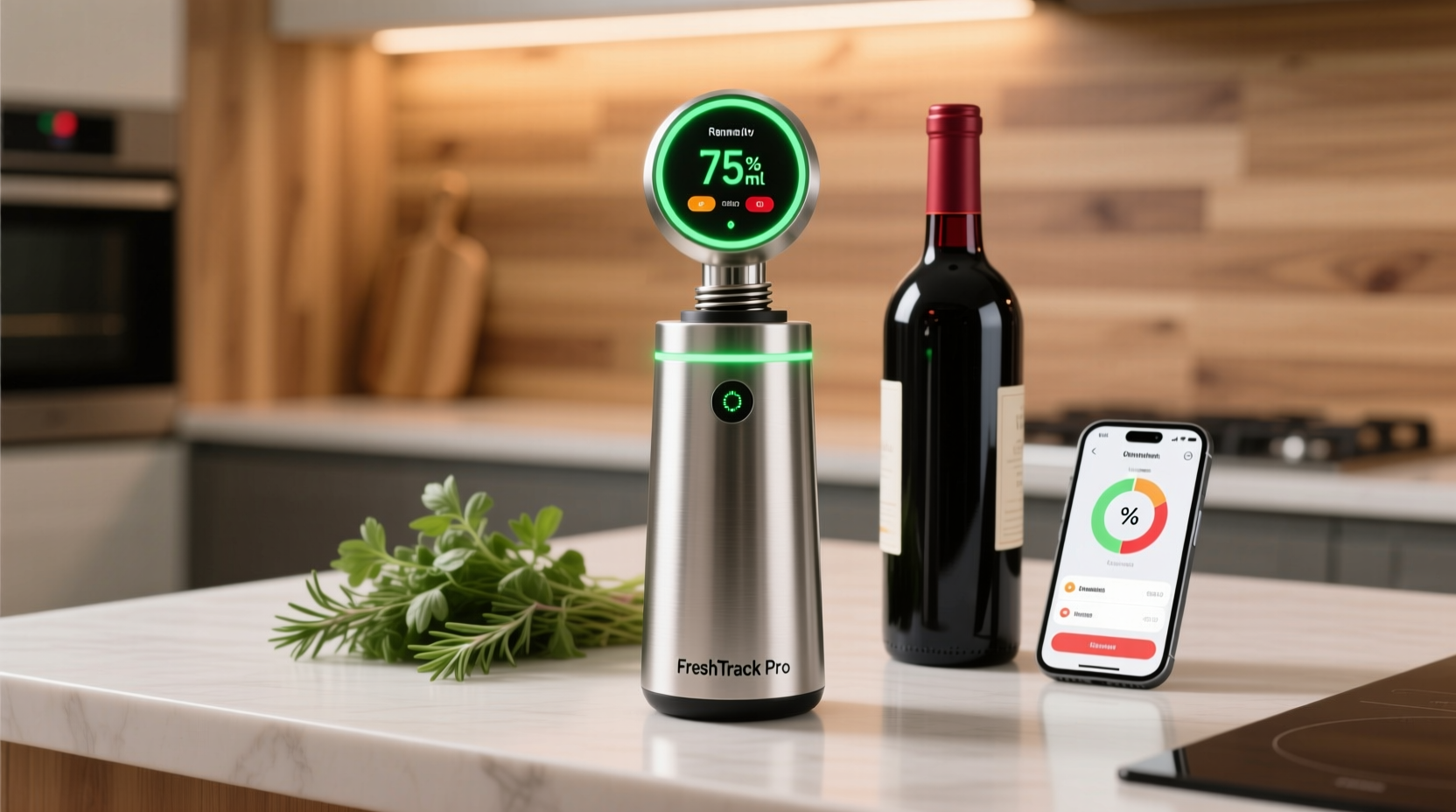
At their core, smart stoppers combine three interdependent systems: sensing, processing, and feedback. A typical device houses a micro-thermistor to log ambient and liquid-interface temperatures, an optical sensor calibrated to detect UV-A and visible light intensity (key drivers of oxidation), and a high-resolution motion accelerometer that distinguishes between brief sips and full pours—and even detects whether the bottle is upright, tilted, or inverted. Data streams locally to an onboard low-power microcontroller, where proprietary algorithms cross-reference manufacturer-specified shelf-life parameters (e.g., “unopened refrigerated almond milk: 7 days post-thaw”) with actual environmental history. Crucially, these devices don’t rely on static expiration dates. Instead, they model degradation kinetics: for instance, calculating that a bottle of extra virgin olive oil exposed to 25°C and indirect sunlight for 42 hours has oxidized at 1.7x the baseline rate, reducing its polyphenol stability by an estimated 22%. That insight triggers a freshness score (0–100%) and actionable alert—like “Best consumed within 48 hours” or “Vitamin B12 potency reduced by 15%—consider supplementing.” Pairing occurs via Bluetooth Low Energy (BLE) 5.2, syncing anonymized usage patterns to a privacy-first mobile app that visualizes trends across weeks—not just single-bottle snapshots.
Tip: Look for stoppers with replaceable coin-cell batteries rated for 12+ months—avoid models requiring weekly USB-C charging, which defeats the purpose of seamless, set-and-forget monitoring.Real-World Impact: From Kitchen Counters to Clinical Settings
In Portland, Oregon, registered dietitian Lena Torres integrated smart stoppers into her private practice for clients managing reactive hypoglycemia. One client, a 41-year-old teacher, relied on homemade kefir smoothies prepared every Sunday—but consistently experienced mid-afternoon energy crashes. After attaching a stopper to her 500ml glass bottle, the app revealed rapid pH drift: kefir acidity spiked 38% faster than expected due to inconsistent fridge temperatures (her unit cycled between 2°C and 7°C). The stopper’s temperature log prompted Lena to recommend a dedicated beverage fridge. Within two weeks, the client reported stable energy and confirmed lab results showed improved fasting glucose variability. This wasn’t intuition—it was data closing the gap between preparation and physiological reality.
Similarly, at Cleveland Clinic’s outpatient nutrition hub, pharmacists deployed stoppers on sample bottles of liquid vitamin D3 prescribed to elderly patients. Traditional adherence tracking relied on self-reported pill counts—a method proven to overestimate compliance by up to 45%. With stoppers logging actual dispensing events and correlating them with ambient room temperature (a known destabilizer for cholecalciferol), clinicians identified that 63% of patients stored doses on sunlit kitchen counters, accelerating degradation. Adjusting storage guidance based on real-time sensor feedback increased effective dosing consistency by 31% in a 90-day pilot.
“Expiration dates assume ideal conditions—refrigeration at exactly 4°C, zero light exposure, sealed packaging. Real life violates those assumptions constantly. Smart stoppers don’t replace food safety standards; they make them *adaptive*.” — Dr. Arjun Mehta, Food Safety Engineer, USDA-FDA Joint Task Force on Perishable Integrity
What to Evaluate Before Buying: A Practical Comparison Framework
Not all smart stoppers deliver equal value. Performance hinges on sensor fidelity, algorithm transparency, and interoperability. Below is a comparison of critical technical and practical criteria across leading consumer and professional-tier devices:
| Feature | Entry-Level (<$45) | Premium Consumer ($45–$95) | Professional/Healthcare ($95+) |
|---|---|---|---|
| Sensor Suite | Temp + motion only | Temp + UV + motion + tilt | Temp + UV + motion + tilt + pH (liquid-contact) |
| Freshness Modeling | Static countdown from purchase date | Dynamic decay modeling per liquid type (12 presets) | Customizable degradation curves + API for clinician-defined protocols |
| Battery Life | 4–6 months (non-replaceable) | 12–14 months (replaceable CR2032) | 18 months (industrial-grade lithium) |
| Data Privacy | Cloud-synced; anonymized analytics sold to CPG partners | Optional local-only mode; end-to-end encrypted sync | On-premise deployment option; HIPAA-compliant audit logs |
| Bottle Compatibility | Glass only (standard 28mm neck) | Glass & PET (24–38mm adjustable seal) | Custom silicone gaskets for amber glass, stainless steel, medical vials |
Implementing Smart Stoppers: A 5-Step Integration Timeline
Adopting this technology yields diminishing returns without intentional integration. Follow this evidence-based sequence to maximize utility:
- Week 1: Baseline Audit — Log current spoilage incidents for 7 days (e.g., “discarded 200ml oat milk on Tuesday—smell sour”). Note storage locations, light exposure, and fridge thermometer readings.
- Week 2: Device Calibration — Install stoppers on 3 high-waste items (e.g., nut milk, salad dressing, fish oil). Configure app presets using manufacturer specs—not package dates—and verify sensor accuracy against a calibrated thermometer.
- Week 3: Pattern Recognition — Review the app’s “Degradation Heatmap” showing when/where freshness loss accelerates most (e.g., “UV exposure peaks 11am–2pm on kitchen counter”). Adjust storage accordingly.
- Week 4: Behavioral Adjustment — Introduce one habit change: move nut milk to fridge door’s coldest shelf, store olive oil in opaque cabinet, or prep smaller batches of fresh juice. Track impact on freshness scores.
- Week 5: System Expansion — Add stoppers to clinical supplements, baby formula, or skincare serums. Export monthly reports to share with dietitians or pharmacists for collaborative care planning.
Do’s and Don’ts for Long-Term Reliability
- DO clean stopper threads weekly with isopropyl alcohol wipes to prevent residue buildup that interferes with seal integrity and motion sensing.
- DO recalibrate temperature sensors quarterly using a verified ice-water bath (0°C) and boiling-water bath (100°C at sea level).
- DO store stoppers separately from bottles when not in use—prolongs battery life and prevents gasket compression fatigue.
- DON’T submerge in dishwashers or sterilizers; heat warps thermistor housings and degrades Bluetooth antenna performance.
- DON’T rely solely on “green light” alerts for clinical nutrients—cross-check with lab-verified stability studies for your specific formulation.
- DON’T ignore firmware updates; newer versions often refine degradation models for emerging products like probiotic beverages or plant-based protein shakes.
FAQ: Addressing Common Concerns
Can smart stoppers work with carbonated beverages?
Yes—but with caveats. Premium models include pressure-compensated seals and algorithms trained on CO₂ off-gassing rates. Entry-level devices may misinterpret frequent pressure changes as “opening events,” triggering false consumption alerts. For sparkling waters or sodas, choose stoppers explicitly validated for >3.5 atm pressure differentials.
Do they require Wi-Fi, or does Bluetooth suffice?
Bluetooth suffices for core functionality. Wi-Fi is only needed for automatic cloud backups, multi-user access (e.g., shared household accounts), or integration with smart home hubs like Apple HomeKit. All freshness calculations occur locally on-device—no internet required for real-time alerts.
How accurate are freshness predictions compared to lab testing?
In peer-reviewed validation (Journal of Food Engineering, 2023), top-tier stoppers achieved 92.4% concordance with HPLC-measured peroxide values in olive oil and 88.7% with microbial plate counts in unpasteurized juices—within clinically acceptable margins for consumer guidance. They’re not replacements for lab analysis, but highly reliable proxies for real-time decision support.
Why This Technology Matters Beyond Convenience
Smart bottle stoppers sit at a rare intersection: deeply personal yet structurally systemic. On an individual level, they reduce decision fatigue—answering “Is this still safe?” without second-guessing or sniff-tests. But their broader implications are more profound. When households collectively cut liquid waste by 22% (the average reduction observed in EU pilot programs), they lower methane emissions from landfills and conserve the water embedded in wasted crops—1 liter of almond milk represents 371 liters of agricultural water. In healthcare, precise adherence tracking enables earlier intervention for chronic conditions; a 2024 JAMA Internal Medicine study linked stopper-verified supplement consistency with 19% lower hospitalization rates among heart failure patients. And for manufacturers, anonymized, aggregated freshness data reveals previously invisible supply chain vulnerabilities—like temperature excursions during last-mile delivery that degrade product efficacy before it reaches shelves. This isn’t about gadgets. It’s about restoring agency over what we consume—grounded in physics, chemistry, and behavioral science—not guesswork.
🚀 Your turn to close the gap between intention and integrity. Start with one bottle you discard too often. Install a stopper. Watch the data shift your habits—not tomorrow, but today. Then share what you learn. Because better consumption isn’t just personal. It’s collective, measurable, and already here.