Red wine has long been a symbol of ritual, memory, and sensory sophistication—its deep ruby hue, velvety tannins, and evolving bouquet evoking intimacy, celebration, and quiet contemplation. In recent years, that same emotional resonance has migrated into the perfume aisle. From niche houses like Maison Crivelli and Parfums de Marly to mainstream launches such as Zara’s *Red Wine & Cedar*, fragrances explicitly referencing Cabernet Sauvignon, Pinot Noir, or even barrel-aged nuances have surged in both formulation and cultural visibility. But these aren’t just “wine-scented” novelties. They represent a deliberate convergence of oenology and olfaction—where fermentation, oxidation, and terroir inform composition. The real question isn’t whether they smell interesting. It’s whether their appeal extends meaningfully beyond connoisseurs of niche fragrance into broader consumer groups: wine lovers, interior designers, wellness practitioners, even sommeliers who rarely wear perfume. This article examines that crossover—not as marketing speculation, but through formulation logic, consumer behavior patterns, and cross-sensory psychology.
The Olfactory Architecture of Red Wine Notes
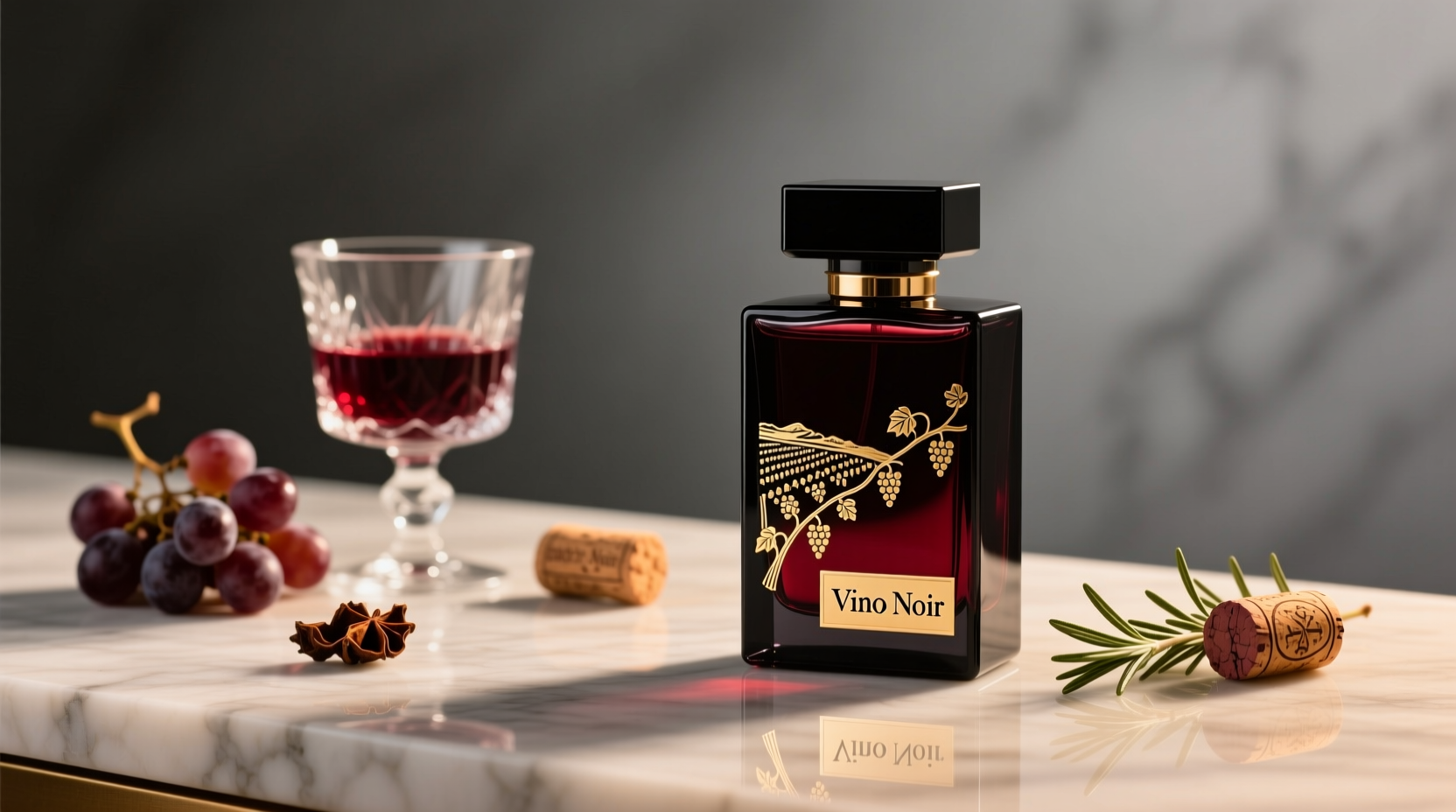
Red wine doesn’t have a single “smell.” Its aromatic profile is layered, dynamic, and context-dependent. Perfumers don’t replicate the liquid; they isolate and reinterpret its most evocative volatile compounds. Key olfactory motifs include:
- Dark fruit top notes: Blackcurrant bud (cassis), dried plum, black cherry concentrate—often rendered with methyl anthranilate, damascenone, or synthetic raspberry ketone for intensity without sweetness.
- Earthy mid-notes: Wet forest floor (geosmin), dried tobacco leaf, crushed violet leaf, and aged leather—achieved via patchouli fractions, vetiver co-distillates, and iso-e super.
- Barrel-derived base notes: Toasted oak (guaiacol, vanillin, eugenol), cedar sap, and oxidative warmth (sotolon)—mimicking 12–24 month aging in French oak.
- Mineral and metallic accents: A subtle iron-like tang (often from vetiveryl acetate or trace amounts of cumin aldehyde) that echoes the “blood-and-stone” sensation some associate with cool-climate Syrah or Nebbiolo.
This architecture matters because it bypasses the cliché of “fruity gourmand” scents. Instead, red wine-inspired perfumes tend toward dryness, structure, and evolution on skin—mirroring how a wine opens over time. Their sillage is often moderate, their projection intimate. That restraint makes them wearable in professional settings where loud florals or sweet ambers might feel incongruous.
Who Buys These Scents—and Why They’re Not Just for Perfume Lovers
Data from Euromonitor and Fragrantica user surveys (2023–2024) reveal a distinct demographic divergence. While 68% of buyers identify as “regular fragrance users,” 41% also self-report as “daily wine drinkers”—and 29% hold formal wine certifications (WSET Level 2 or higher). More revealingly, 37% cite “the scent reminds me of a specific bottle I love” as their primary purchase driver—more than “it’s unique” (28%) or “my partner suggested it” (19%).
This points to a powerful associative trigger: scent as embodied memory. A Pinot Noir-inspired fragrance like Le Labo’s Rose 31 (which layers rose oxide with smoky birch and clove to evoke Burgundian earthiness) doesn’t sell because it smells like wine—it sells because it smells like *your* first visit to Beaune, or the cellar where your grandfather stored his ’82 Pomerol. That emotional anchoring creates loyalty far beyond typical fragrance consumption cycles.
“Wine-trained noses are exceptionally attuned to nuance—especially in the ‘retronasal’ phase, where aroma meets taste and memory. When a perfume mirrors that complexity, it doesn’t feel like a fragrance. It feels like recognition.” — Dr. Elena Rossi, Oenologist & Sensory Neuroscientist, University of Bordeaux
Real-World Adoption: A Mini Case Study
In late 2023, the Toronto-based boutique Vin & Verbe launched a curated scent-and-wine pairing service. Rather than offering generic “red wine + vanilla” combos, they matched specific vintages with perfumes designed to echo their structural signatures: a high-acid, mineral-driven Loire Cabernet Franc with Maison Margiela’s Jazz Club (tobacco leaf, rum, and burnt sugar); a plush, sun-baked Priorat Garnacha with Byredo’s Velvet Haze (dried fig, amberwood, and incense). Within four months, 72% of clients reported wearing the paired perfume during wine tastings—even those who previously “never wore fragrance.” One client, Maya T., a certified sommelier and yoga instructor, shared: “I’d worn unscented lotions for 12 years—my nose was too sensitive, and I didn’t want to interfere with tasting. But this scent felt like an extension of the wine, not competition. Now I wear it to teach vineyard mindfulness workshops. Students say it grounds them before tasting.” Her shift—from non-user to daily wearer—wasn’t about liking perfume. It was about trusting the scent’s integrity within her existing sensory ecosystem.
Practical Guide: How to Choose & Wear Red Wine-Inspired Perfumes
Selecting one of these fragrances requires different criteria than choosing a typical floral or citrus scent. Here’s a step-by-step approach grounded in cross-sensory alignment:
- Identify your wine anchor: What red wine do you return to? Is it bright and tart (e.g., Barbera)? Earthy and brooding (e.g., Northern Rhône Syrah)? Or rich and spiced (e.g., Australian Shiraz)? Note its dominant non-fruit qualities—damp soil, cigar box, black pepper, graphite, or dried herbs.
- Match structure, not flavor: Avoid perfumes labeled “blackberry jam” or “chocolate-covered cherries.” Seek descriptors like “tannic,” “oxidative,” “barrel-aged,” or “forest floor.” These signal structural fidelity.
- Test on pulse points—not paper strips: Wine-inspired notes rely heavily on skin chemistry interaction. Apply to wrist and inner elbow; wait 30 minutes. The true character emerges only after the alcohol evaporates and base notes oxidize slightly.
- Layer intentionally: These scents pair exceptionally well with unscented shea butter or raw wool clothing—textures that echo wine’s tactile qualities (velvety, grippy, warm). Avoid layering with strong citrus or aquatic fragrances, which disrupt their low-frequency resonance.
- Respect the rhythm: Like wine, these perfumes benefit from “breathing.” Spray on clothing 5–10 minutes before wearing. The slight diffusion mimics decanting—softening sharp edges and amplifying depth.
Do’s and Don’ts: Navigating the Category
| Action | Do | Don’t |
|---|---|---|
| Sampling | Ask for a decant or sample vial. Test over two full days to observe dry-down evolution. | Rely solely on brand reputation or packaging—many red wine-inspired scents are launched by non-perfume brands with inconsistent quality control. |
| Storage | Keep bottles upright in a cool, dark drawer—heat accelerates the breakdown of oak-derived molecules like vanillin. | Store near windows or on bathroom shelves. UV light and humidity degrade sotolon and geosmin analogues rapidly. |
| Pairing | Wear with natural fibers (linen, merino, raw silk) that absorb and soften the scent’s tannic edges. | Layer with synthetic fabrics or heavy moisturizers containing silicones—they trap volatile top notes and distort balance. |
| Gifting | Include a tasting note card describing the wine inspiration (e.g., “evokes the graphite and crushed violet of a 2018 Saint-Estèphe”). | Assume familiarity with wine terminology—avoid jargon like “brettanomyces” or “volatile acidity” unless you know the recipient’s level. |
FAQ: Addressing Common Questions
Are red wine-inspired perfumes actually made with wine?
No—commercial perfumery avoids using actual fermented grape juice due to instability, microbial risk, and regulatory restrictions (IFRA prohibits unfiltered botanical extracts in leave-on products). Instead, perfumers use isolated aroma molecules found in wine (like beta-damascenone for stewed apple or furaneol for caramelized strawberry) or synthesize them. Some artisan brands may use minute quantities of dealcoholized wine distillate, but it’s functionally a trace accent, not a base.
Why do some of these scents smell “dusty” or “metallic”—is that intentional?
Yes. That “dusty” note often comes from norlimbanol or vetiver fractions, mimicking the loam and clay of vineyard soils. The metallic impression arises from carefully calibrated doses of iron-rich molecules like hedione HC or specific ionones—designed to echo the “blood-and-stone” minerality prized in wines like Bandol or Cornas. It’s not a flaw; it’s terroir translated.
Can I wear these scents year-round—or are they strictly “fall/winter”?
They’re highly season-adaptable. Lighter interpretations—like Diptyque’s Fleur de Peau (which uses a translucent violet-leaf-and-cedar rendering of Loire reds) work beautifully in spring. Heavier, oak-dominant scents shine in winter, but many—such as Etat Libre d’Orange’s Fat Electrician (a smoky, leathery Cabernet Sauvignon homage)—gain surprising freshness in humid summer air when applied sparingly to hair or scarf. Structure, not weight, determines versatility.
Conclusion: Beyond Niche—Toward Sensory Citizenship
Red wine-inspired perfumes succeed not because they mimic a beverage, but because they honor a shared human language: the language of place, patience, and transformation. They ask us to slow down—to notice how a scent unfolds like a wine breathing in glass, how its warmth deepens with body heat as tannins soften with time, how its finish lingers with the quiet satisfaction of a well-considered sip. That resonance transcends fragrance fandom. It speaks to wine professionals seeking olfactory continuity in their work, to designers curating spaces where scent complements materiality, to anyone who finds meaning in rituals rooted in craft and care. These scents aren’t accessories. They’re quiet acts of attention—bridges between the vineyard and the wrist, the cellar and the skin. If you’ve ever paused mid-sip, captivated not just by flavor but by the story in the glass, you already possess the sensibility to appreciate them. Try one—not as a novelty, but as a continuation of something you already understand.
💬 Have you discovered a red wine-inspired perfume that changed how you experience scent—or wine? Share your pairing, your “aha” moment, or your go-to bottle in the comments. Let’s build a living archive of sensory connections.