At first glance, a clear glass jar with a two-piece metal lid—complete with a rubber gasket and screw band—looks like a standard mason jar. It’s the kind you see on farmhouse shelves, at farmers’ markets, and even behind distillery bars. But when that same jar holds unaged corn whiskey labeled “Appalachian Lightning” or “Blue Ridge Shine,” something shifts: it’s no longer just a container. It becomes evidence—of tradition, yes, but also of regulatory scrutiny. The distinction between a “moonshine jar” and a “mason jar” isn’t about glass thickness or thread pitch. It’s about intent, labeling compliance, tax status, and decades of federal enforcement precedent. Confusing the two isn’t merely a semantic oversight—it can trigger audits, product seizures, or even criminal referrals. This article cuts through folklore to clarify what the law actually says, how regulators interpret it, and why the jar on your shelf may carry more legal weight than you realize.
Origins and Shared Design: Why They Look Identical
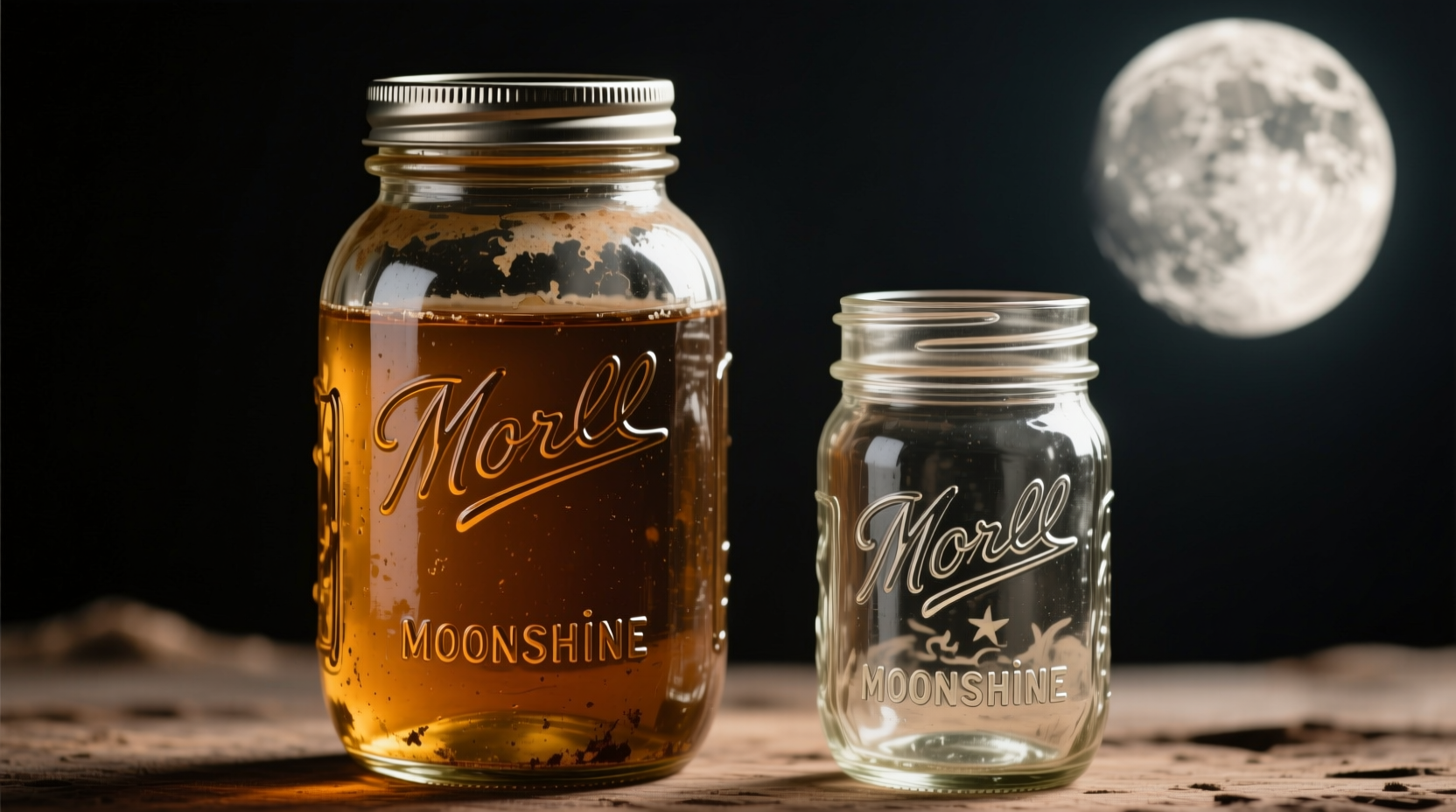
The visual similarity is intentional—and historical. Mason jars were patented by John Landis Mason in 1858 to solve food spoilage. Their defining features—a threaded mouth, reusable zinc lid with rubber seal, and wide-mouth versatility—made them ideal for home canning. By the early 20th century, rural distillers adopted the same jars for practical reasons: durability, reusability, and ease of sealing for short-term storage. When Prohibition began in 1920, these jars became synonymous with illicit spirits—not because they were designed for alcohol, but because they were already ubiquitous, inexpensive, and difficult to trace.
Today, both commercial craft distilleries and licensed micro-distilleries often use the same jars sold by Ball, Bernardin, or Kerr. The glass itself is nearly identical: soda-lime glass, 12-ounce or 16-ounce capacity, ASTM-compliant thermal shock resistance. Even the lid components meet the same FDA food-contact standards. Yet the moment liquid enters that jar—and especially when it’s distilled spirit—the regulatory framework changes entirely.
The Legal Threshold: When a Mason Jar Becomes a Moonshine Jar
There is no federal statute titled “Moonshine Jar Regulation.” Instead, the distinction emerges from three intersecting bodies of law: the Federal Alcohol Administration Act (FAA Act), the Internal Revenue Code (IRC) Title 26, and FDA food-labeling guidance. What transforms a generic mason jar into a regulated “moonshine jar” is not its shape—but how it’s used in commerce:
- Labeling intent: If the jar bears any branding, logo, slogan, or imagery associated with distilled spirits—even a rustic font or cornstalk motif—it triggers TTB (Alcohol and Tobacco Tax and Trade Bureau) labeling jurisdiction.
- Tax classification: Any container holding distilled spirits intended for sale must comply with IRC § 5001–5011, including excise tax payment ($13.50 per proof gallon), taxpaid stamping, and formula approval.
- Consumer expectation: Courts have ruled (U.S. v. Johnson, 2017) that “when a common household item is repurposed in a manner that signals alcoholic beverage to the average consumer, it assumes the legal obligations of a beverage container.”
This means a distillery filling a Ball Wide Mouth quart jar with 100-proof whiskey—and selling it at a tasting room—is using a “moonshine jar” under federal law. That same jar, filled with peach preserves and sold at a roadside stand, remains a lawful mason jar. The container doesn’t change; the context does.
Tip: Never reuse retail mason jars for distilled spirits without TTB label approval—even for complimentary samples at your distillery event. A handwritten “Taste Only” tag does not satisfy federal labeling requirements.Key Legal Differences: A Regulatory Comparison
The table below outlines enforceable distinctions—not marketing preferences—that determine whether a jar falls under alcohol regulation or general food packaging rules.
| Regulatory Area | Mason Jar (Food Use) | “Moonshine Jar” (Distilled Spirits) |
|---|---|---|
| Label Requirements | FDA Nutrition Facts panel optional; ingredient list required only if >2 ingredients; no mandatory net quantity statement format. | TTB-mandated front label: Brand name, class/type (e.g., “unaged corn whiskey”), alcohol content (% ABV), net contents in metric & U.S. customary units, government health warning statement, and bottler/distiller address. |
| Tax Compliance | No federal excise tax applies. | Must be taxpaid before removal from bonded premises; $13.50/proof gallon rate applies; taxpaid stamps or electronic reporting required. |
| Production Oversight | Subject to FDA Food Safety Modernization Act (FSMA) preventive controls if commercially produced. | Must be produced in a TTB-approved distilled spirits plant; all formulas pre-approved; records subject to unannounced TTB audits. |
| Seal Integrity Standards | No federal requirement beyond general food-grade seal performance. | Must prevent evaporation loss >0.5% per year per TTB Ruling 2021-1; lid gaskets tested for alcohol resistance (not just water). |
| Enforcement Risk | Noncompliance may trigger FDA warning letter or recall. | Unlabeled or untaxed spirits in mason-style jars are classified as “nonbeverage products” under 27 CFR § 19.911—subject to seizure, civil penalty up to $10,000/jar, or criminal prosecution. |
Real-World Enforcement: The Tennessee Case Study
In 2022, a small Appalachian distillery in Sevierville, TN, began offering limited “heritage edition” 12-ounce jars of white dog whiskey in reused, sterilized Ball jars. Each jar bore a hand-stamped copper label reading “Batch #7 • Unaged • 110 Proof” and included a QR code linking to tasting notes. No TTB label approval had been sought; the distillery argued it was “educational sampling only” and fell under Tennessee’s farm distillery exemption.
Within six weeks, TTB auditors visited during a routine bond examination. They photographed every jar, reviewed sales logs, and discovered 217 jars had been sold directly to consumers via their website—with shipping labels listing “distilled spirits” in the contents field. TTB issued a Notice of Violation citing three infractions: failure to obtain Certificate of Label Approval (COLA), failure to taxpay prior to release, and misbranding under FAA Act § 12(a)(1). The distillery paid a $24,800 civil penalty, reformulated packaging using TTB-compliant amber glass with tamper-evident shrink bands, and withdrew all online listings for jarred product until COLA approval was granted—eight months later.
This case illustrates a critical reality: regulators do not distinguish based on nostalgia or craftsmanship. They distinguish based on transactional evidence—what’s written on the jar, how it’s sold, and whether taxes were paid before consumer receipt.
Expert Insight: Regulatory Clarity from Industry Authorities
“The term ‘moonshine jar’ has zero legal definition in the Code of Federal Regulations. What matters is function, not folklore. If you’re putting distilled spirits into a container and transferring ownership—even for $1—the TTB treats that container as a ‘bottle’ under 27 CFR Part 4. That includes mason jars, growlers, ceramic crocks, or repurposed perfume flacons. There is no grandfather clause for tradition.”
— Daniel R. Hayes, Former TTB Chief Counsel and Partner, Beverage Law Group PLLC
“We’ve seen dozens of cases where distillers assumed ‘small batch’ or ‘limited release’ exempted them from labeling rules. It doesn’t. The TTB’s position is unambiguous: size, volume, or production method never overrides the requirement for taxpaid status and approved labeling when spirits enter commerce.”
— Maria Chen, Director of Compliance, American Craft Spirits Association
Actionable Compliance Checklist for Distillers & Retailers
If you manufacture, bottle, sell, or distribute distilled spirits in mason-style containers, verify each item below before production or sale:
- ✅ Obtain TTB Certificate of Label Approval (COLA) for every unique label design—including color variants and seasonal editions.
- ✅ Confirm taxpaid status is recorded in TTB’s Permits Online system before removing spirits from bonded premises.
- ✅ Use only lids certified for alcohol contact (e.g., Ball’s “Lid for Spirits” line, not standard canning lids).
- ✅ Print mandatory health warning statement in 8-point minimum font, centered on front label—not tucked into fine print on the back.
- ✅ Maintain batch records showing fill date, proof, and container count for minimum three years post-sale.
- ✅ Avoid colloquial terms like “shine,” “white lightning,” or “corn liquor” unless properly classified and approved (e.g., “unaged corn whiskey” requires formula approval).
FAQ: Clarifying Common Misconceptions
Can I legally sell moonshine in a mason jar if I’m a licensed distillery?
Yes—but only after obtaining TTB label approval (COLA), paying federal excise tax, and ensuring the jar meets TTB’s container integrity standards. Using a mason jar does not exempt you from any distilled spirits regulations. In fact, TTB scrutinizes non-traditional containers more closely due to higher risk of consumer confusion and evaporation.
Is it illegal to own or display a mason jar labeled “moonshine” if it’s empty?
No—possession of an empty, unlabeled jar is not prohibited. However, displaying an *empty jar with vintage “moonshine” branding* (e.g., a 1940s-era jar with “Pappy’s Pure Corn” embossed on the glass) may violate TTB advertising rules if used in a distillery’s marketing materials without proper disclaimers, as it could imply endorsement or authenticity.
Do state laws add further restrictions beyond federal rules?
Yes—significantly. For example, North Carolina prohibits any distilled spirits container smaller than 200 mL (including 12-oz mason jars) for retail sale. Kentucky requires additional state-specific health warnings on all spirit containers. Always consult your state’s Alcoholic Beverage Control board before launching jarred products—even if federally compliant.
Conclusion: Respect the Jar, Respect the Law
The mason jar is an icon of American self-reliance—functional, humble, and enduring. The moonshine jar carries that same silhouette, but it bears the weight of federal statutes, tax obligations, and public health mandates. Conflating the two isn’t a harmless nod to heritage; it’s a regulatory vulnerability that can cost thousands in penalties, damage brand reputation, and jeopardize operating licenses. Whether you’re a fourth-generation distiller honoring Appalachian roots or a startup crafting small-batch whiskey in a converted barn, clarity begins with intentionality: choose the jar deliberately, label it precisely, taxpay transparently, and document rigorously. Authenticity isn’t diminished by compliance—it’s deepened by it. When your jar sits on a shelf, let its clarity reflect not just the spirit inside, but the integrity of your process.
💬 Have you navigated TTB approval for jarred spirits—or faced an unexpected audit? Share your experience in the comments. Your insight helps others avoid costly missteps and strengthens our collective understanding of responsible distilling practice.