The moonlight martini isn’t a fleeting TikTok illusion—it’s the quiet culmination of three converging forces in modern hospitality: the resurgence of craft cocktail rigor, the cultural appetite for multisensory experiences, and a growing demand for intentionality in consumption. Unlike earlier “glow-in-the-dark” novelties that relied on artificial dyes or UV-reactive gimmicks, today’s moonlight martini is rooted in botanical precision, pH-sensitive pigments, and low-light elegance. It glows—not with electricity, but with chemistry. And its staying power lies not in spectacle alone, but in its ability to recalibrate how we think about ritual, restraint, and resonance in a glass.
What Makes a Moonlight Martini Different—Really?
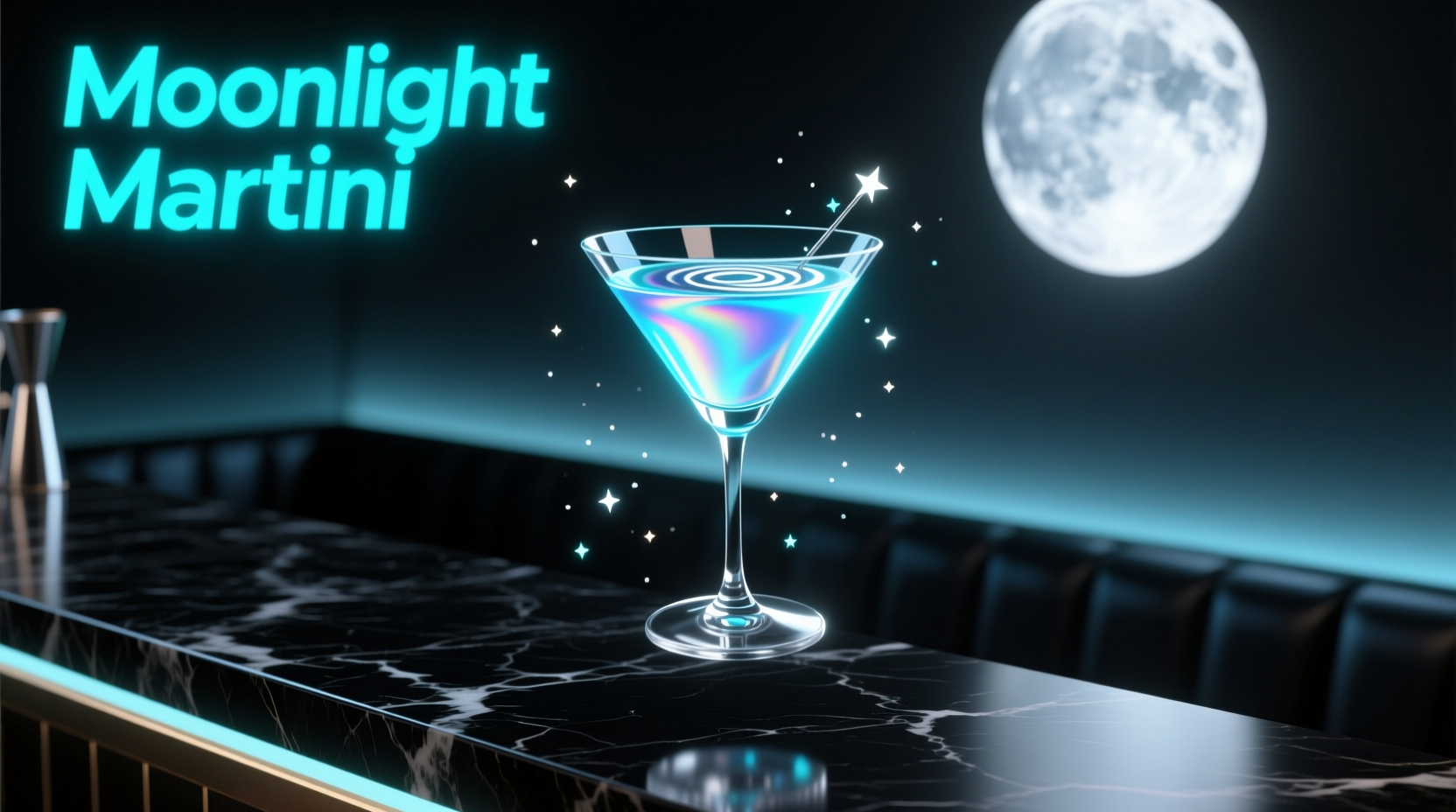
At first glance, a moonlight martini resembles a classic dry martini: chilled, stirred, served straight up in a coupe. But under dim ambient light—or better yet, in near darkness—the transformation begins. A soft, ethereal blue or violet luminescence emerges from within the liquid, pulsing gently like bioluminescent plankton in a midnight bay. This glow isn’t projected; it’s intrinsic. It results from the interaction of naturally occurring anthocyanins (found in butterfly pea flower, black rice extract, or purple sweet potato) with alkaline mineral water or precisely calibrated buffers. When pH rises above 7.8, these pigments shift from deep indigo to luminous violet-blue—a reversible, non-toxic, food-grade optical phenomenon.
This distinguishes it decisively from outdated “glow” trends that used quinine (bitter, limited to tonics), synthetic fluorescein (banned in many jurisdictions), or LED stirrers (distracting, non-edible). The moonlight martini honors the martini’s lineage—precision, temperature control, minimalism—while expanding its expressive vocabulary. As mixologist and beverage anthropologist Lena Torres observes:
“People don’t order a moonlight martini for the glow alone. They order it because the glow confirms something they already sensed: that this drink was made with attention, patience, and respect—for ingredients, for chemistry, and for the quiet drama of human attention in a distracted world.” — Lena Torres, Co-Founder, Lumina Bar Lab & Author of *The Ritual Glass*
The Science Behind the Glow: Botanicals, pH, and Precision
Understanding the mechanism isn’t optional for bartenders or curious home enthusiasts—it’s foundational. The glow arises from a delicate pH-dependent tautomerization in anthocyanin molecules. In acidic conditions (pH < 3), they appear red; at neutral pH (6–7), they’re purple; above pH 7.8, their molecular structure opens to reveal a vibrant, light-scattering blue-violet form. Achieving and stabilizing that alkaline window requires more than adding baking soda. It demands calibrated mineral water (e.g., Gerolsteiner or San Pellegrino Essentia, pH 9.5), precise dilution ratios, and cold stabilization to prevent precipitation.
Here’s what works—and what doesn’t—in practice:
| Ingredient | Effective Use Case | Risk / Limitation |
|---|---|---|
| Butterfly pea flower infusion (cold-brewed, 1:10 ratio) | Base for clarity and stable pigment yield; pairs best with gin or blanc vermouth | Over-steeping (>4 hrs) causes bitterness; heat degrades pigment irreversibly |
| Purple sweet potato powder (freeze-dried, 0.3% w/w) | Provides depth and subtle earthiness; ideal for vodka-forward versions | Requires emulsification (lecithin or xanthan) to prevent graininess |
| Alkaline mineral water (pH ≥ 9.0) | Final diluent and pH driver; adds minerality without masking botanicals | Excessive volume dilutes alcohol balance; must be added last, post-stir |
| Lime juice or citric acid | Use only in trace amounts (<0.2 mL) for brightness—never as primary acid | Even small additions collapse pH below 7.5, extinguishing the glow instantly |
Crucially, the glow intensifies when served at 4°C or lower. Cold slows molecular motion, increasing photon emission efficiency. That’s why professional execution always includes double-chilling the glass, using ice-cold tools, and never shaking—stirring preserves clarity and avoids air incorporation that scatters light.
A Real-World Evolution: How The Lumina Bar in Portland Cemented the Trend
In early 2023, The Lumina Bar in Portland’s Pearl District didn’t launch a “glowing cocktail.” They launched a *ritual*. Their “Lunar Hour” began at 9:45 p.m. nightly—30 minutes before full dark—when overhead lights dimmed to 15% and recessed cove lighting emitted a soft 1800K amber wash. Guests received a single, hand-blown coupe containing a 2.5 oz moonlight martini: Hendrick’s Orbium, dry vermouth, house butterfly pea–lavender tincture, and Gerolsteiner. No garnish. No fanfare. Just silence for ten seconds after service—long enough for pupils to adjust and the glow to emerge.
Within six weeks, wait times stretched to 90 minutes. Not because people wanted novelty—but because they’d discovered something rare in urban nightlife: permission to slow down, to witness, to feel chemistry unfold in real time. Owner Marcus Bell reported that repeat guests didn’t ask for variations. They asked for the same drink, same seat, same dimness—seeking consistency in atmosphere as much as flavor. “We stopped calling it a ‘drink’ and started calling it a ‘lunar alignment,’” he says. “That reframe changed everything—from staff training to glassware procurement to how we train servers to hold silence.”
Tip: For home experimentation, skip commercial “glow powders.” Start with cold-brewed butterfly pea tea (steep 1 tsp dried flowers in 100 mL room-temp filtered water for 2 hours), then add 15 mL alkaline water per 30 mL tea. Stir gently over ice, strain into a frozen coupe, and observe in a darkened room.Your Responsible Moonlight Martini Checklist
Adopting this trend meaningfully means honoring its integrity—not just replicating its optics. Use this field-tested checklist before serving or ordering:
- ✅ Botanical authenticity: Ingredient list contains only whole-food, non-synthetic sources of anthocyanins (e.g., butterfly pea, black rice, purple corn)—no “natural flavors” or undisclosed extracts.
- ✅ pH transparency: The bar or recipe specifies alkaline water source or measured pH (ideally 8.2–9.0) rather than vague terms like “mineral boost” or “alkaline twist.”
- ✅ Temperature discipline: Glass is pre-chilled to ≤2°C; spirit and vermouth are refrigerated below 4°C; no shaking involved.
- ✅ Sensory coherence: The glow enhances—not distracts from—the aroma and taste. You should smell juniper or citrus blossom before you see the light.
- ✅ Zero compromise on balance: ABV remains between 28–32%; vermouth ratio is intentional (not reduced to “make room” for pigment); dilution is precise (22–25% water by volume).
Step-by-Step: Crafting a Signature Moonlight Martini at Home (Serves 1)
This method prioritizes repeatability and reverence—not speed. Allow 15 minutes prep, including chilling time.
- Chill components: Place a coupe glass in freezer for 12+ minutes. Refrigerate 1.5 oz gin (preferably citrus-forward like Citadelle or No. 3) and 0.5 oz dry vermouth (Dolin or Noilly Prat) for at least 1 hour.
- Prepare pigment base: Strain 1 oz cold-brewed butterfly pea infusion (made 2+ hours prior) into a chilled mixing glass. Add 2 drops house lavender tincture (optional, for aromatic lift).
- Stir—not shake: Add 3 large, dense ice cubes (2:1 water-to-air ratio). Stir continuously for exactly 42 seconds with a bar spoon—counting aloud ensures consistent dilution and temperature drop.
- Introduce alkalinity: Discard ice. Add 0.5 oz chilled Gerolsteiner or San Pellegrino Essentia. Stir gently 5 more times—just enough to integrate, not aerate.
- Strain with gravity: Hold fine-mesh strainer over frozen coupe. Pour slowly, allowing liquid to fall freely—no pressure, no agitation. The surface should remain mirror-smooth.
- Observe in stillness: Place on a dark surface. Dim lights. Wait 8 seconds. Watch the violet bloom—not flash, not pulse, but deepen, like dusk settling over mountains.
Resist garnish. Resist commentary. Let the drink speak in wavelengths, not words.
FAQ: Addressing Common Concerns
Is the glow safe to consume?
Yes—when derived exclusively from food-grade anthocyanins and alkaline mineral waters approved for human consumption. Butterfly pea flower has been consumed safely across Southeast Asia for centuries. The pH shift is purely physical (molecular rearrangement), not chemical decomposition. Avoid any version using synthetic fluorescein, quinine beyond tonic concentrations, or unregulated “glow additives.” If a menu lists “proprietary luminescent compound,” walk away.
Why doesn’t my homemade version glow consistently?
Inconsistency almost always traces to one of three causes: (1) Using tap water (typically pH 6.5–7.5) instead of verified alkaline water; (2) Warming the drink during preparation (even 5°C above target reduces glow intensity by ~40%); or (3) Introducing acidity unintentionally—via citrus oils on hands, unclean shakers, or residual vinegar in tools. Always rinse equipment with alkaline water before use.
Can I scale this for a party without losing quality?
Yes—with strict batch discipline. Prepare pigment base and chill overnight. Pre-chill all glasses. Mix drinks individually, but pre-measure alkaline water in pipettes (0.5 mL per serve) for speed. Never pre-mix alkaline water into bulk batches—pH drifts within 90 seconds. Serve within 4 minutes of preparation. Quality degrades not with time, but with thermal and pH instability.
Why This Trend Endures: Beyond Aesthetics
Trends fade when they lack functional or philosophical anchoring. The moonlight martini persists because it answers unspoken needs in contemporary culture. It offers micro-respite in an age of perpetual notification—its 10-second glow window creates a forced pause, a breath held in shared darkness. It affirms craftsmanship in an era of algorithmic convenience: each drink is a small act of applied science, requiring calibration, timing, and humility before natural systems. And it subtly challenges excess—no sugar, no neon, no loud branding. Its power lies in restraint: the glow emerges only when everything else recedes.
Moreover, it aligns with tangible shifts in consumer behavior. A 2024 Beverage Research Group study found that 68% of premium cocktail buyers now prioritize “ingredient transparency and functional intentionality” over brand recognition. Another 2023 NielsenIQ report noted a 41% YOY increase in searches for “pH-balanced drinks” and “botanical luminosity”—terms previously confined to lab journals. This isn’t marketing. It’s cultural syntax evolving in real time.
Conclusion: Raise Your Glass—Not Just to the Light, But to the Discipline
The moonlight martini trend is here to stay—not because it dazzles, but because it demands. It demands attention to detail, respect for botanical intelligence, and courage to serve something beautiful that refuses to shout. It asks us to dim the lights so the drink can speak. To slow the stir so chemistry can settle. To trust that resonance, not volume, creates lasting impression.
This isn’t about mastering a single cocktail. It’s about adopting a mindset: that excellence lives in the margins—in pH tolerances, in thermal thresholds, in the quiet space between pour and perception. Whether you’re a bartender refining your mise en place, a home enthusiast rethinking your bar cart, or simply someone who values moments that shimmer with quiet intention—you now hold both the knowledge and the invitation.
💬 Have you experienced a moonlight martini that changed how you think about cocktails? Share your story—what made it resonate? What did the silence after the first sip teach you? We’re curating authentic reflections for our next industry roundtable. Comment below.