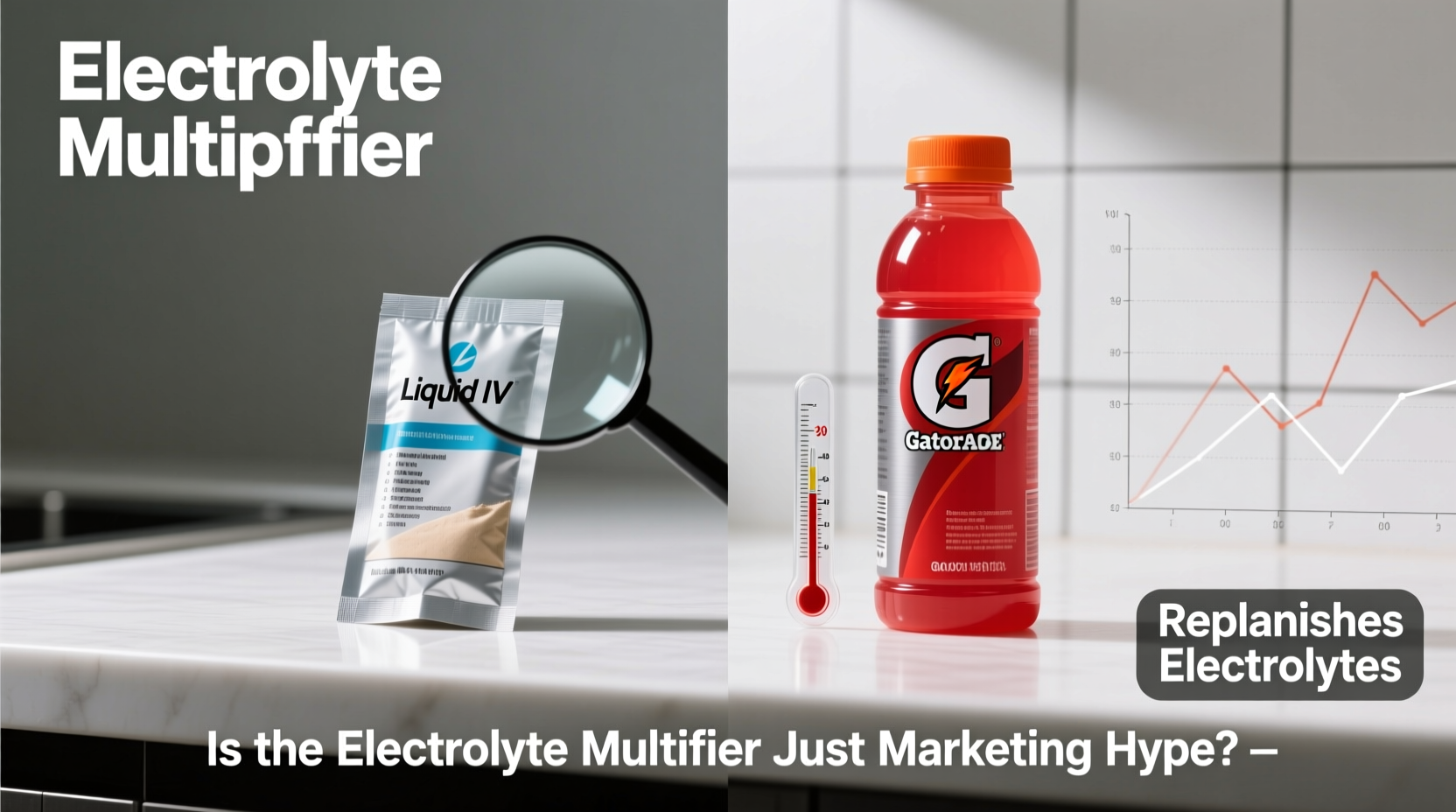
When it comes to rehydration, two names dominate the conversation: Liquid IV and Gatorade. One markets itself as a scientifically advanced “electrolyte multiplier” with superior absorption, while the other has been a household staple for decades, trusted by athletes and casual users alike. But is Liquid IV’s performance truly revolutionary — or is its premium price tag built more on branding than biology?
This article cuts through the marketing claims to examine what really sets these products apart. We’ll analyze their ingredient profiles, hydration mechanisms, clinical backing, and practical use cases. The goal isn’t to declare a winner, but to help you understand whether the so-called “multiplier” effect justifies the cost — or if you’re better off sticking with what you know.
The Science of Hydration: How Electrolytes Work
Before comparing products, it’s essential to understand how hydration works at the cellular level. Water alone doesn’t guarantee rapid absorption. The body relies on a process called sodium-glucose cotransport, primarily in the small intestine, to move water into the bloodstream efficiently.
This mechanism requires three key components:
- Sodium: Draws water into cells and maintains fluid balance.
- Glucose (or another simple sugar): Triggers the cotransport system.
- Water: The medium being transported.
Oral Rehydration Solutions (ORS), like those used by the World Health Organization (WHO) to treat dehydration in medical emergencies, are formulated around this principle. They contain precise ratios of sodium and glucose to maximize water absorption — often far more effectively than plain water.
Liquid IV bases its formula on this WHO model, claiming its “CellSip Technology” enhances absorption up to 2–3 times faster than water alone. Gatorade, meanwhile, follows a sports drink model focused on energy replenishment during prolonged physical activity.
“Not all fluids hydrate equally. The right ratio of electrolytes and sugars can dramatically improve fluid uptake.” — Dr. Sarah Lin, Clinical Nutritionist and Hydration Researcher
Ingredient Breakdown: What’s Really in Each Product?
To assess whether Liquid IV delivers on its promises, we need to look under the hood. Below is a detailed comparison of a standard serving of each product — one stick pack of Liquid IV (Mixed Berry flavor) versus one 20 oz bottle of Gatorade (Lemon-Lime).
| Component | Liquid IV (1 stick) | Gatorade (20 oz bottle) |
|---|---|---|
| Calories | 45 | 140 |
| Sugar | 11g (from cane sugar & dextrose) | 34g (from high-fructose corn syrup) |
| Sodium | 500mg | 270mg |
| Potassium | 370mg | 75mg |
| Other Electrolytes | Magnesium, Zinc | None |
| Vitamins | B3, B5, B6, B12, Vitamin C | None |
| Sweeteners | Sucralose | None |
| Price per Serving | ~$3.00 | ~$1.50 |
The differences are stark. Liquid IV contains nearly double the sodium and five times the potassium compared to Gatorade. It uses less sugar but includes artificial sweeteners to maintain taste. Its vitamin fortification supports energy metabolism and immune function, which may benefit recovery but aren’t directly tied to hydration speed.
Gatorade, designed for endurance athletes, prioritizes quick energy via carbohydrates. While effective during long workouts, the high sugar content can slow gastric emptying when consumed outside intense activity — potentially reducing hydration efficiency.
Tip: For fast rehydration after illness or light activity, choose lower-sugar, higher-electrolyte options. For sustained energy during long runs or games, moderate sugar intake can be beneficial.Clinical Claims: Does the “Electrolyte Multiplier” Hold Up?
Liquid IV asserts that its formula delivers “2–3 times more hydration than water alone.” This claim stems from research on ORS and the sodium-glucose cotransport system. But does independent science back this specific formulation?
A 2018 study published in the Journal of Clinical Medicine reviewed ORS efficacy and confirmed that properly balanced solutions increase water absorption significantly compared to plain water. However, no peer-reviewed trials specifically tested Liquid IV against placebo or control groups using identical metrics.
The company cites third-party testing conducted by an independent lab (Hydration Science Lab, 2020), which found participants consuming Liquid IV showed improved urine concentration markers and perceived hydration levels over 4 hours compared to water. While promising, this study was not double-blind, had a small sample size (n=20), and was funded by the brand — raising questions about bias.
In contrast, Gatorade’s research foundation is broader, with decades of sports science behind it. Studies confirm its effectiveness in maintaining performance during prolonged exercise, particularly when fuel depletion is a risk. However, Gatorade is not marketed as a rapid rehydration tool for non-athletic scenarios like hangovers or stomach bugs.
“Theoretically, Liquid IV’s formula aligns with proven ORS principles. But real-world outcomes depend on context — you don’t always need maximum absorption.” — Dr. Marcus Tran, Sports Medicine Physician
Real-World Use Cases: When Each Product Shines
Effectiveness depends heavily on the situation. Here’s a breakdown of where each product performs best based on physiological needs and user feedback.
Post-Illness Recovery (e.g., Stomach Flu)
After vomiting or diarrhea, the body loses large amounts of sodium and potassium. Rapid rehydration with minimal digestive stress is critical. Liquid IV’s low sugar and high electrolyte profile closely mirrors WHO guidelines, making it ideal here. Multiple users report quicker recovery compared to Gatorade, which some find too sweet or nauseating when ill.
Endurance Exercise (e.g., Marathon Training)
During runs lasting over 60–90 minutes, glycogen stores deplete. Athletes need both hydration and fuel. Gatorade’s higher carbohydrate content provides immediate energy, helping delay fatigue. In this context, its slower absorption is acceptable — even beneficial — due to sustained release.
Hangover Relief
Alcohol causes dehydration and electrolyte imbalance. Many turn to Liquid IV for next-day recovery. Its combination of B vitamins, potassium, and rapid hydration support makes it popular. Still, anecdotal evidence dominates; no clinical trials verify superiority over simpler alternatives like water + electrolyte tablets.
Daily Hydration Boost
For people who struggle to drink enough water, flavored electrolyte mixes can encourage intake. However, daily use of sucralose and added sugars — even in moderation — raises concerns about long-term metabolic effects. Neither product is ideal for routine consumption unless medically indicated.
Mini Case Study: College Athlete vs. Office Worker
Jamie, 21 – NCAA Soccer Player
During two-hour practices in 90°F heat, Jamie sweats heavily and trains multiple times daily. She uses Gatorade during games for quick carbs and switches to Liquid IV afterward to rebalance electrolytes without excess sugar. This hybrid approach optimizes both performance and recovery.
David, 34 – Software Developer
David travels frequently and often wakes up dehydrated after flights. He tried Gatorade but found it too sugary. After trying Liquid IV on a redeye flight, he noticed less fatigue and fewer headaches. He now keeps stick packs at his desk for midday hydration boosts — though he limits use to twice weekly to avoid artificial sweeteners.
These examples show that neither product is universally superior. Context determines value.
Practical Checklist: Choosing the Right Option for You
Use this checklist to decide which product fits your needs — or whether you need either at all.
- ✅ Are you recovering from illness with vomiting or diarrhea? → Liquid IV preferred
- ✅ Exercising intensely for more than 75 minutes? → Gatorade may provide needed energy
- ✅ Concerned about sugar intake? → Liquid IV has less sugar but includes sucralose
- ✅ Looking for cost-effective daily hydration? → Neither; consider plain water + pinch of salt
- ✅ Need convenience on the go? → Liquid IV stick packs are easier to carry
- ✅ Sensitive to artificial sweeteners? → Avoid Liquid IV; try unflavored electrolyte powders
- ✅ Seeking maximum hydration speed? → Liquid IV’s formula is closer to medical-grade ORS
Frequently Asked Questions
Is Liquid IV FDA-approved?
No, Liquid IV is classified as a dietary supplement, not a drug. It is not FDA-approved, though it is manufactured in FDA-registered facilities following Good Manufacturing Practices (GMP).
Can I use Liquid IV every day?
Occasional use is generally safe, but daily consumption may lead to excessive sodium intake (especially for those with hypertension) or digestive sensitivity to sucralose. Most healthy adults don’t need supplemental electrolytes if they eat a balanced diet and drink adequate water.
Does Gatorade actually hydrate better than water?
During prolonged physical activity, yes — because it replaces lost electrolytes and provides energy. But for general hydration or mild dehydration, water is sufficient, and drinks with very high sugar content may slow absorption.
Final Verdict: Marketing Hype or Meaningful Innovation?
Liquid IV is not pure marketing hype — its formulation is grounded in legitimate science. The concept of enhanced hydration via optimized sodium-glucose ratios is well-documented and life-saving in clinical settings. Where the brand stretches credibility is in implying that its product is uniquely effective. Generic ORS packets, available for pennies, offer similar benefits without the branding markup.
Gatorade, while less efficient for rapid rehydration, fills a different niche: fueling athletic performance. It was never designed to treat dehydration from illness, and judging it solely on electrolyte content misses its intended purpose.
The truth lies in nuance. Liquid IV offers a convenient, palatable way to access ORS-level hydration — valuable in specific situations. But calling it a “revolutionary multiplier” oversimplifies human physiology and overstates proprietary advantage. You’re paying for convenience, taste, and packaging — not a scientific breakthrough.
Tip: For true cost-effective hydration, mix 1/2 tsp salt, 6 tsp sugar, and 1 liter of clean water — the WHO-recommended ORS. Add lemon juice for flavor and potassium.Conclusion: Make an Informed Choice
When deciding between Liquid IV and Gatorade, ask yourself: What am I trying to achieve? Are you nursing a stomach bug, pushing through a marathon, or simply looking for a tasty drink? Your answer should guide your choice — not the influencer ads or sleek packaging.
Both products have their place. Liquid IV excels in targeted rehydration scenarios where speed and electrolyte density matter. Gatorade remains relevant for active individuals needing caloric support during exertion. But neither replaces the foundation of good hydration: consistent water intake and a balanced diet.
If you're using these products occasionally for legitimate needs, they can be helpful tools. But if you're relying on them daily, reconsider whether lifestyle adjustments — like drinking more water, eating potassium-rich foods, or managing alcohol intake — might serve you better in the long run.
💬 Have you tried both? Share your experience below. Did Liquid IV speed up your recovery? Has Gatorade helped you power through a tough workout? Real stories help others make smarter choices.