When the mercury rises, choosing the right summer dress isn’t just about style—it’s about staying comfortable. Two popular contenders often appear in warm-weather wardrobes: knitted dresses and linen dresses. At first glance, both may seem suitable for hot days, but their materials behave very differently under heat and humidity. So, which one actually keeps you cooler? The answer depends on fiber composition, weave structure, moisture management, and airflow. Let’s examine these fabrics beyond aesthetics and dive into what truly happens when you wear them under a blazing sun.
The Science of Fabric Breathability
Coolness in clothing is determined by more than touch alone. It’s a combination of thermal conductivity, air permeability, moisture-wicking ability, and how quickly fabric dries. Natural fibers like cotton, linen, and wool generally outperform synthetics in breathability, but even among natural textiles, performance varies widely.
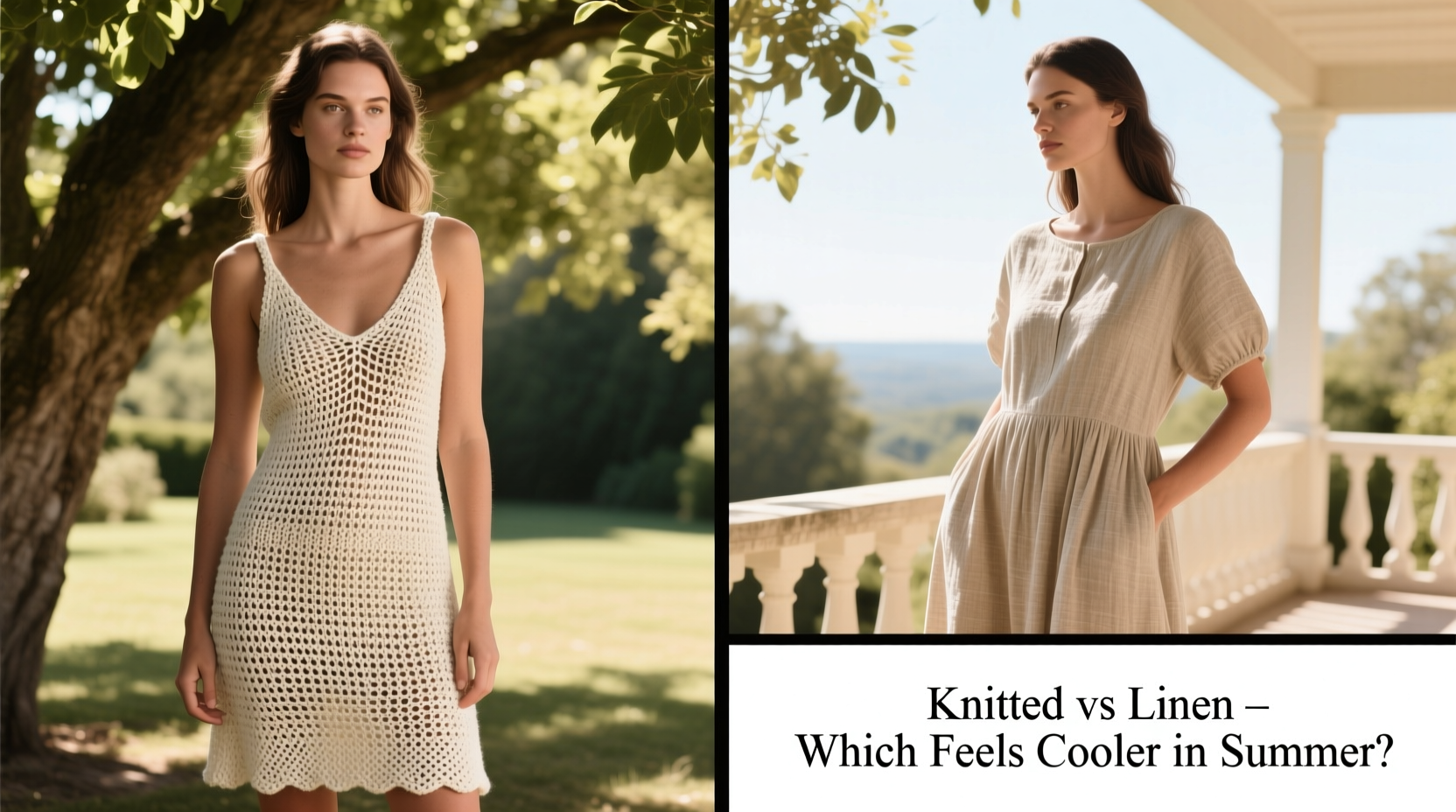
Linen, made from flax fibers, is renowned for its hollow cellulose structure, allowing it to wick moisture away from the skin and dry rapidly. Its loose weave further enhances ventilation, letting air circulate freely around the body. In contrast, knitted dresses—often made from cotton, viscose, or synthetic blends—rely heavily on stitch density and fiber type. While some knits are designed for airflow, many cling closely to the skin, reducing evaporation and trapping heat.
“Linen’s natural structure gives it superior thermoregulation. It doesn’t just feel cool—it actively helps your body cool down.” — Dr. Lena Torres, Textile Physicist, Institute of Sustainable Fashion
Material Breakdown: Linen vs Knit
To compare fairly, we must distinguish between types of knits and pure linen. Not all knits are created equal, nor are all linen garments identical in weight or finish.
Linen Dresses: The Gold Standard for Summer?
Linen excels in high-heat environments because it absorbs moisture without feeling damp and releases it quickly into the air. This process, known as evaporative cooling, mimics the way sweat cools the body. Linen also has a higher thermal conductivity than most fibers, meaning it draws heat away from the skin faster. However, it wrinkles easily and can feel stiff at first, softening with each wash.
Knitted Dresses: Comfortable But Risky in Heat
Knitted fabrics are constructed by interlocking loops of yarn, creating a stretchy, form-fitting texture. If made from lightweight cotton or bamboo, they can be breathable. But if the knit is tight or includes polyester, it restricts airflow and holds moisture against the skin. Worse, close-fitting knits reduce the microclimate between fabric and body—the very space needed for air to circulate and carry heat away.
Tip: Look for open-stitch knits (like lace or mesh patterns) if you prefer knitwear in summer—they allow better airflow than dense jersey fabrics.Comparative Performance Table
| Feature | Linen Dress | Knitted Dress (Typical Cotton/Polyester Blend) |
|---|---|---|
| Breathability | Excellent – open weave, high air permeability | Moderate to Poor – depends on stitch tightness |
| Moisture Wicking | High – absorbs up to 20% of its weight in moisture before feeling damp | Low to Moderate – synthetic blends wick poorly |
| Drying Speed | Very Fast – dries 2–3x quicker than cotton | Slow – especially with polyester content |
| Heat Conductivity | High – feels cool to the touch immediately | Low – retains body heat more readily |
| Fit & Air Gap | Loose, airy silhouette promotes ventilation | Often snug, reduces airflow near skin |
| Durability in Sun | High – resistant to UV degradation | Variable – synthetics degrade faster in sunlight |
Real-World Scenario: A Day at the Mediterranean Coast
Imagine walking through a coastal town in southern Italy—temperature 34°C (93°F), humidity 70%, sun beating down from mid-morning onward. Two women wear different dresses: one in lightweight linen, the other in a sleeveless cotton-polyester knit.
The woman in linen feels warm but not sticky. Her dress absorbs sweat and dries within minutes as sea breezes pass through the fabric. Even after sitting in the sun, the garment remains relatively cool due to linen’s high thermal conductivity.
The second woman, despite her dress being thin and light-colored, begins to feel clammy by noon. The knit clings slightly to her back and underarms where sweat accumulates. Without adequate airflow, the moisture doesn’t evaporate efficiently, making her feel hotter over time—even though she’s technically wearing less fabric.
This scenario illustrates that coverage isn’t the only factor; fabric behavior under real conditions matters far more.
Expert Tips for Choosing a Cooler Summer Dress
- Prioritize loose silhouettes – Garments that drape rather than hug allow convective cooling.
- Avoid synthetic blends – Polyester and nylon trap heat and resist moisture absorption.
- Check the hand feel – Linen should feel crisp and slightly textured, not silky-smooth (a sign of chemical finishes that reduce breathability).
- Opt for lighter colors – They reflect sunlight rather than absorbing it, lowering surface temperature.
- Wash before wearing – Linen softens and becomes more breathable after washing.
Step-by-Step Guide: How to Test a Dress for Summer Suitability
- Hold it up to light – Can you see through the weave? More translucency means better airflow.
- Rub the fabric together – Linen produces a slight crackle; overly smooth knits may lack breathability.
- Spritz with water – Does it absorb quickly (linen) or bead up (synthetic knit)?
- Wear it indoors on a warm day – Walk around for 20 minutes. Do you feel trapped heat or consistent airflow?
- Assess post-wear condition – After removing, does the inside feel damp? That’s a sign of poor moisture management.
Frequently Asked Questions
Can a knitted dress ever be cooler than linen?
Only under specific conditions: if it's made from ultra-lightweight, open-knit natural fibers like organic cotton or TENCEL™, and worn in low-humidity environments. Even then, it rarely matches linen’s overall cooling efficiency.
Does linen really get softer over time?
Yes. Each wash breaks down surface fibers slightly, increasing softness while maintaining strength. Many people find linen most comfortable after several washes.
Are there eco-friendly alternatives to both?
Hemp and ramie are excellent sustainable options with similar cooling properties to linen. Both are durable, biodegradable, and require minimal water to grow.
Final Verdict: What Actually Feels Cooler?
In direct comparison, **linen dresses win decisively for summer comfort**. Their natural structure supports airflow, rapid drying, and heat dissipation in ways most knits cannot replicate. While certain high-performance knits—especially those using advanced natural blends—can offer decent breathability, they still fall short in humid or prolonged sun exposure.
The key takeaway isn’t just about material, but intention. Choose garments designed for climate response, not just fashion trends. A loosely woven linen dress may wrinkle more, but it will keep you cooler, drier, and more comfortable throughout the day than a sleek, clinging knit that looks good in photos but fails in function.
“Clothing should work with your body, not against it. In summer, that means letting air move, moisture escape, and heat dissipate. Linen does this naturally.” — Rafael Mendez, Sustainable Apparel Designer
Take Action This Summer
Next time you’re shopping for a summer dress, skip the instant gratification of soft, stretchy knits and consider how the fabric performs under real heat. Try a linen piece—even if it feels rough at first. Wear it through a hot afternoon, notice how it behaves with sweat and breeze, and compare it honestly to your current go-to. You might find that true comfort isn’t softness, but freedom from stickiness, overheating, and discomfort.
💬 Have you switched from knits to linen in summer? Share your experience or tips in the comments—your insight could help someone beat the heat!