In 2025, foldable phones are no longer experimental gadgets—they’re mainstream. Samsung, Google, Huawei, and OnePlus now offer refined models with improved hinges, brighter displays, and seamless software integration. Yet despite rapid advancements, most premium foldables still carry price tags between $1,400 and $1,900, rivaling or exceeding flagship slab phones. For many consumers, the question isn’t whether these devices are impressive, but whether they justify their cost in everyday life.
The answer depends on more than specs and marketing claims. It hinges on how you use your phone, your tolerance for early-adopter quirks, and what you value in a mobile experience. While foldables deliver undeniable novelty and productivity gains, they also come with trade-offs in longevity, repair costs, and ecosystem maturity. Let’s examine whether the investment makes sense for the average user—or if it's still a luxury few truly need.
1. The Evolution of Foldables: From Novelty to Near-Maturity
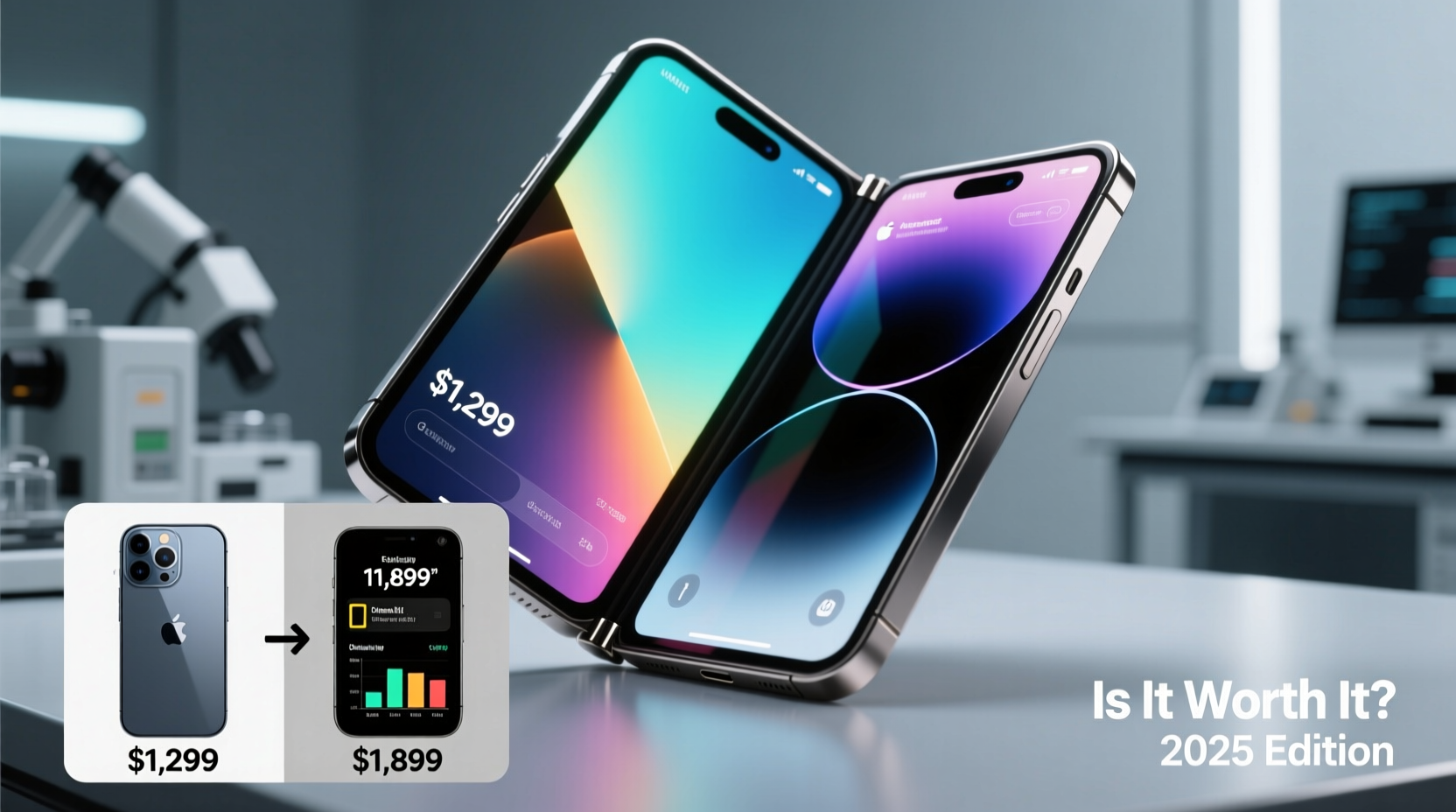
Foldable phones launched as engineering showpieces—fragile, overpriced, and limited by software that didn’t fully leverage their form. By 2025, that’s changed dramatically. Most major brands have iterated through at least four generations, addressing core weaknesses like crease visibility, hinge instability, and outer screen compromises.
Samsung’s Galaxy Z Fold 6 now features a nearly invisible crease, an under-display camera, and an ultra-thin glass overlay that resists scratches better than ever. Google’s Pixel Fold has matured into a cohesive experience with aggressive AI-driven multitasking. Even Motorola’s Razr+ has evolved from nostalgic gimmick to a genuinely useful compact flip phone with solid battery life and IPX8 water resistance.
Hardware improvements are matched by software advances. Android 15 offers native support for adaptive layouts, resizable split-screen apps, and gesture navigation optimized for large inner displays. Developers are increasingly designing with foldables in mind, reducing awkward scaling issues that plagued earlier models.
“Foldables have crossed the threshold from 'interesting' to 'functional.' In 2025, they’re viable daily drivers—if you know their limits.” — Lin Chen, Senior Analyst at MobileInsight Group
Yet even with progress, foldables remain niche. IDC reports that in Q1 2025, foldables accounted for just 1.7% of global smartphone sales. That number is growing year-over-year, but slowly. The barrier? Cost and uncertainty about durability.
2. Price vs. Value: Breaking Down the True Cost of Ownership
A new Galaxy Z Fold 6 starts at $1,899. The Pixel Fold is priced at $1,799. Even mid-tier options like the OnePlus Open ($1,699) sit well above traditional flagships. To assess whether this premium is justified, consider not just upfront cost but total ownership expenses over two to three years.
| Device | Launch Price (2025) | Avg. Repair Cost (Screen) | Expected Lifespan | Resale Value After 2 Years |
|---|---|---|---|---|
| Samsung Galaxy Z Fold 6 | $1,899 | $499–$650 | 2.5–3 years | ~40% |
| Google Pixel Fold | $1,799 | $550 | 2–2.5 years | ~35% |
| OnePlus Open | $1,699 | $400 | 2.5 years | ~45% |
| iPhone 16 Pro | $1,199 | $399 | 3–4 years | ~55% |
As the table shows, foldables depreciate faster and cost more to repair. A cracked inner display—still a vulnerability despite improved UTG (ultra-thin glass)—can cost up to a third of the phone’s original price. While manufacturers offer extended warranties (Samsung Care+, Pixel Protect), adding $15–$25/month to ownership costs.
On the flip side, productivity gains can translate into tangible value. Users who frequently edit documents, manage emails, or run dual apps may save 10–15 minutes per day thanks to multitasking efficiency. Over a year, that’s 60–90 hours—equivalent to more than two full workdays.
Tip: If buying a foldable, invest in manufacturer protection. Third-party insurers often deny claims for hinge or internal screen damage.3. Real-World Use Cases: Who Actually Benefits?
Foldables aren’t for everyone. Their value is highly situational. Consider these scenarios:
- Mobile professionals who review contracts, annotate PDFs, or join video calls benefit from larger screens without carrying a tablet.
- Content creators appreciate the flexibility of shooting on the outer screen, then editing on the expansive inner display.
- Frequent travelers enjoy immersive media consumption—reading, streaming, or browsing maps—in confined spaces like airplane seats.
- Power users who thrive on split-screen workflows gain measurable efficiency from running messaging, email, and reference materials simultaneously.
But for casual users—those who primarily scroll social media, text, and take photos—the advantages are less clear. The folded size is often bulkier than standard phones, and one-handed use suffers. Many report that after the initial excitement fades, they default to using only the outer screen, rendering the foldable aspect underutilized.
“I bought the Fold 5 for business trips. After six months, I realized I used the inner screen mostly for YouTube and spreadsheets. My iPhone does 90% of what I need, and fits in my pocket.” — Daniel R., Marketing Consultant, Chicago
Mini Case Study: A Freelancer’s Workflow Transformation
Maria T., a freelance graphic designer from Austin, upgraded to a Galaxy Z Fold 6 in early 2025. Her workflow involves constant app switching: referencing client briefs in Gmail, sketching in Adobe Fresco, and communicating via Slack and Zoom.
Before the foldable, she relied on a phone and iPad. Now, she uses the inner screen to run Fresco on one side and her inbox on the other, dragging assets between apps with drag-and-drop. She estimates she saves 20 minutes per project on context switching. Over 20 projects a month, that’s nearly 7 hours—time she now bills or spends on creative development.
For Maria, the $1,900 price was offset within eight months purely through increased billable hours. But her use case is specific. Without heavy multitasking needs, most users won’t see similar returns.
4. Durability Concerns and Longevity Outlook
Durability remains the biggest concern. Despite IP ratings and Gorilla Glass Victus 3 on outer screens, the inner display is still vulnerable. Dust ingress, accidental drops at the wrong angle, and repeated folding stress the mechanics over time.
Samsung claims its latest hinge supports 200,000 folds—about five years of average use. But real-world conditions vary. Humidity, temperature extremes, and pocket debris can accelerate wear. YouTube teardown channels have documented cases of delamination and touch degradation after 18 months of heavy use.
Battery life is another limitation. Foldables pack two screens and additional sensors into slim frames, forcing compromises. Most last 8–10 hours of active use—shorter than comparable slab phones. Fast charging helps, but frequent top-ups are common.
Tip: Close the device before placing it in a bag or pocket. Loose coins or keys can scratch or press against the inner screen.Checklist: Is a Foldable Right for You?
Ask yourself these questions before upgrading:
- Do I regularly use multiple apps at once (e.g., email + browser, chat + document)?
- Do I travel frequently and want a single device that replaces phone + tablet?
- Am I comfortable paying extra for warranty coverage due to higher repair risks?
- Do I prioritize screen real estate over pocketability and battery life?
- Can I wait for sales or trade-in deals to reduce the effective cost?
If you answered “yes” to three or more, a foldable may be worth considering. Otherwise, a high-end conventional phone with DeX-like desktop modes (e.g., Samsung Dex, Motorola Ready For) might offer similar benefits with greater reliability.
5. The Future Is Flexible—But Not for Everyone Yet
Foldables represent the future of mobile design. As manufacturing scales and materials improve, prices will drop. Analysts predict sub-$1,000 premium foldables by 2027. Until then, they remain a premium segment with narrow but meaningful utility.
For early adopters and tech enthusiasts, the appeal is clear: cutting-edge innovation, bragging rights, and a glimpse into tomorrow’s mobile experience. For pragmatists, the calculus is harder. You’re paying not just for hardware, but for participation in an evolving ecosystem.
Consider timing. If you’re on a three-year upgrade cycle, a foldable purchased in 2025 may feel outdated by 2028, when rollable or slide-phone designs could emerge. But if you upgrade every two years, you’ll always be near the bleeding edge—and absorbing the depreciation hit each time.
Step-by-Step Guide: How to Decide Whether to Upgrade
- Assess your current pain points. Are you frustrated by small screens, inefficient multitasking, or carrying multiple devices?
- Test drive a foldable. Visit a carrier store or Samsung Experience Center. Spend at least 10 minutes using the inner screen for real tasks.
- Compare total cost. Factor in insurance, potential repairs, and resale value loss over two years.
- Evaluate alternatives. Could a large-screen tablet with cellular, or a secondary e-ink device, solve your needs more affordably?
- Wait for deals. Major releases (September for Samsung, October for Google) trigger discounts on previous models. Trade-in programs can knock $500–$800 off the price.
FAQ
Are foldable phones more fragile than regular smartphones?
Yes, especially the inner display. While modern models are far more durable than early versions, they still require careful handling. Avoid exposing them to dust, sand, or liquids, and never place them face-down. The hinge mechanism is robust but not indestructible.
Can I use a screen protector on the inside display?
No. Most manufacturers explicitly warn against third-party screen protectors on the inner foldable display. They can interfere with touch sensitivity, cause bubbling, or damage the self-healing polymer layer. Outer screens can accept tempered glass protectors.
Will app developers fully support foldables soon?
Support is improving rapidly. Google has mandated responsive layout compliance for top-tier Play Store apps since 2024. Most major apps—Microsoft Office, Zoom, Chrome, Adobe Suite—now adapt seamlessly. Niche or older apps may still display letterboxing or scaling issues.
Conclusion
Upgrading to a foldable phone in 2025 is not a decision to make lightly. These devices are no longer prototypes, but they aren’t yet mass-market essentials. They offer transformative benefits for specific users—professionals, creatives, multitaskers—who can leverage the expanded interface to save time and streamline workflows.
For everyone else, the steep price, modest battery life, and lingering durability concerns may outweigh the perks. If you're drawn to the technology, consider waiting for refurbished models or post-launch discounts. Or start with a foldable flip phone like the Razr+, which offers portability and charm at lower risk.
The foldable era has arrived—but wisdom lies in knowing whether you're part of its intended audience. Evaluate your habits, not the hype, and let real-world utility guide your choice.
🚀 Ready to explore the future of mobile? Share your thoughts on foldables—would you pay a premium for the flexibility, or do traditional phones still win? Join the conversation below.