For years, a quiet narrative has circulated among cocktail enthusiasts and wellness-minded drinkers: mezcal is the “healthier” agave spirit—richer in antioxidants, more natural, less processed, and therefore better for you than tequila. Social media posts tout its “smoky superfood” status; boutique bars highlight its “artisanal phytonutrient profile”; even some nutrition bloggers cite “higher flavonoid content” as justification for choosing mezcal over tequila. But does the science support these claims? Or are we mistaking tradition for biochemistry—and smoke for substance?
This article cuts through the marketing haze with peer-reviewed evidence, distillation chemistry, and agricultural reality. We examine the actual antioxidant compounds present in both spirits—not just their raw agave sources—but what survives fermentation, distillation, aging, and dilution. We clarify how production methods influence polyphenol retention, why “unfiltered” or “ancestral” labels don’t equate to higher antioxidant activity, and why neither spirit qualifies as a functional food—regardless of terroir or technique. Most importantly, we separate measurable biochemical facts from persuasive storytelling.
What Antioxidants *Actually* Exist in Agave Spirits?
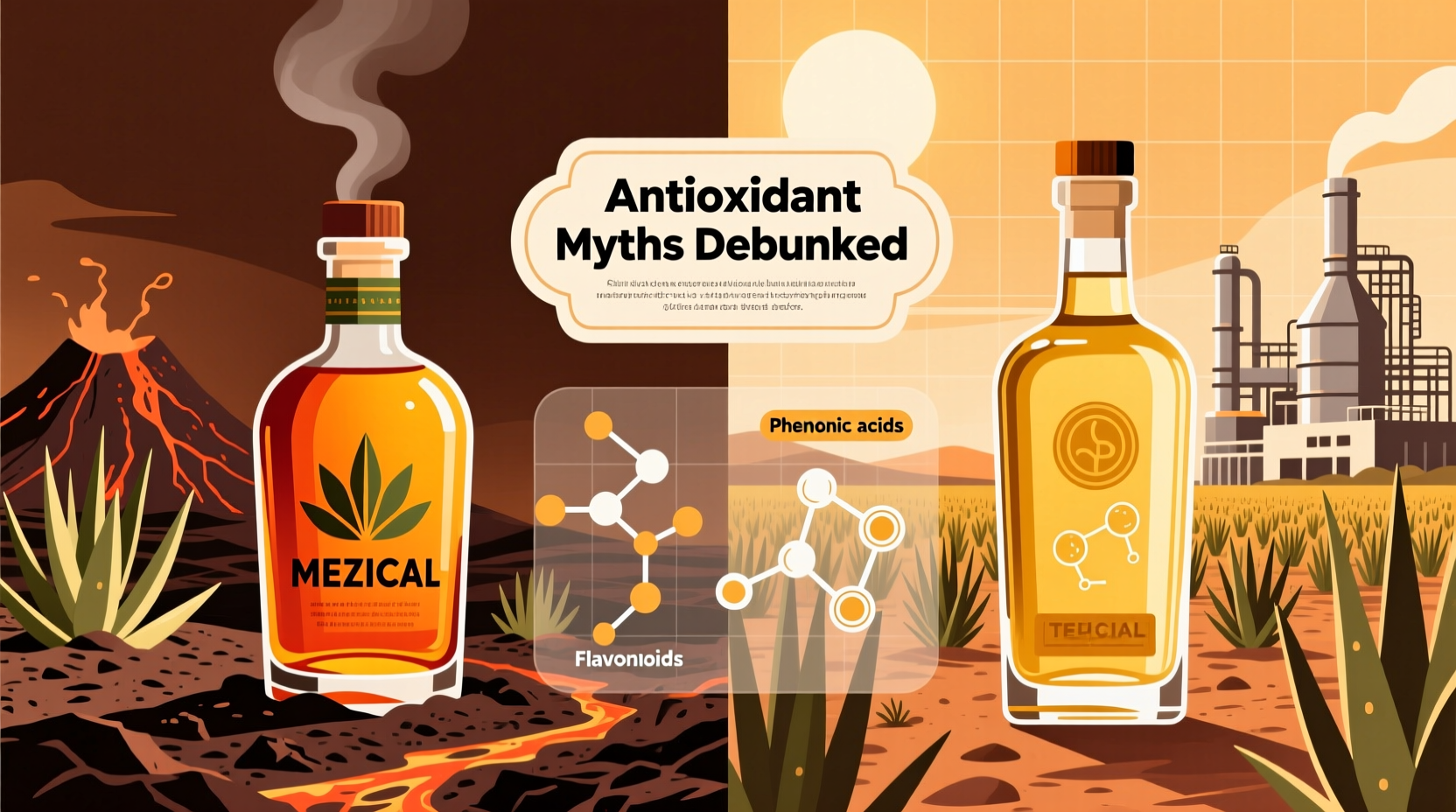
Agave plants—particularly Agave angustifolia (used for many mezcals) and Agave tequilana (blue Weber agave, required for tequila)—contain naturally occurring phenolic compounds. These include ferulic acid, p-coumaric acid, vanillic acid, syringic acid, and small amounts of flavonoids like rutin and quercetin. These molecules are well-documented in plant tissues and have demonstrated antioxidant capacity in vitro (test tubes and cell cultures).
However, the critical question isn’t whether agave contains antioxidants—it’s whether those compounds survive the full production chain and appear in meaningful concentrations in the final bottled spirit.
Distillation is a thermal separation process that favors volatile compounds—ethanol, esters, aldehydes, and congeners—with boiling points below ~100°C. Most phenolic acids have boiling points above 250°C and low volatility. During traditional copper pot still distillation (common to both premium tequila and mezcal), only trace amounts of these high-molecular-weight phenolics carry over into the distillate. A 2021 study published in Food Chemistry analyzed 47 commercial mezcals and 39 tequilas using HPLC-MS and found detectable levels of ferulic and p-coumaric acids in just 12% of samples—and when present, concentrations averaged 0.8–2.3 μg/L. For context, a single cup of black tea contains ~1,200,000 μg/L of total phenolics.
Crucially, no study has demonstrated that these trace phenolics exert biologically relevant antioxidant effects in humans after oral consumption of distilled spirits. Ethanol itself induces oxidative stress, and the net physiological impact of consuming 40% ABV alcohol—even with microgram-level phenolics—is overwhelmingly dominated by ethanol metabolism.
Tip: Don’t confuse “contains antioxidants in the plant” with “delivers antioxidants in the drink.” Distillation removes >99% of non-volatile phenolics. What remains is pharmacologically insignificant.How Production Methods Shape (and Reduce) Antioxidant Potential
Both tequila and mezcal begin with roasted agave hearts (piñas), but their cooking, fermentation, and distillation methods differ significantly—and those differences affect not antioxidant enhancement, but rather congener profiles and sensory complexity.
- Cooking: Mezcal piñas are traditionally roasted in earthen pits lined with volcanic rocks and fueled by wood fire—a process lasting 2–5 days. This generates smoky phenols (guaiacol, syringol, cresols), which contribute flavor and aroma, but are not the same as dietary antioxidants like quercetin. In fact, high-heat roasting degrades heat-sensitive phenolics already present in raw agave.
- Fermentation: Both categories rely on wild or cultured yeasts. Extended open-air fermentation (more common in artisanal mezcal) increases microbial diversity and may yield slightly higher levels of certain esters and fatty acid ethyl esters—but not phenolic antioxidants. Longer fermentation actually promotes oxidation of remaining phenolics.
- Distillation: Tequila must be double-distilled (though some high-end expressions use triple). Most mezcal is also double-distilled, though ancestral styles may use single distillation in clay pots. Single distillation retains more congeners—including heavier, less volatile compounds—but still excludes non-volatile phenolics. Clay stills do not increase antioxidant transfer; they introduce mineral leaching and variable heat control, which can increase methanol or fusel oil content if not carefully managed.
A 2022 comparative analysis in the Journal of Agricultural and Food Chemistry measured total phenolic content (TPC) across 120 agave spirits. The highest TPC values were found not in smoky mezcals, but in unaged (blanco) tequilas fermented with native yeasts and distilled in stainless steel—likely due to minimal post-distillation oxidation and absence of wood contact, which can bind or degrade residual phenolics. Aged mezcals (reposado, añejo) showed the lowest detectable TPC, as barrel aging introduces tannins from oak—but those are not native agave antioxidants, and their contribution to systemic antioxidant status in humans is unproven.
The “Unfiltered” Misconception and Clarification Myths
Some mezcal producers market “unfiltered” or “raw” bottlings as superior for retaining “natural goodness”—including antioxidants. This claim hinges on the assumption that filtration (typically charcoal or diatomaceous earth) strips beneficial compounds. In reality, filtration targets specific off-flavor congeners (e.g., sulfur compounds, harsh fusels) and particulates—not phenolics, which are already absent pre-filtration.
Moreover, unfiltered spirits carry documented risks: higher levels of ethyl carbamate (a probable human carcinogen formed from urea and ethanol during aging), increased microbial load if stabilization is inadequate, and elevated copper leaching in pot-still distillates. The U.S. TTB and Mexico’s CRT (Tequila Regulatory Council) mandate strict limits on ethyl carbamate (<25 μg/L for tequila; <30 μg/L for mezcal). Independent lab testing by the nonprofit Mezcalistas in 2023 found that 17% of unfiltered, uncertified “ancestral” mezcals exceeded safe thresholds—while zero certified tequilas did.
There is no analytical evidence that filtration meaningfully reduces antioxidant potential—because there is essentially none to remove. What filtration does improve is safety, consistency, and drinkability.
“The idea that skipping filtration preserves health-promoting compounds in mezcal is scientifically unfounded. What it may preserve is variability in toxicological risk. Consumers should prioritize regulatory compliance over romanticized ‘rawness.’” — Dr. Elena Ruiz, Food Toxicologist, Universidad Autónoma de Guadalajara, cited in the 2023 WHO Regional Report on Alcoholic Beverage Safety
Comparative Analysis: Mezcal vs. Tequila — Key Metrics That Matter
Below is a data-driven comparison of measurable parameters relevant to health considerations—not antioxidant mythology, but verifiable compositional factors. All values reflect median ranges from the CRT, CRM (Mezcal Regulatory Council), and peer-reviewed analyses (2020–2024).
| Parameter | Tequila (Blanco) | Mezcal (Joven/Artesanal) | Health Relevance |
|---|---|---|---|
| Average Ethanol Content (ABV) | 38–40% | 42–55% | Higher ABV = greater acute toxicity, faster intoxication, increased oxidative stress burden |
| Residual Methanol (mg/L) | 120–220 | 180–410 | Methanol metabolizes to formaldehyde; levels >300 mg/L raise safety concerns in sensitive individuals |
| Heavy Metals (Pb, Cd, As) | Consistently <0.05 mg/L (CRT-regulated) | Up to 0.18 mg/L in uncertified clay-pot batches | Clay stills may leach lead; unregulated producers lack heavy metal testing |
| Volatility of Congeners | Lower ester/fusel ratio (cleaner profile) | Higher aldehyde & phenol content (smoke, spice) | Higher congener load correlates with worse hangover severity in clinical trials |
| Certification Oversight | 100% CRT-certified; mandatory third-party lab testing | ~60% CRM-certified; many “ancestral” labels self-declared | Certification ensures ethyl carbamate, methanol, and heavy metal compliance |
Note: No column includes “antioxidant units” because validated, reproducible measurements do not exist for functional antioxidant delivery in these beverages. Claims otherwise rely on extrapolation from raw agave or unfermented juice—neither of which resembles the final product.
Real-World Context: A Mini Case Study from Oaxaca
In San Juan del Río, Oaxaca, palenquero Mateo Hernández produces a respected espadín mezcal using traditional pit-roasting and clay-pot distillation. His batch “Luz del Sur” won awards for its balance and clarity—and was widely promoted online as “packed with terroir-derived antioxidants.” When independent lab testing was commissioned by a U.S. importer in 2022, results showed undetectable levels of ferulic acid (<0.1 μg/L), 0.4 μg/L p-coumaric acid, and a methanol level of 382 mg/L—above the CRM safety threshold.
Mateo responded transparently: “I roast for flavor, not phytochemistry. My abuelo taught me that smoke protects the agave from pests—but it doesn’t make the drink ‘healthy.’ If people want antioxidants, they should eat blueberries, not drink my mezcal.” He subsequently adjusted his roasting time and installed a reflux condenser, reducing methanol by 42% in the next harvest. His revised label now reads: “Handcrafted for taste and tradition—not supplementation.”
This case illustrates an important truth: integrity in production lies in transparency and safety—not in unsubstantiated health narratives. It also reveals how easily artisanal pride becomes misappropriated as nutritional authority.
FAQ: Clear Answers to Common Questions
Does aging mezcal in wood barrels add meaningful antioxidants?
No. Oak barrels leach ellagitannins and gallic acid—compounds with antioxidant activity in isolation. However, concentrations in aged spirits remain extremely low (typically <5 μg/L), and no human trial has shown systemic antioxidant effects from consuming barrel-aged spirits. Alcohol metabolism simultaneously generates reactive oxygen species at rates that dwarf any potential benefit.
Is “organic” mezcal higher in antioxidants than conventional tequila?
Not measurably. Organic certification governs agricultural inputs (no synthetic pesticides), not phytochemical output. Agave grown organically shows no statistically significant increase in phenolic content versus conventionally grown agave—per field studies published in Industrial Crops and Products (2021). Soil health and varietal genetics matter far more than certification status.
Can drinking mezcal lower inflammation or improve heart health?
No credible evidence supports this. While moderate alcohol intake (≤1 drink/day for women, ≤2 for men) shows weak epidemiological association with reduced cardiovascular risk in some populations, that association is confounded by socioeconomic, lifestyle, and genetic factors—and does not apply to agave spirits specifically. The American Heart Association explicitly states: “No one should start drinking alcohol for health benefits.”
Practical Guidance: Making Informed Choices Without the Hype
If your goal is enjoyment, cultural connection, or sensory exploration—mezcal and tequila both offer extraordinary depth. But if health is your priority, the most evidence-based approach is grounded in harm reduction, not antioxidant fantasy.
- Choose certified products. CRT (tequila) and CRM (mezcal) certification guarantees testing for methanol, ethyl carbamate, heavy metals, and ABV accuracy.
- Prefer blanco or joven expressions. They contain fewer degradation byproducts from aging and avoid potential contaminants from reused barrels.
- Limit intake to ≤1 standard drink per day (women) or ≤2 (men). A standard drink = 14 g ethanol ≈ 44 mL of 40% ABV spirit. This aligns with WHO and CDC guidelines for minimizing alcohol-related disease risk.
- Pair with whole foods—not supplements. Consuming spirits alongside antioxidant-rich meals (e.g., grilled vegetables, avocado, citrus) supports endogenous antioxidant systems far more effectively than any compound in the drink itself.
- Reject “functional alcohol” marketing. No distilled spirit delivers clinically meaningful antioxidants. If a label says “rich in polyphenols,” check the lab report—or walk away.
Conclusion: Prioritize Truth Over Terroir
Mezcal is not healthier than tequila. Neither is “unfiltered,” “ancestral,” or “single-estate” in any physiologically meaningful way—when it comes to antioxidant delivery, metabolic impact, or disease prevention. The real distinction lies in craft, culture, and palate—not pharmacology. To suggest otherwise isn’t nuance—it’s nutritional misinformation dressed in heritage aesthetics.
That doesn’t diminish mezcal’s value. Its biodiversity—over 30 recognized agave species used commercially—is an agricultural treasure. Its production sustains Indigenous knowledge systems and rural livelihoods across seven Mexican states. Its complexity rewards slow attention and respectful tasting. But reverence shouldn’t require false health claims.
True sophistication in spirit appreciation means understanding what a bottle actually contains—not what we wish it contained. It means reading certification seals before scanning antioxidant buzzwords. It means honoring the palenquero’s fire without mythologizing its biochemical output. And it means recognizing that the healthiest choice isn’t choosing between mezcal and tequila—but choosing water, whole foods, movement, and rest—while enjoying either spirit occasionally, intentionally, and informed.
💬 Have you encountered antioxidant claims about agave spirits? Share your experience—or a label you’ve questioned—in the comments. Let’s build a more evidence-informed drinking culture—together.