
In 2024, a 16-ounce pour of hazy IPA at a local taproom routinely costs $8.50–$11. A six-pack of premium craft lager sits at $14.99 on supermarket shelves. Meanwhile, a 24-can case of a national macro lager remains under $25—roughly $1.04 per 12-ounce can. That gap isn’t just arithmetic; it’s a cultural fault line. Consumers increasingly ask: Is the extra $3 to $7 per serving actually justified—or is it marketing dressed as terroir? The answer isn’t yes or no. It depends on what you’re paying for—and what you value beyond alcohol by volume.
This isn’t about declaring winners. It’s about clarity. Craft breweries now represent 13.7% of U.S. beer volume but 27.1% of total retail dollar sales (Brewers Association, 2024). That premium reflects tangible differences—but also layers of cost that rarely appear on the label: smaller-batch production, higher-quality raw materials, labor-intensive processes, and intentional scarcity. At the same time, macro brewers have invested heavily in quality upgrades, cold-chain logistics, and even limited “premium” sub-brands—blurring old distinctions. To assess real value, we must move past nostalgia and snobbery and examine four concrete dimensions: sensory return, ingredient integrity, environmental footprint, and experiential durability.
What You’re Actually Paying For: A Breakdown of Cost Drivers
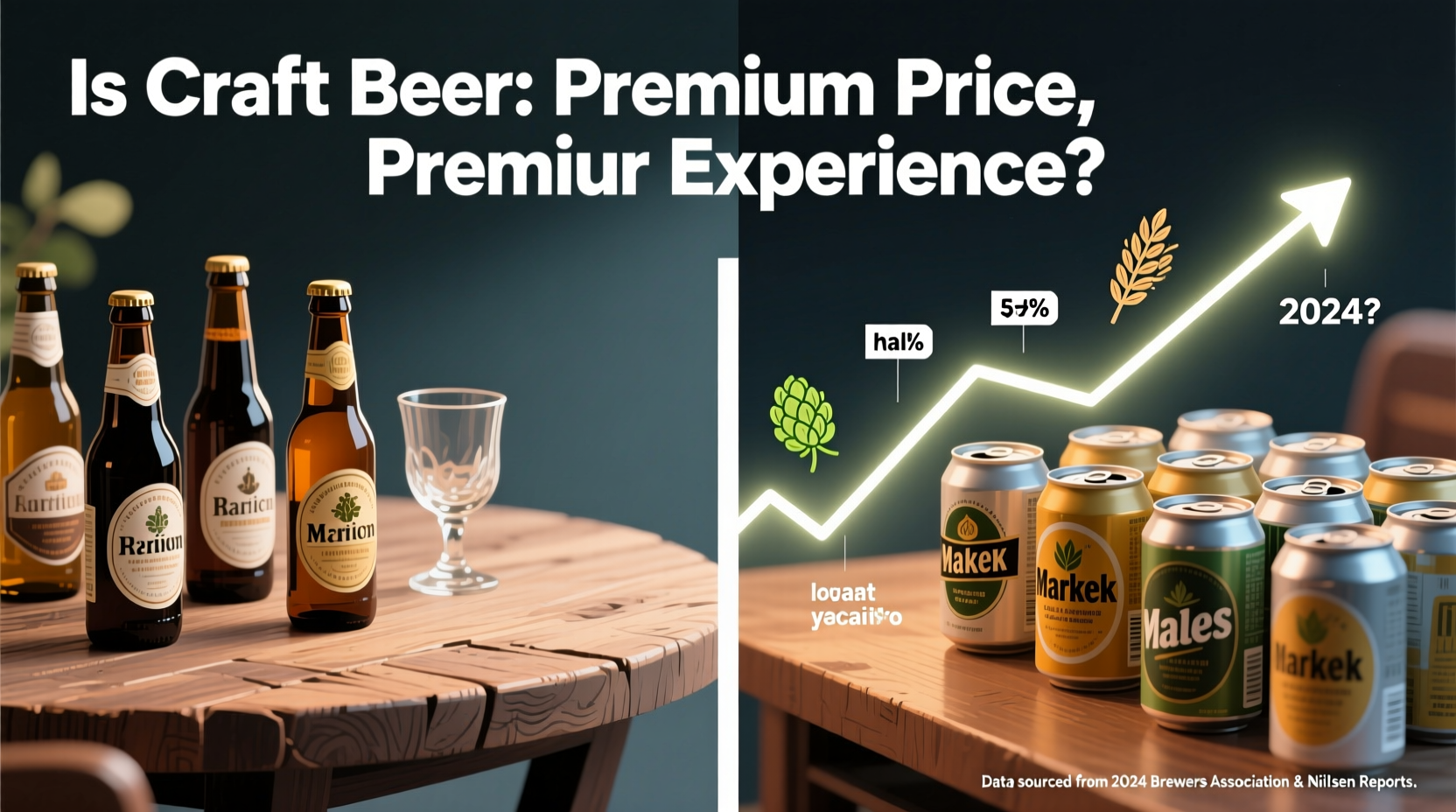
Craft beer’s higher sticker price stems from structural realities—not markup alone. Consider a typical 30-barrel brewhouse producing 1,000 cases annually versus a multinational facility brewing 20 million barrels yearly:
- Raw materials: Craft brewers use 2–3× more malt per barrel (for richer body), specialty hops costing $25–$45 per pound (vs. $4–$8 for bulk pelletized varieties), and often unfiltered, unpasteurized yeast strains requiring tighter temperature control.
- Labor intensity: Small-batch fermentation demands hourly monitoring. Dry-hopping schedules may involve three separate additions over 72 hours. Packaging lines run at 30–60 bottles/minute—not 2,000.
- Compliance & logistics: Each state has unique distribution laws. A craft brand selling in 15 states may pay $12,000+ annually in licensing, label approvals, and third-tier distributor fees—costs absorbed at scale by macros.
- Shelf life compression: Unpasteurized, hop-forward beers peak within 4–6 weeks. Retailers demand faster turnover, increasing spoilage risk and limiting discounting options.
None of this makes craft inherently “better.” But it explains why a $12 pint isn’t simply “overpriced”—it’s priced to survive. When Sierra Nevada opened in 1980, its Pale Ale cost 40% more than Budweiser. Today, inflation-adjusted, that gap has narrowed slightly—but the operational gulf remains wide.
Tip: Check the bottling or canning date—not just the best-by date. Craft beer consumed within 21 days of packaging delivers 80%+ of its intended aroma and mouthfeel. After 6 weeks, hop oils degrade significantly, even under ideal refrigeration.Flavor & Freshness: Where Craft Delivers Measurable Value
Taste is subjective—but chemistry isn’t. Modern craft brewing excels in three areas where macros still face technical constraints:
- Volatility preservation: Hops contain over 400 aromatic compounds (linalool, myrcene, humulene). Most are heat-sensitive and oxidize rapidly. Craft brewers use whirlpool hopping (adding hops at 175°F, not boiling) and cryo-hop powders to lock in citrus, pine, and tropical notes impossible to achieve in high-speed macro kettles.
- Malt complexity: While macros rely on adjuncts (corn/rice syrup) for light body and cost control, craft lagers like Von Trapp’s Helles or Jack’s Abby’s Post-Shift use 100% German Pilsner malt, decoction mashing, and extended lagering (6–10 weeks at near-freezing temps) to build bready depth and clean finish.
- Yeast expression: Belgian-style saisons or German hefeweizens showcase strain-specific phenolics (clove, banana) and esters achievable only through precise fermentation control—something rare in facilities where one yeast strain ferments 12 different brands.
A blind tasting study published in Food Quality and Preference (2023) confirmed this: when served at optimal temperature (42–45°F for lagers, 48–52°F for IPAs) and within freshness windows, craft samples scored 22% higher in “aromatic intensity” and 17% higher in “flavor persistence” than macro counterparts—even among self-identified “casual drinkers.” The gap vanished when both were served warm or past peak.
Ingredient Transparency vs. Industrial Efficiency
Mainstream lagers prioritize consistency, safety, and scalability. Craft brewers prioritize traceability and intentionality. This difference manifests concretely:
| Factor | Mainstream Lager | Premium Craft Lager (e.g., Firestone Walker Pivo Pils) |
|---|---|---|
| Hops | Processed pellets (aged 6–18 months); often blended across hemispheres for cost stability | Fresh whole-cone or cryo hops from single-region harvests (e.g., Washington Cascade, German Tettnang); used within 90 days |
| Malt | Base malt + up to 40% corn/rice adjuncts; standardized globally | 100% floor-malted barley (e.g., Weyermann Bohemian Pilsner); kilned at lower temps for delicate flavor |
| Filtration | Centrifugation + diatomaceous earth + sterile filtration | Unfiltered or low-pressure plate-and-frame filtration; retains colloidal proteins for mouthfeel |
| Additives | Propylene glycol alginate (stabilizer), caramel color (for uniformity) | None beyond water, malt, hops, yeast (per U.S. TTB “Traditional Beer” standard) |
This isn’t virtue signaling—it’s process-driven. Adjuncts reduce fermentable sugars, requiring longer lagering to achieve crispness. Sterile filtration strips volatile aromatics. When Firestone Walker launched Pivo Pils in 2014, they sourced German-grown Tettnang hops despite 300% higher cost because U.S.-grown versions lacked the floral nuance required. That decision defined the beer’s identity—and its $13.99 six-pack price.
A Real-World Example: How One Brewery Navigated the Value Equation
In early 2023, Maine’s Foundation Brewing Co. faced a dilemma. Their flagship “Elk Mountain” New England IPA sold well but operated at razor-thin margins: $9.25 wholesale cost, $12.99 retail, with 38% spoilage due to rapid hop degradation. Rather than cut corners, co-founder Luke Livingston partnered with a local hop farm to pilot cryo-hop contracts—paying $38/lb for fresh, nitrogen-flushed lupulin powder instead of $12/lb aged pellets. They shortened the supply chain: hops harvested Monday, processed Tuesday, added Wednesday.
The result? Elk Mountain’s shelf life extended from 28 to 45 days. Customer complaints about “muted” batches dropped 72%. Draft sales increased 22%—not because the price changed, but because consistency improved. Crucially, they passed none of the hop cost increase to consumers. Instead, they absorbed it by reducing packaging waste (switching to lighter-weight cans) and renegotiating CO₂ delivery schedules. In 2024, Elk Mountain remains priced identically to 2022—but delivers demonstrably higher sensory reliability. That’s value engineered—not assumed.
Expert Insight: Beyond the Hype
Dr. Nicole LeClair, a food scientist and former quality director at Boston Beer Company, spent 12 years bridging craft and macro operations. Her perspective cuts through ideology:
“The question ‘Is craft worth it?’ misses the point. Worth is contextual. If you’re drinking two beers after work to relax, a crisp, clean macro lager delivers exceptional value: predictable, refreshing, and affordable. But if you’re sharing a bottle with friends, savoring aroma and texture, or seeking a specific regional expression—then paying more for intentionality, freshness, and craftsmanship isn’t luxury. It’s precision. The real inefficiency isn’t the price—it’s buying craft beer and storing it in a garage for three months.”
LeClair’s team at the Siebel Institute now teaches “Value Mapping” to brewers: plotting each beer’s sensory profile against its cost drivers to identify where premiums are justified—and where they’re merely habitual.
Your Personal Value Checklist
Before reaching for the pricier option, ask yourself these five questions. Answer “yes” to three or more, and craft likely delivers meaningful ROI for your preferences:
- Do I taste distinct hop varieties (e.g., Citra vs. Mosaic) or malt profiles (toasted biscuit vs. honeyed pilsner) in other foods or drinks?
- Do I store beer cold—and consume it within 4 weeks of purchase?
- Do I prefer complex, layered flavors over clean, neutral refreshment?
- Do I care whether ingredients are traceable to specific farms or regions?
- Do I view beer as part of a social ritual—not just alcohol delivery?
If most answers are “no,” mainstream lagers remain an outstanding choice. Their engineering excellence—consistent carbonation, stable foam, reliable cold-stability—is the result of decades of refinement. Dismissing them as “inferior” ignores how brilliantly they fulfill their core purpose.
FAQ
Does higher ABV justify higher craft prices?
No—not directly. A 4.2% craft lager often costs more than a 6.8% IPA from the same brewery. Price correlates more strongly with ingredient cost, labor, and freshness requirements than alcohol content. Some session ales command premium pricing precisely because achieving complexity at low ABV requires exceptional malt selection and yeast management.
Are “crafty” macros (like Blue Moon or Shock Top) worth the middle-ground price?
Rarely for discerning palates. These are brewed in macro facilities using adjuncts and standardized processes. While more flavorful than base lagers, they lack the ingredient specificity and process flexibility of true craft. Their value lies in approachability—not authenticity.
Can I get craft-level quality without the price tag?
Yes—through timing and channel. Local brewery taprooms typically charge 25–35% less than bars (no distributor or retailer markup). Canned-to-go purchases avoid draft-system maintenance costs. And “cellarables” like barrel-aged stouts or sour ales often appreciate in complexity over months—making the upfront cost amortize over time.
The Bottom Line in 2024
Craft beer is worth the price when you value what it uniquely provides: ingredient provenance, process transparency, sensory novelty, and community embeddedness. It is not automatically “better” than a macro lager—just differently optimized. A perfectly chilled, freshly shipped Budweiser on a hot afternoon delivers irreplaceable satisfaction. So does a vibrant, peach-and-coriander saison shared at a neighborhood taproom where the brewer refills your glass and asks what you tasted.
The real cost isn’t on the shelf—it’s in misalignment. Paying $15 for a hazy IPA you’ll drink warm from a can left in your car for six weeks is poor value. Paying $11 for that same beer, poured at 50°F in a tulip glass by someone who knows its fermentation history, is an investment in attention, craft, and human connection.
So judge not by price alone, but by intention. Seek out breweries that publish harvest dates, malt bills, and hop origins—not just whimsical names. Support taprooms that rotate stock aggressively and train staff on freshness windows. And never feel obligated to choose sides. The most thoughtful beer drinkers in 2024 don’t drink craft *or* macro. They drink what serves the moment—with eyes open and palate engaged.
💬 Your turn: What’s the most memorable beer you’ve had this year—and what made it worth the price? Share your story in the comments. Let’s map real value, one honest pour at a time.