Dried-out markers are a common frustration for artists, students, teachers, and parents alike. Whether they’re used for coloring books, classroom projects, or labeling storage bins, the moment a marker stops flowing smoothly, it often gets tossed aside. But before you add another plastic cap to the landfill, consider this: most dried markers can be revived—quickly, safely, and inexpensively—using nothing more than a common household item: water.
Water is not only accessible and non-toxic; it’s also highly effective at rehydrating the ink reservoir inside many types of markers, especially water-based ones like washable markers, highlighters, and even some art-grade pens. This method breathes new life into seemingly dead tools, saving money and reducing waste. The science behind it is straightforward: as markers dry out, their internal fibers lose moisture. Reintroducing water restores capillary action, allowing ink to flow again.
This guide walks through the full process of reviving dried markers with water, explains which types respond best, and offers practical tips to extend marker lifespan long-term. No special equipment or chemicals required—just patience, a cup, and clean water.
The Science Behind Drying and Revival
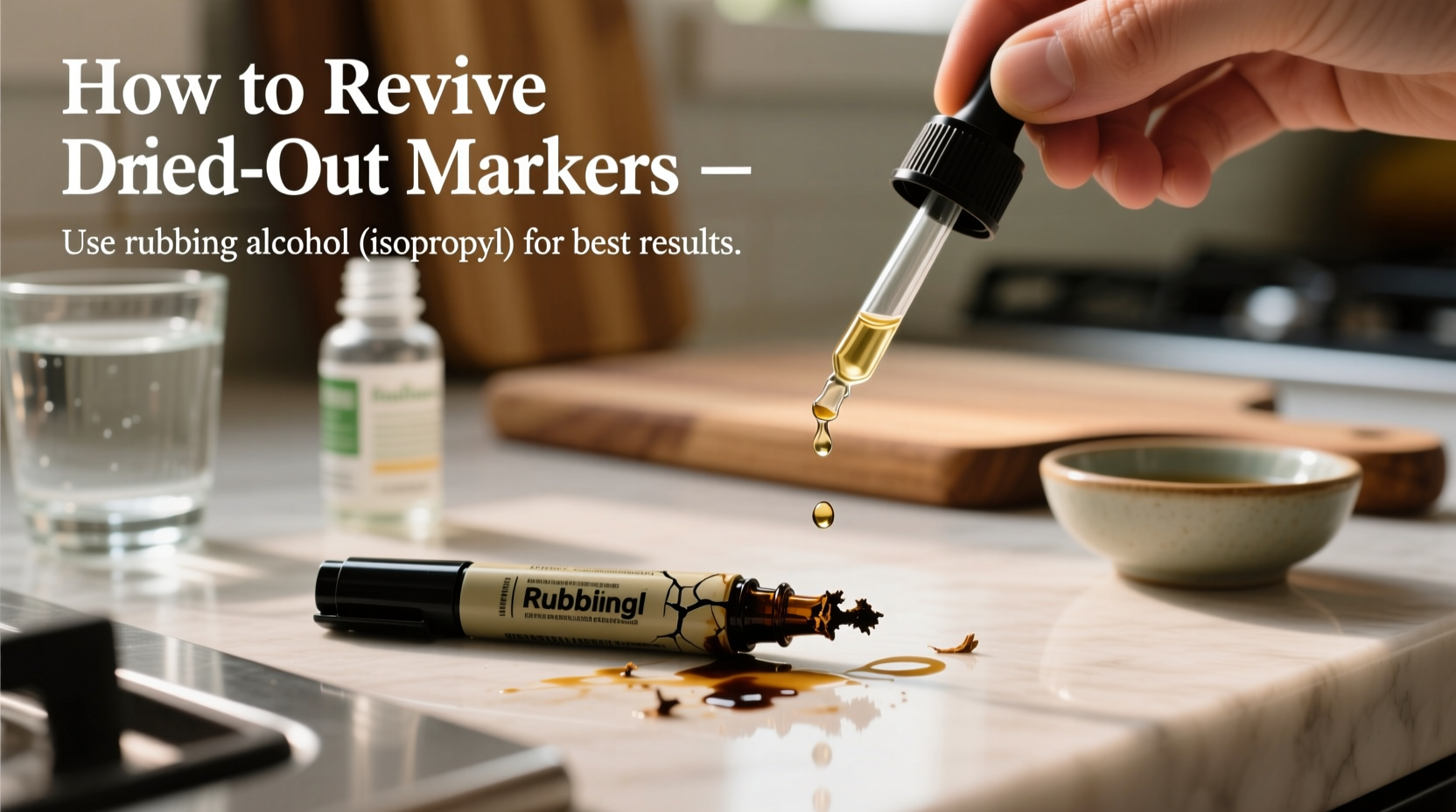
Markers rely on a porous fiber core saturated with liquid ink. When the cap is left off, evaporation pulls moisture from the nib and core, causing the ink to thicken or stop flowing entirely. Even brief exposure to air—just 10 to 15 minutes—can begin this drying process.
Water-based markers, such as Crayola washables or standard highlighters, use water-soluble dyes suspended in a glycol or alcohol base. While the solvents help prevent rapid drying, they still evaporate over time. Once the moisture level drops too low, the ink no longer migrates from the core to the tip.
Rehydration works by submerging the nib in water, allowing moisture to travel up the fiber via capillary action. As the core absorbs water, it dilutes the dried ink residue and restores flow. It's similar to how a sponge reabsorbs liquid after drying—it doesn’t regain its original saturation instantly, but with time, functionality returns.
“Many so-called ‘dead’ markers aren’t empty—they’re dehydrated. Simple rehydration can restore 70–90% of their function.” — Dr. Linda Tran, Materials Scientist & Educational Supply Consultant
Step-by-Step Guide to Reviving Markers with Water
Follow this detailed timeline to maximize your success rate when reviving dried markers. This method works best on water-based markers but may offer limited results with permanent or oil-based varieties.
- Assess the marker: Shake it gently. If you hear liquid sloshing, there’s still ink inside—great sign. If completely silent and writing produces faint or no lines, proceed.
- Gather supplies: You’ll need lukewarm water (not hot), a small glass or cup, and the dried markers.
- Prepare the water: Fill the container with about half an inch to one inch of water. Enough to submerge the tip, but not so much that the entire barrel gets wet.
- Submerge the nib: Place the marker upright in the water with only the tip submerged. Do not lay it sideways unless using a clip to hold it in place without soaking the body.
- Wait patiently: Let it soak for 30 minutes to 2 hours. For severely dried markers, leave overnight (up to 12 hours).
- Test the marker: After soaking, wipe the tip gently and scribble on scrap paper. If still faint, repeat soaking in 30-minute increments.
- Recap immediately: Once revived, always store with the cap securely fastened.
Which Markers Can Be Revived?
Not all markers respond equally to water revival. Below is a comparison of common marker types and their likelihood of recovery using this method.
| Marker Type | Water-Based? | Revival Success Rate | Notes |
|---|---|---|---|
| Washable Kids' Markers (e.g., Crayola) | Yes | High (90%) | Responds quickly; ideal candidate for soaking. |
| Highlighters | Yes | High (85%) | May require longer soak due to fine tips. |
| Art Markers (watercolor-based) | Partially | Moderate (70%) | Best with manufacturer-recommended solution, but water helps in a pinch. |
| Permanent Markers (e.g., Sharpie) | No | Low (20%) | Uses alcohol-based ink; water won’t dissolve residue effectively. |
| Whiteboard Markers | Semi | Moderate (60%) | Can absorb water, but ink may separate; test carefully. |
For permanent markers, alternative revival methods involve using rubbing alcohol instead of water. However, this requires ventilation and caution due to flammability and fumes. For the scope of this article—which focuses on safe, household solutions—water remains the top recommendation for compatible markers.
Real Example: A Teacher’s Classroom Hack
Ms. Elena Ruiz, a third-grade teacher in Austin, Texas, faced a recurring problem: her classroom’s supply of washable markers dwindled rapidly each semester. With a tight budget and 28 students using them daily, she was replacing boxes monthly.
“I noticed most of the ‘dead’ markers weren’t empty,” she said. “The kids would say they didn’t work, toss them in the bin, and grab new ones. I started collecting them in a jar labeled ‘Maybe Not Dead.’”
Over a weekend, she soaked 47 dried markers in shallow trays of water for two hours. By Monday morning, 41 were fully functional again. She now teaches her students the soaking method as part of classroom responsibility lessons.
“We saved over $120 in supplies last year alone,” she added. “And the kids love seeing something ‘broken’ come back to life. It’s a little lesson in sustainability.”
Maximizing Longevity: Prevention Tips
Revival is helpful, but preventing dry-out in the first place saves time and maintains consistent performance. Implement these habits to keep markers usable longer.
- Cap tightly after every use: This is the single most important habit. Even 5 minutes uncapped accelerates drying.
- Store vertically with caps down: Keeps ink pooled near the tip, reducing air pockets in the core.
- Avoid heat and sunlight: High temperatures increase evaporation. Don’t leave markers in cars or near radiators.
- Use a damp cloth for cleaning tips: Wipe nibs gently after use to prevent crust buildup.
- Rotate stock: Use older markers first. Label containers with purchase dates if possible.
Checklist: Marker Revival & Care Routine
Use this checklist weekly or monthly to maintain your marker collection efficiently.
- ☐ Collect all dried or underperforming markers.
- ☐ Sort by type (washable, highlighter, etc.).
- ☐ Shake each to check for remaining ink.
- ☐ Soak water-based markers nib-down in lukewarm water for 30–120 minutes.
- ☐ Test on scrap paper; repeat soak if needed.
- ☐ Discard any with cracked barrels, mold, or persistent clogs.
- ☐ Return revived markers to storage with caps secured.
- ☐ Clean storage containers to prevent dust buildup.
- ☐ Educate users on proper capping habits.
- ☐ Schedule next check-in (recommended: every 4–6 weeks).
Frequently Asked Questions
Can I use hot water to speed up the process?
No. Hot water can warp plastic nibs or cause leaks in the barrel. Stick to room temperature or slightly warm water to avoid damaging the marker.
How long will a revived marker last?
A successfully revived marker typically lasts several more weeks of regular use, depending on frequency and storage. It may not perform exactly like new, but it regains most functionality.
Is it safe for children to try this method?
Yes, with supervision. The process uses only water and involves no chemicals. Teach kids to handle markers carefully and avoid splashing. Consider using a tray to contain spills.
Why This Matters Beyond Convenience
Beyond saving a few dollars, reviving dried markers supports broader environmental goals. According to EPA estimates, over 1.6 billion pens and markers are discarded annually in the U.S. alone, most ending up in landfills where they take centuries to decompose.
Plastic marker bodies, synthetic inks, and non-recyclable components contribute to microplastic pollution and resource waste. By extending the life of each marker, households and institutions reduce their plastic footprint significantly.
Moreover, teaching children repair over replacement fosters a mindset of resourcefulness. Instead of defaulting to disposal, they learn to troubleshoot, experiment, and value materials. These small acts build long-term sustainability habits.
“The future of waste reduction isn’t just recycling—it’s extending product lifespans through simple maintenance. A revived marker is a tiny act with cumulative impact.” — Green Schools Initiative Report, 2023
Conclusion: Give Dry Markers a Second Life
Reviving dried-out markers with water is more than a clever hack—it’s a practical, eco-conscious skill that anyone can use. With minimal effort and zero cost, you can restore functionality to markers thought to be lost. The method is grounded in basic physics, supported by educators and scientists, and proven in real-world settings from classrooms to home offices.
Next time a marker fails to write, pause before discarding it. Soak it. Test it. Recycle it only when truly spent. And share this simple technique with others—teachers, parents, artists, and office managers who deal with the same frustration daily.
💬 Have a marker revival success story? Share your experience in the comments below. Let’s build a community of mindful creators who waste less and create more.