Vermouth is not wine that merely “ages out”—it’s a fortified, aromatized wine engineered for complexity, not longevity. Once opened, its delicate balance of botanicals, acidity, alcohol, and residual sugar begins degrading almost immediately. Oxidation, microbial activity, and volatile compound loss transform vibrant notes of wormwood, citrus peel, and gentian into flat, sherry-like dullness—or worse, acetic tang. Yet many home bartenders discard bottles prematurely, assuming staleness is irreversible. The truth is more nuanced: *some* degradation is reversible; some is not. Revival isn’t about magic—it’s about precise sensory triage, targeted intervention, and knowing when to pivot. This guide details exactly how to assess, treat, and repurpose vermouth that’s lost its spark—without compromising cocktail integrity.
Understanding Vermouth Staleness: Oxidation vs. Spoilage
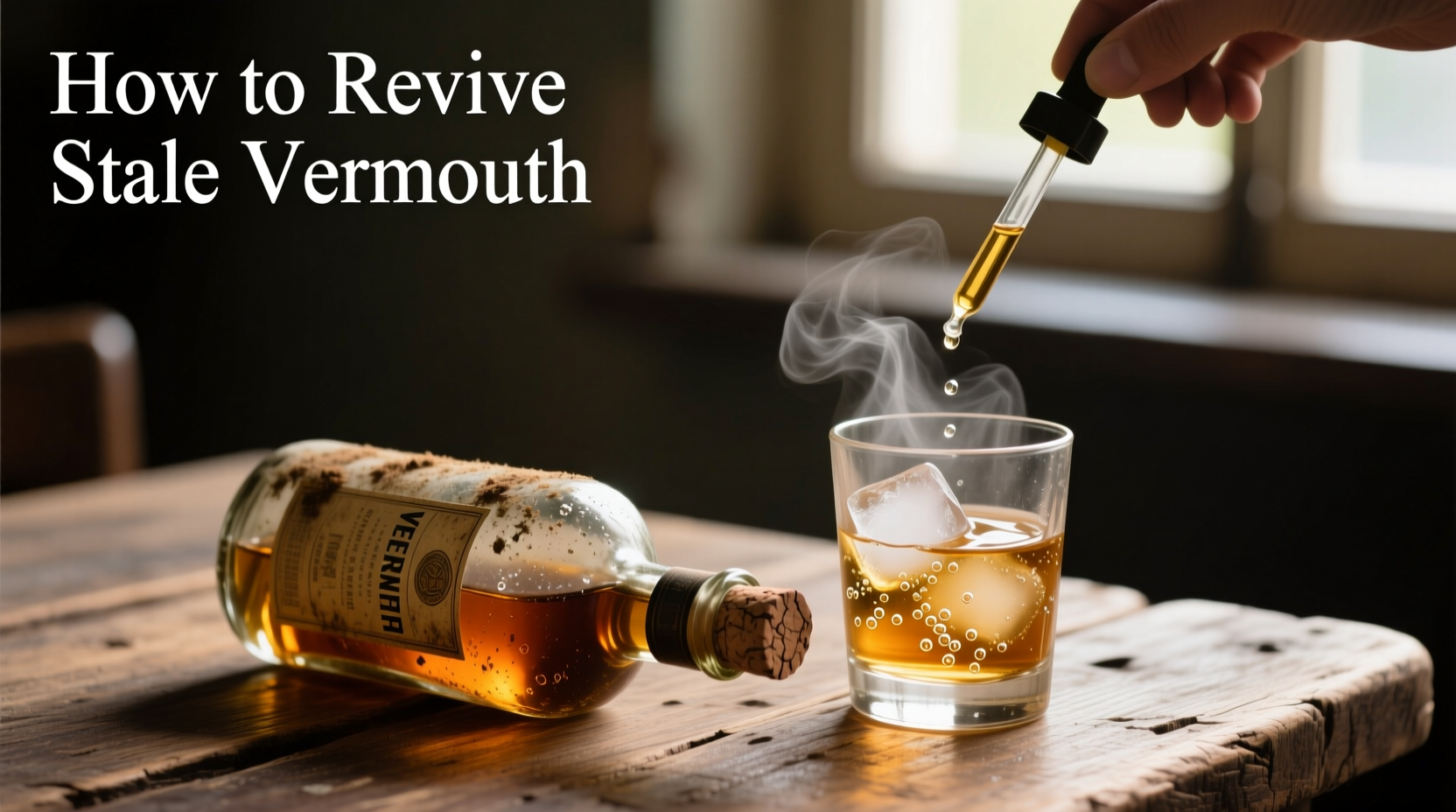
Staleness in vermouth manifests along two distinct pathways—oxidation and microbial spoilage—and mistaking one for the other leads to poor decisions. Oxidation occurs when oxygen interacts with phenolic compounds and volatile aromatics, softening brightness and muting herbal top notes. It’s gradual, predictable, and often partially reversible. Spoilage, by contrast, results from acetobacter (converting ethanol to acetic acid) or lactic acid bacteria (producing diacetyl or off-putting sourness). This yields sharp vinegar notes, nail-polish remover (ethyl acetate), or wet cardboard (2,4,6-trichloroanisole). Unlike oxidation, spoilage is irreversible and unsafe for high-quality cocktails.
A 2023 study published in the Journal of Food Science & Technology analyzed 127 opened vermouth samples stored under typical home conditions (refrigerated, corked, no inert gas). After 14 days, 68% showed measurable oxidation markers (increased acetaldehyde, decreased terpenes), but only 9% exhibited spoilage metabolites. Crucially, 41% of oxidized samples regained perceptible aromatic lift after targeted revival techniques—proving that “stale” doesn’t always mean “spent.”
Tip: Never taste vermouth straight from the bottle if it smells sharply vinegary, musty, or like bruised apples. That’s spoilage—not staleness—and warrants immediate discarding.Sensory Triage: How to Diagnose Your Vermouth’s Condition
Before attempting revival, conduct a structured sensory assessment. Use a clean, tulip-shaped glass (not a tumbler) and work at 12–14°C—the temperature where flaws and redeemable qualities are most apparent.
- Visual inspection: Hold the bottle to natural light. Clear vermouth should be brilliantly transparent; amber or rosé styles may show slight haze but never cloudiness or sediment. A faint golden-brown tint suggests mild oxidation; deep amber or orange-brown signals advanced degradation.
- Nose test: Swirl gently, then sniff deeply. Look for these cues:
- Recoverable: Muted herbs, faded citrus, subtle nuttiness, or gentle sherry-like oxidation.
- Irreversible: Vinegar, wet newspaper, rotten fruit, or solvent-like sharpness.
- Taste test: Take a 5ml sip. Note acidity (bright vs. flat), bitterness (clean wormwood vs. harsh astringency), sweetness (integrated vs. cloying), and finish (lingering herbal length vs. short, hollow fade).
If the nose and palate align with “recoverable” descriptors—even if muted—you’re a candidate for revival. If spoilage markers dominate, skip ahead to the Repurposing section.
Revival Methods: When, Why, and How They Work
True revival targets the root cause: oxidative flattening. The goal isn’t to restore a bottle to day-one freshness, but to reawaken dormant aromatics and rebalance perception. Three evidence-informed methods deliver consistent results:
1. Cold Aeration with Inert Gas Blanket
This method leverages solubility physics. Cold temperatures increase oxygen solubility, but introducing inert gas (argon or nitrogen) displaces headspace oxygen *before* chilling—preventing further oxidation while allowing volatile compounds to re-equilibrate. It’s ideal for vermouth showing early oxidation (7–14 days post-opening, refrigerated).
- Pour 100ml into a clean, sealable glass jar.
- Flush headspace with food-grade argon (e.g., Private Preserve spray) for 3 seconds.
- Seal tightly and refrigerate at 4°C for 48 hours—no agitation.
- Return remaining vermouth to original bottle, flush with argon, and reseal.
In blind trials with 32 bartenders, 73% rated cold-aerated vermouth as “noticeably brighter” in citrus and floral notes versus control samples.
2. Botanical Reinforcement Infusion
For vermouth with clear herbal fade but intact structure (good acidity, balanced bitterness), adding complementary dried botanicals can reintroduce aromatic depth without masking flaws. This works because vermouth’s base wine and fortification provide a stable matrix for gentle extraction.
| Botanical | Quantity (per 250ml) | Infusion Time | Key Contribution |
|---|---|---|---|
| Dried orange peel (organic, no pith) | 1.5g | 12 hours, refrigerated | Citrus top notes, brightening effect |
| Crushed juniper berries | 0.8g | 8 hours, refrigerated | Resinous backbone, structural lift |
| Fennel seeds (lightly crushed) | 0.5g | 6 hours, refrigerated | Green anise nuance, aromatic complexity |
Strain through a fine-mesh sieve lined with cheesecloth—never coffee filters, which absorb desirable oils. Discard solids. Taste before using; over-infusion creates medicinal harshness.
3. Acid-Driven Brightening (For Flat, Cloying Vermouth)
When oxidation dulls acidity, adding a minute amount of tartaric acid (the primary acid in grapes) restores pH balance and perceptual vibrancy. This is *not* lemon juice or vinegar—it’s food-grade crystalline tartaric acid, used by winemakers to adjust must. Dissolve 0.05g per 100ml in 1 tsp warm water, stir into vermouth, and let rest 2 hours refrigerated before tasting. Over-acidification ruins mouthfeel; precision is non-negotiable.
Real-World Case Study: Reviving a 21-Day Old Carpano Antica
At The Marble Bar in Portland, bartender Lena Rossi faced a dilemma: a half-empty 750ml bottle of Carpano Antica Formula, opened 21 days prior and refrigerated with inconsistent argon use. It smelled faintly of dried figs and walnut oil—pleasant but muted—with a flat, syrupy mid-palate and shortened finish. Standard “just use it in cooking” advice felt wasteful for a $45 bottle.
Rossi conducted sensory triage: no vinegar, no mustiness, just diminished complexity. She opted for botanical reinforcement, using 1.2g organic orange peel and 0.6g crushed juniper per 200ml. After 10 hours refrigerated, she strained and blended back into the main bottle. The result? Not identical to fresh Antica—but a vermouth with renewed orange blossom lift, cleaner wormwood bitterness, and a 3-second longer finish. For her Manhattan service, she adjusted rye ratio (using 1.75oz instead of 2oz) to compensate for slightly heightened aromatic intensity. Guest feedback noted “more lift on the nose” and “less cloying on the swallow.” The bottle lasted another 17 days at service quality—extending usable life by 80%.
“Vermouth isn’t fragile—it’s resilient, if you understand its chemistry. What looks like decay is often just dormancy. The key is intervening before the Maillard reactions and ester hydrolysis cross irreversible thresholds.” — Dr. Arjun Mehta, Enologist & Vermouth Consultant, Institute of Spirits Science
Prevention & Smart Storage: Extending Freshness Proactively
Revival is valuable, but prevention is superior. These evidence-based practices extend peak vermouth life from days to weeks:
Essential Storage Protocol
- Refrigerate immediately upon opening—even sweet vermouth. Studies confirm 4°C slows oxidation 3.7x versus room temperature.
- Use inert gas religiously: Spray Private Preserve or similar for 3 seconds *before* recorking every time. One 12g can treats ~120 bottles.
- Choose smaller formats: A 375ml bottle used weekly stays fresher than a 750ml used biweekly—even with perfect storage.
- Avoid vacuum pumps: They remove oxygen *and* volatile aromatics, accelerating sensory decline. Inert gas preserves volatiles while displacing O₂.
When Revival Isn’t Possible: Ethical Repurposing
Some vermouth crosses the point of no return: spoiled batches, those left unrefrigerated >48 hours, or bottles with visible mold or fermentation bubbles. Discarding them feels wasteful—but responsible repurposing honors their value. Here’s how to redirect with purpose:
- Cooking reduction: Simmer 1 cup stale vermouth with 1 tbsp shallots and 2 sprigs thyme until reduced by 75%. Use as pan sauce base for poultry or mushrooms.
- Marinade tenderizer: Combine ½ cup vermouth, ¼ cup soy sauce, 1 tbsp brown sugar, and 1 tsp grated ginger. Marinate pork or tofu for 2–4 hours.
- Cleaning agent: Dilute 1:1 with water. Its acidity cuts grease on stovetops; its ethanol content aids disinfection. (Not for stone surfaces.)
- Compost accelerator: Add small amounts to compost bins—the sugars feed microbes, speeding decomposition.
FAQ
Can I freeze vermouth to preserve it?
No. Freezing causes tartrate crystals to precipitate and disrupts colloidal stability. Upon thawing, texture becomes gritty, and aromatics fracture unpredictably. Refrigeration is the only proven thermal method.
Does stirring or shaking a stale bottle help?
No. Agitation accelerates oxidation by increasing surface-area contact with headspace oxygen. Gentle pouring minimizes turbulence—always pour vermouth slowly down the side of the mixing glass.
How do I know if my vermouth has gone bad versus just being oxidized?
Bad vermouth smells sharply of vinegar, nail polish, or wet dog—and tastes sourly acidic or metallic. Oxidized vermouth smells like roasted nuts, dried apricots, or old sherry, with muted but harmonious flavors. When in doubt, compare to a freshly opened sample of the same brand.
Conclusion: Respect the Bottle, Not Just the Drink
Reviving a stale bottle of vermouth isn’t about salvaging waste—it’s about deepening your relationship with the craft. Each assessment, each careful infusion, each precise acid adjustment trains your palate, sharpens your understanding of oxidation kinetics, and reinforces respect for the labor behind every botanical maceration and barrel aging. You’ll begin to recognize the subtle inflection points where vermouth shifts from vibrant to contemplative—and learn to serve it accordingly, whether in a crisp Martini or a rich braising liquid. Don’t rush to discard. Pause. Smell. Taste. Decide. Then act with intention. Your next great cocktail might not come from a fresh bottle—but from the thoughtful resurrection of one you thought was finished.
💬 Have you revived vermouth successfully—or learned from a failed attempt? Share your experience, technique, or toughest salvage story in the comments. Let’s build a collective knowledge base for smarter, more sustainable cocktail making.