Most people organize their spice racks alphabetically. It feels neat, logical, and orderly. But here’s the truth: alphabetical order doesn’t make you a better cook. It doesn’t save time when you’re mid-recipe with one hand on the knife and the other reaching for cumin. What actually helps? Organizing your spices by how often you use them.
This method transforms your spice rack from a static display into a dynamic, functional tool that aligns with how you cook in real life. Instead of scanning A–Z every time, your most-used spices are right where your hand naturally reaches. Less fumbling, fewer distractions, and more focus on flavor.
The shift from alphabetical to frequency-based organization is more than just rearranging jars—it’s a mindset change about kitchen efficiency. Once implemented, it streamlines meal prep, reduces clutter, and even encourages creativity by keeping essential flavors front and center.
Why Alphabetical Order Fails in Practice
Alphabetical sorting appeals to our love of order. It looks tidy on Instagram and makes sense at first glance. But in practice, it ignores how we actually interact with our kitchens.
When you're sautéing onions and need paprika in three seconds, you don’t have time to mentally scan through \"Oregano, Paprika, Rosemary.\" You need that paprika now—and if it's buried behind turmeric and za'atar, you’ll either delay the dish or skip it altogether.
Additionally, an alphabetical system treats all spices equally, regardless of utility. Cinnamon may be used twice a year for holiday baking, while garlic powder sees action weekly. Yet both get equal shelf space and prominence. This imbalance leads to inefficiency and underutilization of valuable cabinet real estate.
“Efficiency in the kitchen isn't about perfection—it's about minimizing friction during cooking. Your spice system should serve your habits, not fight them.” — Chef Lena Torres, Culinary Instructor & Kitchen Design Consultant
Step-by-Step Guide to Frequency-Based Organization
Rethinking your spice rack starts with observation and ends with optimization. Follow these steps to build a personalized, high-efficiency layout tailored to your cooking style.
- Empty your entire spice collection – Remove every jar from the rack. Lay them out on a counter so you can assess what you own.
- Categorize by usage frequency – Over the next week, track which spices you reach for. Alternatively, estimate based on recent meals:
- Daily/Weekly: Salt, pepper, garlic powder, onion powder, paprika, cumin, oregano
- Occasional (Monthly): Turmeric, coriander, chili flakes, cinnamon, nutmeg
- Rare (Seasonal/Specialty): Saffron, sumac, fenugreek, cardamom pods
- Declutter expired or duplicate spices – Check expiration dates. Ground spices lose potency after 2–3 years. Toss anything stale or discolored. Combine partial jars of the same spice.
- Create zones on your rack – Divide your storage space into three areas:
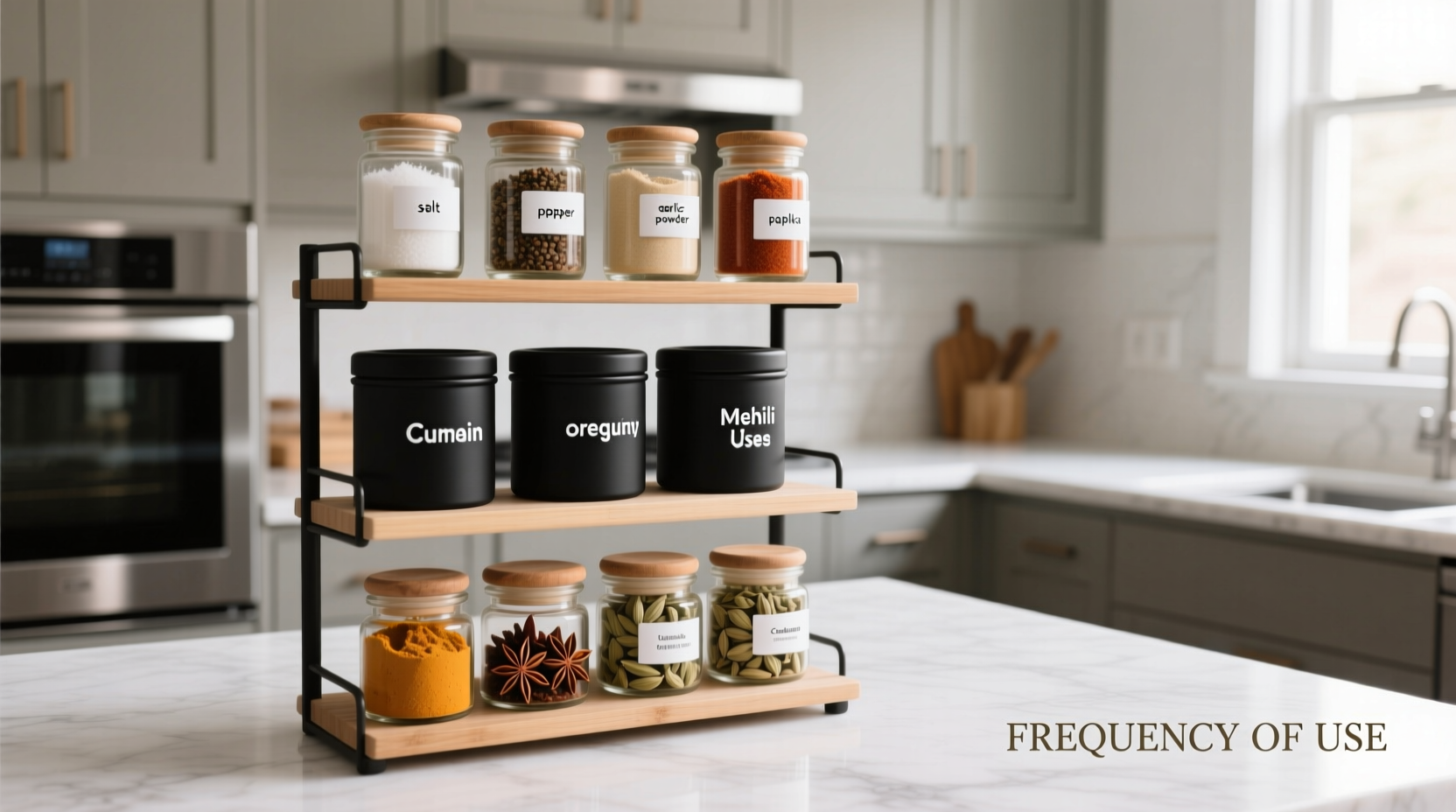
- Prime Zone (Eye-level, center): Reserved for top 8–10 most-used spices.
- Secondary Zone (Sides or upper/lower shelves): For occasional-use spices.
- Archive Zone (Back row, top shelf, drawer): For rare or specialty items.
- Label clearly and consistently – Use uniform labels (chalkboard stickers, printed tags) with bold names. Consider adding icons or color-coding for visual recognition.
- Re-evaluate quarterly – Cooking habits evolve. Reassess every few months and adjust placements as needed.
Real Example: Maria’s Kitchen Transformation
Maria, a home cook in Portland, used to spend extra minutes each night searching for spices. Her rack was meticulously alphabetical: bay leaves next to black pepper, thyme beside turmeric. But she rarely used half the collection.
After tracking her usage over two weeks, she discovered she reached for only 12 spices regularly—mostly garlic powder, smoked paprika, cumin, and cayenne—for her go-to taco bowls and roasted vegetables.
She reorganized: those 12 moved to the middle shelf. Everything else was grouped by cuisine (Indian, Mediterranean, Baking) and stored on higher shelves. She added small labels with red borders around heat-level spices like cayenne and chili powder.
Result? Her average meal prep dropped by nearly five minutes per dish. “I don’t even think about where things are anymore,” she said. “My hand just goes to the right spot.”
Do’s and Don’ts of Functional Spice Storage
| Do | Don’t |
|---|---|
| Store spices away from heat and light – Keep them in a cool, dark cabinet, not above the stove. | Expose jars to direct sunlight or steam, which degrades flavor and color. |
| Use consistent container sizes – Uniform jars improve accessibility and aesthetics. | Mix tall bottles with short tins, creating uneven spacing and wasted space. |
| Group by frequency, not cuisine (initially) – Speed matters more than theme when cooking. | Organize strictly by region unless you cook one cuisine exclusively. |
| Keep a 'restock list' – Note when jars run low to simplify grocery planning. | Assume you’ll remember what you’re running out of. |
| Use tiered racks or turntables – Maximize visibility and access in deep cabinets. | Stack jars behind others where they’re invisible and forgotten. |
Tips for Maintaining Your System Long-Term
A well-organized spice rack can degrade quickly without maintenance. Here’s how to keep it working efficiently month after month.
- Wipe shelves monthly – Spills and dust accumulate. A quick clean prevents clumping and contamination.
- Rotate new purchases to the back – Follow the “first in, first out” rule to prevent old spices from being buried.
- Limit impulse buys – Just because a recipe calls for star anise doesn’t mean you need to own it permanently. Buy small quantities or omit if rarely used.
- Use clear containers – Opaque jars force you to read every label. Transparent glass lets you see levels and contents instantly.
- Keep a master inventory list – Maintain a note in your phone or on the inside of a cabinet listing all your spices and purchase dates.
Frequently Asked Questions
Can I still use alphabetical order within frequency zones?
Absolutely. Once you’ve divided spices into daily, occasional, and rare categories, organizing alphabetically within each zone adds structure without sacrificing speed. For example, in your prime zone, arrange cumin, garlic powder, oregano, and paprika in alphabetical order. This combines logic with efficiency.
What if I cook different cuisines on different days?
If your cooking varies widely—Thai on Tuesdays, Italian on Fridays—consider a hybrid model. Maintain a core set of universal spices (salt, pepper, garlic, onion) in the prime zone, then rotate one or two cuisine-specific spices into secondary spots based on your weekly plan. Or keep themed mini-kits in small bins that you swap out weekly.
How do I handle spices I use frequently but take up a lot of space?
Bulk spices like sea salt or cracked pepper should be stored in larger containers elsewhere (pantry, countertop crock), with a smaller refill jar in your main rack. This preserves space for diverse flavors while ensuring supply. Refill the small jar weekly during meal prep.
Checklist: Build Your Frequency-Based Spice Rack
Follow this checklist to implement a smart, lasting system:
- ☐ Empty all spices from current storage
- ☐ Discard expired, stale, or unidentifiable jars
- ☐ Merge duplicates into single containers
- ☐ Track usage over 5–7 days (or estimate based on memory)
- ☐ Sort into three groups: Daily, Occasional, Rare
- ☐ Assign zones on your rack: Prime (center), Secondary (edges), Archive (back/top)
- ☐ Place top 8–10 spices in prime zone
- ☐ Label all jars clearly with large, readable text
- ☐ Install organizers like turntables or risers if needed
- ☐ Set a calendar reminder to review every 3 months
Conclusion: Design for How You Actually Cook
Organizing your spice rack by frequency of use isn’t just a practical upgrade—it’s a commitment to cooking with intention. It replaces rigid systems with responsive design, prioritizing function over form. When your kitchen tools align with your behavior, everything flows easier: decisions are faster, cleanup is simpler, and meals feel less like chores.
You don’t need a gourmet pantry or expensive containers. You need clarity, consistency, and a layout that respects your time. Start tonight: pull out your spices, identify the ones you truly rely on, and put them where they belong—front and center.
💬 Ready to optimize your kitchen? Share your before-and-after spice rack story in the comments or tag us on social media. Let’s inspire smarter cooking, one spice at a time.