Instant ramen has long been a staple of quick meals—affordable, fast, and satisfying. But too often, it's dismissed as bland or overly processed. The truth is, with just a few thoughtful additions and small technique tweaks, you can turn that humble packet into a restaurant-worthy dish. You don’t need fancy equipment or culinary training. Just creativity, curiosity, and a willingness to experiment. Whether you're a student on a budget, a busy professional, or someone who simply loves flavor, these upgrades will elevate your ramen from basic to brilliant.
Upgrade the Broth: The Foundation of Flavor
The seasoning packet in most instant ramen is high in sodium and lacks depth. While convenient, it’s also where most of the “instant” taste comes from. To create a more complex, savory base, consider enhancing—or even replacing—the provided broth entirely.
Start by using half the seasoning packet and supplementing it with richer ingredients. A spoonful of miso paste adds umami and creaminess. A splash of soy sauce deepens the salt profile without making it overwhelming. For a tangy twist, add a teaspoon of rice vinegar or lime juice. Fish sauce, though pungent in its raw form, dissolves into the broth beautifully, adding a subtle funk that mimics high-end Southeast Asian noodle soups.
Tip: Simmer your broth gently for 3–5 minutes after adding extras—this melds the flavors and intensifies the aroma.If you have access to homemade or store-bought dashi (Japanese soup stock), replace the water with it. Even a powdered version works wonders. Dashi brings out the natural savoriness of ingredients and creates a cleaner, more refined broth than the standard seasoning mix.
Add Protein That Elevates the Dish
Most instant ramen comes with a dehydrated protein sliver—if any. This is one of the easiest areas to upgrade. Adding real, quality protein transforms the dish from snack-like to meal-worthy.
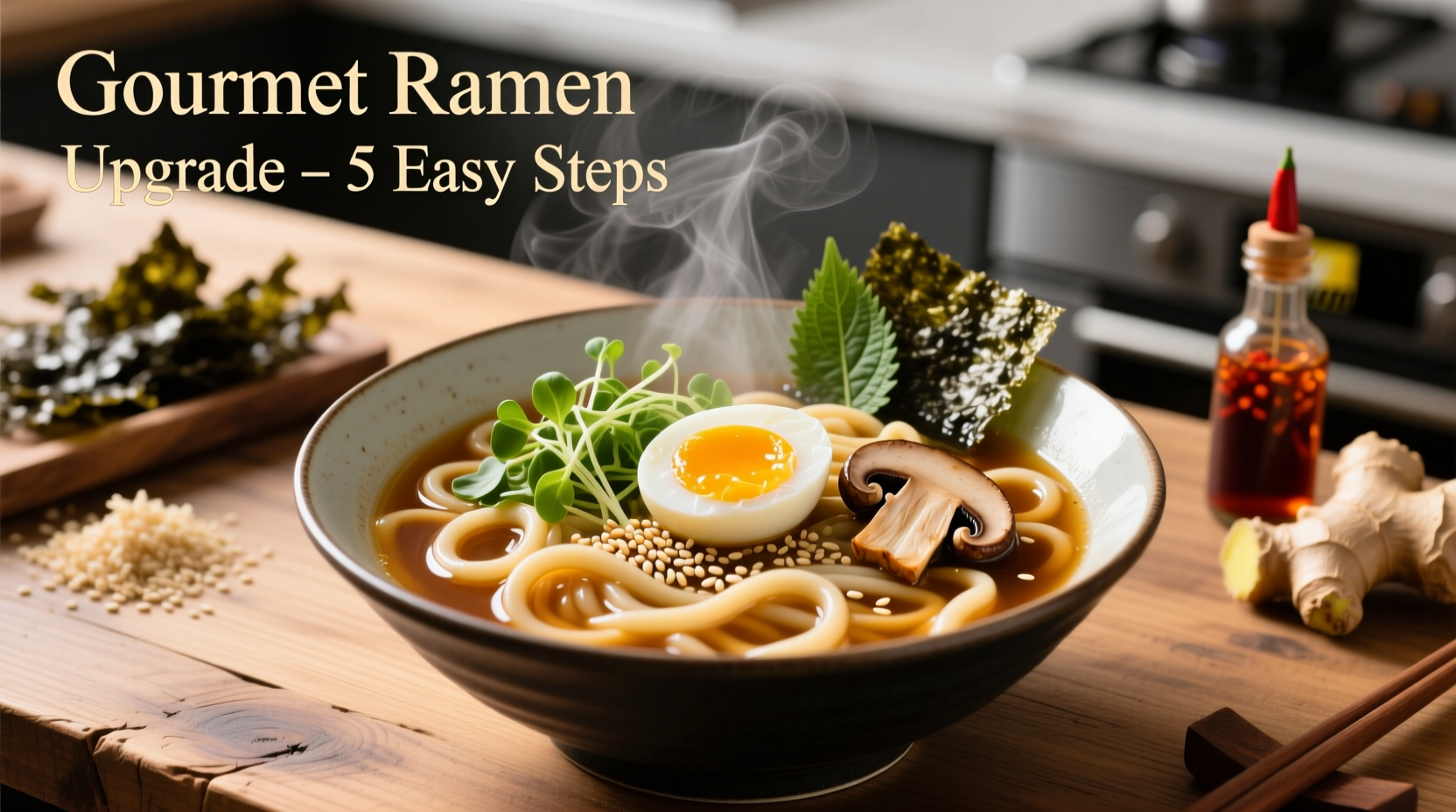
A soft-boiled or poached egg is perhaps the most accessible gourmet touch. The runny yolk enriches the broth, coating each noodle in silky richness. To make a perfect soft-boiled egg, simmer it for exactly 6 minutes, then plunge it into cold water. Peel and halve it over your bowl just before serving.
For meat lovers, thinly sliced deli ham, rotisserie chicken, or leftover steak work instantly. Pan-sear pre-cooked meats briefly to crisp the edges—this adds texture and depth. If you’re cooking from scratch, ground pork sautéed with garlic and ginger makes an excellent topping inspired by tonkotsu ramen.
Vegetarian? Try pan-fried tofu cubes marinated in soy sauce and sesame oil. Or add edamame for a pop of freshness and plant-based protein.
“Ramen is only as good as its toppings. The broth may bring warmth, but the proteins bring soul.” — Chef Naomi Tanaka, Japanese Comfort Food Specialist
Boost Texture and Freshness with Vegetables
One reason instant ramen feels flat is its lack of textural contrast. The noodles are soft, the broth is liquid, and the dried vegetables offer little crunch. Introducing fresh, crisp, or lightly cooked vegetables changes everything.
Quick additions include:
- Sliced green onions for sharpness and color
- Shredded carrots for sweetness and bite
- Baby spinach or bok choy, wilted directly in the hot broth
- Bean sprouts for a refreshing crunch
- Thinly sliced mushrooms (shiitake or cremini) sautéed in butter or oil
You don’t need to prep anything far in advance. Most of these can be added during the last minute of cooking. For example, throw spinach into the pot just before turning off the heat—it wilts in seconds. Sauté mushrooms while the water boils; their earthy aroma enhances the entire dish.
Vegetable Timing Guide
| Vegetable | Best Method | Cook Time |
|---|---|---|
| Spinach / Kale | Wilt in broth | 30–60 seconds |
| Bok Choy | Add stems first, leaves later | 2 minutes total |
| Mushrooms | Sauté separately | 4–5 minutes |
| Carrots / Bell Peppers | Stir in at end | 1–2 minutes |
| Bean Sprouts | Raw or blanched | None or 30 seconds |
Refine the Noodles and Finish Strong
The noodles themselves can be improved. Most people boil them directly in the seasoning broth, but this can result in overcooked, mushy strands. Instead, cook the noodles in plain water, drain, and rinse briefly under cold water to stop the cooking process. Then add them back to your enhanced broth. This gives you full control over texture.
For extra flavor, toss the drained noodles in a bit of toasted sesame oil or chili oil before adding them to the bowl. It coats each strand and adds a luxurious mouthfeel.
The final touches make all the difference. A drizzle of chili oil brings heat and complexity. A sprinkle of furikake (a Japanese seasoning blend with seaweed, sesame seeds, and dried fish) adds umami and crunch. A few drops of toasted sesame oil or truffle oil (if you're feeling indulgent) deepen the aroma. Fresh herbs like cilantro or Thai basil brighten the entire dish.
Step-by-Step Gourmet Ramen Upgrade
- Boil 2 cups of water (or dashi) in a pot.
- Add noodles and cook according to package, but remove 1 minute early.
- Drain and rinse under cold water; set aside.
- In the same pot, warm 1 cup of fresh broth or water with miso, soy sauce, and optional fish sauce.
- Add vegetables like spinach, mushrooms, or bok choy and simmer 1–2 minutes.
- Return noodles to the pot, stir to combine.
- Pour into a bowl and top with protein, soft-boiled egg, green onions, and seasonings.
- Finish with a drizzle of chili oil and a sprinkle of sesame seeds.
Real-Life Example: Sarah’s Dorm Room Ramen Revolution
Sarah, a college sophomore, used to eat plain instant ramen three times a week. She loved the convenience but hated how unsatisfying it felt. After watching a short video on ramen upgrades, she decided to experiment.
She started small: adding frozen peas and a scrambled egg. The next week, she bought a bottle of sriracha and some green onions. Soon, she was simmering her broth with a spoonful of peanut butter (inspired by Thai cuisine) and topping her bowl with crushed peanuts. Her roommates noticed immediately—her ramen smelled incredible.
By mid-semester, Sarah had a mini-routine: boil noodles, sauté mushrooms and spinach, mix in soy sauce and sesame oil, top with a soft-boiled egg and sriracha. Her upgraded ramen took only five minutes longer than the original—but tasted like something from a trendy downtown café. Her friends started asking for her “recipe,” and she began hosting weekly “Ramen Nights” in the dorm kitchen.
What began as a way to eat better became a social ritual—all because of a few simple changes.
Gourmet on a Budget: Cost vs. Impact
Many assume gourmet means expensive. Not true. Most upgrades cost pennies but deliver disproportionate flavor returns. Consider this breakdown:
| Upgrade | Cost (Approx.) | Flavor Impact |
|---|---|---|
| Soft-Boiled Egg | $0.20 | ★★★★★ |
| Soy Sauce (splash) | $0.05 | ★★★★☆ |
| Green Onions | $0.10 per stalk | ★★★★☆ |
| Miso Paste (1 tsp) | $0.15 | ★★★★★ |
| Sesame Oil (drizzle) | $0.10 | ★★★★☆ |
| Frozen Vegetables | $0.30 per serving | ★★★☆☆ |
Even if you add three of these upgrades, you’re still spending less than $1 extra per bowl—but gaining vastly more satisfaction, nutrition, and enjoyment.
Tip: Buy condiments in bulk—they last months and can be used across many meals, not just ramen.Frequently Asked Questions
Can I make gourmet ramen without a stove?
Absolutely. Use a microwave-safe bowl. Heat water to boiling in the microwave (about 3–4 minutes), pour over noodles, cover, and let sit for 3 minutes. Stir in your broth enhancements and top with no-cook ingredients like egg, greens, and sauces.
Is instant ramen unhealthy even with upgrades?
The base product is high in sodium and low in nutrients, but upgrading it significantly improves its nutritional profile. Adding vegetables, eggs, and lean protein increases fiber, vitamins, and protein. Reducing the seasoning packet by half cuts sodium. Over time, these changes make ramen a more balanced occasional meal rather than a dietary crutch.
What’s the best way to store leftover broth enhancements?
Keep miso paste, soy sauce, and sesame oil in a cool, dark pantry. Fish sauce and chili oil last for months unrefrigerated. Pre-peel and slice vegetables, store in airtight containers in the fridge for up to 5 days. Hard-boiled eggs keep for a week refrigerated—perfect for quick assembly.
Essential Checklist: Your Gourmet Ramen Starter Kit
- ☐ Soft-boiled or poached egg
- ☐ Green onions, sliced
- ☐ Soy sauce or tamari
- ☐ Sesame oil (toasted)
- ☐ Miso paste or fish sauce
- ☐ Frozen or fresh vegetables
- ☐ Chili oil or sriracha
- ☐ Furikake or sesame seeds
- ☐ Protein (leftover chicken, tofu, ham, etc.)
- ☐ Optional: lime wedge, cilantro, nori sheet
Conclusion: Turn the Ordinary Into Extraordinary
Great food doesn’t require expensive ingredients or hours in the kitchen. Sometimes, it starts with a 3-minute packet of instant ramen and the courage to stir in something new. Every upgrade—whether it’s an egg, a sprinkle of spice, or a handful of greens—adds layers of flavor, texture, and satisfaction. These small acts of culinary care remind us that we deserve nourishing, enjoyable meals, no matter our budget or schedule.
Don’t settle for “just enough.” Transform your ramen. Taste the difference. Share the idea. And next time someone says ramen is cheap food, show them what cheap food can become.
💬 What’s your favorite ramen upgrade? Try one of these tips tonight and tell us what you added—your idea might inspire someone else’s next great bowl.