For years, “mocktail” meant one thing: sweet, pulpy, and unmistakably childlike—a glass of sparkling apple juice with a wedge of lime, served at weddings or baby showers as an afterthought. But today’s sober-curious, health-conscious, and flavor-obsessed adults demand more. They want drinks that engage the palate like a Negroni or a Manhattan—layered, bitter, aromatic, textured, and intentionally complex—not just hydrated fruit punch. The shift isn’t about abstinence; it’s about intentionality. It’s about respecting the ritual of the cocktail—the chill of the glass, the aroma rising from the rim, the slow evolution of flavors across sips—without alcohol. Achieving that requires moving beyond juice-centric thinking and embracing techniques, ingredients, and philosophies long reserved for bar programs in Michelin-starred restaurants and award-winning zero-proof bars.
The Core Problem: Why Most Non-Alcoholic Cocktails Taste Like Juice
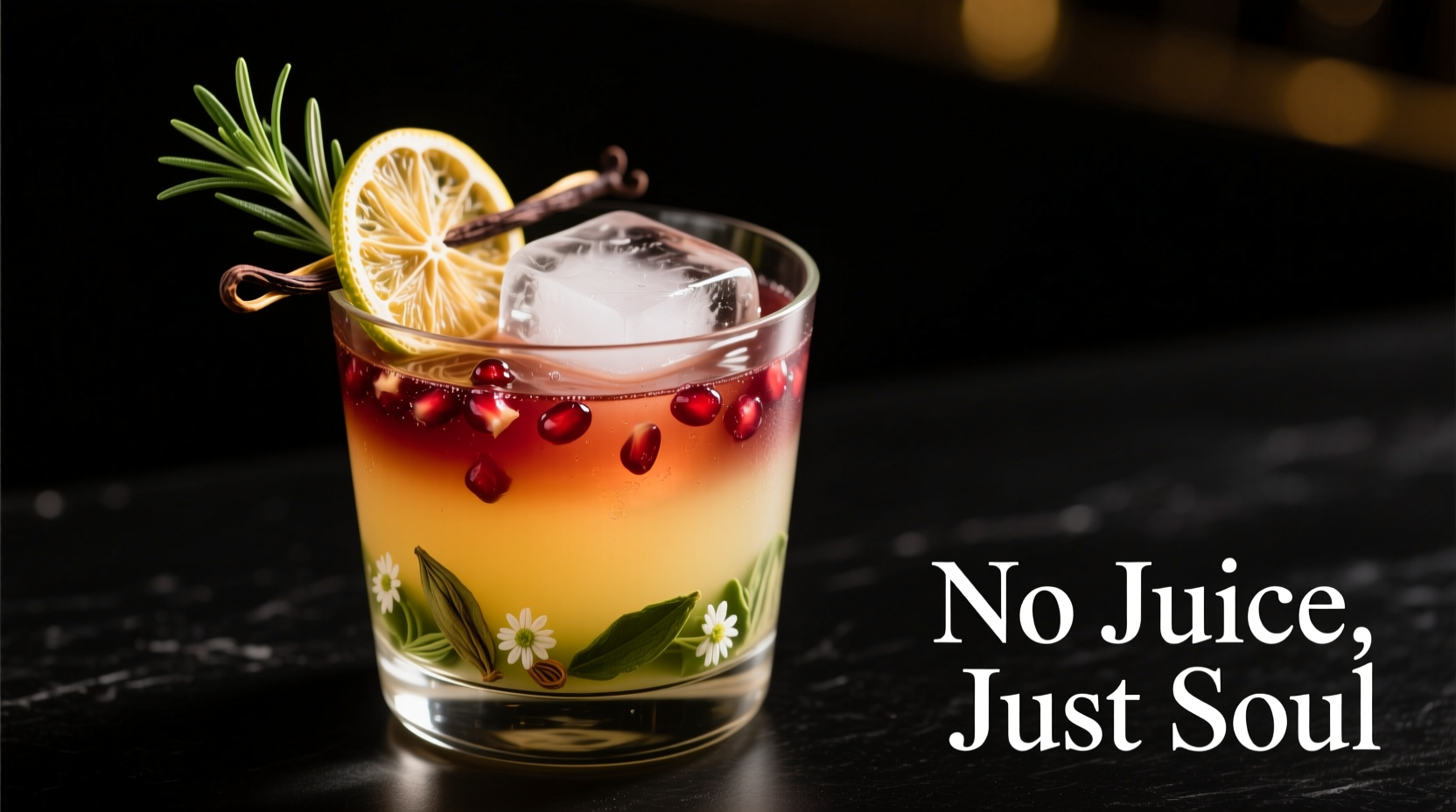
Most homemade non-alcoholic drinks fail because they replicate the *structure* of alcoholic cocktails without addressing their *functional role*. Alcohol isn’t just a solvent—it’s a carrier of volatile aromatics, a textural amplifier (adding viscosity and mouthfeel), and a natural bittering agent. When you remove it, what remains is often unbalanced sweetness, flat acidity, and one-dimensional fruit notes. Juice alone lacks tannin, umami, salinity, smoke, or roasted depth—all essential counterpoints that give adult beverages gravitas. Worse, many recipes rely on syrup-heavy bases (simple syrup, agave, honey) and carbonated sodas that mask rather than complement. The result? A drink that satisfies thirst but not sophistication.
Tip: Never start with juice as your base. Begin instead with a low-sugar, high-character foundation—cold-brewed tea, shrub, fermented vinegar, or roasted vegetable stock—and build upward.Five Foundational Ingredients That Replace Alcohol’s Complexity
Alcohol contributes bitterness, heat, volatility, and structure. To replace those qualities authentically, you need ingredients that deliver comparable sensory effects—without sugar overload or cloying sweetness. These five categories form the backbone of serious zero-proof mixing:
- Bitter & Herbal Infusions: Gentian root, dandelion, artichoke leaf, wormwood, and dried citrus peels provide the same dry, lingering finish found in Campari or Aperol. Steep 1 tsp dried gentian in ½ cup hot water for 8 minutes, strain, and chill. Use ½ oz per drink.
- Vinegar-Based Shrubs: Not just for salads—shrubs (fruit + vinegar + sweetener, aged 3–7 days) add bright acidity, subtle funk, and roundness. Blackberry-thyme shrub or roasted beet–apple cider vinegar shrub adds savory depth far beyond lemon juice.
- Non-Alcoholic Ferments: Jun kombucha (unflavored, low-sugar), tepache (fermented pineapple rind), or even house-made kvass (rye or beet-based) contribute effervescence, lactic tang, and umami complexity—no carbonation machine required.
- Roasted & Toasted Elements: Cold-brewed chicory coffee, toasted sesame oil (used sparingly as a rinse), smoked sea salt, or charred lemon peel introduce bitterness, nuttiness, and smokiness—flavor dimensions rarely found in juice.
- Umami-Rich Broths & Extracts: Mushroom dashi (dried shiitake + kombu, steeped 20 min, chilled), tomato water (strained fresh tomato pulp), or even a few drops of white miso paste dissolved in warm water add savory weight and mouth-coating richness that mimics the body of aged spirits.
These aren’t garnishes—they’re structural pillars. A well-built zero-proof cocktail uses at least two of these categories to create tension and resolution across the palate.
A Step-by-Step Framework: Building Your First Adult Non-Alcoholic Cocktail
Forget “recipes.” Think in terms of ratios, balance, and progression. Follow this repeatable framework—tested across over 200 iterations in professional zero-proof bar development—to engineer depth every time:
- Choose Your Base (0.75–1 oz): Select one low-sugar, high-character foundation: cold-brewed green tea (for grassy astringency), unsweetened jun kombucha (for tart effervescence), mushroom dashi (for umami weight), or roasted carrot juice (for earthy sweetness).
- Add Bitter & Aromatic Depth (0.25–0.5 oz): Use a house-made gentian infusion, orange bitters (alcohol-free versions exist—check labels for glycerin or vinegar base), or a few drops of grapefruit zest oil.
- Introduce Acid & Brightness (0.25 oz): Go beyond lemon or lime. Try yuzu juice, verjus (unfermented grape juice), or shrub syrup (1:1 shrub-to-water dilution). This must cut—not dominate.
- Layer Texture & Mouthfeel (0.25 oz): Add one of: aquafaba (chickpea brine, shaken hard for foam), cold-foamed coconut milk, or a pinch of xanthan gum (0.05g) dissolved in 1 tsp water and stirred in last.
- Finish with Salinity or Smoke (1–2 drops or pinch): A single drop of smoked sea salt solution (1 tsp salt dissolved in ¼ cup water) or a light rinse of lapsang souchong tea in the glass before pouring creates an unforgettable finish.
Shake all liquid components (except foam or finishing elements) vigorously with ice for 12 seconds. Double-strain into a chilled coupe or rocks glass. Top with texture element if using. Finish with salinity/smoke. Serve immediately.
Real-World Example: The “Hearth & Hemlock” (Served at The Verdant, Portland)
In early 2023, bar manager Lena Ruiz faced pressure to replace the bar’s popular “Smoked Maple Old Fashioned” on its new zero-proof menu. Guests complained the initial mock version tasted like “caramel apple cider.” She scrapped juice entirely. Her breakthrough came from rethinking the Old Fashioned’s core functions: spirit = oak, vanilla, heat; bitters = herbal bitterness; sugar = caramelized depth; orange = aromatic lift.
Ruiz built her replacement around three non-juice pillars: • Base: Cold-brewed black tea infused with toasted oak chips (steeped 4 hours, strained) — delivers tannin, wood, and body. • Bitter: House-made hemlock spruce tip tincture (spruce tips macerated in apple cider vinegar for 5 days) — piney, resinous, clean bitterness. • Sweet/Depth: Date molasses (simmered dates + water, reduced by half) — deep caramel, mineral, no refined sugar. • Finish: A single drop of smoked sea salt solution + expressed orange oil rubbed on the rim.
The result? A drink served over a single large cube, garnished with a dehydrated blood orange wheel and a tiny sprig of fresh spruce. Guests consistently describe it as “campfire in a glass—earthy, crisp, warming, and utterly unsweet.” Sales now exceed the original alcoholic version. As Ruiz told Zero Proof Journal: “People don’t miss the alcohol when the drink tells a story on the tongue. Juice tells no stories. Roast, ferment, infuse—that’s where narrative begins.”
Do’s and Don’ts: A Practical Comparison Table
| Category | Do | Don’t |
|---|---|---|
| Sweeteners | Use date syrup, blackstrap molasses, or roasted pear puree for complex, low-glycemic sweetness | Rely on simple syrup, agave, or store-bought “mocktail mixes” (often 30g+ sugar per serving) |
| Acidity | Balance with verjus, yuzu, or shrub—add slowly, taste between drops | Default to lemon/lime juice alone; never adjust pH with baking soda (creates off-flavors) |
| Texture | Shake aquafaba for foam; use xanthan for silkiness; layer chilled coconut cream for richness | Add heavy cream or full-fat milk (curdles with acid); skip texture entirely (flat drinks read as “juice”) |
| Garnish | Use edible flowers with tannin (viola), charred citrus, or smoked herbs—aromatic and functional | Stick to standard mint sprigs or plastic umbrella—pure decoration, zero aroma contribution |
| Temperature | Chill glass *and* all components; serve at 38–42°F (3–6°C) for maximum aromatic lift | Build in warm glass or with room-temp ingredients—kills volatility and flattens nuance |
Expert Insight: What Professional Zero-Proof Bartenders Know
The most respected non-alcoholic programs—from Mockingbird in London to Sans Bar in Austin—share one principle: treat zero-proof as its own discipline, not a derivative of mixology. Chef and beverage innovator Javier Mendoza, who developed the zero-proof program for Eleven Madison Park’s “Meadow” concept, puts it plainly:
“The biggest mistake people make is trying to imitate alcohol. You can’t ‘replace’ ethanol—you reinterpret its role. Bitterness isn’t just a flavor; it’s a reset button for the palate. Umami isn’t ‘savory’—it’s the glue that holds disparate notes together. And texture? That’s where memory lives. A properly aerated drink triggers the same dopamine response as a shaken martini—not because it tastes like one, but because it feels like one.” — Javier Mendoza, Beverage Director & Zero-Proof Educator
Mendoza’s team trains staff to describe non-alcoholic drinks using the same language as wine or spirits: “This has a flinty minerality from the schist-filtered spring water,” or “The finish shows dried chamomile and wet stone.” Language shapes perception—and perception determines whether a drink feels adult or infantilizing.
FAQ: Addressing Common Roadblocks
Why does my non-alcoholic cocktail taste flat—even with good ingredients?
Flatness almost always stems from missing one of three pillars: insufficient bitterness (no counterpoint to sweetness), inadequate acidity (no brightness to lift flavors), or lack of texture (no viscosity or effervescence to carry aroma). Rebuild using the step-by-step framework—start with bitterness first, then acidity, then texture. Taste after each addition.
Can I make complex non-alcoholic drinks without special equipment?
Absolutely. You need only a fine-mesh strainer, a small saucepan, airtight jars for infusions, and a Boston shaker (or even a mason jar with tight lid). No centrifuge, vacuum sealer, or rotary evaporator required. The complexity comes from ingredient selection and layered technique—not gear. Start with one bitter infusion and one shrub; master those before adding more variables.
How do I keep guests from assuming it’s “just for kids”?
It’s about presentation and language. Serve in proper stemware (coupe, Nick & Nora, or double old-fashioned). Name it with intention (“Cedar & Celery Root Fizz,” not “Virgin Mojito”). Describe it with sensory precision: “roasted, saline, herbaceous, with a crisp green apple finish.” When you speak about it with the same reverence as a barrel-aged whiskey, guests will listen—and taste—differently.
Conclusion: Your Drink Deserves the Same Respect as Your Dinner
Choosing not to drink alcohol doesn’t mean surrendering complexity, ceremony, or delight. It means choosing a different kind of attention—one focused on botanical nuance, fermentation patience, and the quiet intensity of roasted roots and dried herbs. The adult palate craves contrast: bitter against sweet, smoke against bright, umami against acid. Juice offers none of that. But cold-brewed chicory does. Fermented shrubs do. Toasted sesame oil does. These aren’t substitutes. They’re upgrades—ingredients that have been overlooked in the shadow of ethanol, now stepping confidently into the spotlight.
You don’t need a bar license or a $500 kit to begin. Start tonight: brew a pot of strong black tea, toast a teaspoon of coriander seeds in a dry pan until fragrant, steep them in the tea for 10 minutes, strain, chill. Add a splash of apple cider vinegar shrub and a tiny pinch of flaky sea salt. Stir. Sip slowly. Notice how the bitterness lingers, how the salt lifts the fruit, how the toastiness grounds it all. That’s not juice. That’s intention. That’s adulthood in a glass.
💬 Your turn. Brew one infusion this week. Share your first adult non-alcoholic creation—and what surprised you—in the comments. Let’s build a library of real, resonant, juice-free rituals—together.