There’s a quiet tension at many gatherings: the desire to celebrate with something beautiful, communal, and deeply satisfying—yet without the sugar crash, bloating, or post-party fatigue that often follows traditional sangria. Classic recipes can pack 30–45 grams of added sugar per serving—more than a glazed donut—thanks to sweetened fruit juices, simple syrup, and sugary liqueurs. But festive doesn’t require fermentation *or* fructose overload. A well-crafted low-sugar sangria delivers layered aromatics, bright acidity, subtle tannins, and textural intrigue—all while staying under 6 grams of added sugar per 5-ounce pour. This isn’t about deprivation; it’s about intentionality, balance, and honoring the spirit of sangria: a shared, seasonal, soulful drink rooted in resourcefulness.
Why Traditional Sangria Often Misses the Mark on Sugar
Sangria’s origins lie in rural Spain and Portugal, where winemakers used slightly oxidized or lower-tier wines, bolstered with local fruit, herbs, and a splash of brandy—not syrup—to stretch volume and enhance freshness. The modern American version, however, evolved through mid-century cocktail culture, favoring convenience over authenticity: bottled apple or orange juice, pre-made grenadine, and corn syrup–sweetened triple sec became standard. A single batch made with 1 cup of store-built orange juice (32 g sugar), ½ cup simple syrup (96 g sugar), and ¼ cup Cointreau (12 g sugar) adds nearly 140 grams of added sugar before even adding fruit or wine. That’s enough to sweeten six servings—and completely mute the wine’s natural structure.
Worse, high sugar masks nuance. It flattens acidity, suppresses herbal notes, and creates cloying viscosity instead of lively effervescence. When sugar dominates, you’re not tasting the wine, the fruit, or the spice—you’re tasting sweetness itself.
Tip: Taste your base wine *before* adding anything else. If it tastes unbalanced or overly tart on its own, it will only worsen when diluted and sweetened. Choose a wine with inherent harmony—not one you plan to “fix” with sugar.The Four Pillars of Low-Sugar Sangria Design
Building a compelling low-sugar sangria rests on four interlocking principles—not substitutions alone, but a holistic framework for flavor architecture:
- Fruit as Flavor Enhancer, Not Sweetener: Use ripe, in-season fruit for aromatic oils and juiciness—not sugar delivery. Prioritize berries, citrus zest, stone fruit skins, and apples with firm texture. Avoid canned fruit in syrup or pre-cut melon trays loaded with dextrose.
- Acid as the Primary Brightener: Citrus juice (especially lemon and lime), verjus, or dry apple cider vinegar add vibrancy and lift without calories or glycemic load. Acid tricks the palate into perceiving roundness—even when sugar is minimal.
- Tannin & Texture for Weight and Complexity: A small amount of dry red wine with noticeable tannins (e.g., Tempranillo, young Cabernet Franc) or a splash of unsweetened black tea provides mouthfeel and bitterness that mimics richness. This counters the thinness often associated with “light” drinks.
- Botanical Depth Over Sweet Liqueurs: Replace Cointreau or Grand Marnier with small amounts of dry orange bitters, grapefruit bitters, or a rinse of high-proof, unsweetened orange spirit (like Pierre Ferrand Dry Curaçao). For herbal lift, use fresh rosemary, thyme, or crushed fennel seed—not sugared syrups.
This approach treats sugar not as an ingredient to be reduced, but as an element to be *replaced functionally*. You’re not cutting back—you’re upgrading the tools.
A Step-by-Step Framework for Crafting Your Batch
Follow this sequence—not as rigid rules, but as a reliable workflow for consistent, expressive results. Timing matters: maceration allows flavors to integrate without oxidation or mushiness.
- Select & Prep the Wine (Day 0, Morning): Choose 750 mL of dry, medium-bodied red or rosé (see table below). Chill fully. Wash and dry fruit thoroughly—moisture dilutes wine and encourages spoilage.
- Macerate the Aromatics (Day 0, Afternoon): In a large pitcher, combine zest of 1 orange and 1 lemon (use a microplane; avoid white pith), ½ cup sliced strawberries, ¼ cup thinly sliced green apple (skin on), 2 sprigs fresh rosemary, and 1 tsp black peppercorns. Gently muddle *once* to release oils—do not crush or pulp. Add 2 tbsp fresh lemon juice and 1 tbsp verjus. Let sit at cool room temperature for 2 hours.
- Combine & Chill (Day 0, Evening): Pour chilled wine over the macerated mixture. Stir gently. Add 2 oz dry brandy (no added sugar) and ½ oz Pierre Ferrand Dry Curaçao (or 3 dashes orange bitters if unavailable). Cover and refrigerate for 8–12 hours—no longer. Extended time softens tannins but blurs brightness.
- Strain & Finish (Day 1, 1–2 Hours Before Serving): Strain through a fine-mesh sieve, pressing gently on solids. Discard spent fruit and herbs. Stir in 1 tsp flaky sea salt (enhances perception of fruit and balances bitterness) and 1 tsp grated fresh ginger (adds zing without sugar). Taste. If needed, add *up to* ½ tsp pure maple syrup—but only if acidity feels harsh, not flat. Most batches need zero added sweetener.
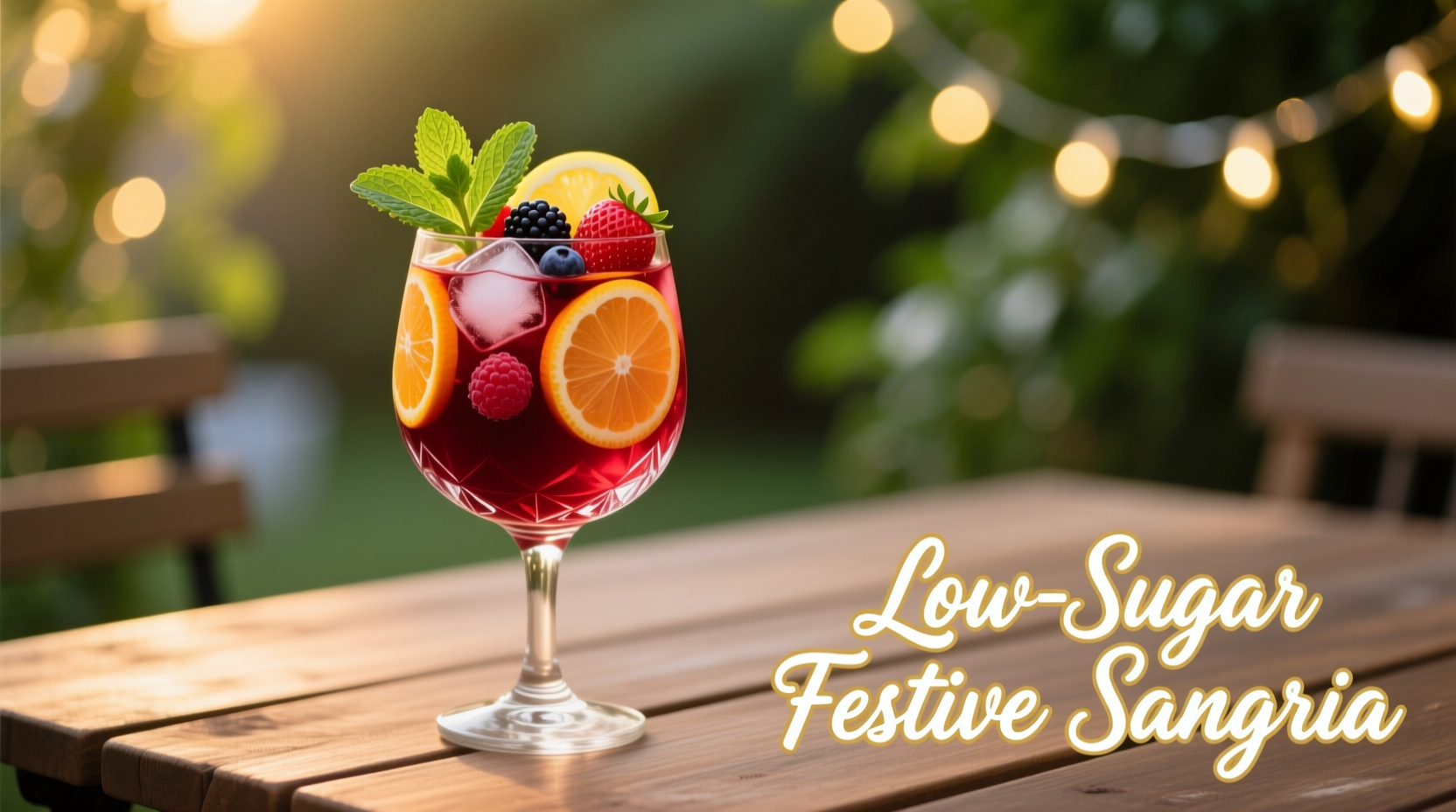
- Serve With Intention (Day 1, Final Step): Pour over large ice cubes (to minimize dilution). Garnish with a twist of orange zest, a single blackberry, and a tiny rosemary sprig. Never serve straight from the fridge—let it warm 5 minutes for full aroma expression.
Smart Ingredient Swaps: What to Use (and What to Skip)
Not all low-sugar options are created equal. Some introduce hidden sugars or compromise mouthfeel. This table compares common choices by functional impact, sugar content, and risk of off-notes:
| Ingredient Category | Recommended Choice | Sugar Content (per 2 tbsp) | Why It Works | Avoid |
|---|---|---|---|---|
| Fruit Base | Fresh raspberries + green apple + orange zest | ~2.5 g (naturally occurring) | High polyphenol content enhances wine’s tannins; acidity cuts richness. | Canned peaches in heavy syrup, fruit cocktail, agave-sweetened dried fruit |
| Acid Source | Verjus or fresh lemon juice | 0 g | Clean, crisp acidity without bitterness or metallic aftertaste. | Bottled “sangria mix,” white vinegar, lime juice (too sharp alone) |
| Spirit Modifier | Dry Curaçao (Pierre Ferrand) or orange bitters | 0.2 g (bitters) / 0.5 g (dry curaçao) | Provides authentic orange oil aroma without sucrose-driven cloying. | Triple sec, Cointreau, Grand Marnier, any “dessert” liqueur |
| Sweetness Adjuster (if needed) | Raw honey (heated & cooled) or monk fruit–erythritol blend | 0 g (monk fruit) / 17 g (honey) | Honey adds floral depth; monk fruit blends dissolve cleanly and lack aftertaste. | Maple syrup (high glycemic), stevia (bitter), corn syrup, simple syrup |
| Texture Builder | Cold-brewed black tea (unsweetened) or dry rosé | 0 g | Tannins mimic body; tea adds subtle smokiness and structure. | Soda water (dilutes flavor), sparkling juice, sweetened iced tea |
Real-World Example: How Elena Transformed Her Summer Gatherings
Elena, a nutrition-focused wellness coach in Austin, hosted weekly backyard sangria nights for friends—but noticed recurring complaints: “I love it, but I feel sluggish by 9 p.m.,” or “My stomach’s upset the next morning.” She’d tried “diet” versions using diet soda and artificial sweeteners, but guests called them “flat” and “chemical-tasting.” Frustrated, she spent a month testing variables: swapping juices for whole fruit, eliminating all liqueurs, and introducing verjus and black tea. Her breakthrough came when she added a pinch of sea salt and served the sangria slightly warmer than fridge-cold. “The first time I poured it, my friend paused mid-sip and said, ‘This tastes like summer in Spain—not like a health food store.’ No one asked for a second glass less. They asked for the recipe.” Her current batch uses Texas-grown blackberries, locally distilled brandy, and cold-brewed Lapsang souchong tea. Average added sugar per serving: 3.2 grams. Attendance at her gatherings has increased 40% year-over-year—proof that restraint, when executed with craft, amplifies joy rather than diminishing it.
“Low-sugar doesn’t mean low-impact. In fact, reducing added sugar often reveals more of what makes wine—and fruit—truly special: their terroir, their seasonality, their natural acidity and tannin. That’s where festivity lives—not in the sugar bowl.” — Dr. Lena Torres, Registered Dietitian & Beverage Historian, author of Drinking Well: A Science-Backed Guide to Alcoholic Beverages
Your Low-Sugar Sangria Success Checklist
- ☑ Chose a dry, balanced wine—not one you’ll “sweeten up later”
- ☑ Used whole, fresh fruit—not juice, syrup, or canned alternatives
- ☑ Added acid (verjus, lemon, or dry cider) *before* tasting for sweetness
- ☑ Included a bitter or tannic element (tea, dry spirit, or herb) for structural weight
- ☑ Macerated no longer than 12 hours to preserve brightness
- ☑ Tasted *before* adding any sweetener—and only added if acidity felt aggressive, not missing
- ☑ Served over large, clear ice with thoughtful garnish (zest > slice)
FAQ: Addressing Common Concerns
Can I make a low-sugar sangria with white wine?
Absolutely—and it’s often easier. Opt for a dry, aromatic white like Albariño, Verdejo, or Grüner Veltliner. Replace red wine’s tannins with 1 oz chilled green tea or a splash of dry sparkling wine just before serving. Use green grapes, cucumber ribbons, and mint instead of berries and rosemary. Acid management becomes even more critical: lean on yuzu juice or a touch of citric acid (⅛ tsp per bottle) for backbone.
What if my sangria tastes too tart or sharp after chilling?
Chilling suppresses fruit perception and amplifies acidity. Let the pitcher sit at cool room temperature (65–68°F) for 10–15 minutes before serving. If still sharp, stir in ¼ tsp flaky sea salt—it doesn’t add saltiness but rounds out harsh edges. Never add sugar to fix chill-induced tartness; it creates imbalance. Warmth and salt resolve 90% of “too tart” issues.
How long does low-sugar sangria last in the fridge?
Up to 48 hours maximum. Without preservative-level sugar, oxidation accelerates. Fruit breaks down, herbs turn vegetal, and delicate top notes fade. For best results, prepare the night before serving—and strain before refrigerating. Do not add sparkling elements (like Prosecco) until the moment of service.
Conclusion: Festivity Is a Feeling—Not a Formula
Low-sugar sangria succeeds not because it’s “good for you,” but because it’s *better made*. It asks you to slow down—to smell the orange zest, taste the wine’s finish, listen to how acidity lifts the fruit, and notice how tannin gives the drink presence. These aren’t compromises. They’re invitations to engage more deeply with the craft of hospitality. When you serve a sangria built on balance rather than sweetness, you’re offering more than refreshment: you’re offering attention, respect for ingredients, and trust in your guests’ palates. That’s the essence of celebration—unhurried, intentional, and alive with nuance.
Start small. Try the step-by-step framework with one bottle of wine and three kinds of fruit. Taste critically—not for sweetness, but for resonance. Notice what lingers. Then share what you discover. Because the most festive thing about sangria has never been the sugar. It’s the way it brings people together around something real, shared, and thoughtfully made.
💬 Which ingredient swap surprised you most—or which fruit combination became your signature? Share your low-sugar sangria story in the comments. Let’s build a living library of joyful, sugar-smart celebrations.