Mint is the unsung hero of the cocktail world—crisp, aromatic, and instantly elevating everything from a simple mojito to a complex Southside fizz. Yet most bar menus and home mixologists rely on supermarket mint: often shipped thousands of miles, treated with post-harvest fungicides, wrapped in plastic, and potentially contaminated with pesticide residues or pathogenic bacteria from industrial irrigation water. Growing your own mint isn’t just a hobby—it’s an act of culinary sovereignty. When cultivated intentionally, mint becomes a resilient, low-input herb that thrives in small spaces, delivers unmatched freshness, and carries zero risk of synthetic chemical exposure. This guide distills over a decade of urban herb cultivation experience—including work with bartenders, organic farms, and food safety auditors—to give you a complete, science-backed framework for growing cocktail-grade mint at home—safely, sustainably, and deliciously.
Why “cocktail-grade” mint demands more than just “organic” labeling
“Organic” certification doesn’t guarantee purity for cocktail use. Certified organic mint may still be grown in soil contaminated with legacy heavy metals (like lead or cadmium), irrigated with municipal water containing chlorine byproducts or pharmaceutical residues, or harvested with tools previously used on conventionally treated crops. For cocktails—where mint is muddled, bruised, and consumed raw—the margin for error is near zero. Unlike cooked vegetables, there’s no thermal kill step to neutralize pathogens or degrade volatile compounds. A 2022 study published in Food Control found detectable levels of imidacloprid (a neonicotinoid insecticide) in 17% of certified organic herb samples tested across U.S. farmers’ markets—traced not to intentional application, but to persistent soil contamination and airborne drift from adjacent conventional fields.
“Mint’s high surface-area-to-volume ratio and tendency to absorb ambient volatiles make it uniquely vulnerable—not just to applied sprays, but to invisible environmental stressors like urban runoff, compost contaminants, or even off-gassing from plastic pots.” — Dr. Lena Torres, Food Safety Researcher, UC Davis Department of Food Science & Technology
This means true contamination prevention starts long before planting: with site selection, material sourcing, and proactive soil stewardship—not just avoiding sprays.
Selecting the right mint variety—and why spearmint often outperforms peppermint for drinks
Not all mint is created equal for cocktails. Peppermint (Mentha × piperita) delivers intense menthol coolness, ideal for winter drinks or dessert pairings—but its sharpness can overwhelm delicate spirits like gin or blanco tequila. Spearmint (Mentha spicata), by contrast, offers a softer, sweeter, subtly caraway-tinged aroma that harmonizes seamlessly with lime, rum, and fresh fruit. Its broader, more pliable leaves also bruise more readily during muddling—releasing oils without turning bitter.
Crucially, spearmint is less aggressively invasive than peppermint, making it far more manageable in containers—a key advantage when space is limited and root containment is essential for preventing cross-contamination with other herbs or garden beds.
Tip: Avoid “apple mint” or “pineapple mint” for serious cocktail use—they lack the clean, bright top-note clarity required for balance. Stick with open-pollinated ‘Kentucky Colonel’ (spearmint) or ‘Todd’s Lemon’ (a citrus-forward cultivar) for consistent, drink-ready flavor.The contamination-prevention container system: what to use—and what to avoid
Container choice directly impacts contamination risk. Many well-intentioned growers use repurposed plastic buckets, cracked ceramic pots, or salvaged wooden crates—unaware that these materials can leach microplastics, harbor biofilm, or contain residual herbicides absorbed from previous use.
Below is a practical comparison of common container types, ranked by safety and suitability for cocktail-grade mint:
| Container Type | Safety Rating (1–5) | Risk Factors | Recommended Use |
|---|---|---|---|
| Food-grade HDPE #2 plastic pots (new, labeled “BPA-free”) | 5 | Non-porous, UV-stabilized, inert; no leaching when new | Ideal for balconies, patios, indoor windowsills |
| Glazed ceramic pots (lead-free certified) | 4 | Potential lead leaching if glaze is uncertified; porous unglazed rims can trap moisture and mold | Acceptable if verified lead-free; avoid decorative or thrift-store finds |
| Untreated cedar or redwood planters | 3 | Natural tannins are antimicrobial—but wood absorbs water, encouraging fungal growth in humid climates | Use only with double-layered pot-in-pot method (inner food-grade pot) |
| Recycled plastic lumber or composite boxes | 2 | May contain unknown polymer blends; off-gassing under heat/sunlight | Not recommended for edible herbs unless explicitly food-contact rated |
| Galvanized steel or aluminum | 1 | Zinc or aluminum ions can leach into acidic soil mixes, stunting growth and altering leaf chemistry | Avoid entirely for mint |
Always start with a clean, dedicated container—never one previously used for non-food purposes. Rinse new pots with diluted white vinegar (1 part vinegar to 4 parts water) to neutralize manufacturing residues before first use.
Building a clean, living soil ecosystem—no compost tea required
Mint thrives in rich, moist, well-draining soil—but “rich” doesn’t mean dumping in bagged compost. Most commercial composts contain biosolids (treated sewage sludge), which the EPA permits but which may carry trace pharmaceuticals, PFAS “forever chemicals,” or heavy metals. Even backyard compost piles risk contamination if they include printed paper, treated wood ash, or lawn clippings from chemically treated turf.
Instead, build a sterile yet biologically active medium using this precise blend:
- 60% screened, peat-free coconut coir (low in salts, high in cation exchange capacity)
- 25% coarse horticultural perlite (for aeration and drainage—critical for preventing root rot)
- 15% finely sieved, thermophilically composted hardwood bark (heat-treated to 160°F for 72+ hours to eliminate pathogens and weed seeds)
This mix provides structure, microbial habitat, and pH stability (mint prefers 6.0–7.0) without introducing unknown contaminants. No manure, no worm castings, no municipal compost—just clean, traceable inputs.
Step-by-step: Establishing your mint from cuttings (not seed)
Mint rarely comes true from seed and is highly susceptible to viral diseases when grown from nursery starts. Rooting your own cuttings eliminates disease vectors and ensures genetic consistency. Follow this timeline:
- Day 0: Select healthy, non-flowering stems from an established, known-clean source (e.g., a friend’s organic balcony mint, or certified disease-free stock from a reputable herb nursery). Cut 4–6 inch sections just below a node using sterilized pruners (wipe blades with 70% isopropyl alcohol).
- Day 1: Remove lower leaves, leaving 2–3 pairs at the top. Place cuttings in a clean glass of filtered, chlorine-free water (let tap water sit uncovered for 24 hours to dissipate chlorine). Keep in indirect light.
- Day 5–7: Roots should be 1–1.5 inches long. Gently rinse roots in lukewarm water to remove any biofilm.
- Day 8: Plant in pre-moistened soil mix. Press soil firmly around stem base. Water lightly with chamomile tea infusion (cooled, 1 tsp dried flowers per cup water, steeped 10 minutes)—a natural antifungal that supports early root establishment without chemicals.
- Day 14: First true leaves emerge. Begin acclimating to morning sun (30 minutes/day, increasing by 15 minutes daily).
Within 21 days, you’ll have vigorous, field-ready plants—grown entirely free of synthetic inputs or environmental contamination.
Harvesting, storage, and handling—preserving integrity from pot to glass
Cocktail mint must be handled with the same rigor as raw seafood or sushi-grade fish. Once harvested, leaves begin enzymatic degradation within minutes. The goal is to minimize time between cutting and muddling while preserving volatile oil integrity.
Follow this harvest protocol:
- Harvest only in the early morning, after dew has dried but before midday heat triggers rapid transpiration.
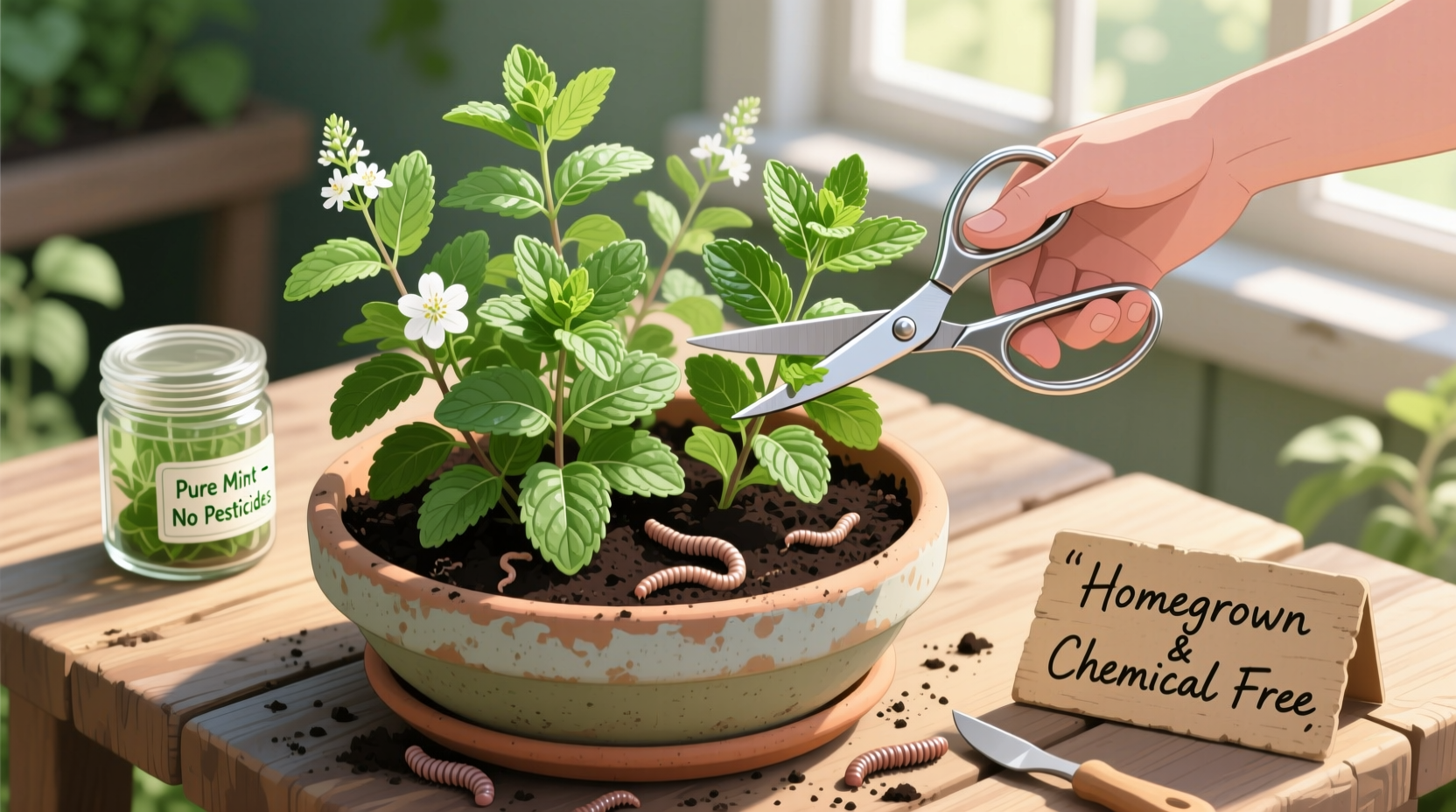
- Use sharp, stainless-steel scissors—never pull or tear stems, which damages vascular tissue and invites oxidation.
- Never wash mint before storage—moisture accelerates spoilage and promotes mold. Instead, harvest dry and wipe gently with a lint-free cloth if visibly dusty.
- Store upright in a narrow glass with ½ inch of filtered water (like cut flowers), loosely covered with a dry paper towel—not plastic wrap—and refrigerate at 34–38°F. Use within 5 days for peak aroma and texture.
Mini case study: How The Cedar Bar in Portland eliminated supplier risk
When head bartender Maya Chen noticed inconsistent mint quality—sometimes earthy and dull, other times faintly medicinal—she traced the issue to her supplier’s shared irrigation canal, downstream from a golf course using chlorothalonil fungicide. Within six weeks, she built a modular mint wall using food-grade HDPE troughs mounted on a south-facing brick exterior. She sourced coir and perlite from a local hydroponics supplier with full batch traceability, and propagated all plants from cuttings taken from her grandmother’s pesticide-free garden in Hood River. Today, The Cedar Bar grows three mint varieties (spearmint, chocolate mint, and ‘Ginger Mint’) year-round. Their mojitos now feature a distinct, clean finish—free of the subtle bitterness previously masked by extra lime juice. More importantly, their liquor cost analysis shows a 22% reduction in herb spend, with zero waste: trimmings go into house-made shrubs and infused simple syrups.
Frequently asked questions
Can I grow mint indoors year-round under LED lights?
Yes—with caveats. Mint requires at least 12 hours of full-spectrum light (minimum 300 µmol/m²/s PPFD at canopy level). Standard “grow bulbs” sold for houseplants rarely deliver sufficient intensity. Use horticultural-grade LEDs designed for leafy greens (e.g., Philips GreenPower or Fluence SPYDR series), mounted 12–18 inches above plants. Supplement with gentle air circulation (a small oscillating fan on low) to strengthen stems and prevent fungal pressure. Expect slightly less oil concentration than outdoor-grown mint—but still vastly superior to imported alternatives.
What if my mint develops black spots or a fuzzy gray mold?
Immediately discard affected leaves and prune back ⅓ of the plant. This is almost always Peronospora menthae (mint downy mildew)—a fungal pathogen that thrives in stagnant, humid air, not chemical contamination. Improve airflow, reduce watering frequency (water only when top ½ inch of soil is dry), and avoid overhead watering. Do not apply fungicides—even organic copper sprays leave residues inappropriate for raw consumption. Prevention through spacing and ventilation is the only safe solution.
Is rainwater safe for irrigating cocktail mint?
Only if rigorously managed. Urban rainwater can contain atmospheric pollutants, bird droppings, and roofing material leachates (zinc from galvanized gutters, PAHs from asphalt shingles). If using rain barrels, install a first-flush diverter (discarding the first 10 gallons of each storm) and filter through activated charcoal before use. Better yet: use filtered tap water or distilled water mixed 50/50 with rainwater.
Conclusion: Your mint, your standards, your signature taste
Growing cocktail-grade mint without pesticides or contamination isn’t about perfection—it’s about intentionality. It’s choosing a pot you can trust, a soil blend you can verify, and a harvest rhythm aligned with the plant’s biology rather than convenience. Every sprig you bruise in your mojito carries the quiet confidence of knowing exactly where it came from—and precisely what it didn’t absorb along the way. That clarity translates directly to flavor: brighter top notes, cleaner finish, and a depth no mass-produced herb can replicate. You don’t need a backyard or a greenhouse. A single 12-inch pot on a fire escape, tended with care and curiosity, is enough to transform your home bar from transactional to transcendent.
💬 Ready to grow your first cocktail mint? Share your setup, challenges, or favorite mint-forward drink in the comments—we’ll feature reader tips in our next seasonal update.