The gimlet is deceptively simple—just gin and lime juice—but its elegance hinges on a single, critical decision: which gin to use. A poorly matched base can mute the citrus, overwhelm it with sugar, or leave the drink flabby and unstructured. London Dry and Old Tom gins represent two distinct philosophies of distillation, botanical expression, and historical intent—and when poured into a gimlet, they produce profoundly different experiences. This isn’t about preference alone; it’s about structural integrity. Lime brightness—crisp, zesty, mouth-watering acidity—requires a spirit that provides lift, not weight; clarity, not clutter; and backbone, not baggage. This article dissects the chemistry, history, and sensory logic behind why London Dry gin remains the superior choice for a balanced, vibrant gimlet—and where Old Tom might earn a thoughtful, intentional exception.
The Gimlet’s Structural Imperative: Why Balance Isn’t Optional
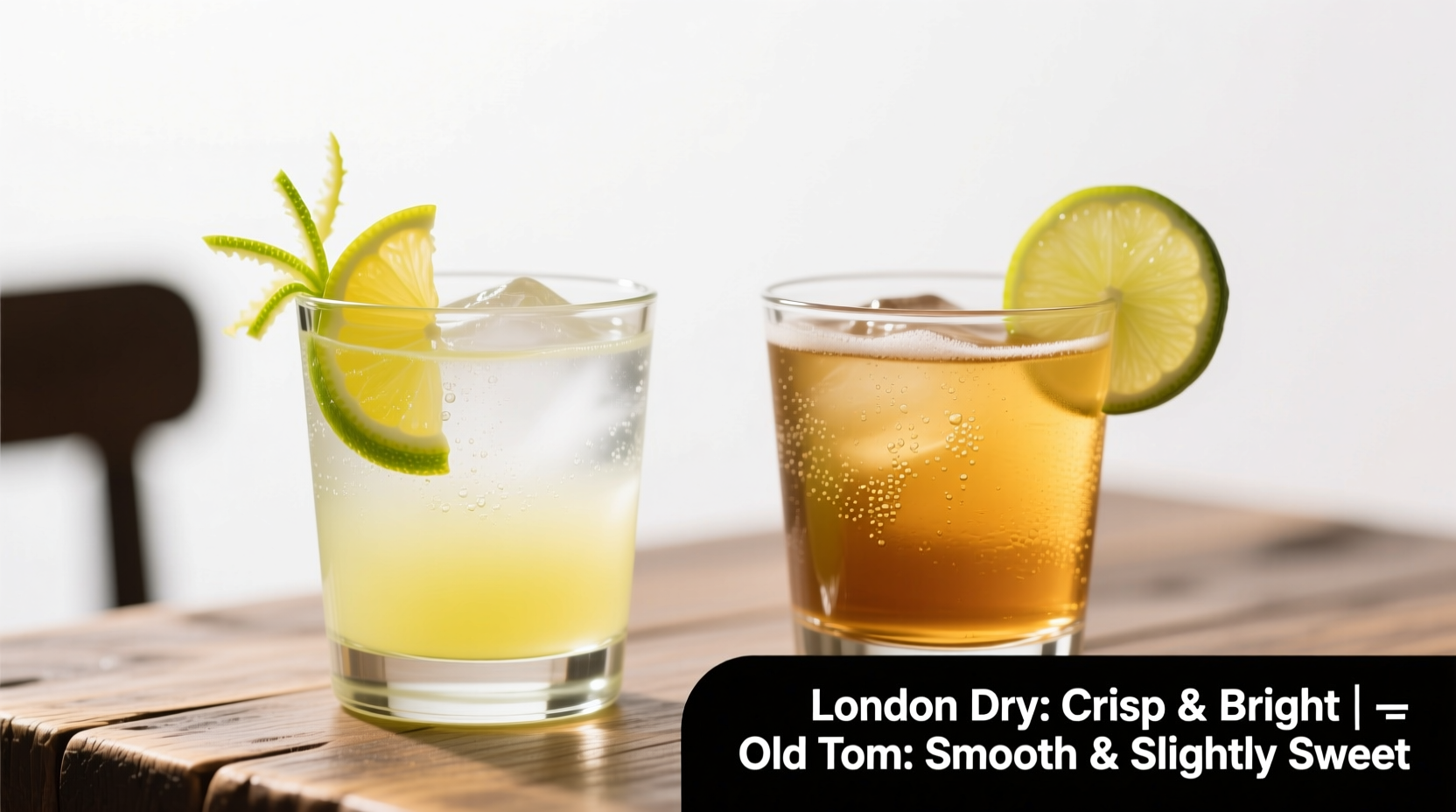
A classic gimlet (traditionally 2:1 gin to fresh lime juice, though modern variations range from 2.5:1 to 3:1) relies on a precise interplay of acidity, alcohol warmth, botanical bitterness, and subtle sweetness. Lime juice brings sharp citric acid, volatile limonene oils, and a clean, green-tart finish. But untempered, it’s aggressively sour and fatiguing. Gin must do three things simultaneously: amplify lime’s aromatic top notes, provide textural contrast to its acidity, and contribute enough botanical complexity to prevent the drink from tasting like diluted cordial. Crucially, it must *not* introduce competing sweetness—especially residual sugar—that would blunt lime’s brightness and create cloying viscosity on the palate.
London Dry gin, by legal definition, contains no added sweeteners post-distillation. Its perceived “dryness” isn’t just absence of sugar—it’s the dominance of juniper, coriander, citrus peel, and orris root, all expressed through high-proof neutral spirit and precise redistillation. This creates a lean, angular profile with high aromatic volatility and clean ethanol lift—ideal for carrying lime’s volatile esters into the nose and supporting its acidity on the tongue. Old Tom gin, historically the pre-Prohibition “sweet” style, was often back-sweetened with sugar or honey to soften rough, early 19th-century spirits. While modern interpretations vary widely, many still contain 0.5–2.0 g/L of residual sugar—a small amount, but one that becomes perceptible when paired with tart lime juice. That sugar doesn’t harmonize; it coats, dulls, and rounds off the very edges that make lime compelling.
Tip: Always taste your lime juice first—freshly squeezed Persian limes offer ideal acidity and low bitterness. If your juice tastes flat or overly vegetal, even the best gin won’t rescue the gimlet.London Dry Gin: The Architect of Brightness
London Dry’s functional brilliance in the gimlet lies in its distillate architecture. Juniper’s piney, resinous core provides a firm, dry foundation against which lime’s acidity can resonate—not fight. Coriander seed adds a subtle, peppery lift that mirrors lime’s pithy bite. Angelica root contributes earthy bitterness, acting as a natural counterpoint to sourness, much like tannin in wine. Most importantly, the high proof (often 45–47% ABV) and lack of dilution or sweetening mean the spirit delivers intense aromatic compounds without softening the lime’s impact. When shaken with ice, London Dry gin releases volatile citrus oils (from its own lemon/orange peel botanicals) that fuse seamlessly with lime’s limonene, creating a unified, soaring aroma. On the palate, its clean, dry finish leaves the mouth refreshed, inviting another sip—exactly what a well-made gimlet should do.
Consider Beefeater or Tanqueray: both emphasize bold juniper and citrus peel, with minimal floral or herbal interference. Their structure is tight, linear, and purpose-built for cocktails demanding clarity. In a 2.5:1 gimlet with freshly squeezed lime, they yield a drink that is bracing, aromatic, and precisely balanced—lime shines *because* the gin doesn’t compete or cushion. It scaffolds.
Old Tom Gin: Historical Charm, Structural Risk
Old Tom gin occupies a fascinating middle ground—more rounded than London Dry, less sweet than genever, and deeply rooted in British pub culture. Its revival since the 2000s has been driven by cocktail historians and craft distillers seeking pre-modern authenticity. But authenticity doesn’t always equal functionality. Many modern Old Toms (e.g., Hayman’s Old Tom, Ransom Old Tom) are lightly sweetened—some with cane sugar, others with botanical glycerol or honey—to evoke the “smooth” character described in 19th-century bar manuals. While delightful in a Martinez or a Tom Collins, this sweetness becomes problematic in the gimlet’s minimalist framework.
Here’s why: lime juice’s citric acid interacts with sugar to form a perceptual “sweet-sour” compound that reads as syrupy rather than bright. The sugar molecules bind with saliva proteins, creating a slight coating effect that mutes the lime’s clean, stinging finish. Instead of a crisp, refreshing snap, the drink develops a lingering, almost candied aftertaste—cloying, not complex. Even unsweetened Old Toms (like Jensen’s Old Tom, which uses only botanicals for roundness) tend toward heavier, maltier, or more anise-forward profiles. These elements don’t elevate lime; they obscure it, adding bass notes where treble is required.
“Old Tom is a beautiful spirit—but it’s a soloist, not an accompanist. In the gimlet, lime needs a conductor, not a duet partner. London Dry conducts with precision; Old Tom tries to sing along and drowns out the melody.” — Dr. Anika Patel, Spirits Historian & Cocktail Formulator at the Institute of Distilled Spirits
When Old Tom *Can* Work: A Targeted Exception
There is one scenario where Old Tom earns its place in the gimlet: when the goal is deliberate, nostalgic richness—not razor-sharp brightness. This requires strict parameters and conscious adjustment.
- Use only unsweetened Old Tom: Verify zero added sugar via distiller’s technical sheet or lab analysis (e.g., Jensen’s, The Cooper King Old Tom).
- Reduce lime juice ratio: Shift from 2.5:1 to 3:1 or even 3.5:1 gin-to-lime to lower total acidity and prevent clashing with Old Tom’s inherent roundness.
- Add a whisper of saline: 1–2 drops of saline solution (or a tiny pinch of sea salt) enhances lime’s perception without sweetness, cutting any residual oiliness.
- Chill and serve up, never on ice: Melting ice dilutes slowly, blurring the delicate balance; serving straight up preserves texture.
This approach yields a gimlet with depth, a velvety mid-palate, and a longer, spiced finish—but it sacrifices the electric, thirst-quenching brightness of the London Dry version. It’s a different drink, not an improvement.
Practical Comparison: Key Differences in Action
| Characteristic | London Dry Gin | Old Tom Gin (Typical) |
|---|---|---|
| Sugar Content | 0 g/L (legally mandated) | 0.5–2.0 g/L (common in modern expressions) |
| Juniper Profile | Dominant, piney, resinous, assertive | Muted, softened, often blended with sweeter botanicals |
| Alcohol Structure | High-proof, linear, clean ethanol lift | Often lower ABV (40–43%), rounder mouthfeel |
| Lime Interaction | Amplifies brightness, extends aromatic lift, cleanses palate | Can mute acidity, add syrupy weight, shorten finish |
| Ideal Gimlet Ratio | 2.5:1 (gin:lime) for maximum vibrancy | 3:1 or 3.5:1 (with saline adjustment) for controlled richness |
Mini Case Study: The Bar Manager’s Pivot
At The Silver Needle, a London cocktail bar known for its precision, head bartender Leo Chen noticed declining customer satisfaction with their “Heritage Gimlet” (made with a popular, lightly sweetened Old Tom). Guests described it as “nice, but heavy,” “a bit too much,” or simply “not refreshing.” Chen conducted a blind tasting with six regulars, serving identical lime juice and ratios—but alternating between Tanqueray London Dry and Hayman’s Old Tom. Five of six preferred the London Dry version, citing “more zing,” “cleaner finish,” and “makes me want another.” Only one, a longtime fan of vintage cocktails, favored the Old Tom for its “comforting warmth.” Chen didn’t scrap the Old Tom option—he relabeled it “The Velvet Gimlet” and adjusted the recipe: 3.5:1 ratio, 2 drops saline, served in a chilled coupe. He also added a footnote on the menu: “For those who prefer brightness, try our Classic Gimlet with Tanqueray.” Sales of both versions rose, but the Classic became the default recommendation—proof that matching spirit to structural need, not just novelty, builds trust and repeat orders.
Step-by-Step: Building the Brightest Possible Gimlet
- Select your gin: Choose a London Dry with pronounced citrus and juniper (e.g., Broker’s, Sipsmith, or Plymouth—though note Plymouth is technically a “Plymouth Gin” style, it shares London Dry’s dryness and works exceptionally well).
- Source pristine lime juice: Use fresh Persian limes, rolled firmly on the counter before juicing. Extract juice immediately before mixing—never use bottled or frozen.
- Measure precisely: Use a jigger for 60ml gin and 24ml fresh lime juice (2.5:1 ratio). Adjust down to 20ml lime if using particularly acidic fruit.
- Shake with intention: Combine in a chilled Boston shaker with 3–4 large ice cubes. Shake hard for exactly 12 seconds—enough to chill and aerate without over-diluting.
- Strain and serve: Double-strain through a fine mesh strainer into a thoroughly chilled coupe glass. No garnish is needed—the aroma is the point.
- Taste and calibrate: Sip immediately. If the lime feels muted, add 0.5ml more juice next time. If it’s too sharp, reduce by 0.5ml. Keep notes.
FAQ
Can I use a “modern” gin with floral or fruity notes instead of classic London Dry?
Proceed with caution. Gins like Hendrick’s (rose/cucumber) or Monkey 47 (47 botanicals) introduce strong secondary flavors that compete with lime rather than support it. They work better in complex cocktails with multiple modifiers. For gimlet purity, stick to juniper-forward, citrus-enhanced London Drys.
Does the quality of lime juice really matter that much?
It’s decisive. Bottled lime juice contains preservatives (sodium benzoate) that react with gin’s botanicals to create bitter, metallic off-notes. Fresh juice provides volatile oils essential for aroma and citric/malic acid balance. Persian limes offer optimal acidity; Key limes are too aggressive and unstable.
Why not just use simple syrup to “balance” a London Dry gimlet if it’s too tart?
Adding sweetness fundamentally changes the drink’s category and defeats the purpose. A gimlet’s elegance lies in its dry, unadorned balance. If your lime is excessively tart, adjust the ratio—not the formula. Sweetening a gimlet makes it a variation (e.g., a “Gimlet Sour”), not a gimlet.
Conclusion
The gimlet is a masterclass in restraint. Its power lies not in what it includes, but in what it excludes—sugar, fruit, herbs, bitters, even excessive dilution. When you choose London Dry gin, you’re choosing clarity, structure, and fidelity to the lime’s essential character. You’re allowing its brightness to cut through, shimmer, and refresh without compromise. Old Tom gin has its place in the cocktail canon—rich, nostalgic, and deeply human—but in the gimlet, it asks the lime to share the spotlight in a way the drink’s architecture cannot sustain. True sophistication isn’t complexity for its own sake; it’s knowing which tool serves the task without distraction. Next time you reach for the shaker, reach past the novelty and grasp the precision. Make your gimlet bright. Make it clean. Make it unmistakably, uncompromisingly lime.
💬 Your turn: Try the 2.5:1 London Dry gimlet this week—no garnish, no tweaks. Taste it side-by-side with an Old Tom version. Then share your observations in the comments: What changed? Where did the brightness live? Let’s refine the standard, together.