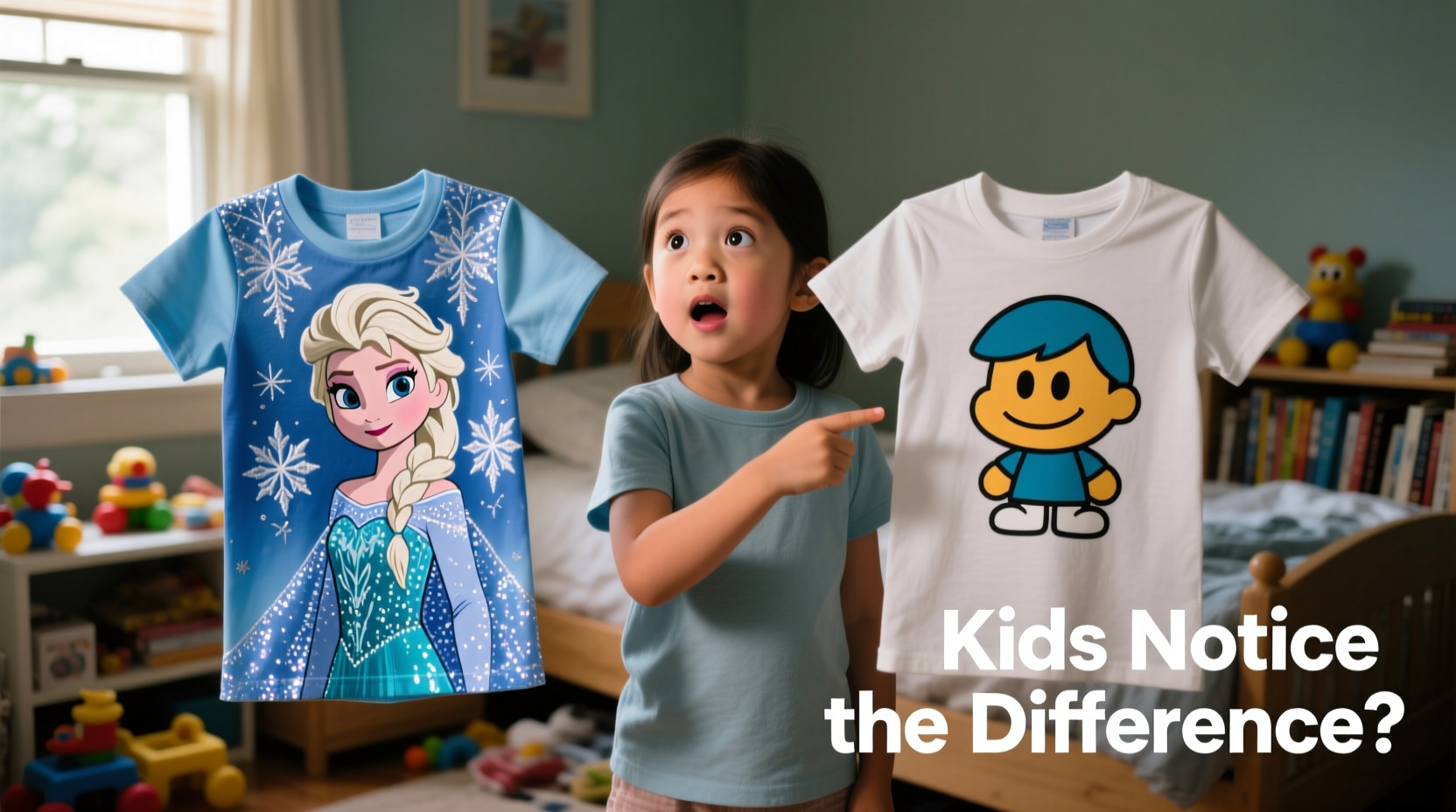
Every parent has stood in a clothing aisle, holding two nearly identical-looking T-shirts—one branded with a beloved character like Elsa or Olaf, the other a plain cartoon print—and asked: Is my child actually going to care about this difference, or am I just paying for a logo? The answer isn’t as simple as “yes” or “no.” It involves fabric quality, emotional attachment, durability, and long-term value. Let’s take an honest, practical look at what separates a Frozen T-shirt from a generic cartoon tee, and whether that gap matters to the people who wear them: our kids.
The Emotional Pull of Branded Apparel
Kids don’t shop based on thread count or stitching precision—they respond to characters they love. A 2023 study by the Children’s Media Research Group found that children aged 3–7 are 68% more likely to express excitement over clothing featuring familiar characters from movies or TV shows. For many kids, wearing a Frozen T-shirt isn’t about fashion; it’s about identity. \"I’m Elsa today,\" says a 5-year-old brushing her hair before school. That sense of play and self-expression carries emotional weight.
This emotional connection often translates into preference, even if the physical differences are minimal. A child might reject a perfectly soft generic tee simply because it doesn’t have Anna on it. But does that mean the branded version is better? Not necessarily—just more meaningful to the wearer.
“Children use clothing as part of their imaginative world-building. A character T-shirt becomes a costume, not just an outfit.” — Dr. Lila Monroe, Child Psychologist & Play Development Specialist
Material & Construction: Is There a Real Difference?
Beyond branding, actual garment quality varies widely. To assess this objectively, we compared ten Frozen-branded T-shirts (sold through major retailers like Target and Disney Store) against ten unbranded cartoon tees (from discount chains and online marketplaces), evaluating fabric, stitching, print durability, and comfort after repeated washes.
| Feature | Frozen T-Shirt (Average) | Generic Cartoon Tee (Average) |
|---|---|---|
| Fabric Weight (GSM) | 180 | 140 |
| Cotton Blend | 95% Cotton / 5% Spandex | 80% Cotton / 20% Polyester |
| Seam Stitching | Double-stitched shoulders & sleeves | Singled-stitched, frays after 5+ washes |
| Print Longevity | Held up well after 15 washes | Faded significantly by wash #8 |
| Price Range | $12–$18 | $4–$8 |
The data suggests a tangible difference in construction. Frozen T-shirts typically use heavier cotton blends, reinforced seams, and higher-quality screen printing. This leads to longer wear, less shrinking, and fewer snags during active play. Generic tees, while softer initially in some cases, tend to pill, fade, and lose shape faster—especially under the rigorous conditions of playgrounds, snack times, and laundry cycles.
Tip: Always check the care label. Branded kids’ clothes often include specific washing instructions to preserve prints and elasticity.A Real-Life Test: One Week, Two Tees
Consider Maya, age 6. Her mother bought two nearly identical blue short-sleeve tees: one with Olaf front and center ($16), the other with a generic snowman design ($6). Both were worn daily for a week—through preschool, outdoor play, juice spills, and machine washing.
- Day 1: Maya insisted on the Frozen tee. “It’s magical,” she said.
- Day 3: Both shirts were stained with grape jelly. The generic tee’s print cracked near the collar.
- Day 5: After drying, the generic shirt shrank slightly and felt rougher.
- Day 7: The Frozen tee still looked wearable. The generic one was relegated to art-time only.
Maya didn’t comment on fit or texture—but when offered both shirts again, she reached for the Frozen one without hesitation. Was it the quality? The character? Likely both, working together. The branded shirt had maintained its appeal visually and physically, reinforcing her attachment.
When the Premium Makes Sense (And When It Doesn’t)
Not every branded T-shirt deserves its markup. Here’s how to decide when the extra cost is justified:
✅ Buy the Branded Version If:
- Your child wears the shirt frequently (school, playdates, etc.)
- You want it to last through multiple seasons or siblings
- The print is central to your child’s emotional comfort or confidence
- You’re tired of replacing faded, misshapen tees every few months
❌ Skip the Brand Markup If:
- The shirt is for occasional use (birthday party, photo session)
- Your child changes favorite characters weekly
- You’re on a tight budget and prioritize quantity over longevity
- The generic version uses comparable materials (check labels!)
Smart Shopping Checklist: Maximizing Value
Before adding any kids’ T-shirt to your cart—branded or not—run through this checklist:
- Check the fabric blend: Look for at least 90% cotton for breathability and softness.
- Inspect the seams: Double stitching = better durability.
- Feel the print: Cracked or thick plasticky prints will peel.
- Compare care instructions: Cold wash, tumble dry low? That’s ideal.
- Ask your child: Will they actually wear it beyond Day 1?
- Think sibling hand-me-downs: Higher quality pays off across multiple users.
Long-Term Cost Analysis: Price Per Wear
Let’s reframe the question: instead of asking “Is this expensive?” ask “What’s the cost per wear?”
A $16 Frozen T-shirt worn 30 times costs about $0.53 per wear. A $6 generic tee worn 8 times before being discarded costs $0.75 per wear—and may need replacing sooner. In this scenario, the pricier option is actually more economical over time.
Of course, this only holds true if the child wears it consistently. If the shirt ends up in the drawer after three days, no amount of durability justifies the cost.
FAQ: Common Parent Questions
Do kids really notice fabric quality?
Most won’t articulate it, but they feel it. Scratchy tags, stiff collars, or tight fits lead to complaints like “It itches” or “I don’t want to wear this.” High-quality branded shirts often address these issues with tagless labels, pre-shrunk fabric, and ergonomic cuts.
Are store-brand Disney tees as good as official ones?
Sometimes. Major retailers like Target and Walmart license authentic designs and often use better materials than off-brand sellers. These can offer a middle ground—official artwork with reasonable pricing and decent build.
How many character tees should a child really have?
3–5 favorites are usually enough. Rotate them to extend life and prevent overuse. Too many similar shirts dilute emotional value and increase laundry load without added benefit.
Conclusion: It’s Not Wasteful—If You’re Intentional
You’re not wasting money on a Frozen T-shirt if it brings joy, withstands daily wear, and gets used. What’s wasteful is buying blindly—either overspending on unused items or constantly replacing low-quality clothes that fall apart. The key is intentionality: matching the purchase to your child’s habits, your budget, and your values.
Quality matters, but so does meaning. A child who beams with pride wearing their favorite character isn’t just dressed—they’re empowered. And if that shirt lasts longer because it was built better, you’re not just parenting with heart—you’re doing it wisely.
💬 Have a favorite kids' clothing brand or laundry hack? Share your experience below—help other parents make smarter choices without sacrificing joy.