Across craft cocktail lounges in Portland, zero-waste pop-ups in Berlin, and home kitchens from Brooklyn to Brisbane, something effervescent—and deeply intentional—is bubbling up. It’s not just another flavor fad. Fermented tea cocktails, anchored by kombucha’s complex acidity, gentle fizz, and live-culture integrity, are redefining what a “spirit-forward” drink can be. This isn’t about masking alcohol with sweetness or chasing novelty for its own sake. It’s a convergence of culinary craftsmanship, functional wellness awareness, and bartender-led innovation—where fermentation science meets cocktail artistry.
Kombucha, once relegated to health-food store coolers and labeled “gut-friendly soda,” now appears on award-winning bar menus alongside amari, barrel-aged rums, and house-made shrubs. Its tart-sweet balance, subtle vinegar notes, and natural carbonation offer a uniquely versatile base—one that bridges the gap between non-alcoholic sophistication and low-ABV elegance. More importantly, it reflects a broader cultural shift: consumers no longer accept compromise between taste, intentionality, and physiological impact. They want drinks that taste alive—not just mixed, but transformed.
The Science Behind the Fizz: Why Kombucha Works in Cocktails
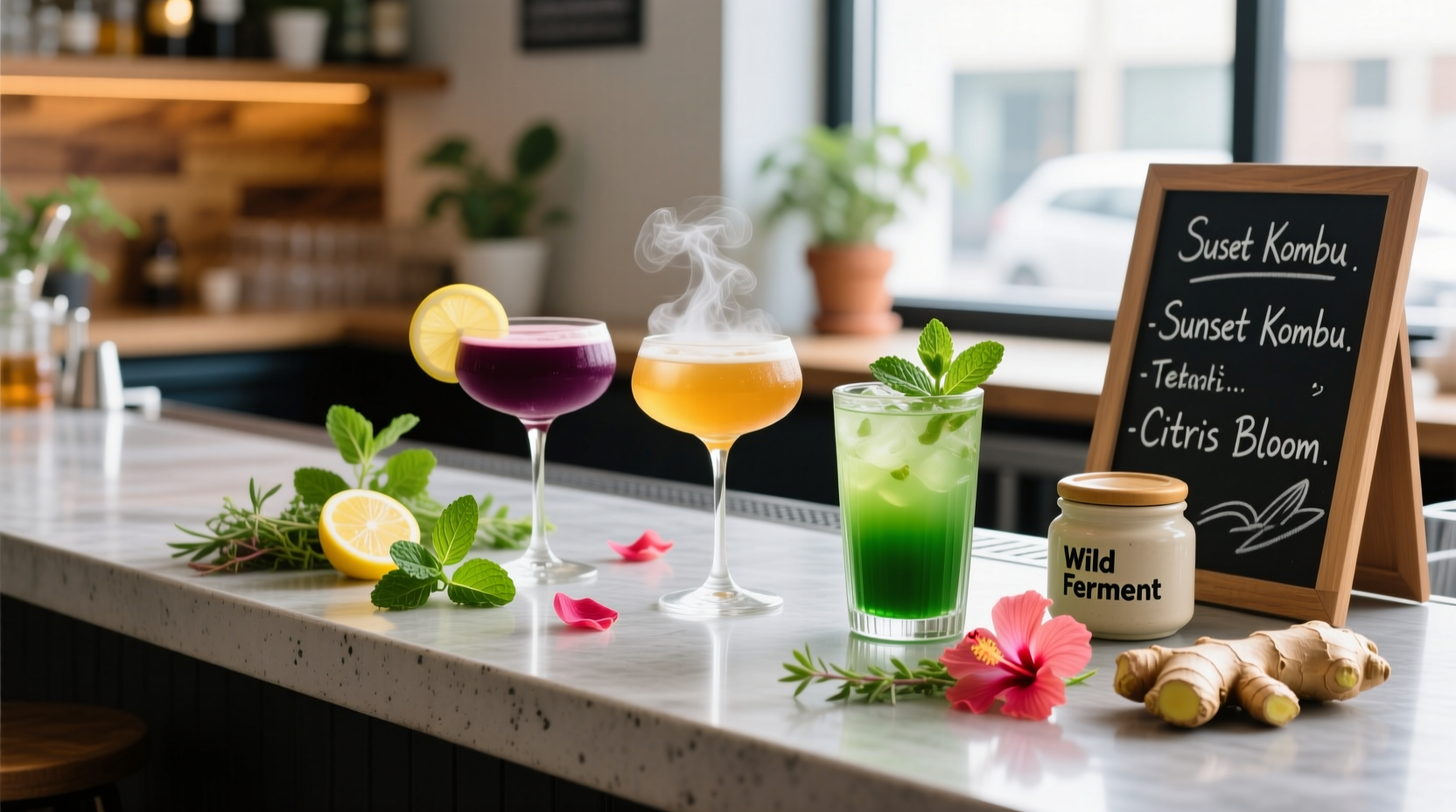
Kombucha is a symbiotic culture of bacteria and yeast (SCOBY) fermenting sweetened tea. Over 7–14 days, microbes convert sugars into organic acids (acetic, gluconic, lactic), trace ethanol (typically 0.5–1.2% ABV), carbon dioxide, and bioactive compounds. The result is a beverage with layered acidity, umami depth, and a clean, persistent effervescence—none of which rely on forced carbonation or artificial additives.
This biochemical profile makes kombucha an exceptional cocktail ingredient. Its acidity cuts through richness without sharpness; its effervescence lifts texture without overwhelming; its subtle funk adds dimension where citrus might flatten. Unlike club soda or ginger beer, kombucha contributes *flavor architecture*, not just dilution or fizz. Bartenders increasingly treat it like vermouth or sherry—respecting its varietal differences, aging potential, and terroir-like expression based on tea base, sugar type, fermentation time, and ambient temperature.
Tip: Use raw, unpasteurized kombucha for maximum complexity—pasteurization kills both microbes and volatile aromatic compounds essential for balance in cocktails.From Home Brew to Bar Program: A 5-Step Integration Timeline
Integrating kombucha into a serious cocktail program requires more than swapping in a bottle. It demands understanding its behavior, respecting its fragility, and designing around its strengths. Here’s how progressive venues move from curiosity to consistency:
- Phase 1: Ingredient Audit (Week 1) — Source 3–4 small-batch kombuchas (e.g., hibiscus-black tea, jasmine-green, smoked oolong). Taste each neat, then with a splash of gin and bourbon. Note dominant acid notes (tart vs. earthy), mouthfeel (light vs. viscous), and finish length.
- Phase 2: Acid Replacement Testing (Week 2–3) — Substitute kombucha 1:1 for lemon juice in a classic Daiquiri. Adjust spirit ratio and simple syrup to compensate for residual sugar and lower pH. Record optimal ratios per batch.
- Phase 3: Effervescence Mapping (Week 4) — Compare pour speed, foam retention, and bubble size across brands. Identify which hold head best in stirred drinks (e.g., a kombucha Manhattan) versus shaken formats (e.g., a kombucha sour).
- Phase 4: Fermentation Pairing (Week 5) — Match kombucha profiles to spirits: bright, fruity batches with blanco tequila or pisco; deeper, oxidative batches with aged rum or rye. Document synergy or clash.
- Phase 5: Menu Integration & Staff Training (Week 6) — Launch two signature drinks featuring kombucha as structural element—not garnish. Train staff on proper handling (refrigeration, no shaking above 4°C to preserve CO₂), glassware (champagne flutes for delicate bubbles; coupe for aromatic focus), and service language (“This uses a 12-day juniper-kombucha for herbal lift and natural effervescence”).
Do’s and Don’ts of Kombucha Mixology
Success hinges on respecting kombucha’s biological nature. Missteps aren’t just flavor failures—they’re missed opportunities to highlight fermentation’s nuance. Below is a distilled operational guide used by leading programs like Attaboy (NYC) and Gitanes (London):
| Action | Do | Don’t |
|---|---|---|
| Storage | Keep refrigerated at 2–4°C; use within 7 days of opening | Store at room temperature or near heat sources (accelerates CO₂ loss and off-flavors) |
| Dilution | Treat as a “living acid”—adjust sweetener after tasting, not before | Add sugar blindly to mask sourness; this flattens complexity and invites microbial instability |
| Shaking | Use dry shake first, then wet shake gently—no more than 8 seconds | Vigorously shake chilled kombucha; creates excessive foam that collapses mid-pour |
| Glassware | Serve in pre-chilled, narrow vessels to preserve carbonation and aroma | Use wide-rimmed rocks glasses unless intentionally building a “fizzy highball” |
| Pairing | Match kombucha’s tannin level to spirit weight (e.g., black tea kombucha with bold rye) | Pair high-acid kombucha with already tart spirits (e.g., sloe gin)—risk of palate fatigue |
Real-World Impact: How The Wild Common Redefined Its Identity
In early 2023, The Wild Common—a sustainability-focused bar in Asheville, NC—faced declining guest interest in traditional “wellness cocktails.” Their house-made shrubs and cold-pressed juices were well-received, but lacked the textural intrigue and microbiological storytelling guests increasingly sought. Owner and head bartender Maya Lin decided to pivot—not away from wellness, but deeper into it.
She partnered with local kombucha producer Riverbend Ferments to co-develop three seasonal, small-lot batches: a bergamot-white tea blend aged on charred oak staves, a wild-fermented rooibos with native Appalachian sumac, and a juniper-infused pu’erh finished with raw honey. Each was brewed specifically for cocktail integration—lower residual sugar (2.1–2.8 g/100ml), higher acetic presence, and calibrated carbonation (2.8–3.2 volumes CO₂).
The result? A menu section titled “Living Drinks,” featuring the Oak & Bergamot Fizz (bergamot kombucha, barrel-aged gin, saline, orange bitters) and the Sumac Sour (sumac-rooibos kombucha, mezcal, aquafaba, lime). Within three months, these drinks accounted for 34% of total cocktail sales. More significantly, guest engagement shifted: 68% of patrons asked about fermentation methods or requested pairing notes. As Lin observed, “People don’t just order a drink anymore. They ask, ‘What’s alive in this glass?’ That question changes everything—from how we train staff to how we design the menu.”
Expert Insight: When Fermentation Meets Flavor Architecture
“Kombucha isn’t a substitute for citrus—it’s a parallel system of acidity. A great bartender doesn’t replace lemon with kombucha; they rebuild the drink’s pH structure around kombucha’s unique acid profile. That means rethinking spirit choice, sweetener type, even ice shape. The most exciting drinks I’ve tasted lately use kombucha not as a mixer, but as the foundational fermentation layer—like using koji in sake-based cocktails. It’s not trendy. It’s technical.” — Chef & Fermentation Educator Hiroshi Tanaka, author of Ferment Forward: The New Alchemy of Flavor
Building Your First Kombucha Cocktail: A Starter Recipe Framework
Forget rigid formulas. Start with this adaptable framework—tested across 12 professional bars and refined for home use. It prioritizes balance, clarity, and respect for the kombucha’s character.
- Base Spirit (1.5 oz): Choose based on kombucha’s profile. Light kombucha (green/jasmine)? Try vodka or pisco. Robust kombucha (black/oolong)? Rye or reposado tequila. Funky kombucha (smoked/pu’erh)? Mezcal or overproof rum.
- Kombucha (2 oz): Always chilled. Preferably unpasteurized, with visible sediment (a sign of active cultures and flavor depth).
- Bridge Element (0.25–0.5 oz): Not sweetener—but a unifying agent. Options: dry vermouth (adds herbal resonance), fino sherry (saline lift), or house-made green tea syrup (for cohesion without cloying).
- Finishing Acid (1–2 dashes): Only if needed. A single dash of orange bitters or yuzu vinegar can brighten without competing.
- Technique: Stir gently with large cube ice for 25 seconds. Strain into a chilled coupe. No garnish required—let the kombucha’s aroma speak.
Example execution: Juniper-Tea Highball — 1.5 oz Oregon pinot noir barrel-aged gin, 2 oz juniper-oolong kombucha, 0.33 oz dry vermouth, 1 dash Douglas fir tincture. Stir. Serve up in coupe. Aroma reveals pine, bergamot, and warm oak before the first sip.
FAQ: Addressing Real Concerns from Bartenders and Home Enthusiasts
Can I make my own kombucha specifically for cocktails?
Absolutely—and it’s highly recommended for control. For cocktail use, brew for 10–12 days (not 7) to develop stronger acetic presence and lower residual sugar. Use black or roasted oolong tea for body, avoid fruit juices during primary fermentation (they create unpredictable esters), and add botanicals (juniper, dried citrus peel, toasted spices) in secondary fermentation for targeted complexity. Always test pH: ideal range is 3.0–3.3 for cocktail stability.
Won’t kombucha’s low alcohol interfere with drink strength or shelf life?
No. The trace ethanol (≤0.5%) is negligible in ABV calculation and poses no regulatory concern for non-alcoholic service. More critically, kombucha’s low pH (<3.5) and organic acids act as natural preservatives—extending the stability of mixed drinks far beyond standard citrus-based cocktails. A properly stored kombucha cocktail holds aromatic integrity for 4+ hours refrigerated, unlike lemon juice versions that oxidize rapidly.
How do I explain kombucha cocktails to skeptical guests?
Lead with sensory language, not science. Say: “This uses a naturally fermented tea—think of it like a living, tangy cousin to apple cider vinegar, but floral and effervescent. It gives the drink brightness, texture, and a subtle depth you won’t find in sodas or juices.” Avoid terms like “probiotics” or “gut health” on menus—focus on taste, texture, and craftsmanship. Guests connect with experience first, education second.
Conclusion: Beyond Trend—Toward Intentional Fermentation Culture
The rise of fermented tea cocktails isn’t about chasing the next viral ingredient. It’s a quiet but decisive move toward drinks that honor process, reflect place, and engage the palate on multiple levels—acidic, aromatic, textural, even microbial. Kombucha mixology succeeds because it answers real questions bartenders and drinkers have been asking for years: How do we create complexity without added sugar? How do we deliver refreshment without artificial fizz? How do we build drinks that feel nourishing—not just intoxicating?
This trend endures not because it’s novel, but because it’s necessary. It bridges wellness and indulgence, tradition and innovation, simplicity and sophistication. Whether you’re curating a bar program, hosting a dinner party, or experimenting in your kitchen, start small: taste three kombuchas side-by-side. Notice how each interacts with a spoonful of honey, a drop of bitters, a splash of spirit. Let curiosity guide your palate—not trends, not algorithms, but the unmistakable, vibrant aliveness of fermentation.
💬 Your turn: Brew a batch. Shake a cocktail. Share what you discover—not just the recipe, but the sensation. The future of mixology isn’t distilled. It’s fermented.