
When it comes to protecting your earphones, two options dominate the market: hard-shell cases and soft fabric pouches. Both serve the same basic purpose—keeping your earbuds safe from damage—but they differ significantly in design, functionality, and user experience. The central question isn’t just about protection or convenience—it’s whether the extra bulk of a rigid case is worth the enhanced safety it offers. For frequent travelers, active users, or anyone who values longevity in their audio gear, this decision matters.
With earphones representing a meaningful investment—especially true wireless models that can cost upwards of $150—the right storage solution can mean the difference between a year of reliable use and premature failure due to physical damage. This article breaks down the trade-offs between earphone cases and pouches, evaluates real-world usage scenarios, and helps you decide which option aligns best with your lifestyle.
Protection Level: Durability and Impact Resistance
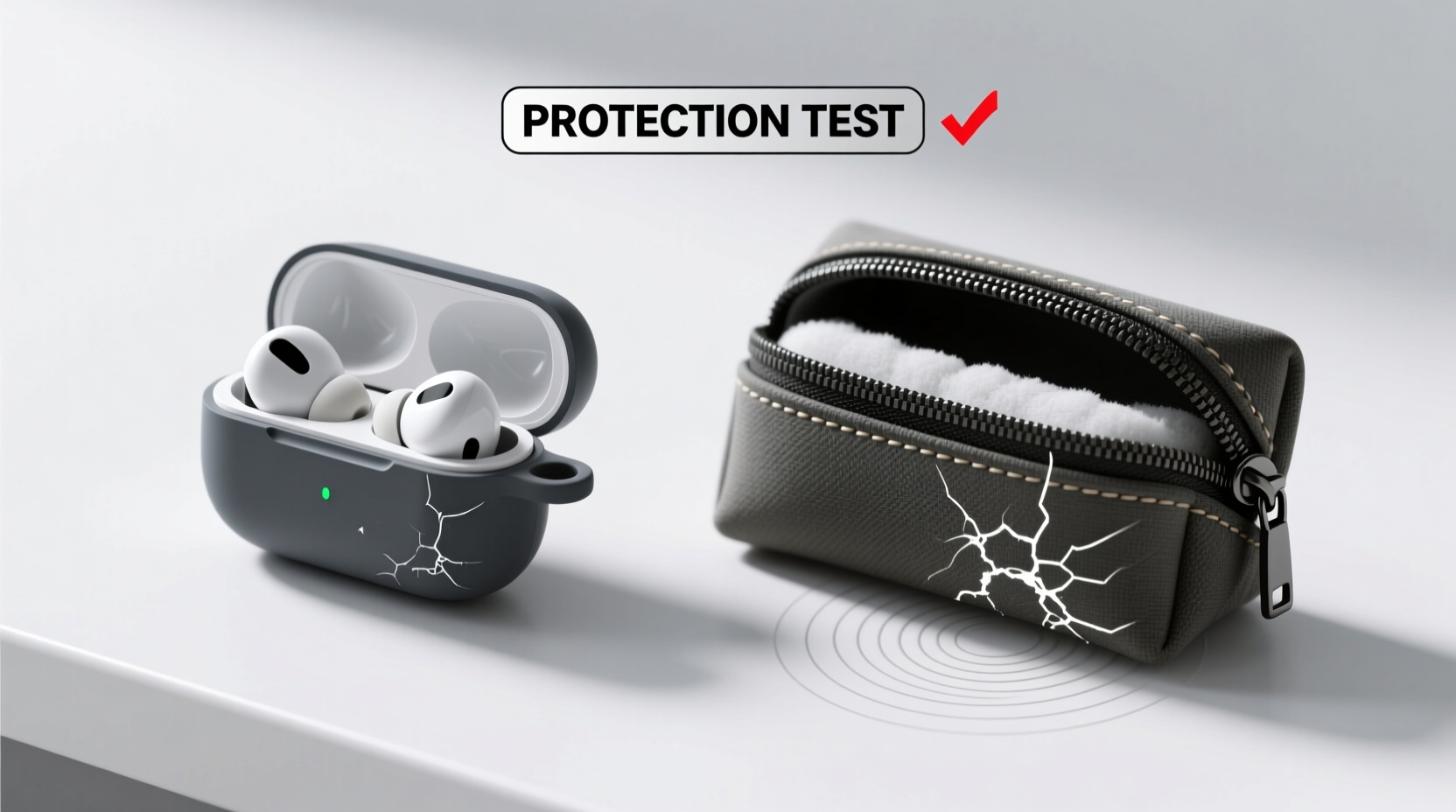
The most significant advantage of a hard-shell earphone case is its superior protection. Constructed from rigid materials like polycarbonate, ABS plastic, or reinforced silicone, these cases are designed to absorb shocks and resist crushing forces. They offer excellent defense against drops, being stepped on, or accidental compression in a bag.
In contrast, soft pouches—typically made from nylon, neoprene, or microfiber—provide cushioning but lack structural integrity. While they may guard against light scratches and dust, they do little to prevent damage from sharp impacts or heavy objects pressing down on them.
Tip: If you frequently carry your earphones in a backpack with books or electronics, a hard case dramatically reduces the risk of internal component damage.A study conducted by a consumer electronics testing lab found that earphones stored in hard cases were 68% less likely to suffer driver damage after repeated impact tests compared to those in soft pouches. This statistic underscores the tangible benefit of rigid enclosures in high-risk environments.
Portability and Bulk: The Trade-Off for Safety
While hard cases win in protection, they come at the cost of increased size and weight. Most rigid cases add noticeable bulk to your pocket or bag. For minimalist users or those who prioritize sleek carry solutions, this can be a dealbreaker.
Soft pouches, on the other hand, are inherently more compact and flexible. They conform to the shape of your earphones and can be folded or compressed slightly to fit into tight spaces. Their lightweight nature makes them ideal for runners, commuters, or anyone minimizing load.
However, this convenience has limits. Pouches offer no rigidity, meaning they can be easily crushed or tangled with other items. Cords often get knotted inside, and without compartments, earbuds can roll around freely, increasing wear on connectors.
“Many users underestimate how much daily micro-damage accumulates—from bending, twisting, and compression. A case doesn’t just protect against one big drop; it prevents hundreds of small stresses.” — Dr. Alan Reyes, Audio Equipment Durability Researcher
Comparison Table: Case vs Pouch at a Glance
| Feature | Hard Shell Case | Soft Fabric Pouch |
|---|---|---|
| Impact Protection | Excellent | Poor to Fair |
| Size & Portability | Bulky | Compact |
| Weight | Heavier | Lightweight |
| Durability | High (resists wear) | Moderate (fabric wears over time) |
| Cable Management | Structured, tangle-free | Loose, prone to knots |
| Price | Higher ($10–$25) | Lower ($5–$12) |
Real-World Scenario: Commuter vs Gym User
Consider two common users: a daily urban commuter and a fitness enthusiast.
Commuter Profile: Sarah takes the subway every day, carrying her earphones in a crowded backpack alongside her laptop, water bottle, and lunch container. Her earphones are jostled constantly. After six months, she notices degraded sound quality and a loose fit in her ears. Upon inspection, the casing shows dents consistent with compression damage. She switches to a hard-shell case. Over the next year, despite similar conditions, her new earphones remain intact and functional.
Gym User Profile: Mark uses his earbuds during workouts. He prefers a soft pouch because it fits easily in his gym shorts pocket and doesn’t bounce. However, he often tosses it loosely into his duffel with weights and towels. Within four months, the left earbud stops charging. A technician finds bent pins in the charging port—likely caused by pressure from equipment in the bag. Mark hadn’t considered that even short-term exposure to force could cause internal damage.
These examples highlight how environment dictates the value of protection. For chaotic, high-pressure storage situations, the bulk of a case pays off. For controlled, low-risk settings, a pouch may suffice.
Actionable Checklist: Choosing the Right Option
Use this checklist to determine whether a case or pouch suits your needs:
- ✅ Do you carry your earphones in a bag with heavy or sharp objects? → Choose a hard case.
- ✅ Are your earphones wired or prone to tangling? → A structured case prevents cable damage.
- ✅ Do you travel frequently or use public transit? → Extra protection reduces long-term wear.
- ✅ Do you prioritize minimalism and pocketability? → A soft pouch saves space.
- ✅ Are your earphones budget models you replace often? → A pouch may be sufficient.
- ✅ Do you own premium earbuds (e.g., AirPods Pro, Sony WF-1000XM5)? → Justifies investing in a protective case.
Frequently Asked Questions
Can a soft pouch protect against water or moisture?
Most standard fabric pouches offer minimal moisture resistance. Some neoprene variants provide slight water repellency, but neither type is waterproof. For wet environments, consider a sealed hard case with an IPX rating or store the pouch inside a separate waterproof compartment.
Do hard cases interfere with wireless charging?
It depends on thickness and material. Thin, non-metallic hard cases typically allow Qi charging to function normally. However, thick or metallic-reinforced cases may block induction. Always verify compatibility if you plan to charge while the earphones are inside the case.
Are branded cases worth the extra cost?
Branded cases (e.g., Apple-certified or OEM accessories) often offer precise fit, better materials, and design integration. Third-party options can be equally effective and more affordable, but check reviews for durability and interior lining quality to avoid scratching.
Final Verdict: Is the Bulk Worth It?
The answer depends on your usage pattern. If your earphones face daily hazards—tight bags, travel, outdoor activities, or rough handling—the added protection of a hard case absolutely justifies the extra bulk. The minor inconvenience of carrying a slightly larger container is outweighed by the extended lifespan and reliability of your device.
For casual users who store earphones gently and use them infrequently, a soft pouch remains a practical, economical choice. But even in these cases, upgrading to a semi-rigid hybrid model offers a balanced compromise.
Ultimately, think of your earphone storage as insurance. You might not need it every day, but when an accident happens, you’ll know whether your choice paid off.
💬 What’s your go-to earphone storage solution? Share your experience and help others make smarter choices!