When a recipe calls for fresh parsley but only dried is available—or vice versa—many home cooks hesitate. The confusion stems from more than just texture or appearance; it’s about understanding how the drying process alters flavor, potency, and culinary function. Parsley, often relegated to a mere garnish, is actually a foundational herb in global cuisines, valued for its bright, clean taste and aromatic lift. Knowing how to convert between fresh and dried parsley accurately ensures that dishes maintain their intended balance of flavor without becoming bland or overpowering. This guide clarifies the science and practice behind parsley conversions, offering precise ratios, usage strategies, and storage insights to help cooks make informed decisions in the kitchen.
Definition & Overview
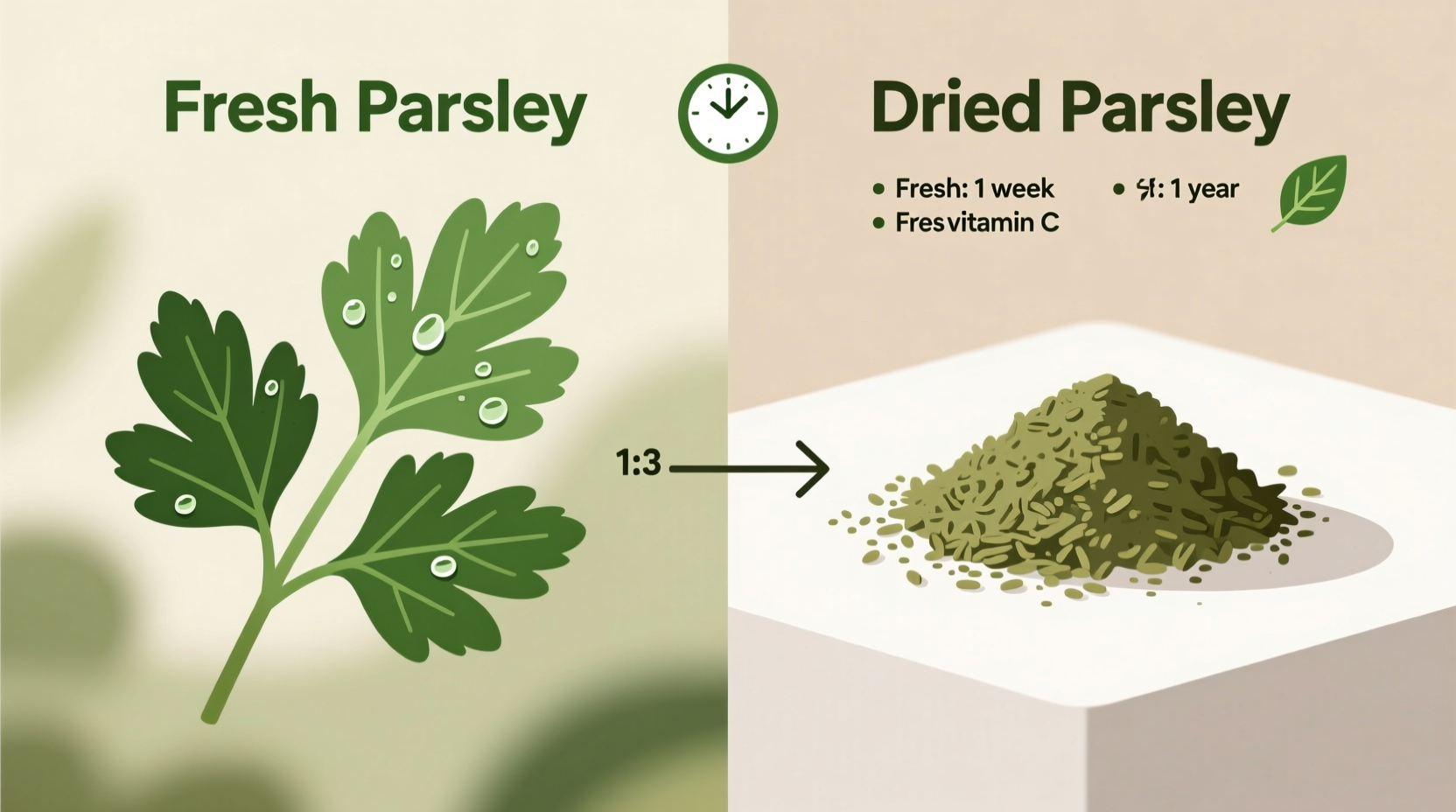
Parsley (Petroselinum crispum) is a biennial herb in the Apiaceae family, native to the central Mediterranean region but now cultivated worldwide. It comes primarily in two forms: curly leaf and Italian (flat-leaf). Both types are used fresh extensively in European, Middle Eastern, and American cooking, where they contribute freshness and subtle bitterness that cuts through rich ingredients. When dried, parsley loses much of its volatile oil content but retains a concentrated, earthier version of its original character. While fresh parsley is prized for its crisp texture and vibrant green hue, dried parsley serves as a shelf-stable alternative suitable for long-cooked dishes or when fresh herbs are unavailable.
The transition from fresh to dried involves moisture removal, typically through air-drying, freeze-drying, or oven dehydration. This process reduces volume significantly and intensifies certain compounds while diminishing others, particularly those responsible for brightness and aroma. As a result, dried parsley cannot replicate the sensory experience of fresh—but it can still play a valuable role in seasoning when used appropriately.
Key Characteristics
| Characteristic | Fresh Parsley | Dried Parsley |
|---|---|---|
| Flavor Profile | Bright, slightly peppery, with grassy and citrus notes | Muted, earthy, faintly bitter; lacks vibrancy |
| Aroma | Pronounced, green, herbal scent | Subtle, musty; minimal fragrance |
| Color | Vibrant emerald green | Olive green to brownish-green |
| Texture | Crisp, juicy leaves and tender stems | Brittle, crumbly, desiccated |
| Shelf Life | 5–10 days refrigerated | 6–12 months in airtight container |
| Culinary Function | Finishing herb, salad component, flavor base | Background seasoning in soups, stews, dry rubs |
| Heat Sensitivity | Loses quality quickly with prolonged heat | Stable under extended cooking |
These distinctions underscore why substitution isn’t always seamless. Dried parsley lacks the aromatic complexity of its fresh counterpart due to the loss of essential oils during dehydration. However, it excels in applications where long simmering allows gradual flavor release and integration into the dish matrix.
Practical Usage
Understanding when and how to use each form of parsley is key to effective cooking. Fresh parsley shines in raw or minimally cooked preparations where its crisp texture and volatile aromatics can be fully appreciated. Chopped finely, it enhances tabbouleh, gremolata, chimichurri, and salsa verde. It also functions as a palate-cleansing garnish on hearty dishes like osso buco, lentil stew, or grilled meats.
Dried parsley, by contrast, performs best when incorporated early in the cooking process. Its diminished moisture content allows it to absorb liquids and slowly infuse flavor over time. Ideal uses include:
- Simmered sauces (marinara, béchamel, tomato-based gravies)
- Soup stocks and broths (chicken noodle, minestrone, vegetable soup)
- Dry spice blends (herbes de Provence, poultry seasoning, za’atar variants)
- Bread doughs and savory muffins
- Meatloaf, meatballs, and stuffing mixtures
Because dried parsley has less surface area and lower water content, it integrates more readily into dry or semi-solid mixtures than fresh chopped leaves, which may retain pockets of unblended moisture.
Pro Tip: Rehydrate dried parsley before using in cold dishes. Soak 1 teaspoon of dried parsley in 1 tablespoon of warm water or lemon juice for 10 minutes. This restores some pliability and helps distribute flavor more evenly in dressings or dips.
Conversion Ratio: Fresh to Dried Parsley
The standard conversion ratio between fresh and dried parsley is 3:1 by volume. That means:
- 1 tablespoon fresh parsley ≈ 1 teaspoon dried parsley
- 1 cup fresh chopped parsley ≈ 1/3 cup dried parsley
- ¼ cup fresh = ~4 teaspoons dried
This rule applies because drying removes approximately 75–85% of the herb's weight in water, concentrating the remaining plant material. However, concentration does not equate to equal flavor impact. Due to thermal degradation of delicate terpenes and flavonoids during drying, dried parsley delivers less overall flavor intensity per gram than fresh—even after adjusting for volume.
Therefore, when substituting dried for fresh in a recipe calling for last-minute addition (e.g., stirred into a finished sauce), consider increasing the amount slightly—up to 1.5x the converted quantity—and adding it earlier in cooking to allow full rehydration and flavor diffusion.
Step-by-Step Substitution Guide
- Identify the role of parsley in the dish. Is it a finishing element (use fresh) or background seasoning (dried acceptable)?
- Apply the 3:1 ratio. For every 3 tablespoons fresh, use 1 tablespoon dried.
- Adjust timing. Add dried parsley at the beginning or middle of cooking; add fresh in the final 1–2 minutes.
- Taste and refine. Dried herbs vary in potency based on age and processing. Always taste before serving and adjust seasoning if needed.
- Balance with acid. If using dried parsley, a splash of lemon juice or vinegar can help restore brightness lost during dehydration.
Variants & Types
Not all dried parsley is created equal. Several production methods yield different grades and qualities:
1. Air-Dried Curly Parsley
The most common commercial form, made by hanging or mechanically drying curly leaf parsley. Retains some shape but becomes brittle. Best for soups and casseroles where visual appeal matters less.
2. Freeze-Dried Flat-Leaf Parsley
Processed via lyophilization (freeze-drying), this type preserves more cellular structure and color. Dissolves easily in liquid and offers superior flavor retention. Often found in premium spice lines and gourmet ingredient suppliers. Recommended for sauces and dishes requiring truer herbal character.
3. Ground Parsley Powder
Finely milled dried parsley, sometimes blended with salt or anti-caking agents. Extremely concentrated and fast-dissolving. Use sparingly—start with half the standard conversion—and ideal for rubs, marinades, or seasoning salts.
4. Irradiated vs. Non-Irradiated
Some imported dried parsley undergoes irradiation to eliminate pathogens and extend shelf life. While safe, this process may further degrade flavor compounds. Look for non-irradiated labels if maximizing taste is a priority.
| Type | Best Uses | Shelf Life | Conversion Factor (vs. Fresh) |
|---|---|---|---|
| Air-Dried | Soups, stews, braises | 8–10 months | 1:3 (dried:fresh) |
| Freeze-Dried | Sauces, dressings, quick sautés | 12–14 months | 1:2.5 (more potent) |
| Ground Powder | Rubs, dry mixes, infused oils | 6–9 months | 1:4 (use less) |
Comparison with Similar Ingredients
Parsley is frequently confused with other green herbs, especially cilantro and celery leaf. Understanding these differences prevents misapplication in recipes.
- Cilantro (Coriander Leaf): Has a pungent, citrusy-lime aroma with polarizing soapy notes (due to genetic sensitivity). Much stronger than parsley. Not interchangeable in European dishes, though both are used as fresh garnishes in global cuisines.
- Chervil: A delicate French herb with anise undertones. Often paired with tarragon in fines herbes blends. Milder than parsley and unsuitable as a direct substitute, especially when dried.
- Curly vs. Flat-Leaf Parsley: Curly parsley is more ornamental and slightly tougher; flat-leaf has deeper flavor and is preferred by chefs. Both dry similarly, but flat-leaf tends to retain marginally better taste post-dehydration.
- Dried Basil or Oregano: These Mediterranean dried herbs have bolder profiles. Using them in place of dried parsley will alter the dish significantly—do not substitute unless intentionally shifting flavor direction.
\"Dried parsley won't replace fresh in a salad, but it can carry the essence of greenness in a winter stew when nothing else is available.\" — Chef Elena Martinez, Culinary Instructor, Institute of Artisanal Cooking
Practical Tips & FAQs
How do I store dried parsley properly?
Keep in an airtight glass jar away from heat, light, and humidity—ideally in a cool, dark pantry. Avoid storing near the stove or dishwasher. Properly stored, high-quality dried parsley lasts up to one year before noticeable flavor decline.
Can I make my own dried parsley at home?
Yes. Wash and pat dry fresh parsley thoroughly. Hang small bunches upside down in a warm, well-ventilated area for 5–7 days, or use a food dehydrator at 95°F (35°C) for 4–6 hours. Once crisp, crumble leaves and discard thick stems. Home-dried parsley often tastes fresher than commercial versions since it’s processed quickly after harvest.
Is dried parsley nutritionally equivalent to fresh?
No. Fresh parsley is rich in vitamin K, vitamin C, and antioxidants like apigenin. Drying reduces vitamin C significantly and diminishes phytonutrient levels. While dried parsley still contributes trace nutrients, it should not be relied upon for dietary benefits.
Why does my dried parsley taste dusty or stale?
This indicates age or poor storage. Old dried herbs lose essential oils and develop off-flavors. Test freshness by rubbing a pinch between your fingers and smelling—it should have a faint green aroma. If odorless or musty, replace it.
What dishes should never use dried parsley?
Avoid dried parsley in:
- Raw salads (e.g., tabbouleh)
- Herb sauces (pesto, chimichurri)
- Garnishes for seafood or egg dishes
- Any application where texture and aroma are critical
Can I substitute fresh for dried parsley?
Yes, but reverse the ratio: use three times the amount of fresh parsley when replacing dried. For example, if a recipe calls for 1 teaspoon dried parsley, use 1 tablespoon chopped fresh—but add it later in cooking to preserve its qualities.
Storage Checklist:
✅ Store in opaque, airtight container
✅ Label with purchase date
✅ Keep below 70°F (21°C)
✅ Replace after 12 months
❌ Do not store in refrigerator (moisture causes clumping)
Summary & Key Takeaways
Dried and fresh parsley serve distinct roles in the kitchen. While they originate from the same plant, their culinary behaviors differ markedly due to changes induced by dehydration. Fresh parsley brings vibrancy, aroma, and textural interest, making it indispensable in finishing dishes and raw preparations. Dried parsley, though muted in comparison, provides a convenient, shelf-stable way to introduce herbal nuance into slow-cooked meals.
The standard conversion—3 parts fresh parsley to 1 part dried—is a reliable starting point, but adjustments may be necessary depending on the type of dried parsley used and the dish being prepared. Freeze-dried varieties perform better than air-dried, and ground powders require even smaller quantities. Crucially, timing matters: dried herbs benefit from early addition, while fresh herbs are best added at the end.
To maximize results:
- Use fresh parsley whenever possible for peak flavor and appearance.
- Reserve dried parsley for soups, stews, sauces, and dry blends.
- Rehydrate dried parsley lightly when using in cold applications.
- Store both forms correctly to prolong usability and potency.
- Never treat dried parsley as a perfect stand-in for fresh—understand its limitations and leverage its strengths.
Mastering the interplay between fresh and dried herbs elevates everyday cooking. By respecting the unique properties of each form, cooks ensure that even simple seasonings contribute meaningfully to the final plate.