For decades, red wine was served at “room temperature”—a phrase rooted in 19th-century European parlors where ambient conditions hovered around 60–65°F (15–18°C). Today, most homes run warmer—often 72°F (22°C) or higher—making that same bottle taste stewed, alcoholic, and flat. The question isn’t whether chilling red wine is acceptable; it’s whether doing so *intelligently* unlocks nuance, balance, and authenticity that heat obscures. This isn’t about breaking tradition—it’s about honoring the wine itself.
The Science of Temperature and Flavor Perception
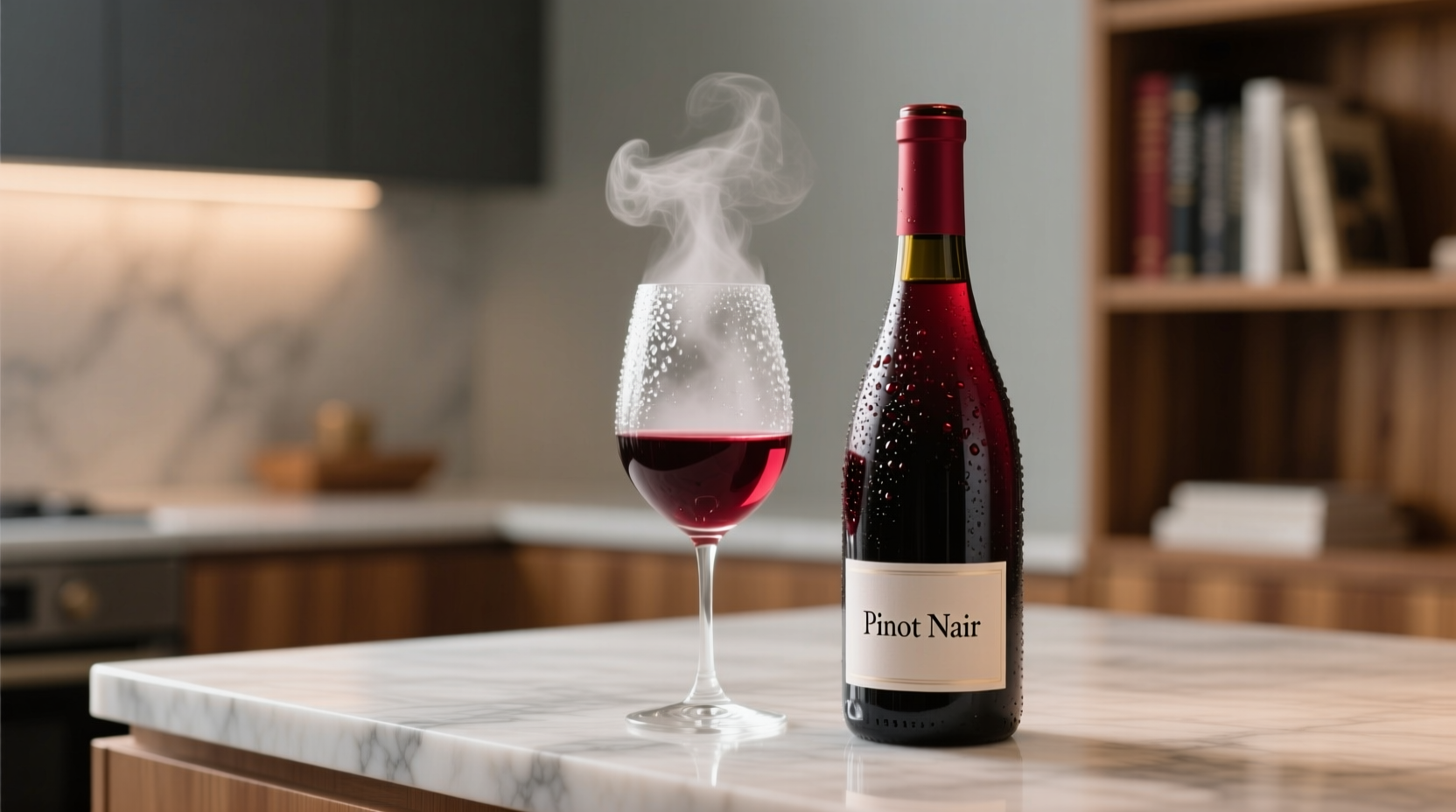
Temperature directly modulates how our taste buds and olfactory receptors interpret wine. At warmer temperatures, volatile aromatic compounds evaporate more readily—but so do alcohol vapors, which can dominate and mask fruit, earth, and floral notes. Meanwhile, excessive heat softens acidity and tannin structure, muting definition and making wines feel heavy or cloying. Conversely, when reds are too cold—below 50°F (10°C)—aromas contract, tannins tighten unnaturally, and fruit flavors recede into muted shadows.
Research from the University of California, Davis’ Department of Viticulture and Enology confirms that optimal aroma release for most red varieties occurs between 55–65°F (13–18°C). Within this range, esters (fruity compounds), terpenes (floral notes), and pyrazines (herbal tones) volatilize at balanced rates. Acidity remains bright without sharpness; tannins feel supple rather than grippy or numbing. Alcohol integrates seamlessly instead of burning on the finish.
This isn’t theoretical. In blind tastings conducted by the Court of Master Sommeliers, panels consistently rated the same Pinot Noir as “more vibrant, layered, and harmonious” when served at 57°F versus 68°F—even among experienced tasters who believed they preferred “warmer” service.
Red Wine Isn’t One Category—It’s a Spectrum
Treating all red wines identically ignores centuries of viticultural adaptation. A light-bodied, high-acid Gamay from Beaujolais behaves fundamentally differently than a dense, oak-aged Cabernet Sauvignon from Napa. Their ideal serving temperatures reflect their structural DNA—not tradition or convenience.
| Wine Style | Typical Region/Example | Optimal Serving Temp (°F) | Why This Range |
|---|---|---|---|
| Light-bodied, fruity, low-tannin | Beaujolais Nouveau, Valpolicella Classico, young Loire Cabernet Franc | 54–57°F (12–14°C) | Preserves freshness and bright red fruit; temp tames any residual spritz or slight volatility |
| Medium-bodied, aromatic, moderate tannin | Pinot Noir (Burgundy, Oregon), Barbera, Grenache-dominant blends | 57–61°F (14–16°C) | Unfolds floral and spice notes without flattening acidity; softens tannins just enough |
| Full-bodied, high-tannin, oak-influenced | Napa Cabernet, Barolo, Rioja Reserva, Syrah/Shiraz | 61–65°F (16–18°C) | Allows complex tertiary aromas (leather, tobacco, cedar) to emerge; keeps alcohol in check without dulling structure |
| High-alcohol, warm-climate reds | Australian Shiraz (>14.5% ABV), Zinfandel, some Argentine Malbec | 59–62°F (15–17°C) | Crucially tempers perceived alcohol heat while preserving dark fruit depth |
| Older, delicate reds (15+ years) | Mature Burgundy, aged Rioja Gran Reserva, mature Bordeaux | 60–63°F (16–17°C) | Too cold = muted; too warm = rapid oxidation. Slight chill preserves fragile aromas and slows degradation |
Note: These ranges assume the wine is already at cellar temperature (55°F / 13°C) before final adjustment. Never serve red wine straight from the refrigerator (35–38°F) unless intentionally refreshing a light rosé-style red—or unless you’re correcting for a hot room.
When Chilling *Does* Ruin the Experience (and How to Avoid It)
Chilling becomes detrimental only when applied thoughtlessly—either too aggressively or without understanding context. Three common missteps turn enhancement into erasure:
- Over-chilling with ice or freezer exposure: Dropping a bottle into an ice bucket for 15 minutes or placing it in the freezer for “quick cooling” risks thermal shock. Glass can crack, and rapid temperature drop forces aromatic compounds to condense and remain trapped. Worse, if the wine dips below 50°F, it may never fully recover its expressive potential during the short window of service.
- Ignoring ambient conditions: Serving a “chilled” 58°F Pinot Noir in a 75°F dining room means it warms to 65°F within 12 minutes—exactly where its acidity fades and alcohol surges. The fix isn’t colder wine, but managing environment: use insulated glassware, avoid direct sunlight on the table, and decant ahead of time only if needed.
- Applying uniform logic across vintages: A cool-climate 2020 German Spätburgunder thrives at 55°F. Its warmer, riper 2022 counterpart may need 59°F to avoid overwhelming density. Vintage variation matters as much as region.
Real-World Validation: A Sommelier’s Tasting Room Moment
In spring 2023, sommelier Lena Torres hosted a vertical tasting of three vintages of Willamette Valley Pinot Noir at her Portland restaurant. Guests were served each wine at two temperatures: one at “traditional” 68°F, the other at 58°F—both poured simultaneously into identical ISO glasses. No labels were revealed until after tasting.
What followed was revealing. All 24 guests described the 68°F pours as “jammy,” “alcoholic,” and “one-dimensional,” with several noting “heat on the finish” and “muted strawberry notes.” The 58°F versions? “Lifted,” “crisp red cherry with forest floor,” “balanced tannin,” and “lingering acidity.” One guest—a retired winemaker—said, “I’ve been serving my own Pinots too warm for 17 years. This changes everything.”
Lena didn’t alter the wines—only their thermal state. The difference wasn’t preference. It was perception, restored.
Expert Insight: What the Masters Say
“Temperature is the silent variable in wine appreciation. We obsess over soil, clone, and barrel time—but neglect the single factor that determines whether those elements reach the drinker’s senses intact. A great red wine chilled 3 degrees below its peak zone loses coherence. Chilled 3 degrees *within* its ideal band? It gains clarity, focus, and honesty.” — Raj Patel, Master Sommelier and Director of Education, Guild of Sommeliers
“The idea that ‘red wine must be warm’ is a hangover from coal-heated rooms and unregulated cellars. Modern climate control demands modern service standards. I now advise all my clients: when in doubt, err toward cooler—not warmer—for any red under 14.5% ABV.” — Dr. Elena Vargas, Oenologist & Lead Researcher, UC Davis Sensory Lab
Step-by-Step: Serving Red Wine at Its True Optimal Temperature
- Know your wine’s profile: Check the label for alcohol %, region, and grape. Lighter, cooler-climate reds (e.g., Loire Cabernet Franc, Dolcetto) lean toward the lower end of the spectrum; bold, warm-climate reds (e.g., Paso Robles Zinfandel, McLaren Vale Shiraz) sit higher.
- Assess your environment: Use a simple digital thermometer. If room temperature exceeds 70°F, plan for a 2–4°F lower pour temp to compensate for rapid warming.
- Pre-chill deliberately: For light-to-medium reds: refrigerate 20–25 min. For full-bodied: 10–15 min. Never freeze or use ice water baths unless you’re refreshing a chilled red for summer patio service—and even then, limit immersion to 5 minutes max.
- Decant with intention: Only decant high-tannin, young reds (e.g., Barolo, young Bordeaux) if serving above 62°F—decanter warmth accelerates oxidation. For delicate or older reds, skip decanting; pour directly and serve slightly cooler to preserve fragility.
- Monitor during service: Taste the wine at pour, then again at 15 and 30 minutes. If it begins to lose vibrancy or feels “hot,” it’s warming past its ideal zone. Next time, start 2°F cooler—or serve in smaller pours to maintain temperature.
FAQ
Can I put a red wine in the fridge overnight?
Yes—if it’s a lighter style (Beaujolais, Valpolicella, young Pinot) and you intend to serve it the next day at ~55–57°F. Just remove it 15 minutes before opening to allow gentle warming. For fuller reds, overnight chilling risks oversaturation of tannins and muted aromatics—limit fridge time to 30–45 minutes before service.
Why does my chilled red taste “thin” or “sharp”?
Two likely causes: First, it’s too cold—below 53°F—which suppresses fruit expression and exaggerates acidity. Second, the wine may be naturally high-acid and low-alcohol (e.g., young Italian Sangiovese), and benefits from just a few minutes of air contact *after* pouring to soften. Try swirling vigorously and waiting 90 seconds before re-tasting.
Does chilling affect aging potential?
No—chilling for service has zero impact on long-term aging. What matters for cellaring is *consistent*, cool (55°F), humid (60–70%), dark, vibration-free storage. Short-term temperature shifts for serving are physiologically reversible and leave no residual effect on chemical stability.
Conclusion
Chilling red wine doesn’t ruin the tasting experience—it rescues it. When applied with attention to variety, vintage, alcohol level, and environment, a modest, precise reduction in temperature restores balance, reveals hidden layers, and honors the grower’s intent. It transforms a wine that tastes like alcohol and heat into one that speaks of soil, season, and soul. This isn’t trend-chasing. It’s sensory fidelity.
You don’t need special equipment—just a thermometer, a refrigerator, and willingness to question inherited habits. Start tonight: pick a bottle you love but rarely feel “right” with. Chill it 22 minutes. Pour. Breathe. Taste—not what you expect, but what’s actually there. That moment of recognition—that’s when red wine stops being a ritual and starts being revelation.
💬 Have you discovered your red wine’s “sweet spot” temperature? Share your go-to chill time and varietal in the comments—we’ll compile real-world data and update our temperature guide with your insights.