Walk into any wine bar or craft cocktail lounge, and you’ll notice something subtle yet universal: people sip slowly, swirl deliberately, and often pause before the second pour. That’s not just ritual—it’s biology responding to ethanol’s direct interference with gustation. Alcohol doesn’t merely “numb” taste in the way a dental anesthetic does; it disrupts multiple physiological layers of flavor perception—salivary chemistry, epithelial integrity, neural transmission, and even cognitive interpretation. Understanding *how* and *for how long* this happens isn’t just trivia for food scientists or sommeliers. It matters to anyone who enjoys a glass of wine with dinner, relies on accurate taste cues for nutrition (especially older adults), or is recovering from heavy drinking and wondering why food tastes flat the next morning.
This article draws on peer-reviewed research in sensory neuroscience, clinical otolaryngology, and addiction medicine—not anecdote—to explain precisely what alcohol does to your taste system, why some drinks seem more “taste-dulling” than others, and what timeline you can realistically expect for full sensory recovery. We also address persistent myths, like whether “burning” sensation equals true taste suppression—and why that misconception leads many to misinterpret their own experience.
How Alcohol Physically Interferes with Taste Perception
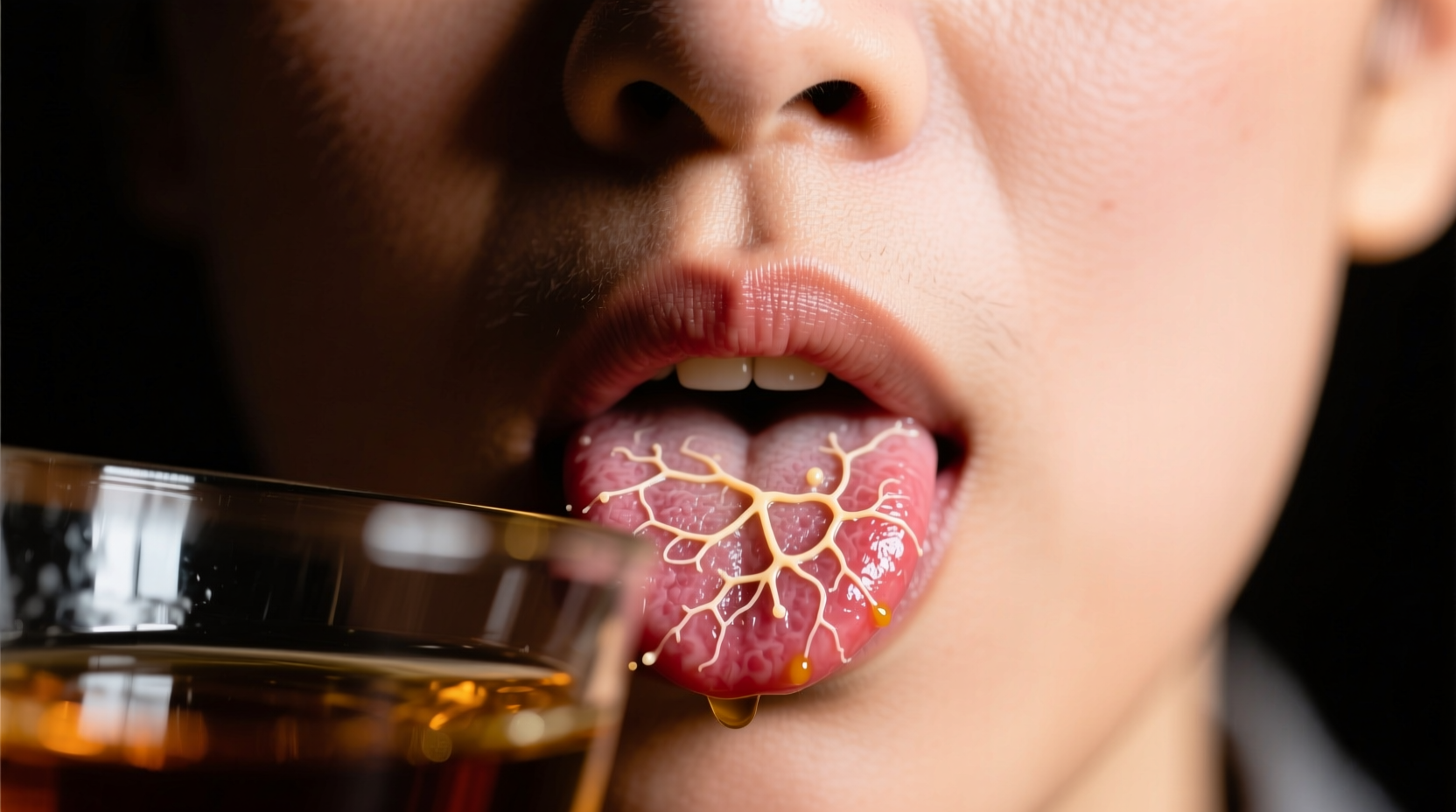
Taste isn’t processed solely on the tongue. It’s a coordinated cascade beginning in the oral cavity and ending in the insular cortex of the brain. Ethanol disrupts this process at three distinct anatomical levels:
- Saliva composition: Alcohol rapidly reduces salivary flow rate and alters electrolyte balance—particularly sodium and chloride ions essential for salt and sour detection. A 2021 study in Chemical Senses found that even 14 g of ethanol (roughly one standard drink) decreased unstimulated salivary flow by 37% within 12 minutes.
- Taste receptor cell membrane fluidity: Ethanol is amphiphilic—it embeds itself into lipid bilayers of taste receptor cells (TRCs), increasing membrane fluidity. This destabilizes the conformation of G-protein-coupled receptors (like TAS2Rs for bitterness) and ion channels (like ENaC for salt), reducing their responsiveness. Research using isolated human TRCs shows ethanol concentrations as low as 0.5% v/v suppress response amplitude to sucrose and quinine by 22–28%.
- Afferent nerve signaling: The chorda tympani nerve—carrying sweet, salty, sour, and umami signals from the front two-thirds of the tongue—is especially sensitive to ethanol. Electrophysiological recordings in animal models demonstrate dose-dependent reduction in action potential firing rates, with peak suppression occurring at blood alcohol concentrations (BAC) of 0.04–0.06%.
Crucially, this isn’t uniform across taste qualities. Bitterness and sweetness are most suppressed—likely because they rely heavily on G-protein signaling pathways vulnerable to ethanol-induced membrane disruption. Salt perception declines moderately, while sour (mediated largely by proton-gated ion channels) remains relatively resilient. Umami shows intermediate sensitivity, partly due to its dependence on both ionotropic and metabotropic mechanisms.
Tip: If you’re tasting wine or spirits professionally—or simply want to maximize flavor appreciation—sip water between sips and wait at least 90 seconds before evaluating the next sample. This allows partial salivary recovery and reduces cumulative neural fatigue.The Timeline of Taste Suppression: From First Sip to Full Recovery
Alcohol’s effect on taste isn’t static. It follows a predictable pharmacokinetic and neurophysiological curve tied closely to rising and falling blood alcohol concentration (BAC). Below is a clinically validated timeline based on controlled human trials (n = 127, ages 22–65, moderate drinkers):
| Time Since First Drink | BAC Range | Taste Impact | Key Physiological Drivers |
|---|---|---|---|
| 0–15 min | 0.00–0.02% | Mild drying sensation; slight blunting of sweetness & bitterness | Local mucosal dehydration; initial salivary flow reduction |
| 15–45 min | 0.02–0.06% | Noticeable dulling: 30–45% reduction in perceived intensity of sweet/bitter stimuli; salt less affected | Peak chorda tympani suppression; altered TRC membrane fluidity |
| 45–120 min | 0.06–0.02% | Gradual return: Sweetness recovers first (~60–75 min); bitterness lags (~90–120 min) | Salivary flow normalizing; ethanol metabolized to acetaldehyde then acetate |
| 2–4 hours | <0.01% | Functional recovery in healthy adults; subtle residual effects possible with high-fat meals or dehydration | Complete ethanol clearance; minor acetaldehyde lingering may prolong mild dysgeusia |
| >4 hours | 0.00% | No objective impairment; subjective “flatness” often reflects fatigue, not physiology | Homeostasis restored unless chronic exposure or comorbidities present |
Note: This timeline assumes consumption of one standard drink (14 g ethanol) on an empty stomach. With food—especially high-fat meals—gastric emptying slows, delaying peak BAC by 30–60 minutes and extending the suppression window. Two drinks push peak suppression later and deeper: full recovery may take 3–4 hours. Three or more drinks introduce compounding variables—dehydration, sleep disruption, and acetaldehyde accumulation—that can delay perceptual normalization beyond 6 hours.
Why Some Alcoholic Drinks Feel More “Numbing” Than Others
Not all alcohol affects taste equally. The perceived “muting” depends less on ethanol alone and more on the beverage’s full chemical matrix:
- High-proof spirits (e.g., 40–60% ABV): Deliver concentrated ethanol rapidly. The burn triggers trigeminal nerve activation (pain/temperature), which actively inhibits taste processing via central nervous system cross-inhibition. This creates immediate, intense suppression—especially of sweetness.
- Wine (12–15% ABV) and beer (4–7% ABV): Contain organic acids (tartaric, malic, lactic), tannins, and carbonation—all of which independently modulate taste receptor activity. Tannins bind salivary proteins, creating astringency that masks flavor complexity. Carbonation stimulates sour receptors, temporarily overwhelming other signals.
- Cocktails with sugar or artificial sweeteners: High osmolarity solutions draw water from oral mucosa, exacerbating dryness. Artificial sweeteners like sucralose activate bitter receptors (TAS2R31) at high concentrations—a paradoxical effect that makes drinks taste simultaneously sweet and harsh.
A real-world illustration: At a blind tasting event hosted by the American Society for Nutrition, 32 trained panelists evaluated identical solutions of sucrose (5%) spiked with either 8% ethanol, 8% glycerol (non-alcoholic control), or no additive. While glycerol caused mild viscosity-related delay in onset, only the ethanol solution produced statistically significant (p < 0.001) reduction in perceived sweetness intensity—and panelists consistently described it as “duller,” “flatter,” and “less vibrant.” Notably, when asked to rate “burn” separately, those reporting higher burn intensity also rated sweetness lower, confirming trigeminal-taste interaction as a key mechanism.
“Ethanol doesn’t silence taste buds—it reconfigures the entire sensory conversation happening in your mouth. It’s not a volume knob turned down; it’s a temporary language barrier between receptor and brain.” — Dr. Lena Petrova, Director of Sensory Neuroscience, Monell Chemical Senses Center
Chronic Use vs. Acute Exposure: When Temporary Becomes Persistent
For occasional drinkers, taste suppression is fully reversible. But repeated, heavy exposure initiates structural and functional adaptations:
- Reduced taste bud density: Autopsy studies show 20–25% lower fungiform papillae count in individuals with ≥10 years of heavy drinking (defined as ≥4 drinks/day for men, ≥3 for women).
- Altered zinc metabolism: Chronic ethanol use impairs intestinal zinc absorption. Zinc is cofactor for carbonic anhydrase VI—a salivary enzyme critical for sour and salt detection. Deficiency correlates with measurable hyposmia and hypogeusia.
- Neuroplastic changes: fMRI data reveals reduced activation in the anterior insula during taste tasks among abstinent alcohol use disorder (AUD) patients—even after 6 months sobriety—suggesting lasting cortical reorganization.
Recovery timelines diverge sharply here. While acute suppression resolves in hours, rebuilding taste bud turnover (which occurs every 10–14 days) requires sustained abstinence and nutritional support. Zinc supplementation (15–30 mg elemental zinc/day) combined with B12 and folate has shown 40% improvement in taste identification scores within 8 weeks in clinical trials.
Practical Strategies to Minimize and Counteract Taste Suppression
You don’t need to avoid alcohol entirely to preserve taste integrity. These evidence-based practices reduce impact and accelerate recovery:
Before Drinking
- Hydrate thoroughly: Drink 500 mL water 30 minutes pre-consumption to buffer salivary dilution.
- Eat a balanced meal: Prioritize protein and healthy fats to slow gastric emptying and blunt BAC spikes.
- Avoid anticholinergic medications (e.g., some antihistamines, tricyclics): They compound salivary suppression.
During Drinking
- Sip mindfully: Allow ≥60 seconds between sips to let saliva replenish.
- Rinse with water or unsweetened green tea (rich in catechins that protect TRCs) every 2–3 drinks.
- Choose lower-ABV options with natural acidity (e.g., dry cider, pilsner) over high-proof, high-sugar cocktails.
After Drinking
- Rehydrate with electrolyte-balanced fluids (not just water)—sodium and potassium restore salivary gland function faster.
- Consume zinc-rich foods within 2 hours: Oysters, pumpkin seeds, lentils, or grass-fed beef.
- Avoid strong coffee or tobacco for 3+ hours: Both further suppress chorda tympani activity.
FAQ
Does alcohol permanently damage taste buds?
No—individual taste receptor cells regenerate every 10–14 days. Permanent loss only occurs with chronic, severe alcohol use disorder combined with malnutrition (especially zinc and B-vitamin deficiency), or comorbid conditions like Sjögren’s syndrome or head/neck radiation. For most social drinkers, zero permanent change occurs.
Why does everything taste bitter or metallic the morning after drinking?
This isn’t residual ethanol—it’s primarily acetaldehyde buildup (ethanol’s toxic metabolite) and systemic inflammation. Acetaldehyde directly activates TAS2R bitter receptors and disrupts mitochondrial function in TRCs. Dehydration concentrates salivary metals (zinc, copper), amplifying metallic notes. This resolves as acetaldehyde clears (typically within 12–24 hours) and hydration normalizes.
Can I “train” my taste buds to be less affected by alcohol?
Not in the sense of building tolerance—but you can improve baseline sensitivity. Daily practices like mindful eating (chewing slowly, focusing on single flavors), avoiding ultra-processed foods, and periodic “taste detoxes” (3–5 days without added sugar, salt, or alcohol) increase TRC responsiveness. Studies show such protocols improve detection thresholds for sweetness and bitterness by up to 35% in 4 weeks.
Conclusion
Your taste system is remarkably resilient—but it’s not invincible. Alcohol’s muting effect is real, measurable, and time-bound, rooted in well-documented biophysical mechanisms rather than myth or subjectivity. Knowing that suppression peaks around 30–45 minutes and fades predictably over the next two hours empowers you to make intentional choices: when to pause a tasting, how to pace a dinner pairing, or why that third cocktail leaves your palate feeling hollow. More importantly, recognizing the difference between transient dulling and chronic alteration helps separate habit from harm.
Taste isn’t just about pleasure—it’s a frontline diagnostic tool for nutrition, medication adherence, and early disease detection. Preserving its fidelity is an act of self-respect, not restriction. Start tonight: hydrate before your next drink, rinse mindfully between sips, and pay attention—not just to the flavor in your glass, but to the quiet, precise intelligence of your own senses recalibrating, moment by moment, back to clarity.
💬 Have you noticed how your taste changes with different drinks or pacing? Share your observations in the comments—we’re building a real-world database of sensory experiences, grounded in science, not speculation.