New Mexico’s culinary identity is not simply a regional variation of Southwestern fare—it is a living archive of cultural exchange, indigenous resilience, and cross-continental flavor alchemy. While many associate the state with green and red chile stew, the true depth of New Mexican cuisine lies in its layered history: a convergence of Native American agricultural traditions, Spanish colonial adaptation, Mexican borderland fusion, and 20th-century global immigration patterns that quietly reshaped its palate. Understanding this cuisine means tracing how spices—both native and imported—have evolved from survival ingredients into signature elements of one of America’s most distinctive food cultures. For chefs, home cooks, and cultural historians alike, New Mexico offers a masterclass in how terroir, trade, and tradition shape taste.
Definition & Overview
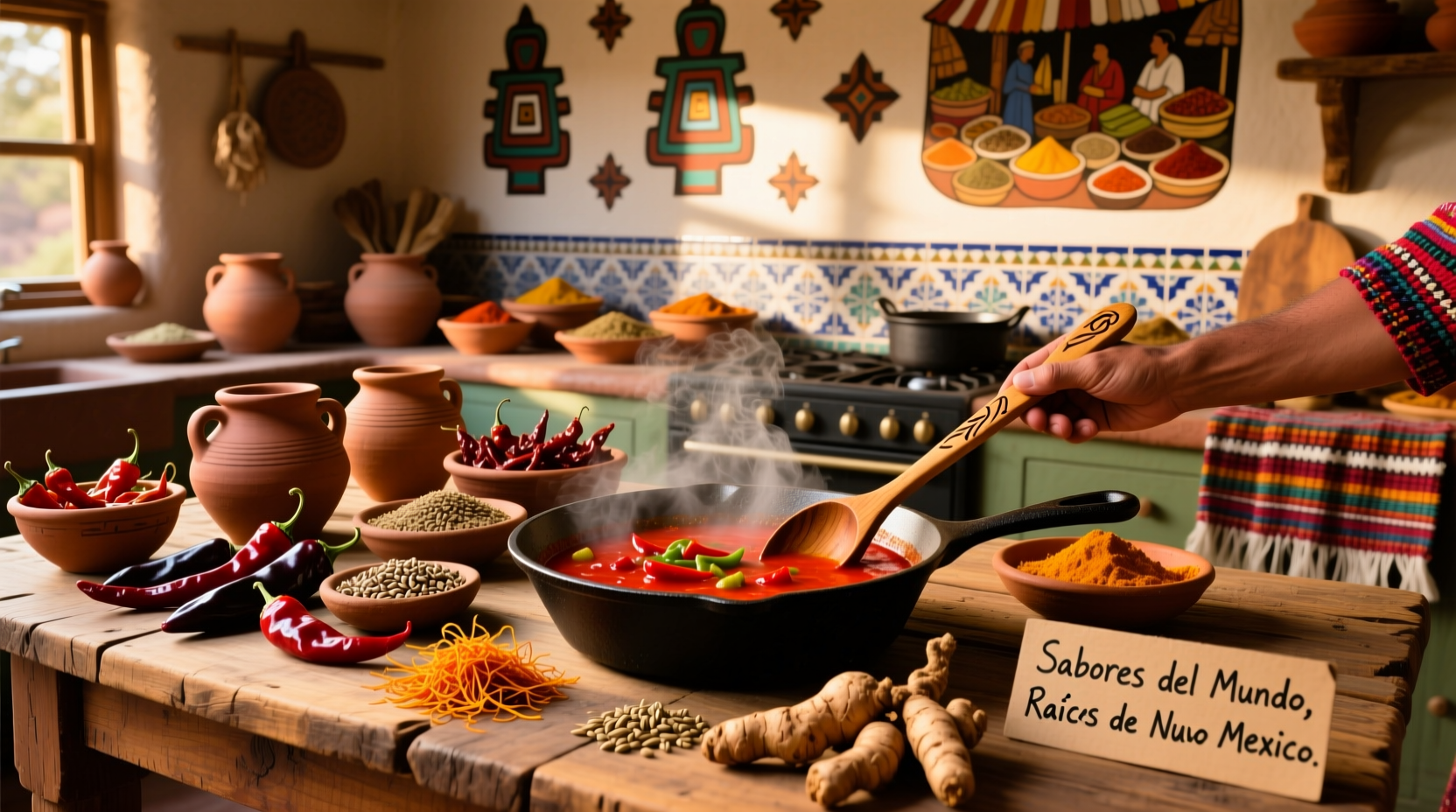
New Mexico cuisine refers to the traditional and contemporary foodways originating in the U.S. state of New Mexico, particularly rooted in the northern highlands and Pueblo communities. It is distinguished by its reliance on locally grown chile peppers—especially the Capsicum annuum cultivars developed over centuries—as foundational flavor agents rather than mere condiments. Unlike Tex-Mex or commercialized \"Southwestern\" dishes, authentic New Mexican cooking emphasizes slow-roasting, earth-cooked stews (like carne adovada), blue corn preparations, and minimal use of dairy or heavy sauces.
The cuisine emerged from three primary influences: the agricultural practices of the Ancestral Puebloans (including irrigation farming of maize, beans, squash, and chiles); the introduction of livestock, garlic, onions, and wheat by Spanish colonists beginning in the 16th century; and later adaptations through trade with Mexico, the American frontier, and immigrant laborers from Asia and Eastern Europe. What sets it apart globally is its treatment of chile as both vegetable and spice—a dual role rarely seen elsewhere in world cuisines.
Flavor profiles are defined by smokiness, moderate heat, vegetal sweetness, and deep umami, especially when chiles are fire-roasted or fermented. Spices such as cumin, oregano, and coriander appear, but sparingly—used more for background resonance than dominance. This restraint allows the chile itself to shine, making New Mexico one of the few places where a single ingredient can define an entire regional gastronomy.
Key Characteristics
| Attribute | Description |
|---|---|
| Primary Flavor Profile | Earthy, slightly sweet, with vegetal notes; roasted forms add smokiness |
| Aroma | Toasted pepper, wood smoke, hints of dried fruit and herbs |
| Color/Form | Fresh (green/red), dried (ristra), powdered (chile molido), paste (adobo-style) |
| Heat Level (Scoville) | Mild to medium (500–4,000 SHU); varies by cultivar and ripeness |
| Culinary Function | Base ingredient in sauces, marinades, stews; also used whole or stuffed |
| Shelf Life | Fresh: 2 weeks refrigerated; dried: up to 2 years if stored properly |
| Signature Varieties | Hatch, Española, Chimayó, Big Jim, Numex Mirasol |
Practical Usage: How to Cook with New Mexico Chile
The cornerstone of any New Mexican dish is the preparation of chile sauce—either red (salsa roja) or green (verde). These are not garnishes but structural components, akin to how tomatoes form the base of Italian ragù or miso underpins Japanese soups.
Step-by-Step: Preparing Fresh Green Chile Sauce
- Select firm, dark green chiles (preferably late summer harvest).
- Rinse and roast over open flame or grill until blistered on all sides.
- Place in sealed container for 10 minutes to steam; peel off charred skin.
- Remove stems and seeds (retain some seeds for heat control).
- Sauté chopped onion in lard or oil until translucent.
- Add roasted chiles and crush lightly with a wooden spoon.
- Pour in ½ cup water or stock, simmer 20–30 minutes.
- Blend briefly for texture (do not purée completely).
- Season with salt, garlic, and a pinch of baking soda to stabilize color.
This sauce becomes the foundation for chile rellenos, enchiladas, huevos rancheros, or simply poured over carne adovada. For red chile sauce, substitute fully matured red pods, which are typically dried and rehydrated before grinding into a smooth slurry.
Pro Tip: Always taste chiles before cooking—heat levels vary dramatically even within the same batch. Adjust seed inclusion accordingly. Store extra sauce in sterilized jars submerged in their own oil for up to six months in cold storage.
Professional Applications
In restaurant kitchens, New Mexican chefs often layer chile types—for example, blending Chimayó (earthy, floral) with Hatch (bright, tangy)—to create complex, region-specific profiles. Some upscale establishments now ferment chiles for 30–60 days to develop lactic acidity and deeper umami, drawing inspiration from Korean gochujang or Chinese doubanjiang techniques.
Modern interpretations include chile-infused broths for ramen, smoked red chile butter on grilled meats, and even chile-spiked chocolate desserts—nodding to Mesoamerican cacao-chile pairings.
Pairing Suggestions
- With Proteins: Pork shoulder (slow-braised in red chile), chicken thighs, goat, venison
- With Grains: Blue corn tortillas, posole (hominy), rice cooked in chile broth
- With Vegetables: Roasted calabacitas (zucchini, corn, squash), grilled nopales (cactus pads)
- With Dairy: Queso fresco, cotija, or sharp cheddar (used sparingly to contrast heat)
- Beverage Pairings: Cider, light red wines (Grenache), roasted barley tea, prickly pear agua fresca
Variants & Types of New Mexico Chiles
While “Hatch chile” dominates national perception, several distinct cultivars thrive across New Mexico’s microclimates, each offering unique characteristics.
| Type | Region | Flavor Notes | Best Uses |
|---|---|---|---|
| Hatch | Hatch Valley (south-central NM) | Bright, tangy, moderately hot | Grilling, roasting, fresh salsas |
| Chimayó | Chimayó (northern NM) | Earthy, floral, low heat, nutty finish | Dried powders, heirloom sauces |
| Española | Española Valley | Sweet early season, robust later | Stews, freezing for winter use |
| Big Jim | Developed at NMSU | Mild, thick-walled, easy to roast | Stuffed chiles, pickling |
| Numex Mirasol | Research cultivar | Balanced heat, high yield | Commercial processing, drying |
Outside fresh forms, chiles appear as:
- Chile molido: Sun-dried pods ground into coarse powder; used like paprika
- Ristras: Strings of whole dried chiles hung for decoration and gradual use
- Chile en polvo: Fine powder, sometimes blended with salt and oregano (commercial)
- Adobada marinade: Paste of red chile, vinegar, garlic, cumin used to cure pork
Global Spice Influences on New Mexico Cuisine
Though deeply indigenous in origin, New Mexican flavors have been subtly transformed by global interactions—some direct, others indirect through broader Latin American or U.S. food systems.
Mediterranean & Middle Eastern Traces
Spanish settlers brought garlic, onions, cilantro, and olive oil—all now integral despite not being native. More significantly, they introduced capers and vinegar-based preservation methods, precursors to modern pickled chile preparations. The use of dried oregano (distinct from Mexican *oregano* which is Lippia graveolens) reflects Iberian influence, adding camphorous depth to red chile sauces.
Asian Contributions via Trade and Migration
In the late 19th century, Chinese railroad workers settled in southern New Mexico. Though few opened restaurants, their use of soy sauce and fermented pastes influenced some Hispano families’ braising liquids. Today, fusion chefs incorporate fish sauce into chile blends for enhanced umami, echoing Southeast Asian principles.
More recently, Nepali and Bhutanese refugees resettled in Albuquerque have introduced Himalayan spices like timur (Sichuan pepper relative) and jimbu herb. Collaborative pop-ups now feature dishes like “chile momos” —steamed dumplings with minced pork and roasted green chile filling.
Mexican Regional Cross-Pollination
Despite political borders, New Mexican cuisine shares strong ties with northern Mexican states like Chihuahua and Sonora. Dishes such as machaca (dried shredded beef) and flour tortillas (introduced via Sonoran wheat farming) became staples. However, unlike central Mexican moles—which rely on chocolate, nuts, and numerous spices—New Mexican sauces emphasize chile purity.
Conversely, Oaxacan immigrants have introduced tejate and tlayudas to Santa Fe markets, creating new pairing opportunities. Some chefs now serve blue corn tamales topped with black bean mole and red chile crema—a tricultural synthesis.
Eastern European Impact via Agricultural Exchange
In the 20th century, Russian Mennonite farmers in northern Mexico migrated to New Mexico’s Tularosa Basin, bringing drought-resistant wheat strains and pickling techniques. Their influence appears in spiced vinegar brines used for curtido-style chile relishes. Additionally, caraway and dill—rare in traditional recipes—occasionally surface in modern farmhouse interpretations.
Comparison with Similar Ingredients
New Mexico chile is frequently mistaken for other peppers. Understanding distinctions ensures authenticity in preparation.
| Ingredient | Difference from New Mexico Chile | When to Substitute? |
|---|---|---|
| Ancho Chile (Mexico) | Dried poblano; fruitier, sweeter, less vegetal | Only if mimicking mild red sauce; lacks herbal nuance |
| Guajillo Chile | Sharper acidity, thinner flesh, more common in salsas | Acceptable in blends but never alone as replacement |
| California Bell Pepper | No heat, no chile flavor; purely textural | Never—fundamentally different category |
| Cayenne Powder | Pure heat with no body or complexity | Only for heat boost; always combine with paprika for color |
| Paprika (Hungarian) | Sweeter, smokier (if smoked variety), less acidic | Use smoked paprika + tomato paste for emergency red chile mimicry |
“You don’t cook with New Mexico chile—you cook around it. It’s not a seasoning. It’s the main event.” — Chef Lois Ellen Frank (Kiowa descent), author of *Foods of the Southwest Indian Nations*
Practical Tips & FAQs
How spicy are New Mexico chiles?
Most range from 1,000 to 3,500 Scoville units—milder than jalapeños on average. Heat increases with sun exposure and soil alkalinity. Northern varieties tend to be more nuanced; southern ones punchier.
Can I grow New Mexico chiles outside the state?
Yes, but replicating flavor is difficult. They require 200+ frost-free days, high elevation (4,500–7,000 ft), intense sunlight, and calcium-rich soil. Gardeners in Colorado, Arizona, and parts of California report success using raised beds and drip irrigation.
What’s the best way to store fresh chiles?
Roast, peel, and freeze in vacuum-sealed bags. They retain texture and flavor for up to 12 months. Never wash before storing—moisture accelerates decay.
Is canned chile acceptable?
Only in emergencies. Most commercial brands lack freshness and contain citric acid, altering pH balance. Seek out regional producers like Taylor’s Anasazi or Los Ranchos Growers who pack in glass with minimal additives.
How do I adjust heat in family meals?
Prepare sauces without seeds first, then offer crushed dried chile flakes (chile de árbol) on the side. Alternatively, serve red and green sauces separately—one mild, one hot.
Are there vegetarian proteins that pair well?
Yes. Pinto beans slow-cooked with onion and chile form the backbone of frijoles borrachos. Tempeh marinated in adobo paste and grilled also absorbs flavors exceptionally well.
Storage Checklist:
☐ Keep dried chiles in amber jars away from light
☐ Label powders with harvest year (flavor fades after 18 months)
☐ Use cast iron or stainless steel pots—avoid aluminum, which reacts with acids
☐ Freeze whole roasted chiles flat on trays before bagging to prevent clumping
Summary & Key Takeaways
New Mexico cuisine stands apart not because of extreme heat or exotic combinations, but due to its philosophical commitment to ingredient integrity. At its heart is the chile—not just a spice, but a cultural keystone shaped by millennia of selective breeding and communal knowledge. From the ancient terraced fields of Taos Pueblo to the bustling farmers' markets of Albuquerque, this food tradition continues evolving while honoring its roots.
The global influences embedded within it—Spanish preservation methods, Mexican regional techniques, Asian fermentation insights, and Eastern European agricultural practices—demonstrate how isolation does not preclude innovation. Instead, New Mexico exemplifies how localized cuisines absorb external elements selectively, transforming them into something uniquely their own.
For the modern cook, engaging with this cuisine means more than following recipes. It requires sourcing quality chiles, understanding their seasonal rhythms, and respecting their role as co-authors of flavor rather than passive additives. Whether preparing a simple plate of sopapillas with honey or crafting a multi-day carne adovada, the lesson remains: let the land speak through the chile.
Seek out heirloom chile growers at local markets, support Indigenous food sovereignty initiatives, and experiment with single-origin chile sauces to truly taste the soul of New Mexico.