
Mangoes are one of the most beloved tropical fruits in the world—sweet, juicy, and packed with flavor. Yet for many, cutting a mango can be frustrating. The large, flat seed in the center makes it tricky to extract the flesh efficiently, and slipping with a knife on the slippery skin poses a real risk. But with the right technique, you can turn a ripe mango into perfectly cubed fruit in under two minutes—without wasting a single bite.
The key lies not just in using a sharp knife, but in understanding the anatomy of the mango and applying a method that’s both safe and effective. Whether you're preparing a fruit salad, blending a smoothie, or simply enjoying fresh mango as a snack, mastering this process will save time, reduce waste, and elevate your kitchen confidence.
Understanding Mango Anatomy
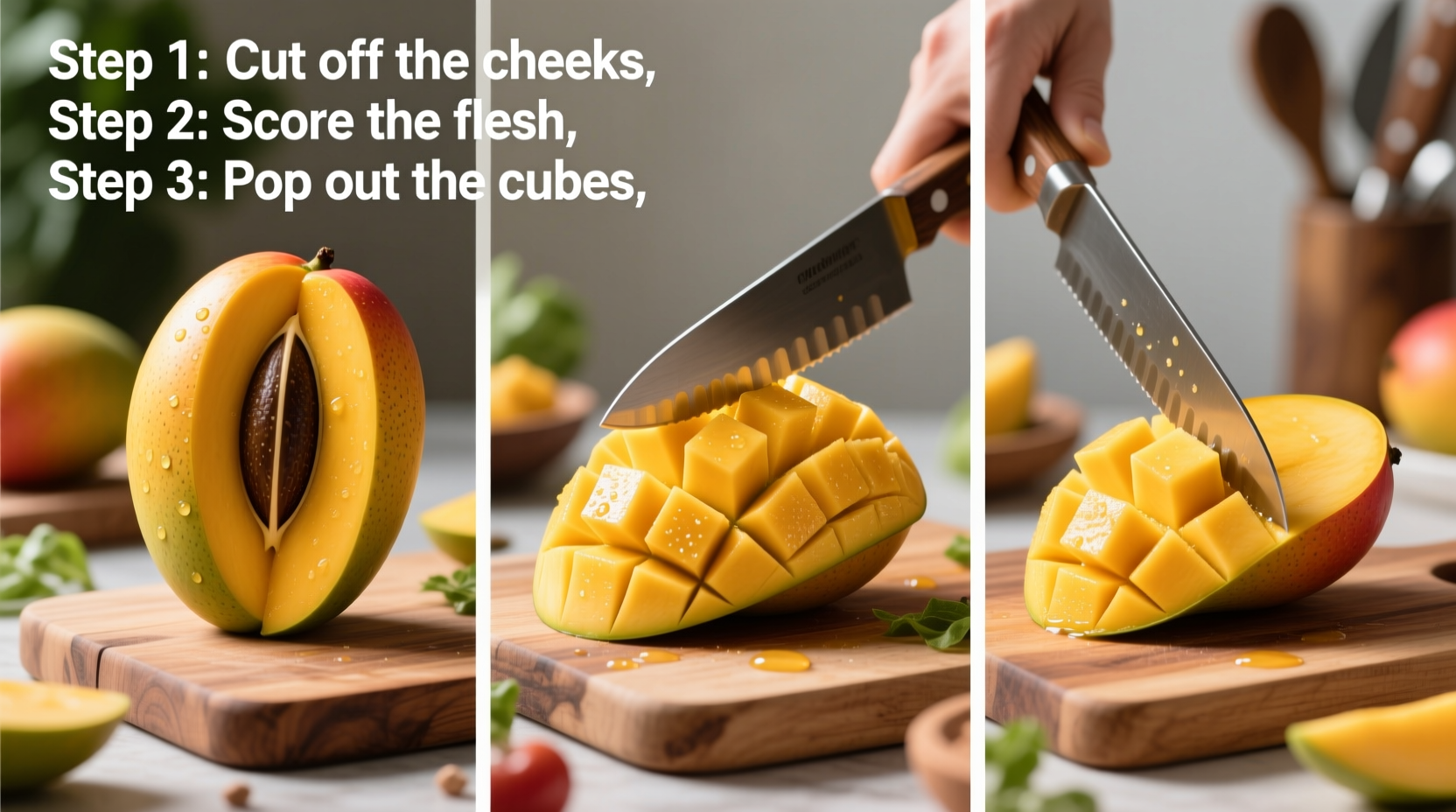
Before reaching for a knife, it's essential to understand the structure of a mango. Unlike apples or oranges, mangoes have a unique internal layout:
- Skin: Thick and inedible, often waxy. It protects the fruit but must be removed before eating.
- Flesh: The sweet, fibrous, golden-yellow pulp that surrounds the seed. This is what you want to harvest cleanly.
- Seed (pit): A large, flat, oval-shaped core located in the center. It’s tough and cannot be eaten, but some varieties have smaller seeds, yielding more edible flesh.
Because the seed runs vertically through the center, slicing straight down from stem to base wastes a lot of fruit. Instead, the goal is to slice off the \"cheeks\"—the two large lobes on either side of the seed—first. This approach maximizes usable fruit and minimizes effort.
“Knowing where the seed sits allows you to work around it, not against it. That’s the foundation of efficient mango prep.” — Chef Rafael Mendez, Culinary Instructor at Miami Tropical Foods Academy
Step-by-Step Guide: The Cheek Method
This widely praised technique—often called the “cheek method” or “hedgehog method”—is used by chefs and home cooks alike for its precision and simplicity. Follow these steps carefully:
- Wash the mango thoroughly. Even if you’re peeling it, washing removes any surface pesticides or wax.
- Stand the mango upright on its stem end. Identify the widest part—the equator—and visualize the flat seed running vertically through the center.
- Cut around the seed. Using a sharp chef’s knife, slice vertically about ¼ inch from the center on one side to remove the first cheek. Repeat on the opposite side. You should now have two large oval pieces of mango flesh and a central seed piece with some residual fruit attached.
- Score the flesh. Take one mango cheek and, with the skin facing down, use your knife to make lengthwise and crosswise cuts in a grid pattern. Be careful not to cut through the skin.
- Turn inside out. Push the skin side upward, causing the cubes to pop outward like a hedgehog. Now, it’s easy to slice the cubes off cleanly.
- Trim the remaining flesh from the seed. Hold the seed in one hand and carefully slice off any leftover fruit. Some people enjoy sucking the seed clean—it’s flavorful and safe, though not everyone prefers it.
Alternative Methods for Different Needs
While the cheek method is ideal for cubing, other techniques suit different purposes:
1. The Bowl Scoop (for purées and smoothies)
If you plan to blend the mango, skip the grid-cutting. After removing the cheeks, use a large spoon to scoop the flesh directly into a blender. Fast and efficient, this method avoids unnecessary chopping.
2. The Peeling & Slicing Method (for salads or salsas)
Peel the entire mango using a vegetable peeler first, then place it on a cutting board and slice into strips or dice as needed. This works well when uniformity matters, but increases the risk of slipping due to the slick surface.
3. The Glass Twist (no knife required)
A popular hack: hold the mango half (with seed removed) in one hand and press the rim of a sturdy glass into the flesh while twisting. The edges of the glass cut through the scored fruit, releasing cubes. While fun, this method can be inconsistent and risks breaking the glass if too much pressure is applied.
Do’s and Don’ts When Cutting Mango
| Do’s | Don’ts |
|---|---|
| Use a sharp, non-slip knife for better control | Use a dull knife—it requires more force and increases slip risk |
| Cut on a stable, damp towel-lined surface | Cut on a wet or greasy counter |
| Refrigerate mango briefly before cutting if very ripe | Try to cube an overly soft mango without chilling it first |
| Save the seed for planting or making infused syrup | Discard the seed immediately—some cultures use it in teas or spices |
| Store leftover cubes in an airtight container for up to 4 days | Leave cut mango at room temperature for more than 2 hours |
Real Example: Maria’s Weekend Prep Routine
Maria, a busy mother of two in Austin, Texas, used to avoid buying mangoes because she found them too messy to cut. One Sunday, she watched a short video demonstrating the cheek method and decided to try it. She bought three ripe Ataulfo mangoes, followed the steps, and was amazed at how quickly she harvested over two cups of perfect cubes.
She divided them into containers—one for immediate snacking, one frozen for smoothies, and another mixed with lime juice and chili for a homemade salsa. For the first time, she didn’t feel guilty about tossing half-eaten mangoes. “It changed how I see the fruit,” she said. “Now I buy them weekly. My kids even help score the flesh with butter knives—it’s become a little family ritual.”
Essential Tips for Best Results
Tip: To check ripeness, gently squeeze the mango near the stem. It should yield slightly, like a ripe avocado. If hard, let it sit at room temperature for 2–4 days.- Choose the right variety: Ataulfo (Honey mango) has less fiber and a smaller seed, making it easier to cut. Kent and Tommy Atkins are larger and more fibrous but widely available.
- Chill before cutting: Firm, cold mangoes are easier to handle and cube cleanly.
- Use a serrated grapefruit spoon: Its curved edge helps separate flesh from skin efficiently after scoring.
- Minimize oxidation: Toss cut mango with a few drops of lemon or lime juice if storing—it preserves color and enhances flavor.
FAQ
Can I cut a mango without a knife?
Yes, though limited. The glass twist method works for soft mangoes, but it’s less precise and carries safety risks. A vegetable peeler combined with scissors can also work in a pinch, especially for children under supervision.
Is the mango seed edible?
No, the inner kernel is not recommended for consumption due to potential allergens and digestive irritants. However, the outer seed surface can be boiled to make tea in some cultures, though this should be done with caution and research.
How do I prevent mango juice from dripping everywhere?
Cut the mango over a bowl or plate to catch juices. Alternatively, use a silicone mat or parchment paper for easy cleanup. Chilling the fruit beforehand reduces juice flow during cutting.
Checklist: Perfect Mango Prep in 5 Steps
- ☐ Wash the mango under cool water
- ☐ Stand mango upright and slice off both cheeks
- ☐ Score the flesh in a grid pattern without cutting through skin
- ☐ Push skin side inward to pop out cubes, then slice off
- ☐ Remove remaining flesh from seed and store properly
Conclusion
Cutting a mango doesn’t need to be messy or intimidating. With the cheek method, a sharp knife, and a few minutes, you can unlock the full potential of this luscious fruit. Whether you're meal prepping, hosting guests, or treating yourself to a tropical snack, mastering this skill brings convenience, safety, and satisfaction to your kitchen routine.
💬 Have a favorite mango recipe or cutting hack? Share your tip in the comments and inspire others to make the most of this vibrant fruit!