Garlic is a cornerstone of global cuisine—its pungent aroma and complex flavor elevate everything from rustic stews to delicate sauces. Yet confusion often arises when recipes call for “garlic cloves” versus “minced garlic.” Are they interchangeable? Does one deliver more punch than the other? The answer lies not just in preparation but in chemistry, timing, and culinary intent. Understanding the distinction ensures precision in cooking, whether you're roasting a whole head or measuring out a teaspoon of jarred minced garlic. This guide breaks down the essential differences in form, flavor, application, and storage, empowering cooks to make informed choices that enhance both taste and technique.
Definition & Overview
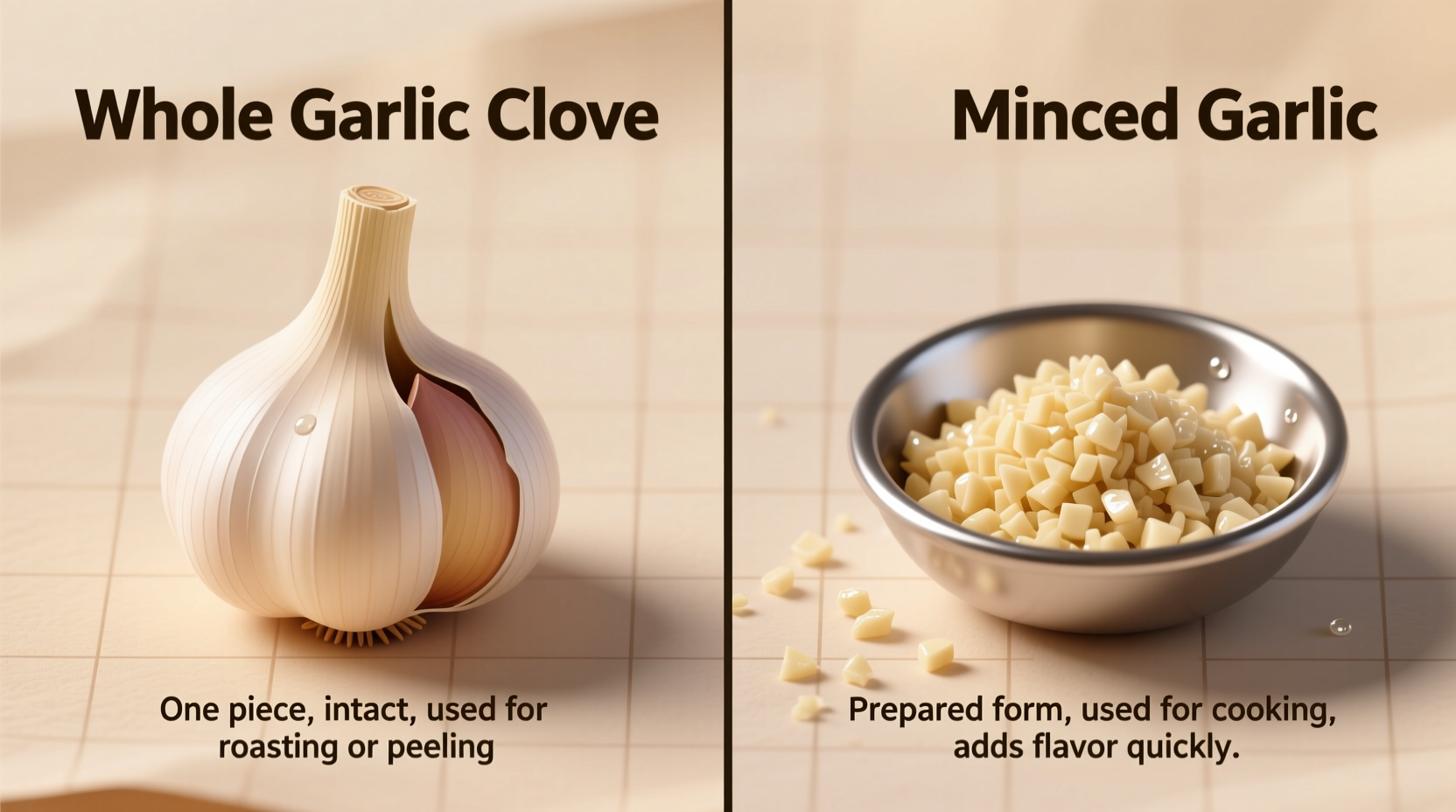
A garlic clove refers to a single segment of a garlic bulb. Each bulb typically contains 10–14 individual cloves enclosed in a papery skin. Botanically part of the Allium family (related to onions, leeks, and shallots), fresh garlic cloves are harvested, cured, and sold whole. When used raw or cooked, they release allicin—a sulfur compound responsible for garlic’s sharp bite and health-promoting properties—only when cell walls are disrupted through cutting, crushing, or mincing.
Minced garlic, by contrast, describes garlic that has been finely chopped, usually to a particle size of 1–2 millimeters. It can be freshly prepared at home using a knife, press, or grater, or purchased pre-minced in jars or tubes. Commercial versions often contain preservatives like citric acid or vegetable oil to extend shelf life. Because it's already broken down, minced garlic delivers faster and more immediate flavor release compared to whole cloves.
The transformation from clove to minced garlic isn't merely mechanical—it's chemical. Crushing or chopping activates enzymes that convert alliin into allicin, intensifying aroma and heat. The finer the mince, the greater the surface area exposed, leading to stronger flavor development. This makes the choice between using a whole clove versus minced garlic not just about convenience, but about controlling the depth, timing, and intensity of flavor in a dish.
Key Characteristics
| Characteristic | Garlic Clove (Whole) | Fresh Minced Garlic | Pre-Minced (Jarred) Garlic |
|---|---|---|---|
| Form & Texture | Firm, intact segment with dry outer skin | Finely chopped, moist, fibrous texture | Paste-like, soft, often suspended in oil |
| Flavor Intensity | Mild when raw; develops complexity when cooked | Bold, sharp, immediate; peaks quickly | Less vibrant; slightly fermented or muted |
| Aroma | Subtle until cut or crushed | Pungent, aromatic upon exposure | Noticeable but less fresh; may have metallic notes |
| Shelf Life | 3–6 months at room temperature (whole) | 1–2 days refrigerated (homemade) | Up to 18 months unopened; 2–3 weeks after opening |
| Culinary Function | Base layer flavor; roasted, sautéed, infused | Quick flavor infusion; ideal for sauces, dressings | Convenience-driven; best for last-minute additions |
| Enzyme Activity | Low until damaged | High—allicin production maximized | Moderate to low—partially degraded over time |
Practical Usage: How to Use Each Form
The way garlic is prepared directly influences how it behaves in a dish. A whole garlic clove functions differently than its minced counterpart—not because one is superior, but because each serves distinct roles based on timing, heat exposure, and desired outcome.
Using Whole Garlic Cloves
Whole cloves are ideal when gradual flavor infusion is desired. Roasting entire bulbs transforms sharpness into mellow sweetness, making them perfect for spreading on bread or blending into mashed potatoes. In braises, soups, or stews, adding peeled whole cloves allows them to soften slowly, releasing flavor without disintegrating. They can also be lightly crushed with the side of a knife to increase surface area while maintaining structural integrity during long cooking.
For infusions—such as garlic oil or herb-infused vinegar—whole cloves prevent bitterness and over-extraction. Because allicin forms only when cells are ruptured, leaving cloves intact limits enzymatic reactions, preserving a cleaner, subtler taste.
Using Freshly Minced Garlic
Freshly minced garlic shines in dishes where rapid flavor development is key. Sautéing minced garlic in oil for 30–60 seconds before adding liquids creates an aromatic base for pasta sauces, stir-fries, and curries. Its fine texture ensures even distribution, preventing pockets of intense heat.
To maximize flavor control:
- Let it rest: After mincing, allow garlic to sit for 5–10 minutes before heating. This optimizes allicin formation, enhancing both taste and antioxidant benefits.
- Add at the right time: For savory depth without acridity, add minced garlic after onions or aromatics have softened but before proteins or liquids. Burnt garlic turns bitter—so monitor heat closely.
- Use in cold applications: Incorporate into vinaigrettes, marinades, or compound butters where raw bite is desirable.
Using Pre-Minced (Jarred) Garlic
Jarred minced garlic offers speed and consistency, especially useful for weeknight meals or commercial kitchens prioritizing efficiency. However, its flavor profile differs due to processing. Heat treatment and preservatives reduce enzymatic activity, resulting in a flatter, less dynamic taste.
Best uses include:
- Recipes calling for small amounts (½–1 tsp)
- Soups, casseroles, or baked dishes where subtle background garlic is sufficient
- Situations where peeling and chopping fresh cloves isn’t feasible
Pro Tip: When substituting jarred minced garlic for fresh, use ½ teaspoon of jarred for every 1 medium clove. Adjust upward slightly if using older product, as flavor diminishes over time.
Variants & Types of Minced Garlic
Not all minced garlic is created equal. Several forms exist, each suited to different needs:
1. Freshly Minced (Home-Prepared)
Chopped by hand or with a press, this version delivers peak flavor and aroma. Ideal for gourmet applications, sauces, and dishes requiring bright, assertive garlic presence.
2. Jarred Minced Garlic in Oil
Pasteurized and preserved, these products maintain texture and usability over months. Brands like Goya or McCormick dominate supermarket shelves. While convenient, they lack the vibrancy of fresh and may develop off-notes if stored too long after opening.
3. Frozen Minced Garlic
Flash-frozen shortly after preparation, this type retains more flavor than jarred versions. Available in cubes or trays, it thaws quickly and works well in cooked dishes. No preservatives needed.
4. Garlic Paste (Tubes)
Found near Asian ingredients, these concentrated pastes (e.g., Lee Kum Kee) are smooth, potent, and often blended with salt or stabilizers. A little goes a long way—use sparingly in marinades or dumpling fillings.
5. Dehydrated Minced Garlic
Dried and granulated, this shelf-stable option rehydrates during cooking. Less aromatic than fresh but useful in spice blends, rubs, or dry mixes. Reconstitute with water (1:1 ratio) for closer approximation to fresh.
Comparison with Similar Ingredients
Garlic is frequently confused with related alliums or processed derivatives. Clarifying distinctions improves recipe accuracy and flavor balance.
| Ingredient | Difference from Garlic Clove / Minced Garlic | When to Use Instead |
|---|---|---|
| Garlic Powder | Dehydrated and ground; lacks moisture and volatile oils; milder, sweeter taste | In dry rubs, seasoning blends, or when avoiding added liquid |
| Granulated Garlic | Larger granules than powder; slower dissolution; moderate potency | In slow-cooked dishes where gradual release is beneficial |
| Black Garlic | Fermented whole cloves; sticky, sweet, umami-rich; no sharpness | As a condiment, in glazes, or gourmet plating—not a substitute |
| Shallots | Milder, sweeter, more floral; higher sugar content | When subtlety is preferred—e.g., vinaigrettes, delicate sauces |
| Garlic Salt | Combination of garlic powder + salt (typically 3:1 ratio) | Only when adjusting for salt content; never direct swap for fresh |
“The moment you crush a garlic clove, you’re not just preparing an ingredient—you’re initiating a biochemical reaction. That’s why the gap between a clove and minced garlic isn’t just physical. It’s temporal, aromatic, and profoundly culinary.” — Chef Elena Torres, Culinary Instructor, Institute of Food Arts
Practical Tips & FAQs
Q: Can I substitute minced garlic for a whole garlic clove?
A: Yes, with adjustments. One medium garlic clove yields approximately 1 teaspoon of freshly minced garlic. For jarred, use ½ teaspoon per clove. Remember that pre-minced lacks freshness, so consider adding a pinch of lemon zest or a drop of vinegar to revive brightness.
Q: How much jarred minced garlic equals one clove?
A: Use ½ teaspoon of jarred minced garlic as a standard replacement for one average-sized clove. Taste and adjust, as potency varies by brand and age.
Q: Does minced garlic go bad faster than whole cloves?
A: Absolutely. Once cell walls are broken, oxidation and microbial growth accelerate. Homemade minced garlic lasts 1–2 days refrigerated. Store-bought lasts longer due to preservatives but degrades in quality within weeks of opening. Always refrigerate after opening and check for sour smell or discoloration.
Q: Is there a flavor loss when using pre-minced garlic?
A: Yes. Processing reduces allicin levels, and prolonged storage dulls volatile compounds. Studies show fresh-minced garlic has up to 40% higher antioxidant activity than jarred equivalents. For critical dishes—aioli, pesto, aglio e olio—always opt for fresh.
Q: What’s the best way to mince garlic efficiently?
A: Follow this method:
- Peel the clove (use the flat side of a knife to loosen skin).
- Trim root end, then slice thinly.
- Rock a chef’s knife back and forth over slices until finely chopped.
- For ultra-fine mince, sprinkle with a pinch of salt to prevent sticking and aid breakdown.
Q: Can I freeze fresh minced garlic?
A: Yes. Place minced garlic in ice cube trays, cover with olive oil, and freeze. Transfer cubes to a sealed bag and store up to 6 months. Use directly in sautés or soups—no thawing required.
Q: Why does my jarred garlic sometimes taste metallic?
A: This results from prolonged contact with metal containers or degradation of sulfur compounds. Opt for brands in glass jars with minimal additives. Avoid aluminum lids; transfer leftovers to non-reactive containers.
Q: How do I reduce garlic breath?
A: Consume parsley, apples, or mint post-meal—these contain polyphenols that neutralize sulfur volatiles. Drinking milk (especially whole) alongside garlic-rich foods also mitigates odor.
Storage Checklist:
- Store whole bulbs in a cool, dark, ventilated place (not the fridge).
- Do not refrigerate unpeeled cloves unless sprouting is imminent.
- Refrigerate peeled cloves in a sealed container for up to 10 days.
- Label frozen garlic cubes with date; use within 6 months.
- Discard any garlic showing green sprouts (unless intentionally growing) or signs of mold.
Summary & Key Takeaways
The difference between a garlic clove and minced garlic extends beyond mere preparation—it encompasses flavor kinetics, shelf stability, and culinary strategy. A whole clove offers controlled, gradual flavor release, ideal for roasting, braising, or infusing. Freshly minced garlic provides immediate, robust taste, crucial for dishes relying on aromatic depth. Pre-minced alternatives prioritize convenience but sacrifice nuance and potency.
Understanding these distinctions enables precise decision-making in the kitchen. Whether building layers in a tomato sauce or crafting a delicate marinade, choosing the right form of garlic ensures optimal results. Prioritize fresh cloves for maximum impact, reserve jarred versions for time-sensitive tasks, and never underestimate the biochemical transformation that occurs the moment a clove is crushed.
Choose your garlic form wisely—your palate will know the difference.