There’s a common misconception that creamy pasta requires heavy cream, butter, or grated cheese. But some of the most luxurious, velvety pasta sauces are made with nothing more than olive oil, garlic, starchy pasta water, and a little technique. The creamy olive oil garlic pasta is a masterclass in simplicity—transforming pantry staples into a dish that tastes like it came from a trattoria in Rome. This isn’t just fast food; it’s intelligent cooking. With under 10 minutes of active time and minimal cleanup, this recipe delivers maximum flavor, texture, and satisfaction. Whether you're feeding yourself after a long day or impressing guests with minimal effort, this method reveals how restraint and precision elevate everyday ingredients.
Definition & Overview
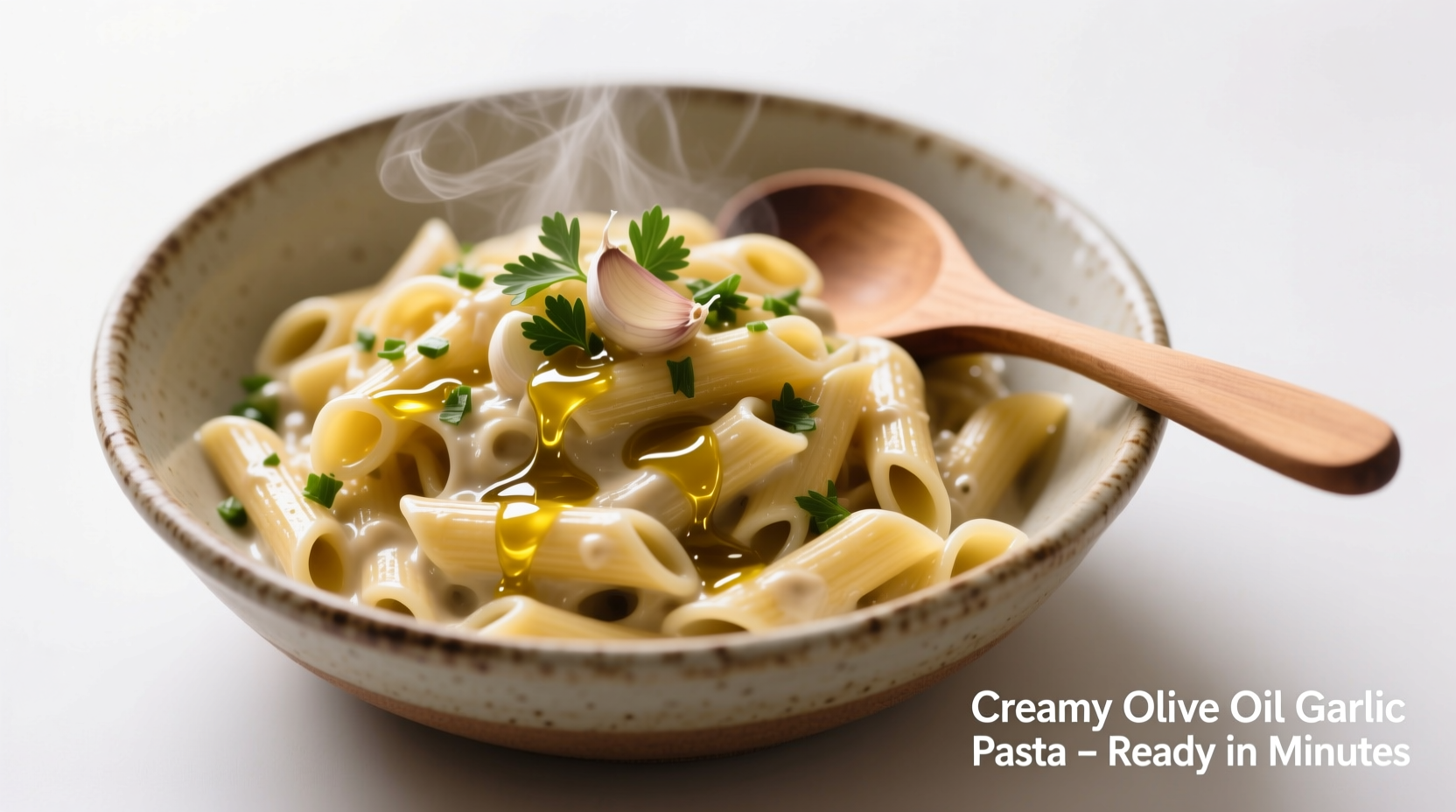
Creamy olive oil garlic pasta is a minimalist Italian-inspired preparation where extra virgin olive oil, garlic, chili flakes, and pasta cooking water form an emulsified, silk-textured sauce that clings to al dente strands. Despite its richness, the dish contains no dairy—no cream, no butter, no Parmesan. The \"creaminess\" comes entirely from the mechanical process of combining hot, starchy water with oil, creating a stable suspension that mimics the mouthfeel of traditional cream-based sauces.
This style of cooking falls under the umbrella of pasta asciutta—dry pasta dressed simply at the end of cooking. It's closely related to dishes like aglio e olio, but with a crucial twist: controlled emulsification. While classic aglio e olio often results in a slick, oily finish, the creamy version achieves cohesion through timing, temperature, and agitation. The technique is rooted in southern Italian home kitchens, particularly in regions like Campania and Sicily, where olive oil is abundant and culinary economy is prized.
The beauty of this dish lies in its immediacy. Unlike slow-simmered sauces, it leverages the final moments of pasta cooking to build complexity. Every step—from slicing garlic to reserving water—serves a purpose. There’s no room for distraction, but also no need for exotic ingredients. What emerges is a dish that balances pungency, heat, fruitiness, and umami depth, all within a glossy, cohesive coating.
Key Characteristics
| Characteristic | Description |
|---|---|
| Flavor Profile | Pungent garlic, fruity olive oil, subtle chili heat, savory depth from starchy water |
| Aroma | Sharp garlic, warm olive oil, toasted pepper notes |
| Texture | Silky, emulsified, non-greasy—clings uniformly to pasta |
| Color | Golden-yellow sheen with flecks of white garlic and red chili |
| Heat Level | Adjustable (mild to medium-spicy), depending on chili quantity |
| Culinary Function | Quick weeknight meal, base for protein/vegetable additions, vegan-friendly centerpiece |
| Shelf Life | Best served immediately; does not reheat well due to broken emulsion |
Practical Usage: How to Make Creamy Olive Oil Garlic Pasta
The success of this dish hinges on three principles: temperature control, starch management, and mechanical emulsification. Follow these steps precisely for consistent results.
- Choose the right pasta: Use dried spaghetti, linguine, or bucatini. These long, thin shapes provide ample surface area for sauce adhesion. Avoid fresh pasta—it releases less starch and can become gummy.
- Boil in salty water: Use 1 tablespoon of coarse sea salt per 4 quarts of water. Salt seasons the pasta internally and enhances starch release.
- Reserve pasta water before draining: Scoop out at least 1½ cups of starchy cooking water before draining. This liquid gold is essential for emulsification.
- Prep aromatics: Thinly slice 3–4 garlic cloves. Finely chop ½ teaspoon of dried red chili flakes (or use 1 small fresh red chili). Have ½ cup of high-quality extra virgin olive oil ready.
- Start the sauce cold: Place a large skillet over medium-low heat. Add olive oil, garlic, and chili flakes. Cook slowly—do not brown the garlic. Sauté for 4–5 minutes until garlic is fragrant and soft, but pale gold.
- Add cooked pasta: Transfer drained pasta directly to the skillet. Toss to coat evenly in oil.
- Incorporate starchy water: Begin adding reserved water ¼ cup at a time, tossing vigorously with tongs. After each addition, cook for 30–45 seconds, allowing the mixture to bubble and thicken.
- Emulsify aggressively: Continue tossing and adding water until the sauce turns glossy and clings to the pasta. The final texture should resemble warm mayonnaise—neither watery nor oily.
- Finish and serve: Remove from heat. Taste and adjust seasoning. Optional: stir in a squeeze of lemon juice or a handful of chopped parsley. Serve immediately.
Pro Tip: For enhanced body, crush one clove of garlic and leave it whole in the oil during cooking. Remove before serving. This infuses deeper flavor without risking bitterness from overcooking minced garlic.
Scaling the Technique for Different Servings
The ratio remains consistent regardless of quantity:
- 100g dry pasta per person
- 1 tbsp salt per liter of water
- 1½–2 tbsp extra virgin olive oil per 100g pasta
- 1 clove garlic per 100g pasta
- ¼–½ tsp chili flakes per serving (adjust to taste)
- ⅓–½ cup reserved water per 100g pasta
For two servings (200g pasta), use 3–4 garlic cloves, 3–4 tsp chili flakes, 3 tbsp olive oil, and about ¾ cup reserved water. Scale linearly beyond that.
Variants & Types
While the base recipe stands strong on its own, several variations adapt it to different palates and occasions. Each maintains the core emulsification principle while introducing complementary elements.
1. Garlic & Lemon Zest (Vegan “Alfredo” Style)
Add the zest of one unwaxed lemon during the final toss. The citrus brightens the oil and mimics the tang of dairy. A small squeeze of juice post-emulsification adds freshness without breaking the sauce.
2. Anchovy-Infused Umami Bomb
Melt 2–3 finely chopped anchovy fillets into the olive oil before adding garlic. The fish dissolves completely, adding savory depth without overt fishiness. Ideal for those seeking a richer profile without meat or dairy.
3. Broccoli Rabe or Greens Version
Blanch bitter greens like broccoli rabe, spinach, or kale in the pasta water during the last 2–3 minutes of cooking. Drain together with pasta and proceed. The greens contribute color, texture, and nutritional balance.
4. Seafood Adaptation (Shrimp or Clams)
Sear peeled shrimp in the garlic-chili oil before adding pasta. Or steam open clams in the same pan, then combine everything—including clam liquor—with the cooked pasta and water. The briny liquid enhances emulsification naturally.
5. Toasted Breadcrumb Crunch (Pangrattato Finish)
Skip the final parsley. Instead, toast ¼ cup of fine breadcrumbs in olive oil until golden. Sprinkle over plated pasta for textural contrast. A traditional southern Italian garnish that adds nuttiness and crunch.
| Variant | Key Addition | Best For |
|---|---|---|
| Lemon Zest | Zest + splash of juice | Light, spring meals; dairy-free elegance |
| Anchovy-Infused | 2–3 anchovies melted in oil | Umami depth; satisfying plant-forward option |
| Greens-Enhanced | Broccoli rabe, spinach, kale | Nutritional boost; textural interest |
| Seafood-Style | Shrimp, clams, mussels | Dinner-party presentation; coastal flair |
| Pangrattato Finish | Toasted breadcrumbs | Crispy contrast; rustic authenticity |
Comparison with Similar Ingredients & Dishes
Creamy olive oil garlic pasta is often confused with other garlicky pasta dishes. Understanding the distinctions ensures proper technique and expectations.
vs. Aglio e Olio
Traditional aglio e olio uses the same ingredients—garlic, oil, chili—but lacks emulsification. The result is flavorful but often separates, leaving oil pooling on the plate. Creamy versions actively bind the oil using starch, achieving a unified texture.
vs. Alfredo Sauce
Authentic Roman Alfredo relies on butter and Parmigiano-Reggiano emulsified with pasta water. The olive oil version replicates the silkiness without dairy, making it suitable for vegan diets. Flavor-wise, it trades sharp cheese for fruity oil and aromatic garlic.
vs. Pesto
Pesto is a blended sauce of basil, pine nuts, garlic, oil, and cheese. While both are oil-based, pesto is a cold condiment added post-cooking. Creamy olive oil garlic pasta builds flavor dynamically in the pan and finishes with heat.
vs. Carbonara (without Eggs)
Carbonara uses eggs, guanciale, and Pecorino to create creaminess. Some modern versions attempt to replace eggs with oil, but fail without proper emulsification. This recipe offers a true dairy-free alternative that mirrors carbonara’s richness through technique, not substitution.
- Aglio e Olio: Simpler, faster, looser texture
- Alfredo: Dairy-dependent, richer, heavier
- Pesto: Herb-forward, chilled component
- Carbonara: Protein-rich, egg-emulsified
- Creamy Olive Oil Garlic Pasta: Vegan, emulsified, light yet satisfying
“The secret to great pasta isn’t in the sauce—it’s in the water. Starch is the unsung hero of Italian cooking.” — Massimo Bottura, Chef, Osteria Francescana
Practical Tips & FAQs
Why isn’t my sauce creamy? It’s too oily.
This is the most common issue. Causes include:
- Not enough starchy water added
- Adding all water at once instead of gradually
- Insufficient tossing or agitation
- Using low-starch pasta (e.g., fresh or gluten-free)
Solution: Return pan to low heat, add 2–3 tbsp more reserved water, and toss vigorously for 60 seconds. The sauce should tighten and emulsify.
Can I use garlic powder?
No. Fresh garlic is essential for both flavor and texture. Powder burns easily, lacks moisture, and won’t infuse the oil properly. It also doesn’t provide the aromatic compounds needed for depth.
What if I don’t have chili flakes?
You can omit them, but they play a functional role—not just heat. The capsaicin helps stabilize the emulsion. Substitute with a pinch of cayenne or a dash of hot sauce (add at the end to preserve integrity).
Is extra virgin olive oil necessary?
Yes. Refined or “light” olive oils lack polyphenols and aroma. Extra virgin provides fruitiness, complexity, and better emulsifying properties. Choose a mid-tier, peppery oil—avoid overly delicate or rancid ones.
Can I make this ahead?
No. Emulsified sauces break upon cooling. Reheating causes separation. If prepping in advance, cook the pasta and reserve water, then sauté garlic and chili. Combine only when ready to serve.
How do I store leftovers?
Store in an airtight container for up to 24 hours. Reheat gently in a skillet with a splash of water, stirring constantly. Expect some loss of texture. Not ideal for freezing.
Can I use gluten-free pasta?
Proceed with caution. Many gluten-free pastas release inconsistent starch or become mushy. Brands like Barilla GF or Jovial (brown rice/cassava blends) work best. Reserve more water and monitor texture closely.
Does the type of pot matter?
Yes. Use a wide, shallow skillet or saucier rather than a deep saucepan. A larger surface area promotes evaporation and even coating. Nonstick works, but carbon steel or stainless steel gives better control over browning and reduction.
Checklist for Success:
- ☑ Salted boiling water
- ☑ Reserved starchy water (at least 1½ cups)
- ☑ Fresh garlic, thinly sliced
- ☑ Quality extra virgin olive oil
- ☑ Gradual water addition
- ☑ Vigorous tossing in pan
- ☑ Serve immediately
Summary & Key Takeaways
Creamy olive oil garlic pasta proves that luxury in cooking doesn’t require luxury ingredients. By mastering emulsification—using starchy water and mechanical agitation—you can transform humble components into something extraordinary. The dish is vegan, quick, and deeply satisfying, relying on technique rather than excess.
Key principles to remember:
- The creaminess comes from emulsifying olive oil with starchy pasta water, not dairy.
- Fresh garlic and chili flakes are non-negotiable for authentic flavor and emulsion stability.
- Reserve water before draining—it’s the backbone of the sauce.
- Toss vigorously in a wide pan to encourage binding and prevent separation.
- Customize with lemon, anchovies, greens, or seafood—but always start with the base method.
This recipe isn’t just a meal; it’s a lesson in culinary intelligence. Once mastered, the technique applies to countless other pasta dishes, reducing reliance on heavy creams and cheeses while amplifying natural flavors. In a world of complicated recipes, this one-minute skill upgrade delivers outsized rewards.
Try it tonight. Taste the difference technique makes.