
When comfort food meets nutrition, few dishes strike the balance as gracefully as a well-executed creamy broccoli and cauliflower bake. This oven-baked casserole transforms two of the most nutrient-dense cruciferous vegetables into a velvety, golden-topped side dish that pleases both children and adults. Whether served alongside roasted chicken at a Sunday dinner or brought to a potluck as a vegetarian centerpiece, this bake delivers richness without excess heaviness—thanks to smart ingredient choices and layered flavor development. More than just a \"healthy alternative,\" it stands on its own as a culinary achievement in texture, aroma, and depth.
The appeal lies not only in taste but also in versatility. Unlike many cream-based casseroles that rely solely on cheese and butter, this version harnesses the natural sweetness of slow-cooked crucifers, the silkiness of a roux-thickened sauce, and the umami lift from aged dairy and toasted breadcrumbs. It’s a dish that respects seasonal produce while embracing indulgence responsibly—making it ideal for modern home cooks who value both flavor and wellness.
Definition & Overview
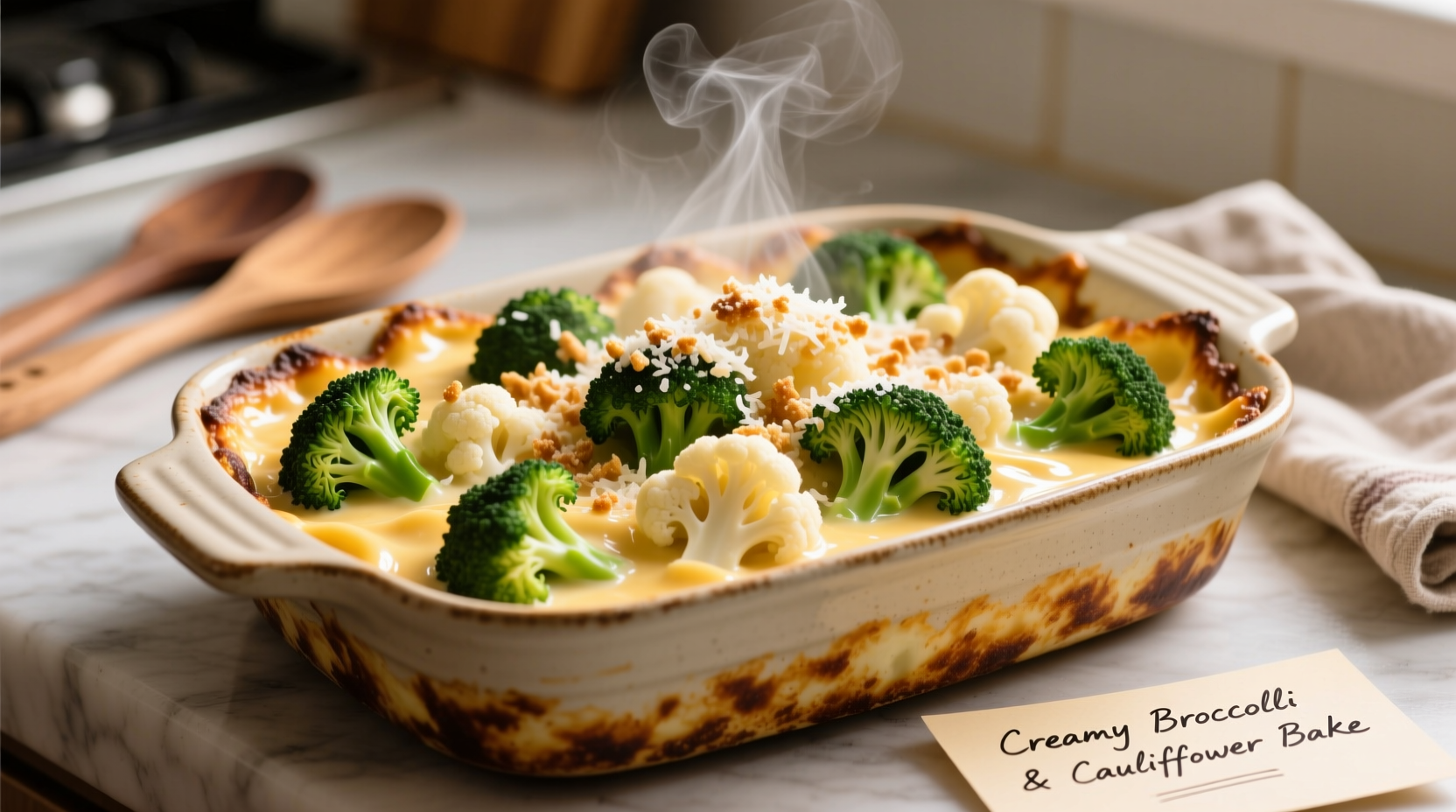
A creamy broccoli and cauliflower bake is a baked casserole composed primarily of steamed or blanched broccoli and cauliflower florets suspended in a rich, seasoned sauce—typically dairy-based—and topped with a crunchy, often cheesy crust before being browned in the oven. It belongs to the broader category of vegetable gratins, which originate in French and European culinary traditions where vegetables are elevated through careful saucing and baking.
This particular iteration distinguishes itself by using an equal ratio of broccoli and cauliflower, leveraging their complementary textures and mild bitterness-sweetness balance. The sauce usually begins with a roux (a cooked mixture of fat and flour), enriched with milk or half-and-half, Dijon mustard, garlic, nutmeg, and grated hard cheese such as Gruyère or Parmesan. Once combined with the vegetables and poured into a baking dish, the top is finished with extra cheese and sometimes buttered panko or cracker crumbs for textural contrast.
The result is a harmonious blend of soft, melt-in-the-mouth vegetables encased in a luscious, savory custard-like matrix, crowned with a crisp, aromatic crust. While commonly served as a side dish, variations exist that include protein additions like shredded rotisserie chicken or crispy bacon, transforming it into a full meal.
Key Characteristics
| Characteristic | Description |
|---|---|
| Flavor Profile | Rich, savory, slightly nutty; balanced between the earthy notes of crucifers and the creamy, tangy depth of aged cheese and mustard. |
| Aroma | Warm dairy, toasted cheese, garlic, and a hint of white pepper or nutmeg upon baking. |
| Texture | Soft and cohesive interior with a distinct fork-tender bite; exterior features a crisp, golden crust. |
| Color | Pale ivory base with flecks of green broccoli; deep golden-brown topping after baking. |
| Culinary Function | Serves as a side dish, vegetarian main, or component in meal prep and entertaining menus. |
| Shelf Life | Refrigerated: up to 4 days. Freezable: up to 3 months when properly wrapped. |
| Heat Level | Mild (unless spiced with cayenne or hot paprika). |
Practical Usage: How to Make a Perfect Creamy Broccoli and Cauliflower Bake
Creating an exceptional bake hinges on technique more than complexity. Follow these steps to achieve consistent results with maximum flavor and optimal texture.
- Prep the Vegetables: Cut one head each of broccoli and cauliflower into uniform, bite-sized florets (about 1–1.5 inches). Smaller pieces cook evenly; larger ones may remain undercooked. Blanch in boiling salted water for 2–3 minutes until brightened in color and slightly tender, then immediately plunge into ice water to halt cooking. Drain thoroughly—excess moisture dilutes the sauce.
- Make the Béchamel Base: In a heavy-bottomed saucepan, melt 3 tablespoons unsalted butter over medium heat. Whisk in 3 tablespoons all-purpose flour and cook for 2 minutes, stirring constantly, to eliminate raw flour taste. Gradually add 2 cups whole milk or half-and-half, whisking continuously to prevent lumps. Bring to a gentle simmer, stirring until thickened enough to coat the back of a spoon (about 5–7 minutes).
- Season the Sauce: Off heat, stir in 1 cup grated Gruyère or sharp white cheddar, 1 tablespoon Dijon mustard, 1 minced garlic clove, ¼ teaspoon freshly grated nutmeg, ½ teaspoon kosher salt, and ¼ teaspoon black pepper. For added complexity, include 2 tablespoons dry white wine or chicken stock at this stage, reducing briefly before adding cheese.
- Combine and Layer: In a greased 9x13-inch baking dish, spread the drained vegetables evenly. Pour the warm sauce over them, gently folding to ensure even coverage. Do not overmix—this can break down the florets.
- Add the Topping: Mix ½ cup panko breadcrumbs with 2 tablespoons melted butter, ¼ cup grated Parmesan, and a pinch of smoked paprika. Sprinkle evenly across the surface. Optionally, dot with additional small pieces of cold butter for enhanced browning.
- Bake Until Golden: Place in a preheated 375°F (190°C) oven for 25–30 minutes, until bubbling around the edges and the topping is deep golden brown. If needed, broil for 1–2 minutes at the end for extra crispness (watch closely).
- Rest Before Serving: Allow the bake to rest for 10 minutes after removing from the oven. This stabilizes the sauce structure and improves sliceability.
Pro Tip: For a lighter version, substitute half the milk with evaporated milk or low-fat cottage cheese blended until smooth. The protein content helps maintain creaminess without added fat.
Variants & Types
The basic framework of the creamy broccoli and cauliflower bake allows for numerous adaptations based on dietary needs, cultural influences, and available ingredients.
- Cheese Variations: Use smoked Gouda for a campfire note, fontina for stretchiness, or blue cheese for boldness. Vegan versions work well with cashew cream and nutritional yeast (¼ cup per cup of liquid) plus plant-based butter and cheese alternatives.
- Gluten-Free Adaptation: Replace flour with rice flour or a gluten-free all-purpose blend in a 1:1 ratio. Ensure breadcrumbs are certified GF or use crushed cornflakes or almond flour for topping.
- Dairy-Free Version: Create a roux using refined coconut oil and arrowroot powder. Use oat milk or cashew milk for creaminess, and add miso paste (1 tsp) for umami depth in place of cheese.
- Protein-Enhanced: Fold in 1.5 cups cooked quinoa, lentils, diced ham, or shredded chicken before baking. These additions turn the dish into a hearty main course suitable for family meals.
- Low-Carb/Keto Style: Omit flour entirely and thicken the sauce with a slurry of xanthan gum (⅛ tsp) in warmed heavy cream. Top with crushed pork rinds instead of breadcrumbs.
- International Twists: Stir in curry powder and coconut milk for an Indian-inspired version, or add harissa and preserved lemon for a North African flair.
| Variant Type | Best Used When | Key Substitutions |
|---|---|---|
| Classic Comfort | Family dinners, holidays, potlucks | Butter, flour, whole milk, Gruyère, panko |
| Vegan | Plant-based diets, vegan gatherings | Nutritional yeast, cashew cream, olive oil, GF crumbs |
| Lightened-Up | Health-conscious meals, weight management | Evaporated milk, reduced-fat cheese, less butter |
| Keto/Low-Carb | Low-carbohydrate lifestyles | Heavy cream, xanthan gum, pork rind topping |
| Protein-Packed | Meatless Mondays, post-workout meals | Lentils, chickpeas, chicken, eggs |
Comparison with Similar Ingredients/Dishes
While similar in appearance and preparation method, several baked vegetable dishes are frequently confused with the creamy broccoli and cauliflower bake. Understanding the distinctions ensures accurate recipe execution and better menu planning.
| Dish | Primary Vegetables | Sauce Type | Topping | Distinguishing Feature |
|---|---|---|---|---|
| Creamed Spinach Casserole | Spinach (wilted) | Cream cheese or Mornay-based | Breadcrumbs or Parmesan | Higher moisture content; requires squeezing |
| Scalloped Potatoes | Potatoes (sliced thin) | Flour-milk roux, no cheese | Buttered breadcrumbs | Starchy base; relies on potato starch for thickening |
| Gratin Dauphinois | Potatoes | Cream infusion (no flour) | None or light cheese | Slow-baked in heavy cream; rustic French origin |
| Creamy Broccoli and Cauliflower Bake | Broccoli & cauliflower | Cheese-enriched béchamel | Cheesy panko or cracker crumbs | Dual cruciferous base; balanced sweetness and bitterness |
| Green Bean Casserole | Canned green beans | Cream of mushroom soup | Fried onions | Convenience-food staple; American mid-century origin |
“The key difference isn’t just the vegetables—it’s how they interact with the sauce. Broccoli and cauliflower release subtle sugars when baked, which caramelizes slightly under heat and enhances the perception of creaminess without needing excessive fat.” — Chef Elena Torres, Culinary Instructor, Pacific Institute of Cuisine
Practical Tips & FAQs
Can I prepare this dish ahead of time?
Yes. Assemble the casserole (without baking) up to 24 hours in advance. Cover tightly and refrigerate. Add 5–10 minutes to the baking time if going straight from fridge to oven. Alternatively, freeze unbaked portions for up to 3 months—thaw overnight before baking.
Why did my sauce separate or become grainy?
This typically occurs when cheese is added to a sauce that’s too hot or stirred too vigorously. Always remove the béchamel from heat before incorporating cheese, and stir gently until melted. Using aged, high-quality cheese also reduces risk—avoid pre-shredded varieties containing anti-caking agents that hinder melting.
How do I prevent a soggy topping?
Ensure vegetables are fully drained after blanching. Excess water migrates into the sauce during baking. Additionally, apply the breadcrumb topping just before baking—not earlier—to preserve crunch. For extra crispness, toast the breadcrumbs separately in butter before scattering.
What can I use instead of flour for thickening?
Rice flour, cornstarch (use half the amount), potato starch, or arrowroot powder work well. For grain-free options, xanthan gum (⅛–¼ tsp per cup of liquid) provides excellent stabilization without altering flavor.
Is this dish freezer-friendly?
Yes, though texture may soften slightly upon thawing. Cool completely, wrap in plastic and foil, and label with date. Reheat covered at 350°F for 30–40 minutes, then uncover and broil briefly to refresh the crust.
Can I skip blanching the vegetables?
You can roast them instead. Toss florets with olive oil, salt, and garlic, then roast at 425°F for 20 minutes until lightly charred. Roasting intensifies flavor and removes moisture naturally, resulting in a deeper-tasting bake with less risk of sogginess.
How can I boost nutrition further?
Incorporate chopped kale or spinach into the mix, increase the cauliflower ratio for lower calories, or stir in ground flaxseed or hemp hearts into the topping for omega-3s.
Storage Guide: Store leftovers in an airtight container in the refrigerator for up to 4 days. Reheat individual portions in the microwave (covered) for 2–3 minutes, stirring halfway, or in a 325°F oven for 15–20 minutes.
Summary & Key Takeaways
The creamy broccoli and cauliflower bake is far more than a simple vegetable side—it’s a masterclass in balancing health and indulgence through thoughtful technique. By understanding the role of each ingredient and respecting foundational methods like blanching, roux-making, and proper layering, home cooks can produce a dish that rivals restaurant-quality offerings.
- The combination of broccoli and cauliflower offers complementary flavors and textures unmatched by single-vegetable casseroles.
- A well-made béchamel enriched with cheese, mustard, and nutmeg forms the soul of the dish—smooth, flavorful, and structurally sound.
- Textural contrast comes from a crisp, buttery topping applied just before baking.
- Variations accommodate dietary preferences including vegan, gluten-free, keto, and high-protein needs without sacrificing satisfaction.
- Make-ahead convenience and strong reheating performance make it ideal for busy households and holiday spreads alike.
This recipe exemplifies modern comfort cooking: rooted in tradition, adaptable to contemporary demands, and universally appealing. With attention to detail and respect for ingredients, it earns its place not just as a side dish—but as a centerpiece of mindful, delicious eating.
Try this recipe this week and discover how two humble vegetables can transform into something truly extraordinary.