
When it comes to chilled coffee drinks, two options dominate café menus and home brewing setups: cold brew and iced americano. Though both are served cold and often mistaken for one another, their flavor profiles are fundamentally different. Understanding these distinctions isn’t just a matter of preference—it’s about appreciating how brewing method, water temperature, time, and bean choice shape every sip.
The confusion is understandable. They arrive in similar glasses, sometimes with ice, and both offer relief from heat or caffeine fatigue. But behind that icy surface lies a world of contrast in texture, acidity, bitterness, and sweetness. Whether you're ordering at a specialty coffee shop or crafting your own morning ritual, knowing what sets them apart helps you make smarter, more satisfying choices.
Brewing Methods Define Flavor
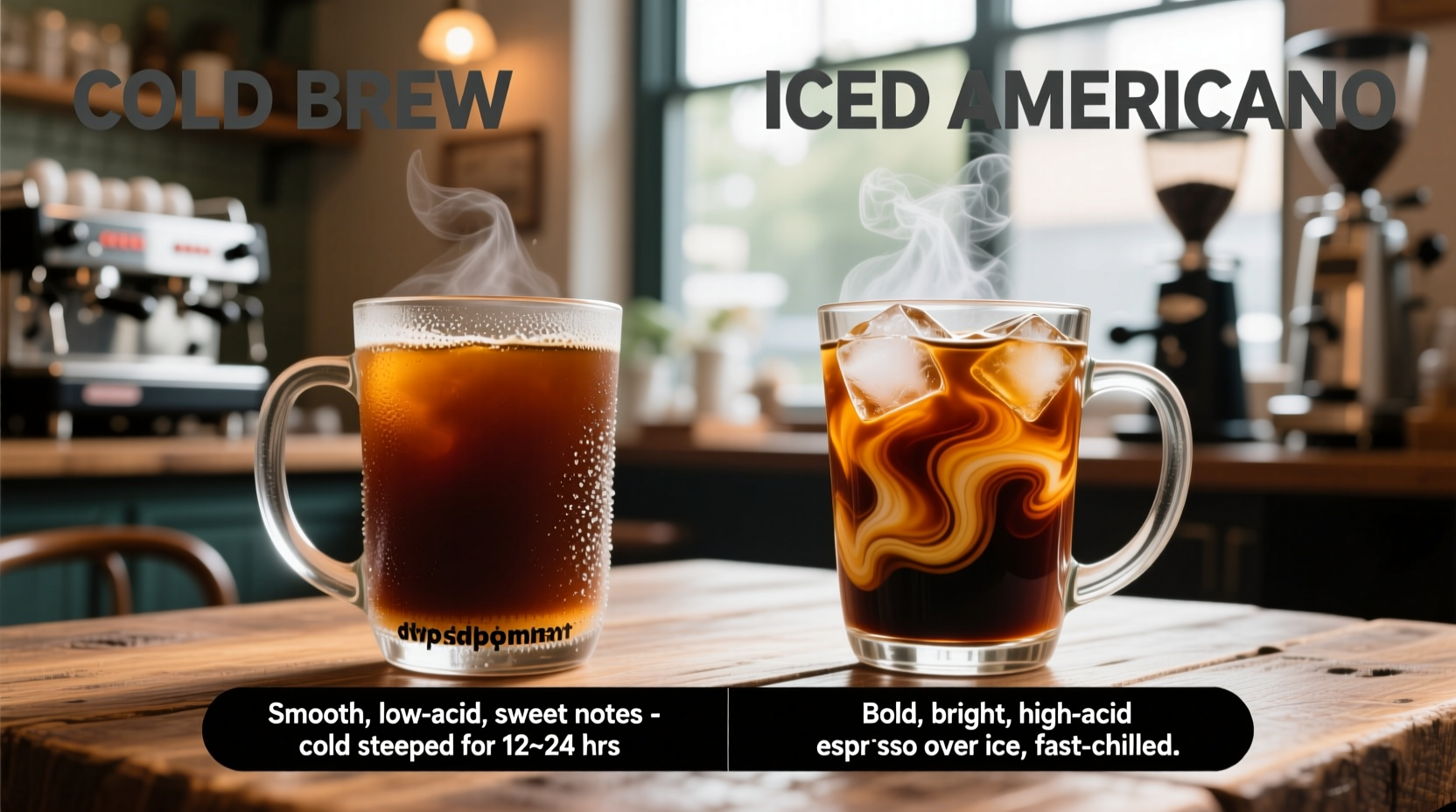
The most critical factor in taste difference is the brewing process. Cold brew and iced americano start with completely different foundations—one is brewed cold over time, the other is hot espresso rapidly cooled.
Cold brew is made by steeping coarsely ground coffee in room-temperature or cold water for 12 to 24 hours. This slow extraction pulls out compounds gradually, minimizing the release of acidic and bitter elements found in coffee. The result is a concentrate that’s smooth, mellow, and naturally sweet.
Iced americano, on the other hand, begins with hot espresso—typically two shots—immediately poured over ice. Hot water under pressure extracts coffee quickly, capturing a broad spectrum of flavors, including brighter acids and deeper roast notes. When chilled by ice, the drink retains much of its original character, though slightly diluted.
Tip: Never pour hot espresso directly onto plastic cups filled with ice—they can crack. Use tempered glass or double-walled containers.Taste Profile Comparison: Acidity, Body, and Sweetness
The sensory experience of each drink diverges sharply due to their extraction methods. Here's a breakdown of the core taste elements:
- Acidity: Iced americanos exhibit higher perceived acidity. The high-pressure hot water extraction pulls out citric, malic, and phosphoric acids, especially noticeable in light- to medium-roast beans. Cold brew, by contrast, suppresses acid development, resulting in a pH closer to neutral—often described as “gentle” or “stomach-friendly.”
- Body: Cold brew has a heavier, syrupy mouthfeel. The long steeping time increases dissolved solids and oils, giving it a velvety texture. Iced americanos are lighter-bodied; while espresso is rich, dilution from ice thins the consistency significantly.
- Sweetness: Cold brew often tastes naturally sweeter without added sugar. This isn't due to actual sugar content but rather the suppression of bitter compounds, allowing subtle chocolate, nutty, or caramel notes to emerge. Iced americanos preserve more of the bean’s inherent complexity, which may include fruity brightness or floral tones—but also sharper edges.
- Bitterness: Bitterness in iced americanos comes from rapid extraction and the Maillard reaction during roasting. It’s not inherently negative—it adds depth—but it can be intense if over-extracted. Cold brew avoids thermal degradation, yielding minimal bitterness unless using dark, oily beans.
“Cold brew isn’t weaker coffee—it’s a different expression of coffee. You trade vibrancy for roundness, acidity for balance.” — Carlos Mendez, Head Roaster at Altura Coffee Co.
Direct Comparison: Cold Brew vs Iced Americano
| Feature | Cold Brew | Iced Americano |
|---|---|---|
| Brew Time | 12–24 hours | 25–30 seconds (per shot) |
| Water Temperature | Cold or room temp | ~90–96°C (194–205°F) |
| Acidity Level | Low | Medium to High |
| Mouthfeel | Full, smooth, syrupy | Light to medium, crisp |
| Natural Sweetness | High (perceived) | Low to moderate |
| Bitterness | Low | Present, especially with dark roasts |
| Caffeine Content (approx.) | Higher (due to longer steep & concentration) | Lower (2 shots = ~120mg) |
| Best Served | Over ice, optionally with milk | Immediately after brewing, over ice |
How Bean Choice Influences Taste
The origin, roast level, and freshness of coffee beans further widen the gap between these two beverages.
Cold brew benefits from medium to dark roasts with low acidity and pronounced chocolate or nutty notes. Beans like Brazilian Santos, Sumatran Mandheling, or blends designed for espresso work well. Light roasts can produce flat or underdeveloped flavors in cold brew because delicate floral or citrus notes don’t extract efficiently in cold water.
Iced americanos shine with high-quality, freshly roasted beans—especially single-origin light or medium roasts. A bright Ethiopian Yirgacheffe or a Kenyan AA will retain its berry-like acidity and tea-like finish even when chilled. However, stale or poorly pulled espresso results in a sour or hollow-tasting iced drink.
Tip: Grind your beans fresh for cold brew too—even though it's steeped overnight, stale grounds lead to muted flavor.Real Example: Café Experience in Portland
In a blind tasting session at a Portland micro-roastery, ten regular coffee drinkers were asked to identify and describe two chilled black coffees. One was a nitrogen-infused cold brew made from a Colombian medium-dark roast; the other, an iced americano using a seasonal washed-process Guatemalan bean.
Nine out of ten correctly identified the cold brew by its creamy texture and lack of sharpness. One participant said, “It tastes like coffee dessert—no need for sugar.” The iced americano was described as “lively,” “clean,” and “more awake-tasting,” though two participants noted it felt “slightly harsh” compared to the cold brew.
This mirrors broader consumer trends: cold brew appeals to those avoiding bitterness or acid sensitivity, while iced americanos attract drinkers who value clarity, origin character, and traditional espresso craftsmanship.
Step-by-Step Guide to Brewing Both at Home
Want to experience the contrast firsthand? Here’s how to prepare both drinks properly.
Making Cold Brew
- Grind 1 cup of coffee beans to a coarse consistency (like sea salt).
- Add grounds to a large jar or French press.
- Pour in 4 cups of cold, filtered water. Stir gently to saturate all grounds.
- Cover and steep at room temperature for 12 hours (or refrigerate for up to 24).
- Strain through a fine-mesh sieve lined with a paper filter or reusable cloth.
- Dilute concentrate 1:1 with water or milk before serving over ice.
Making Iced Americano
- Chill a serving glass by filling it with ice and letting it sit for 1 minute. Discard ice (optional: reserve for serving).
- Pull two shots of espresso directly into the chilled glass—or into a separate vessel if preserving crema matters.
- Add 6–8 oz of cold water. For stronger flavor, use less water.
- Add fresh ice and serve immediately.
“The mistake people make with iced americanos is using old espresso or letting it sit. Freshness is non-negotiable.” — Lena Tran, Barista Champion, 2022 Northwest Brewers Cup
Common Misconceptions Debunked
Myth: Cold brew has less caffeine.
Reality: Cold brew concentrate often contains more caffeine per ounce than espresso. A typical 16-oz cold brew (diluted) can deliver 200+ mg of caffeine, versus ~120 mg in a standard iced americano.
Myth: Iced americano is just hot coffee poured over ice.
No. An iced americano specifically uses espresso, not drip coffee. Pouring hot drip coffee over ice creates a different drink altogether—often called “chilled coffee”—and lacks the intensity and crema interaction of an americano.
Myth: Cold brew doesn’t need good beans.
Incorrect. While cold brew masks flaws better than hot brewing, low-grade or rancid beans still produce flat, woody, or musty results. The extended steep amplifies off-flavors over time.
Frequently Asked Questions
Can I turn cold brew into an iced americano?
No—by definition, an iced americano requires espresso. If you dilute cold brew with water, you’re simply drinking cold brew with less strength. It won’t replicate the aromatic complexity or slight bitterness of a true americano.
Which is healthier: cold brew or iced americano?
Both are low-calorie and sugar-free when consumed black. Cold brew may be easier on sensitive stomachs due to lower acidity. However, neither has significant nutritional advantages unless additives (milk, sweeteners) are included. Choose based on tolerance and taste preference.
Why does my homemade iced americano taste watery?
This usually happens when the espresso is pulled too weakly or the ice melts too fast. Solution: Use a double shot (60ml), pre-chill the glass, and consider larger ice cubes (they melt slower). Alternatively, pull the espresso directly onto room-temperature ice to flash-cool and preserve body.
Checklist: Choosing the Right Drink for Your Palate
- ✅ Prefer smooth, low-acid coffee? → Try cold brew
- ✅ Want bold flavor and espresso richness? → Go for iced americano
- ✅ Need faster preparation? → Iced americano wins (under 1 minute)
- ✅ Planning ahead for batch brewing? → Cold brew is ideal for pitchers
- ✅ Enjoy nuanced origin flavors? → Iced americano highlights terroir
- ✅ Avoiding stomach irritation? → Cold brew is generally gentler
Final Thoughts: Embrace the Difference
Cold brew and iced americano aren’t rivals—they’re expressions of coffee adapted to different moments and moods. Cold brew soothes with its roundness, ideal for slow mornings or afternoon refreshment. Iced americano energizes with its clarity and bite, perfect when you want coffee to feel alive on your palate.
The best way to understand the distinction is to try both side by side, using the same bean if possible. You’ll notice how temperature and time transform the very essence of coffee—not mask it, but redirect it. Once you do, your coffee choices become more intentional, more personal, and ultimately more enjoyable.
🚀 Ready to experiment? Brew a batch of cold brew tonight and compare it with a fresh iced americano tomorrow morning. Take notes, share your findings, and discover which method truly speaks to your taste.